
More versions of Gainsbourg’s La Javanaise
Category: En Francais
Les Français entrent dans une phase de déconfinement accéléré
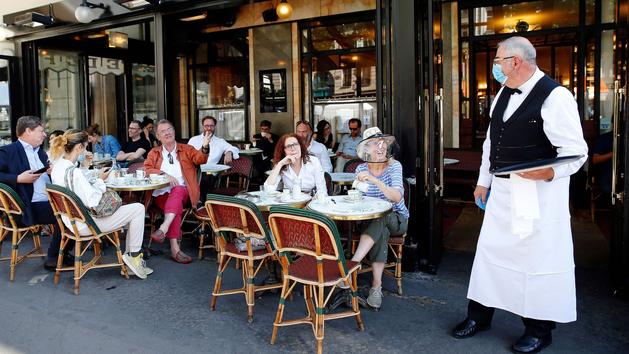
TÉMOIGNAGES – Alors que la pression monte en faveur d’un retour à la normale, ils sont de plus en plus nombreux à ne plus appliquer les gestes barrières.
Il y a quelques semaines encore, chacun se tenait scrupuleusement à un mètre de distance dans la file d’attente au supermarché, barricadé derrière son masque chirurgical, avant de se frictionner les mains au gel hydroalcoolique pour la dixième fois de la matinée. Cette époque d’avant le 11 mai semble aujourd’hui à des années-lumière du quotidien de bien des Français. Et si «le virus recule, mais circule toujours», comme l’a rappelé vendredi dernier le ministre de la Santé, Olivier Véran, nombre de citoyens ont repris une vie normale, lassés de vivre dans un monde aseptisé où tout doit être, en permanence, désinfecté.
«On s’est fait la bise»
Dans le métro parisien, on observe ainsi que le port du masque, pourtant obligatoire, n’est pas toujours respecté, parfois porté négligemment autour du cou, ou bien «oublié»… Et dans le domaine privé, le relâchement est encore plus généralisé. «J’ai revu des amis qui m’avaient beaucoup manqué et on s’est fait la bise, raconte ainsi Lucie, la vingtaine, étudiante en Bretagne [ . . . ]
Continuez à: : Les Français entrent dans une phase de déconfinement accéléré
Comme une Française: Why You Should Never Say “Mon Ami” in French
Chloroquine: les critiques contre l’étude du “Lancet” sont-elles fondées?

LA VÉRIFICATION – Le professeur Philippe Parola, bras droit de Didier Raoult, l’a qualifiée de «farce». Au-delà, de nombreux scientifiques s’interrogent sur l’origine des données qui concluent à un excès de mortalité avec l’antipaludéen [. . .]
Continue at Source: Chloroquine: les critiques contre l’étude du «Lancet» sont-elles fondées?
The 16 French proverbs to drop into any conversation

From howling with the wolves to spotting grey cats – sooner or later in French conversation proverbs will rear their head. Here French language coach Llyane Stanfield introduces some of the most common.
French proverbs are usually recognised primarily by their form: they are short, quick, and most importantly, they have rhythm, like a free-form poem.
Their feel is musical, which makes them easy to remember and they are full of lexicons and cliché, built into the language as phrases or jingles. Most proverbs have a long history but they are far from being ruins and frequently pop up in everyday conversation.
Here are some of the most popular proverbs that live to this day in French.
Après la pluie, le beau temps – after the rain, the good weather. In other words the cheering sentiment that happy times usually follows a period of misfortune.
La fête passée, adieu le saint – the festival ends and goodbye to the saint. The timely reminder that we quickly forget to whom we owe a happy moment.
Chacun voit midi à sa porte – everyone sees noon at his door. You’re basically saying that each person may have a different perspective on something, so it’s a handy one to wheel out if you’re desperately trying not to get bogged down in a controversial topic.
You will notice that quite a few French proverbs involve animals. Here is a few examples of commonly used ones.
Wolves are frequently the bad guys in French proverbs
Quand on parle du loup on en voit la queue – speak of the wolf and you’ll see his tail. This means that when you’re talking about someone (usually speaking ill), that person suddenly shows up and is similar to the English phrase ‘speak of the devil’.
Les loups ne se mangent pas entre eux – wolves don’t eat each other. The evil people sympathise and support each other, again this one has a devil equivalent in English – the devil takes care of his own.
Il faut hurler avec les loups – we must howl with the wolves. Finally a wolf saying in which wolves are not the bad guys – this simply means that you must adapt to the customs of the people you hang out with.
Petit à petit l’oiseau fait son nid – little by little the bird makes its nest. Alternatively, we must have patience and perseverance if we want to get results.
La nuit tous les chats sont gris – all cats are grey in the night. In certain circumstances, everything looks the same. It basically means that in a complicated situation, it is difficult to judge so is handy if you want to express a non-committal opinion on Benjamin Griveaux or any other French sex scandal.
But there are plenty of more general proverbs on the subject of relationships and human behaviour.
Too much kissing is bad for your productivity, who knew?
Qui trop embrasse mal étreint – He who kisses too much is badly hugged. Not specific to kissing, this means that a person who undertakes too many things at the same time ends up succeeding at nothing.
Il ne faut jamais dire ‘Fontaine, je ne boirai jamais de ton eau’ – Never say ‘fountain, I will never drink your water’ or more generally we can’t say we’ll never need someone’s help.
Il faut laver son linge sale en famille – dirty linen should be washed in the family, very similar to the English phrase about not washing dirty laundry in public, it means that domestic issues should not be dealt with in public.
Ce que femme veut, Dieu le veut – what woman wants, God wants. Slightly sexist perhaps, it means that it is hard to resist women’s desires.
Prudence est mère de sûreté – Care is the mother of safety, so we must act cautiously even when we feel confident.
La parole est d’argent, le silence est d’or – speech is silver, silence is golden. Another familiar sentiment in English – silence is safer than words.
Les murs ont des oreilles – the walls have ears. Familiar from spy movies, the phrase means you have to talk quietly because someone may always hear what you say.
Il vaut mieux parler à Dieu qu’à ses saints – it’s better to talk to God than his saints, or for more secular times it is best to talk directly to the most important person.
Source: The Local
Watch the Bilingual Revolution Webinars Online | French Culture
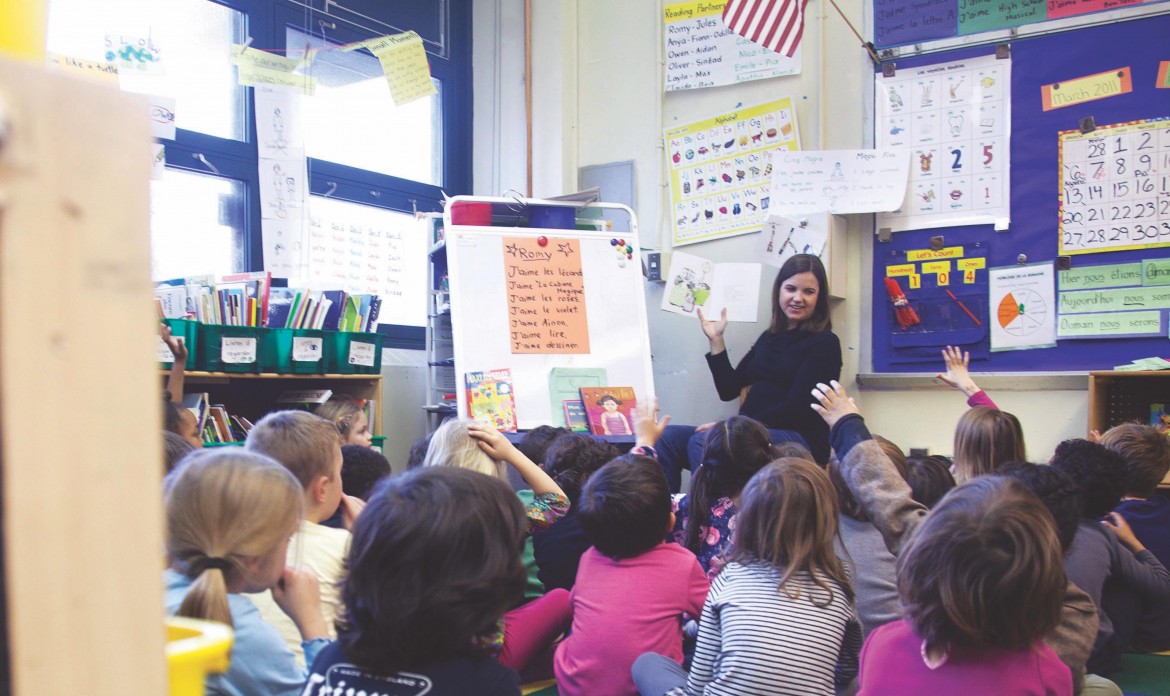
The Cultural Services of the French Embassy in the US presents a series of webinars for parents and educators who are interested in creating bilingual dual-language programs in public schools. Hosted by author and Education Attaché, Fabrice Jaumont, these webinars will uncover how parents can make a difference in their community by starting dual-language programs and providing opportunities for more children to become multilingual.
Episode 1: Community Outreach
In order to create a dual-language program in your local school you’ll need to connect with dozens, if not hundreds, of individuals in your community and form a base of interested families. You can start by forming a core group of parents you know and trust. These are parents Continue reading “Watch the Bilingual Revolution Webinars Online | French Culture”
 Pas De Merde