Impressionism in art is fairly easy to describe: thin brush strokes, obscured edges, the play of light. Impressionism in music is harder to articulate.
Impressionism in art is fairly easy to describe: thin brush strokes, obscured edges, the play of light.
Impressionism in music is harder to articulate. Composer Claude Debussy translated visual ambiguity to music by unrooting time. There are no hard edges. The music is dreamy. It’s often hard to find the beat.
The Impressionist composers — Claude Debussy and Maurice Ravel in particular, but also Erik Satie and Gabriel Faure — took their inspiration from many of the same places that Impressionist painters did: nature. Debussy was particularly inspired by water.
Symbolist poets of the day also influenced Impressionist composers. Paul Verlaine’s “Clair de Lune” and Stéphane Mallarmé’s “Prelude to the Afternoon of a Faun” were beautiful, but obscure, as is Debussy’s music based on these poems.
And finally, Impressionist composers paid attention to how music vibrated in the body. You’ll hear the lowest notes on the piano played in conjunction with the highest notes. Feeling the music was almost as important as hearing it. LISTEN HERE
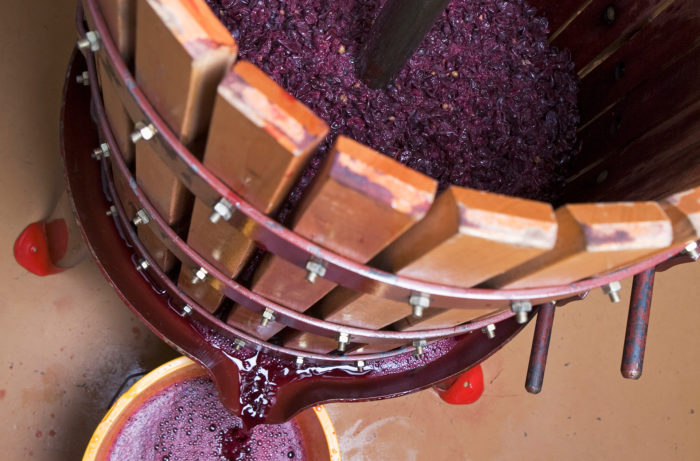
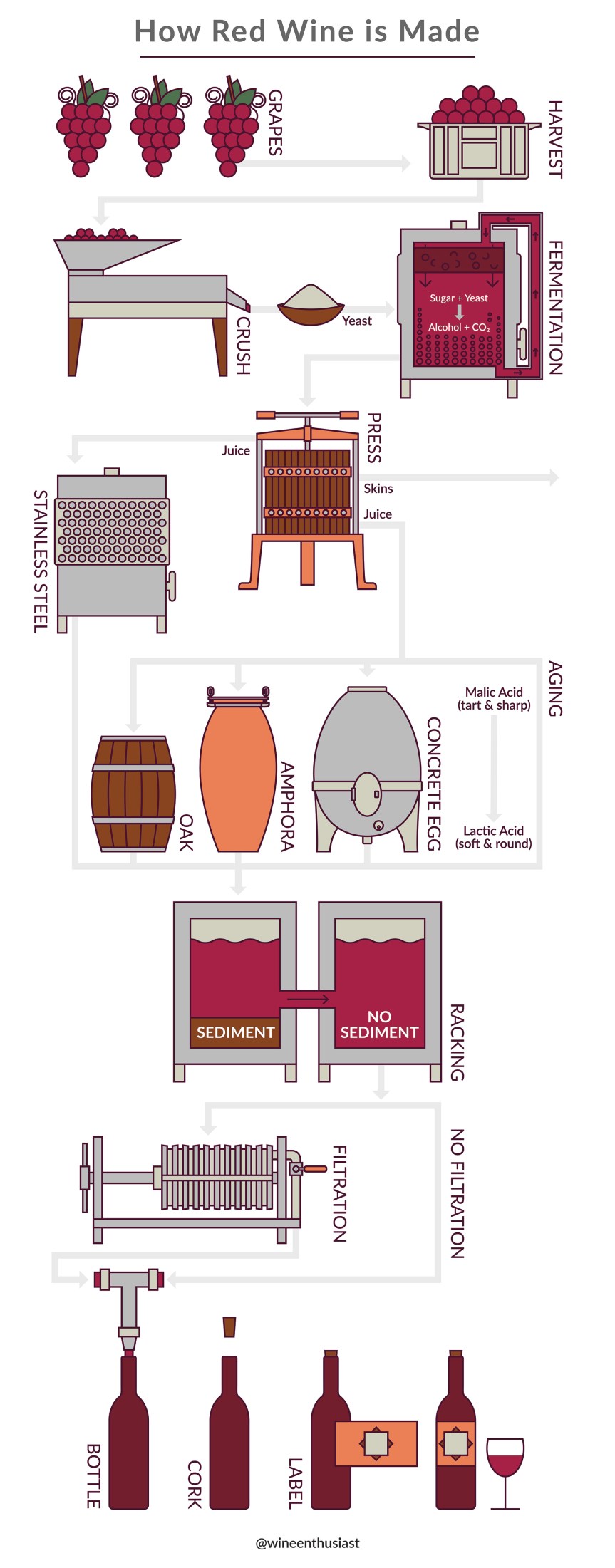
Wineries make red wine today much the same way they did 6,000 years ago in Greece and Persia. Dark-colored grapes are harvested, crushed, fermented, stirred and separated from the skins by a press. Voila! Red wine.
Better containers, presses and cellars have increased quality and efficiency of red wine production many times over, but it’s still essentially a simple process. Red wine production requires no cooking or ingredients besides grapes, yeast and, usually, sulfur dioxide as a preservative.
Red wine is made on the skins
Red wine is made like white wine, but with one major difference. Generally, it ferments with the grape skins and juice combined in a tank or vat. White wines are pressed before fermentation, separating the juice from the skins.
The skin contact in red wine production allows color, flavor and textural compounds to be integrated into the juice, while the yeast converts sugar to alcohol. The skins contain most of the good stuff that gives red wine its color, while the pulp mostly provides the juice.
Harvesting red-wine grapes and the crush
Red wine grapes are ready to harvest in late summer to early fall, several weeks after the initial green color of the grapes has turned to dark red or blue-black, a period called veraison.
Vineyard crews cut the grape bunches or clusters from the vines. That’s either done by hand or a self-propelled machine that shakes or slaps the grapes off their stems and collects the individual berries and juice.
Delivered to the winery, winemakers can also sort out mildewed grapes, unwanted raisins, leaves and debris. Clusters then go through a destemmer/crusher that removes the whole grape berries from the stems and may squeeze them slightly to get the juice flowing. Any juice created at these stages prior to pressing is known as free run. Machine-harvested grapes are already ready to ferment. Continue reading “How Red Wine is Made “→
In 2015, they had created a buzz by posting videos of recovery worldwide hits, and had been seen by some Lady Gaga …
Since this buzz, Lucille and Samuel Atchouel, now from Toulouse but from the Hautes-Pyrénées, now aged 22 and 20, have come a long way … “In 2015, we had an important meeting, Richard Seff, who was the producer of Francis Cabrel and many others. He was seduced by one of the small clips that we made and, although he moved on, he wanted to get back to produce us, provided that we start thoroughly. That’s what we did, we worked every day, on music, texts, models … We finalized 5 titles, Richard Seff made them pass to Valery Zeitoun, the former boss of Universal Music who has set up his own label, My Way Management. And he offered us a contract, he is our producer, and we are now distributed by Sony Music. “
Their first single is available recently, on all platforms. “The title is called” Old Hollywood “and it pays tribute to American cinema in the 50s and 60s. “In fact, we find in the clip (directed by Fabrice Begotti, a size in the genre) full of references to cult movies, as 7 years of reflection with Marilyn, or Roman Holidays with Audrey Hepburn …” We like this universe, “say the artists, who sing tart melodies, in tune with the times, with just the right amount of glamor.
To make choosing where to eat in Paris as painless as possible, we’ve done the “hard” graft for you by testing out 13 of the newest, most talked-about places in the city. From creative cuisine hailing from Israel to the chef that’s shaking things up at the Eiffel Tower, we’ve got you covered.
1. Shabour, A (Michelin) Star In The Making
Every dish here is testimony to the chefs’ inexhaustible inspiration. And teamed with hospitality that’s rarely seen in trendy Paris restaurants of this caliber, Shabour certainly packs one mighty punch.
With several restaurants under their belt in Jerusalem and Tel Aviv, London and Paris, Shabour, meaning ‘hangover’ in Hebrew, is the clan’s third restaurant and first independent endeavor in the French capital. Alongside the enigmatic Assaf Granit is his clan, Dan Yosha and Uri Navon in the kitchen, and Tomer Lanzmann as head host and all-round ambiance-setter en salle.
As far as the décor goes, it’s simple. And that’s the way they wanted it. A former jazz club, the space is entirely candlelit. The stone walls and waxed cement floors provide the backdrop for an open kitchen encased in a marvelous jade-green marble counter for diners to perch at, giving the restaurant a perfectly achieved result.
In a silent ritual of swift movements and the occasional hint of a smile in his icy blue eyes, lead maestro Assaf deposits utensils in front of diners in preparation for each dish, his hands, covered in cryptic black tattoos, sporadically emerging from the shadows.
He lays dinky forks on the counter. An oyster appears adorned with zata herbs (similar to wild oregano), apple and shallot juice, all laid on top of a wooden stand like an artwork, ready to be blowtorched before we swallow it, reeling from the burst of flavor as it slowly imparts its notes in our mouths.
Another stand-out dish includes scorched leek plunged in vegetable stock and filled with labanais (yoghurt-like drink) and porcini mushrooms accompanied by a halloumi crumble and stock that’s meant to recall a journey through the woods. And what a journey it is, each dish pulling us deeper into a world unknown where flavor becomes all that matters.
Next up, Assaf lays out a porcelain egg cup, ready to be filled by Dan with four types of egg: poached, marinated for 48 hours in black tea with ginger, relish of carrots and onions, raisins, tahini, Egyptian spinach, salmon eggs, and poutarde. Explosive. As is Uri’s exceptional amuse bouche of escargot-shaped apple roasted with olive oil and arak, and pickled pink and white beetroot stuffed with brie and plum purée, prepped like a “small tower of Babylon,” as he describes it while he rolls it into shape behind the counter in front of us.
A flurry of dishes, each one more sophisticated than the next and interwoven with accents from a faraway land; the genius behind each mouthful is the scattered positioning of the ingredients on the colorful mismatched porcelain plates. The result is that no mouthful is ever the same.
Here, time stalls as the experience takes you to places you’ve never wandered before. When we left some hours later, we were floating – merry from the wine (which flowed) and not uncomfortably bloated from the food. The next morning however, starting the day proved a little less smooth, but then again, we were warned – the restaurant isn’t called Shabour for nothing.
Sixteen hours may sound like a crazy amount of run time, but considering Ken Burns was covering nearly 100 years of music, his PBS documentary “Country Music” was anything but “too long.” It was excellent from start to finish, and I didn’t want it to end. That said, the venerable documentarian with the puddin’ bowl haircut made several glaring omissions. There are five performers that I believe Mr. Burns gave short shrift.
Here they be:
OMISSION #1 GLEN CAMPBELL
Glen Campbell deserved more than the brief mention he had in the documentary. He was the most popular “cross-over” artist of his time (not always a compliment, but in this case it is.) “The“Glen Campbell Good Time Hour” television show, which aired 1969-1972, featured crackerjack live performances and duets with the likes of Ray Charles, Tom Jones, “newcomer” Linda Ronstadt, C&W greats Roger Miller, Merle Haggard and many others. Like all the variety shows of that time, the great music was punctuated with slimy celebrity walk-ons and unfunny comic skits, but what the hell can the son of an Arkansas cotton-picker do about that?
Perfection
Can one possibly overstate the greatness of Glen Campbell’s most famous songs “Galveston,” “By The Time I Get to Phoenix,” and “Wichita Lineman”? (Each composed by the legendary Jimmy Webb.)
Glen called “Wichita Lineman” the favorite of all his songs. Mine too. In an interview before his death, Glen said that he filled in what might have been a third verse of “Wichita Lineman” with a guitar solo, one now considered iconic. He performed the solo on a six-string bass guitar belonging to legendary L.A. bass player Carol Kaye.
An amazing guitarist
He was one of the most respected session musicians of the ‘60s – a certified member of the famed collection of session men deemed The Wrecking Crew. (There’s a documentary on those rascals also – check it out). That’s Glen’s guitar on Beach Boys’ “Pet Sounds” LP, and on Frank Sinatra’s “Strangers in the Night.” By his own count he played on 586 recordings. “None of those singing stars I backed even knew my name,” he has said. ” I was just the guy at theend of the line, picking guitar.” Among country guitar pickers – he had few peers.
And of course, Glen Campbell could sing! Along with his songs, Campbell’s duet album with the mysterious and talented Delta beauty Bobbie Gentry was nearly as good as George & Tammy’s duets, peaking at #1 (in 1968, no less!) Their on-screen chemistry was, well maybe not “clean as country water”, but certainly “wild as mountain dew.”
“Let it be me”, indeed
His TV show always began with the opening chords of “Gentle On My Mind,” the classic written by John Hartford, who was also a regular on the show. Some consider that song not only Glen’s signature, but the greatest country song of all time.
Glen’s life story was a country song – complete with drug addiction, love affairs (Tanya Tucker), booze, fights, jail, and comebacks (“Rhinestone Cowboy”). For christsake, he even shared a movie screen with John Wayne (“True Grit”).
He had a sad, but beautiful ending to his career and life. Following his Alzheimer’s diagnosis, Campbell embarked on a final “Goodbye Tour” with three of his children joining him in his backup band. He said about his disease at that time, “The stuff I can’t remember is great because it’s a lot of stuff I don’t want to remember anyway.”
Wouldn’t footage of one of those final shows of Glen & Family have been perfect for a documentary that had such strong themes of family, faith, struggle, and Redemption?
#2 ALISON KRAUSS
This omission is even more curious than that of Glen Campbell, because Alison is as popular as she’s ever been, and has never been more respected in the greater music community (recently awarded an Honorary Doctorate of Music from Berklee College of Music.)
1985 when she was just 18 years old. I’ve loved her ever since.
She has sung or played fiddle with nearly all the country artists in the documentary, including Dolly, Emmylou, Ricky Skaggs and Vince Gill. She’s also collaborated with performers outside of country music, such as Elvis Costello (who wrote “Scarlet Tide” which she beautifully performs in the film Cold Mountain), and the famed classical cellist Yo Yo Ma (singing on “Slumber My Darling,” a song written by Stephen Foster in the year 1862.)
Alison is actually the most awarded singer and the most awarded female artist in Grammy history. She was a Nashville “Outlaw” from the get-go, signing with Boston’s Rounder Records in 1987 and staying loyal to her tiny record label even after she became popular. She has performed on the Academy Awards and sung at the White House (invited by President Barack Obama). She has even recorded an excellent duet album with Led Zeppelin’s Robert Plant!
Gone, Gone, Gone
Even with her forays into rock, pop, and classical music, she has been a guardian of the true Bluegrass musical tradition from her teenage years to today.
So, how in Sam Hill did Mr. Burns pass on all this? Maybe I’m biased, as I first saw her play a live show in 1985 when she was just 18 years old, in a church hall less than a mile from my current home. I’ve loved her ever since.
Had Burns given her proper treatment, he may have used this sublime live performance of Alison performing the country spiritual “Down To the River To Pray,” a song featured in the Coen Brothers’ brilliant film, O Brother Where Art Thou?
O brothers, let’s go down
#3: AUSTIN CITY LIMITS
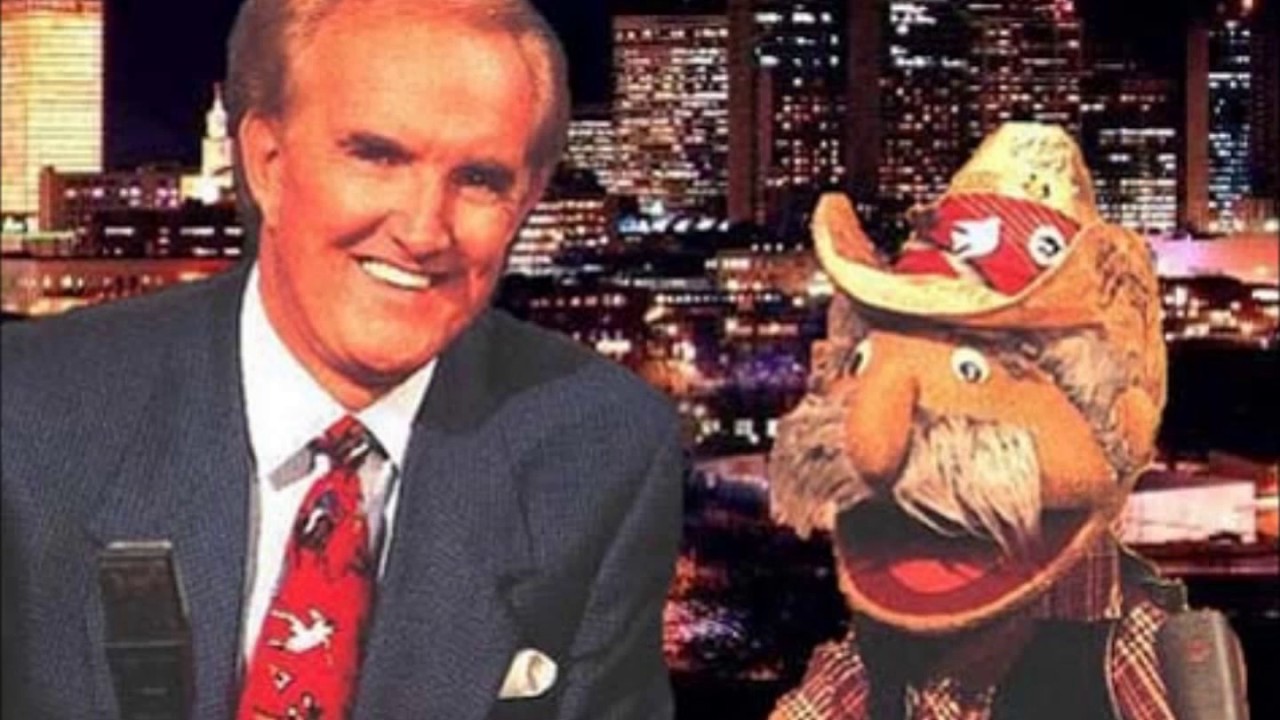
Burns barely mentioned PBS’ iconic Austin City Limits in his documentary, even though he used lots of footage from the show. Now in its 40th season, Austin City Limits was far more entertaining, musically challenging, and more influential than anything ever presented on the often-creepy CMT! (Ralph Emery? bleh!)
Ralph Emery and “Shotgun Red”… Bleh!
Austin City Limits” first aired in 1975, with Willie Nelson featured in the pilot, and Asleep at the Wheel and Bob Wills’ Original Texas Playboys on the first episode. Each week since then, I could turn to my local PBS station and have the opportunity to see live performances from C&W legends like Ernest Tubb, Waylon Jennings and Merle Haggard. But even more cool was discovering new performers on the “fringe” of C&W, getting little exposure elsewhere; performers like Lyle Lovett, Buddy Miller, Lucinda Williams, Shelby Lynne, Jim Lauderdale, John Hiatt, the Avett Brothers, Neko Case, The Jayhawks, Nanci Griffith, and Joe Ely – all who were first introduced to me by watching Austin City Limits.
“It was the biggest deal for me because it was a show for musicians,” singer Sheryl Crow said when invited on the show. “It was where you got to see authentic singer-songwriters, authentic players and it was the mark of real musicianship.”
Authentic, cutting-edge, and inclusive, Austin City Limits has done more to promote real country music than any similar coming out of Nashville. And of course, Austin City Limits featured the greatest theme song ever – Gary P. Nunn’s “London Homesick Blues” (“I wanna go home with the armadillo…”)
#4 IRIS DEMENT
It’s not completely surprising that singer-songwriter Iris DeMent was ignored on the documentary. DeMent is notoriously shy and seldom gives interviews. She doesn’t always smile in photos. She mainly sings gospel music, yet she herself teeters between being an agnostic and an atheist. She’s recorded only six albums since 1993. Yet I completely agree with National Public Radio’s assessment of Iris:
“Iris DeMent makes music that celebrates humanity’s efforts toward salvation, while acknowledging that most of our time on Earth is spent reconciling with the fact that we don’t feel so redeemed. Grounded in hymns, early country songs, gospel and folk, DeMent’s work is treasured by those who know it for its insight and unabashed beauty.“
There is “unabashed beauty” in the seminal country songs Burns repeats through his documentary – songs like the Carter Family’s “Wildwood Flower,” “Will the Circle Be Unbroken,” and Jimmie Rodgers’ ‘Waiting For a Train” and “Miss the Mississippi.” Iris DeMent is so grounded in that tradition, her best songs would fit comfortably on those original recordings of the Carters and “The Blue Yodeler” made in Bristol, Tennessee in the year 1927.
She was born in Arkansas, the youngest of 14 children in a Pentecostal household. Her beautiful song “Mama’s Opry” describes hearing her mother singing along to records by Jimmie Rodgers and the Carter Family (“Nothing in the world is as dear to me, as the sound of my Mama’s Opry”. )
Her debut album, 1992’s “Infamous Angel,” included the song David Byrne would record, “Let the Mystery Be.” Another song from the debut LP, “Our Town” was memorably played during the closing scene for the final episode the much-adored TV series “Northern Exposure.”) Television critics have referred to that scene as the finest ending to a television series ever, and I believe most of the credit should go to Iris’ touching recollection of her the hometown of her youth.
The Los Angeles Times wrote on July 26, 1995:
“Northern Exposure” was in fact quite life-affirming in its celebration of community, friendship and nature and its respect for diversity and life’s imponderables. Now it’s passing away. Yet even as it does so, the show gently reminds us once again, with tonight’s final montage and its last brilliant musical selection of Iris DeMent’s “Your Town”, that life goes on. Let’s dance.”
In 1999, Iris sang four duets with John Prine on his wonderful album “In Spite of Ourselves,” including the great title track. In 2004 she recorded Lifeline, a collection of traditional Protestant gospel songs. In her liner notes, DeMent recounts how her mother sang these songs in times of stress looking straight at the sky, “as if she were talking to someone.” In 2012, she recorded a song “The Night I Learned How Not to Pray.”
While some find her vocal stylings contain too much twang, Merle Haggard once called her “the best singer I’ve ever heard.” Iris believed that title belonged to Tammy Wynette, for whom she dedicated the song “Making My Way Back Home” from her last LP. “Tammy was just the greatest country singer there ever was.”
About the country songs she writes, Iris has says, “I’m not writing for my own entertainment. I’m writing and singing as part of a calling. I feel like I have a job to do, and I invite the spirits of the dead into my room; I invite my history, the people who got me here. When I go to work, I actually call to mind other people I’m close to. I sort of pray.”
Country Music? Country music is Iris DeMent.
#5 JOHN PRINE
John Prine is, in my opinion, the best songwriter living today.
Of John Prine’s greatest song, “Angel From Montgomery,” Bonnie Raitt has said, “I think that song probably has meant more to my fans and my body of work than any other song.” Prine says he wrote the song based on a “vivid picture of this woman standing over the dishwater … She wanted to get out of her house and her marriage and everything. She just wanted an angel to come take her away from all this.”
While “Angel From Montgomery” is often listed amount the top 100 country songs of all time, other performers prefer “Paradise,” “Speed of the Sound of Loneliness,” “Souvenirs,” or “Unwed Fathers.” Bob Dylan’s favorite is “Lake Marie.” Johnny Cash’s had a hit with “Sam Stone” in 1971, even though Cash cut-out Prine’s original lyric, “Jesus Christ died for nothing, I suppose.” Prine’s songwriting has been described as “veering from humorous to devastating, often in the same line.”
Since Prine’s self-titled debut in 1971, he has recorded over 20 albums (my favorites are “The Missing Years” and “In Spite of Ourselves”), and performed concerts around the world. A young journalist named Roger Ebert wrote a rave review for the Chicago Sun- Times, essentially launching Prine’s music career. Next, an admiring Kristofferson got him his first record contract. Dylan and Cash soon hailed Prine as one of the best songwriters of his generation. Today Prine is listed among the Nashville Songwriters Hall of Fame. The Grammy Hall of Fame inducted his 1971 debut album in 2014.
A new generation of songwriters have adopted him as mentor and hero. Sturgill Simpson, Jason Isbell and Margo Price, each have opened for Prine. “We hold him up as our Hank Williams,” says Todd Snider. Kacey Musgrave had a hit with the awesomely-titled “Burn One With John Prine.” I’d like to burn one with him, too. Who wouldn’t?
“Burn One With John Prine”
As for a great Country Music “story” – he was working as a mailman when he recorded that first record. He served in the Army, stationed in Germany, during the Vietnam War (how in the world did Burns not interview Prine in his segment about the Vietnam war?) His grandpa was a carpenter. He’s been beating cancer for about 20 years. And like Jesus Christ, he eventually found his “Irish bride.” (see “Jesus, the Missing Years”.)
So. Many. Great. Songs.
I love the songs of Townes Van Zandt, Gram Parsons, and Guy Clark – each of whom Ken Burns devoted considerable time. None of these can hold a candle to John Prine as a songwriter. (True, Gram and Townes died young). But just as Townes’ most unforgettable song “Pancho and Lefty” was dissected for its greatness in the documentary, so could “Angel From Montgomery,” and several other Prine compositions – like “Hello In There”:
“Ya’ know that old trees just grow stronger And old rivers grow wilder every day Old people just grow lonesome Waiting for someone to say, “Hello in there, hello”
John Prine is a national treasure. He became the first songwriter ever to read and perform his work at the Library of Congress – a tribute usually reserved for prize-winning authors, politicians and respected academics.
I can’t for the life of me figure out how Ken Burns left John Prine out of his documentary on country music. But it’s a big ol’ goofy world, right? The good news is that Prine will soon be the focus of his own documentary (working title “John Prine: Hello in There”). Hello and thankfully not yet goodbye.
“Up in the morning Work like a dog Is better than sitting Like a bump on a log Mind all your manners Be quiet as a mouse Some day you’ll own a home That’s as big as a house …
There’s a big old goofy man Dancing with a big old goofy girl Ooh baby It’s a big old goofy world”




 Pas De Merde