During this endless lockdown due to Covid-19, Monsieur Pas de Merde has decided to form a Woman’s Roller Derby league – much like the one in the movie Kasas City Bomber, starring Raquel Welch.
Here are several names I plan to use for the lucky gals who participate:
Margaret Thrasher
Demolicious
Baby Ruthless
Sybyl Disobedeience
Eve L. Stepmother
Georgia O’Grief
Ginger Smack
Patty de Merde
What is your Roller Derby name? We’d like to know, so we can steal it.
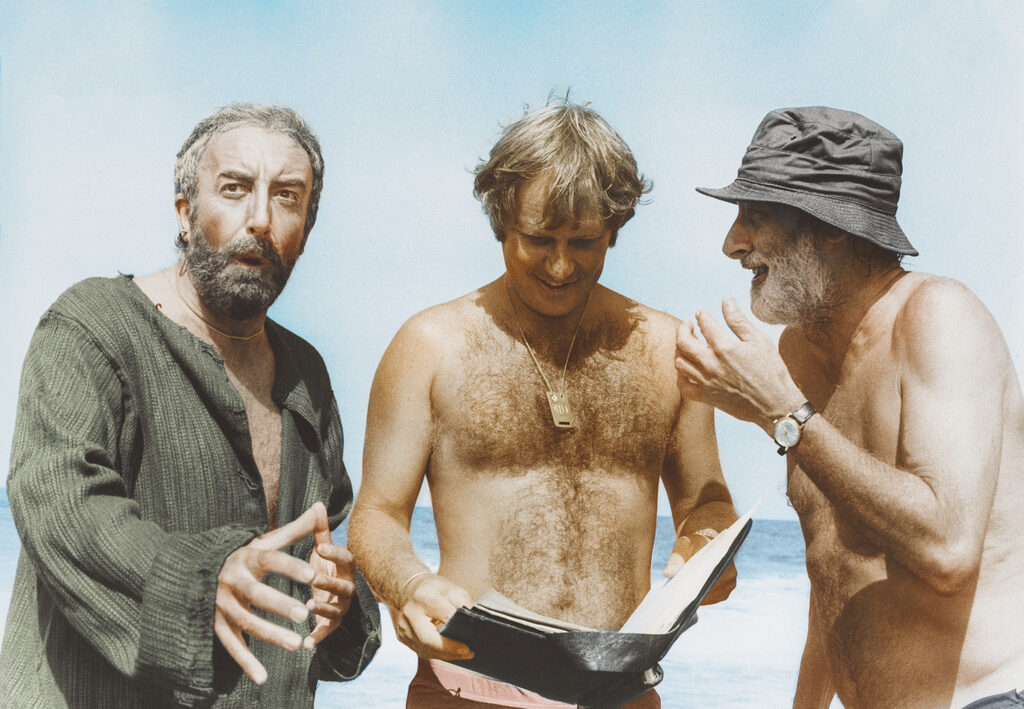
Peter Sellers (left), Peter Medak and Spike Milligan on the set of “Ghost in the Noonday Sun,”
The Hungarian-born filmmaker Peter Medak survived Nazi occupation during World War II and communism under the Soviet umbrella. But Peter Sellers was a force of nature all his own.
By many accounts, the British comic genius severely damaged Medak’s career when in 1973 he enticed the director to make a pirate comedy concocted by friend and cohort Spike Milligan, then decided on the second day of filming he didn’t want to be a part of it. That was the beginning of a nightmarish shoot that would end with the disastrous “Ghost in the Noonday Sun” being shelved and the blame heaped on Medak, who was one of the hottest directors in the world going into the shoot, but afterward wouldn’t make another film for five years.
But Medak’s new documentary “The Ghost of Peter Sellers,” while intending to set the record straight, isn’t a hit piece on Sellers, but a nuanced portrait of a troubled, often self-destructive talent. And it is an introspective piece from a filmmaker who still, nearly a half-century later, lives with the guilt and psychological wounds from the experience that need addressing. Continue reading “Review: ‘The Ghost of Peter Sellers’ revisits an outlandish film and its troubled minds”→
As the cathedral in Chartres reopens, sacred and profane struggle with Covid-19 constraints
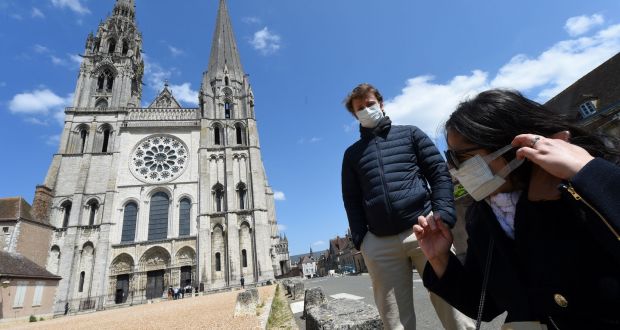
The French poet Charles Péguy described Our Lady of Chartres as a star of the sea, rising above oceans of wheatfields on the plains of La Beauce.
It is more prosaic to approach the Gothic masterpiece from the autoroute, but its majesty is nonetheless stunning.
I visited Chartres because it falls within the 100km “perimeter of liberty” accessible to Parisians under Covid-19 regulations.
The cathedral’s website announced that it would reopen to visitors on the afternoon of May 14th. They would be required to wear masks. Fifty could enter at a time, if they observed social distancing.
The rules changed overnight. The prefecture, the arm of the interior ministry which is responsible for religious affairs, grew alarmed at the prospect of Parisians flocking to the beauty spot 86km to the southwest of the capital.
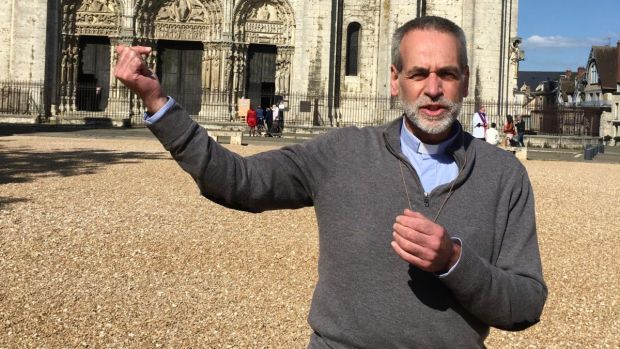
“This is the contradiction we’ve been living with since the beginning of the epidemic,” Fr Emmanuel Blondeau (56), the rector and parish priest, said. “The state says: ‘Stay at home but go to work. We’re lifting the lockdown but don’t move. Don’t go to Chartres, which is the most beautiful town in France.’”
Father Emmanuel Blondeau, rector of Notre Dame de Chartres cathedral on the day the Gothic and Romanesque church reopened to townsfolk and people wishing to pray. Photograph: Tala Skari
They don’t understand what Mass means to Christians. They think it doesn’t matter, but it matters to us
In its guidance, the FDA said that hydroxychloroquine has “not been shown to be safe and effective for treating or preventing COVID-19.” – Source: Business Insider
“Here’s what’s crazy:We don’t know whether the President of the United States is self-prescribing hydroxychloriquine against all medical advice, or is lying that he is so that OTHERS will take it against all medical advice. The fact that each seems plausible is totally insane.” – Joshua A. Geltzer, Former White House, DOJ
A trawl through the history of the Palme d’Or yields streaming gems from Brief Encounter to Blow-Up, The Leopard to The Square
Bring out your tiniest violins: in a normal year I’d be writing this column from the balmy French Riviera, with a glass of rosé at my side, amid the annual Cannes film festival. That, of course, has all been called off. For the first time since the second world war – not counting the time things shut down halfway through amid the May ’68 movement – the festival has admitted no Cannes do.
A year without Cannes leaves the arthouse release schedule a bit disoriented: traditionally, UK distributors pick over the festival’s highlights for the next year and beyond. (At Curzon Home Cinema, for example, you can currently stream Portrait of a Lady on Fire and The Whistlers, both plucked from last year’s Cannes competition.) Through the miracle of streaming, however, you can curate your own festival of past Palmes d’Or to treasure. Continue reading “Curate your own Cannes film festival”→