Trump has butchered America’s regulatory infrastructure

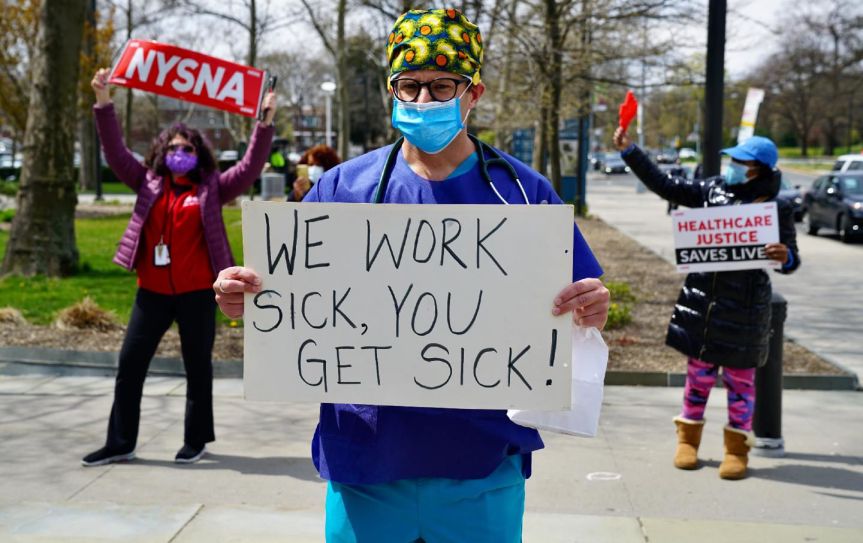
Recent rules changes lock into place weaker environmental, workplace safety, and labor standards, and escalate the assault on legal immigration.

In the frantic scramble toward November 3, there’s a huge amount of Noise distorting the Signal. There are the flashback-inducing idiotic “lock her up!” chants at Trump rallies, this time aimed at Michigan Governor Gretchen Whitmer—who was recently the target of a kidnapping plot hatched by pro-Trump militia members. And there’s Trump’s chilling response, “Lock ’em all up,” the “all” presumably being everyone in the political arena who doesn’t fall into lockstep with Trump’s worldview. There’s Steve Bannon urging Trump’s “troops to back him up” and protect whatever “victory” an embattled No. 45 may try to declare before all the votes are counted. And there’s Rudy Giuliani, who continues to disseminate whatever propaganda tidbits the Russian intelligence agencies care to send his way.

Now, more than ever, it’s crucial to filter out all this Noise. For, if anything, the closer we get to the election, the faster the pace of real change in the political arena will be. The Trump administration is doubling down on its assault on America’s regulatory infrastructure. The New York Times recently reported on a crescendo of rules changes that lock into place weaker environmental, workplace safety, and transportation protections; that eviscerate labor standards; and that escalate Trump’s assault on the legal immigration process.

While it’s standard operating procedure for vulnerable incumbents to try to secure their agenda while they still can, this administration has taken that practice to an extreme. It is essentially bypassing the public-comments period required for major alterations to existing regulations and rapidly implementing fundamental regulatory changes without adequately studying their likely impact.

Continue reading “Trump has butchered America’s regulatory infrastructure”

Montmartre: Can Paris’s art and cabaret district survive Covid-19?

The Paris area of Montmartre is known for its artists and cabarets, dating back to the days when it was a haven for the likes of Van Gogh and Picasso. It’s normally packed with tourists but since Cov…

Source: Montmartre: Can Paris’s art and cabaret district survive Covid-19? – Encore!

Kill a man

Tuer un homme, au nom de Dieu qui plus est. L’Histoire est remplie de ces épisodes féroces et tragiques. Mais « Tuer un homme, ce n’est pas défendre une idée. C’est tuer un homme », disait le théologien protestant Sébastien Castellion. Ce cri résonne à nouveau avec force, après l’ignoble exécution de Samuel Paty, professeur d’histoire-géographie au collège du Bois-d’Aulne à Conflans-Sainte-Honorine (Yvelines), le 16 octobre 2020. L’édito d’Alain Cabantous [ . . .]

Continue at ST. MERRY: Killing a man … – Center pastoral Saint-Merry

Why French Winemakers Are Welcoming Bats to Their Vineyards

Bats in the vineyardThe winged creatures may help the wine industry salvage a terrible year

It’s not such a batty idea: Bordeaux wine producers are building bat-friendly habitats on their vineyards to help eradicate the issue of grapevine moth and grape berry moth infestation.

And in doing so, they’re hoping to salvage a beleaguered French wine industry that’s suffering not only from pests but high tariffs, climate change and the on-going COVID-19 pandemic, all of which is decimating sales of high-end wine bottles.

As Forbes reports, wine producers in France are creating strips of grass between the vines and building bat boxes; the hope is that the insect-eating mammals will eradicate the moths that cause botrytis, a gray mold that’s seriously hurt the industry before, particularly Champagne.

A Bordeaux-based scientist has been catching bats in nets and testing for the moths in their digestive systems; unfortunately, even their presence can’t prove if the yields will increase, as there are too many factors (such as climate) that change every year.

Source: Why French Winemakers Are Welcoming Bats to Their Vineyards – InsideHook

In conversation: A French and American take on Emily in Paris

Emily in Paris is everywhere: causing people to rage on social media, making us dream of booking tix to Paris again (someday!) and paused on TV screens, as people WhatsApp their friends to moan about how unrealistic Emily’s (Lily Collins’) stratospheric social media success is – who gets 200 new followers after posting a photo of baked goods? – and then swooning over how gorgeous Frenchie Lucas Bravo (Emily’s neighbour, Gabriel), is.

Critics – in the US, UK and France – have complained that it’s clichéd, ridiculous, lacks diversity and is deeply culturally offensive. However, it’s also totally addictive, even if people are hate-watching it, with a viewership that includes teens, their parents, and every Sex and the City fan who was excited about the premise of sex – and Pat Field styling – in another city.

For those who haven’t seen it, Emily in Paris centres around Chicagoan Emily, who gets sent to Paris to work for a top French marketing agency when her boss falls pregnant. Clueless about the language and culture, she makes a series of faux pas that sees her branded a plouc (a hick) and ringarde (basic). But Paris is soooo beautiful and Emily’s boss, Sylvie (Philippine Leroy-Beaulieu) and friend, Camille (Camille Razat), are soooo stylish, and the men are soooo dreamy…

One reason that Emily’s got everyone talking is that it touches on the big cultural divide between France and America. Who better to discuss the show then a Frenchwoman (CW founder Eleonore Dresch) and an American, kids’ editor, Jennifer Barton.
Continue reading “In conversation: A French and American take on Emily in Paris”