Two by Two

A London exhibition of work by famous artistic couples reveals the tensions of partnership

The pioneering modernists of the first half of the 20th century are most often hailed for their individual genius. A new exhibition shifts this perception by focusing instead on artistic couples. “Modern Couples: Art, Intimacy and the Avant Garde,” which opens at the Barbican Art Gallery in London on Oct. 10, examines the output of 40 such couples whose lives became indelibly linked through love and art. The exhibition features some of the leading artists of the 20th century, including sculptors Auguste Rodin and Camille Claudel, painters Frida Kahlo and Diego Rivera, and photographers Man Ray and Lee Miller.

The exhibition “is really making an argument that developments in modern art often resulted from a creative dialogue which was very often within the couple,” says Jane Alison, one of the show’s four curators. These developments included modernist movements such as Tactilism, a genre of mixed-media installations, which was developed by the Italian couple Benedetta Cappa and Filippo Tommaso Marinetti; and Rayism, a style of abstract art, created by the Russian couple Natalia Goncharova and Mikhail Larionov.

“We wanted to show that desire has a centrality within the avant-garde and modernity,” Ms. Alison says. “There is an undercurrent of sexuality infusing many of the art works which expresses this intimate access to the other.” The theme of sexual desire is starkly apparent in the work of artists like Claudel, who mined Indian literature for her terra-cotta studies of “Sakountala,” (1886) depicting a couple in a sinuous embrace. In his long-gestating installation “Étant donnés” (1946-1966), Marcel Duchamp made a cast of the body of his lover, the Brazilian sculptor Maria Martins, and the nude photographs Man Ray took of Miller pointed toward a new form of corporeal abstraction.

Robert Delaunay’s ‘Circular Forms: Sun No. 2’ (1912-13)
Robert Delaunay’s ‘Circular Forms: Sun No. 2’ (1912-13) PHOTO: CENTRE POMPIDOU, MNAM-CCI, DIST. RMN-GRAND PALAIS/JACQUES FAUJOUR

Altogether there are over 300 works of art on display in “Modern Couples,” by artists from Europe, Russia, the U.S. and South America. The exhibition also features numerous photographs and letters that attest to the artistic complicity many of these couples enjoyed. Alexander Lavrentiev, a lecturer in design and photography in Moscow who contributed a biographical essay in the exhibition catalog, recalls reading a letter that his grandfather, the influential Russian painter and graphic designer Alexander Rodchenko, wrote to his artist wife Varvara Stepanova during World War II. “My grandfather had returned to Moscow from the Urals, where my grandmother had to stay on,” says Mr. Lavrentiev. “He wrote that he couldn’t work because he found it difficult to live without her and that she was his engine.”

Mr. Lavrentiev likened his grandparents’ relationship to that of the French abstract painter couple Sonia and Robert Delaunay, whose experiments in “color rhythms” were in constant dialogue with one another. “There was a trend of equality which had begun,” he says. “My grandmother became a textile designer in the 1920s but only after fighting for her position in a print shop, which had always been a male-dominated field.”

Ms. Alison says that one of the aims of the exhibition is to “give due recognition to the women artists in the duos whose work has been unjustly marginalized.” She points to the example of the Hungarian photographer László Moholy-Nagy’s wife Lucia Moholy, who is largely unknown today. “She was the one who had trained to be a photographer, and it was in her darkroom that the couple experimented with the photograms which have shaped the way we view the Bauhaus today,” Ms. Alison says. These pictures produced with photosensitive materials, but without a camera, expanded the Bauhaus’s vision of photography as a way of imagining new worlds.

There are very few cases in the exhibition, however, where the female partner eventually outshines her male counterpart, as with Kahlo and Rivera. The Mexican couple, who painted each other for 25 years, were on an equal artistic footing for much of their lives, but Kahlo’s posthumous reputation has grown to be far greater. More typical are artistic couples where the woman saw her career almost entirely eclipsed by her partner. This was certainly the case with Claudel, whose sanity floundered when she tried to break away from the influence of her lover and mentor Rodin.

The same thing happened to Dora Maar, whose confidence Ms. Alison says was shaken when her lover Pablo Picasso persuaded her to abandon photography, where her real talent lay, and take up painting, with inauspicious results. One of Maar’s photographs in the exhibition, “Picasso en Minotaure,” captures her ambivalent feelings toward the Spanish artist’s machismo by shooting him in a pair of tight swimming trunks holding aloft a bull’s skull. “Modern Couples” makes clear that, for many women artists, being part of a creative pair involved obstacles men never had to face.

Dora Maar’s ‘Picasso en Minotaure, Mougins’ (1937)
Dora Maar’s ‘Picasso en Minotaure, Mougins’ (1937) PHOTO: CENTRE POMPIDOU, MNAM-CCI, DIST. RMN-GRAND PALAIS/PHILIPPE MIGEAT

Source WALL STREET JOURNAL: Two by Two – WSJ

Gauguin Review

The conceptual dullness of the new French biopic Gauguin: Voyage to Tahiti hit me especially hard, since I was fired up to see those Tahitian pictures after a June trip to Paris and the Musee D’Orsay, where many of them reside. Have you been to a highly-touristed art museum lately? It used to be that if you wanted to get close to study the brush strokes it was a guard who’d ask you to step back. Now, it’s people who yell at you for blocking their iPhone photos. The museum’s Postimpressionist area would be a great place to get lost, but, like Paul Gauguin, it ends up making you want to flee civilization for shady pandanus glades halfway around the world — preferably without Gauguin’s raging syphilis.

The syphilis isn’t mentioned by name in Gauguin: Voyage to Tahiti, although Gauguin has an unspecified cough that will obviously be fatal, because in biopics there is no such thing as an inconsequential cough. But as played by the febrile Vincent Cassel, this Gauguin seems too tightly wound for sex. The image of Gauguin the voluptuary eating and screwing and painting naked Tahitian women might be a cliché, but the director, Edouard Deluc, has gone to the other extreme. Although the script is based on Gauguin’s own writing, the film presents him as such a gloomy Gus that he might have swapped souls with his onetime pal Van Gogh.

The movie opens in France, where Gauguin is stricken that his oh-so-proper wife won’t come to Tahiti with the kids — though I imagine she’d have put a crimp in his lifestyle if she had. He does need her family money, since rich people are finding his latest works a mite unruly. He’s also dismayed that none of his fellow painters or acolytes will abandon Paris for distant French Colonial paradises. What Deluc gets right is that Gauguin, like most great artists but few in great-artist biopics, spends most of his time not carousing but sitting in front of canvases. What doesn’t come through is how entwined in Tahiti Gauguin’s various impulses were. The artist tells a doctor friend, “I paint and draw all day long and live in harmony with everything around me,” but you don’t see Buddhist oneness in Cassel’s face, especially as he ages into someone resembling Fagin. Non-transcendental, too, are composer Warren Ellis’s somber cellos and violins [. . . ]

Continue at THE VULTURE: Gauguin Review

Christie’s Revives the Market’s Mood With a Strong $168 Million Impressionist and Modern Sale in London 

Claude Monet
Claude Monet’s La Gare Saint-Lazare, vue extérieure (1877)

The solid auction was led by a rare $32.8 million Monet and Picasso’s portrait of Dora Maar, which fetched $25.4 million [ . . . ]

Continue at ARTNEWS: Christie’s Revives the Market’s Mood With a Strong $168 Million Impressionist and Modern Sale in London | artnet News

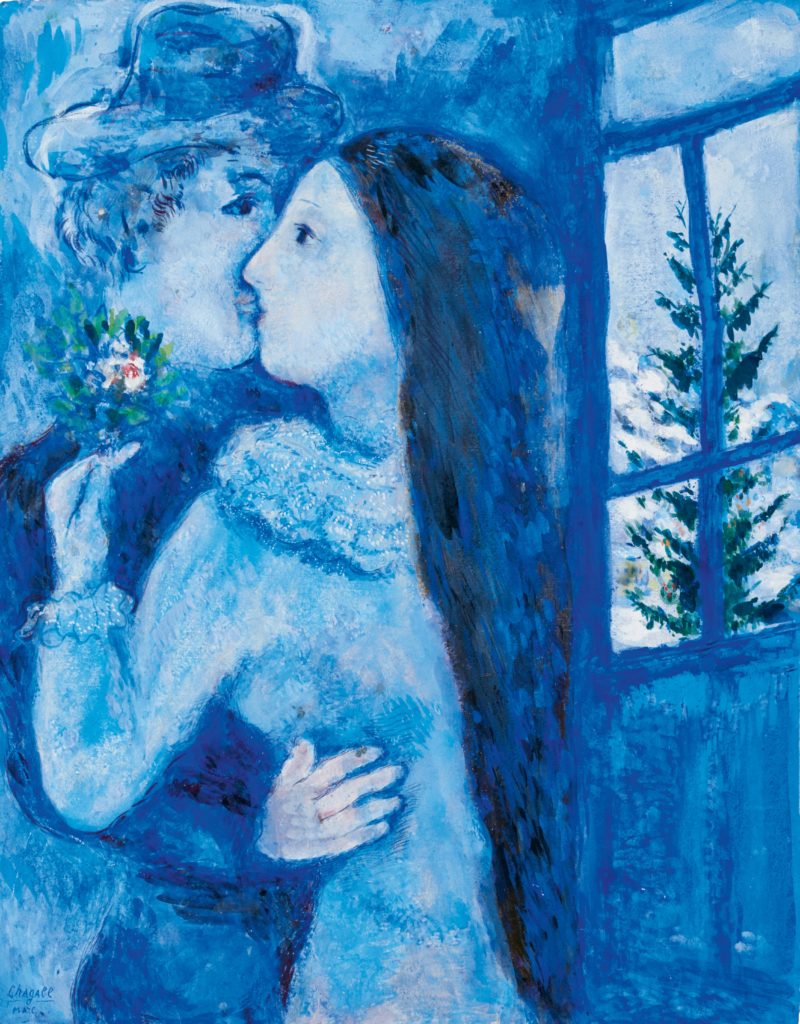
Chagal

Picasso
Pablo Picasso’s Femme dans un fauteuil (Dora Maar) (1942)
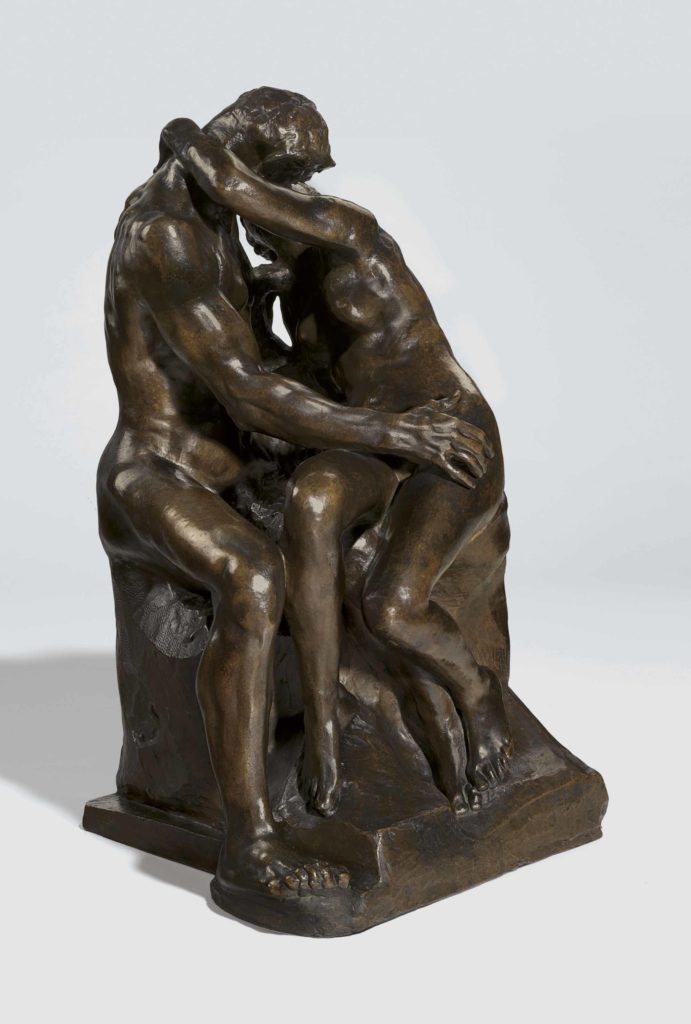
Rodin
Auguste Rodin’s Baiser, moyen modèle dit “Taille de la Porte”–modèle avec base simplifiée (1885/1890)
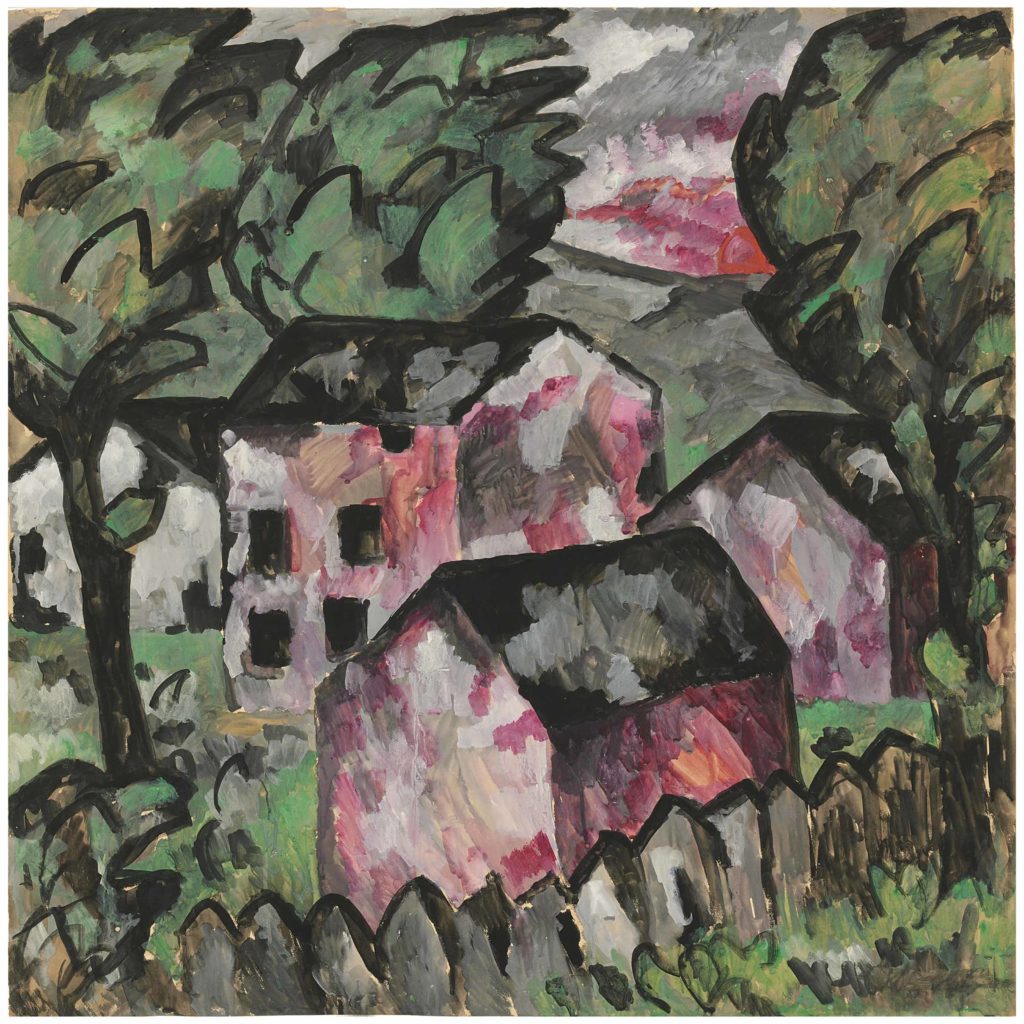
Malevich
Kazimir Malevich’s Landscape (1911)

Amadeo Modigliani lived hard, died young, and is on display in London 

The Jewish-Italian artist womanized, drank, and did drugs — and in his 35 years created an impressive oeuvre, now showing in a blockbuster exhibit at Tate Modern

Despite this, Modigliani’s output was considerable and his work is currently the subject of a blockbuster exhibition at Tate Modern, in London.

His major retrospective is the most comprehensive Modigliani exhibition ever held in the United Kingdom. With over 100 works, it brings together a range of his portraits, landscapes, sculptures and 12 of his iconic, languorous, female nudes, some of which have never been shown in the UK before.

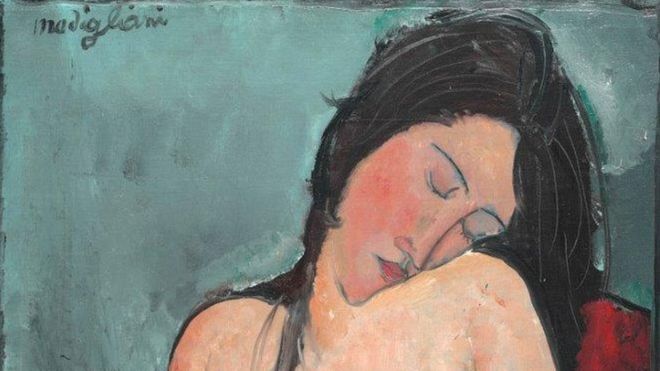
These seductive figures, such as “Reclining Nude on a White Cushion” (1917), “Female Nude” (1916) and “Seated Nude” (1916) constitute many of his best-known works today. But in the early 20th century, the provocative paintings proved controversial, shocking the French establishment.

In 1917, they were included in Modigliani’s only solo exhibition in his lifetime, but were subject to censorship on grounds of indecency: A police commissioner objected to Modigliani’s depiction of pubic hair, finding it offensive [ . . . ]

Read full story at THE TIMES OF ISRAEL: Amadeo Modigliani lived hard, died young, and is on display in London | The Times of Israel

Modigliani masterpiece on display at Ulster Museum

World famous painting goes on display after being loaned by the Courtauld Institute in London.

Female Nude, 1916′ by the Italian artist Amedeo Modigliani is on loan from the Courtauld Gallery, London.

When the painting was initially shown in Paris a century ago it created a scandal.

An exhibition containing it and a number of other Modigliani nudes was closed by the French police.

However, the reception for the masterpiece on its first day of public display in Belfast was much warmer.

“Of all the various nudes that he did, this is one of the most important,” one early viewer told BBC News NI.[ . . . ]

“There’s an immediacy and physicality” says senior curator Anne Stewart

Read Full Story at Source: Modigliani masterpiece on display at Ulster Museum – BBC News

Paris’ Pompidou Centre hosts a May 68 happening, 50 years on

The Pompidou Centre in Paris hosts the ‘Mai 68 Assemblée Générale’ happening to mark the 50th anniversary of May 68 in France. The event runs until 20 May.

In May-June 1968 massive student protests and strikes across France nearly brought down President Charles de Gaulle and his government.

Fifty years on, the Pompidou Centre hosts in Paris a happening called ‘Mai 68 Assemblée Générale’.

May 68 posters and slogans

Graphist artist Philippe Lakits will reinterpret the slogans and posters of May 68 in a 60 metre long frieze designed for the event.

The May 68 slogans have had a powerful impact in a France without newspapers, radio or television, which were all on strike at the time.

Most of the May 68 posters were produced in the Ateliers populaires (People’s Workshops) that art and graphic design students will try to revive in the Pompidou Centre Forum.

According to the event organiser Romain Lacroix, the main May 68 topics on the posters are nowadays ‘somehow irrelevant:

Feminism was hardly touched on, now it’s much more to the fore. Ecology was also neglected, even if the Larzac became an issue… these are issues that are of interest to the younger generation.

Besides the picture frieze, debates and conferences will take place in a mobile lecture hall designed by Olivier Vadrot.

Georges Pompidou and May 68

The Pompidou Centre has a specific link to May 68.

Georges Pompidou, who was General de Gaulle’s prime minister at the time, managed the crisis while he was bringing it to political closure.

In 1969 after being elected president, Pompidou decided to to have an arts centre built which opened ten years later in 1977.

We can see clearly how it’s a question of how to make protest part of the museum. It’s due to the fact that the first artists whose works were shown at the Pompidou Centre in 1977 were those demonstrating on the streets in 68.  [ . . . ]

Continue at Source: Paris’ Pompidou Centre hosts a May 68 happening, 50 years on – culture – RFI