US agrees to hold off tariffs on French wine

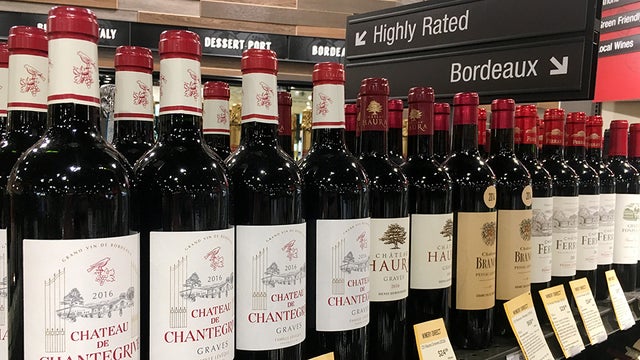
The US President Donald Trump and French President Emmanuel Macron have agreed to hold the tariffs on French wine until the end of this year.

Wine cellar

Last December, the US government announced that it is planning to implement 100% tariffs on $2.4bn worth of French goods as a response to France’s digital services tax.

The tariff will be implemented on wine and other French products, such as Le Creuset Dutch ovens, Hermès handbags and Roquefort cheese, announced Trump.

US-based wine importers protest that Trump’s tariff decision on French wine will impact their livelihoods.

The digital service tax is aimed at American companies such as Google, Apple, Facebook and Amazon (GAFA).

The French government also previously announced it will be imposing a 3% tax on the annual revenues of the US-based technological companies.

However, recent discussions between the Presidents have reportedly calmed the situation to some extent.

According to French diplomatic personnel, who addressed various media agencies, Macron and Trump have agreed to hold the tariff implementation plans and focus on continuing negotiations on digital tax at the Organisation for Economic Cooperation and Development (OECD).

President Macron tweeted saying he had a ‘great discussion’ with President Trump and that the two countries would ‘work together on a good agreement to avoid tariff escalation.’

Currently, a 25% tariff has been implemented by the US government on French wine due to Airbus trade dispute.
Source: US agrees to hold off tariffs on French wine

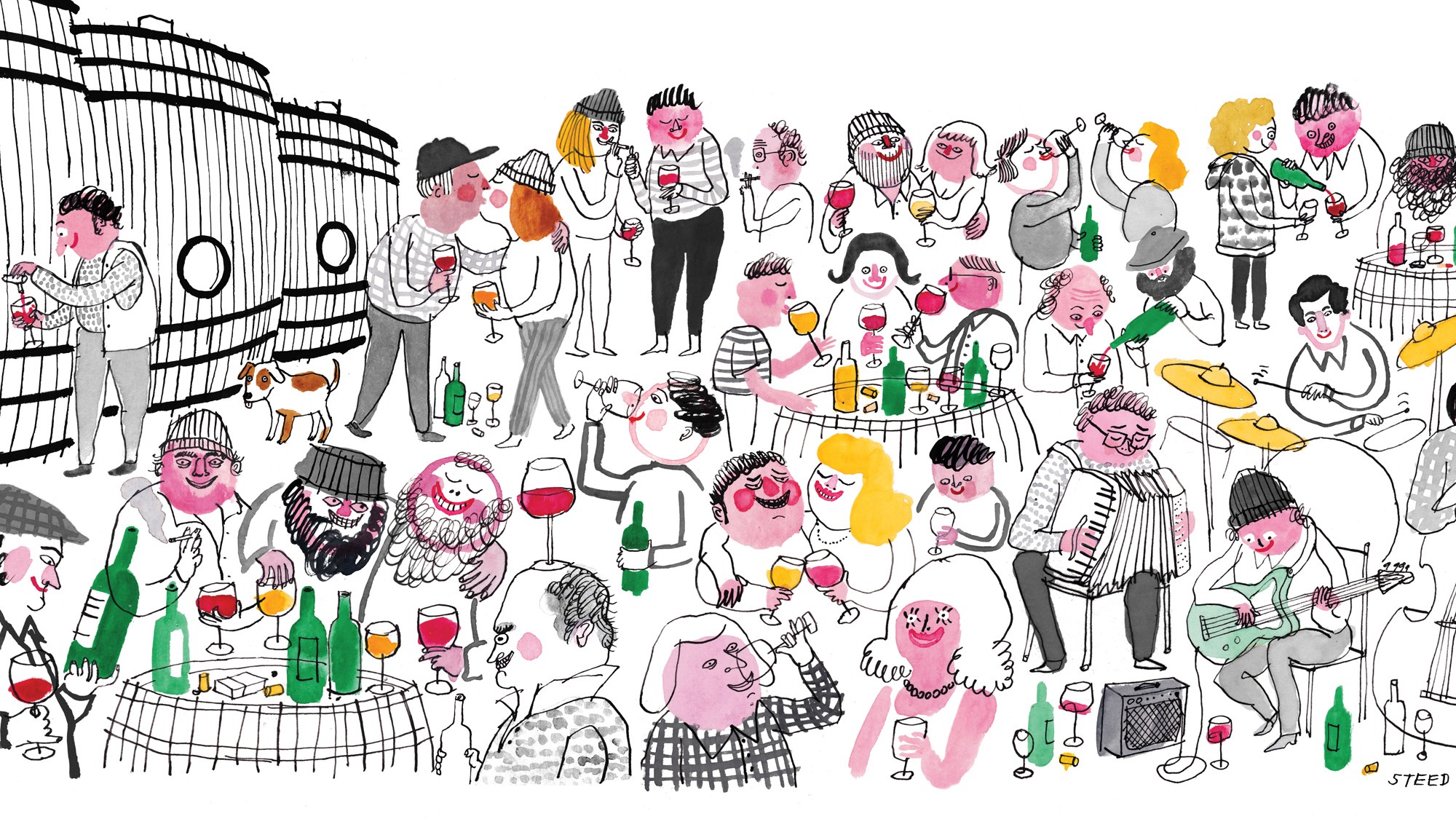
My Totally Racous, Très French, Super Wine-Soaked Weekend in the Loire

At an epic gathering of natural winemakers in France’s verdant river valley, I slurped oysters and downed magnums and got a sense of what makes this community, and its wine, so special.

Let’s get one thing straight: I know very little about wine. I drink a lot of it,
sure—the natural stuff more specifically, which as far as I understand it is a loose, poorly defined term that more or less refers to wine made by small producers without the addition of weird chemicals and with the addition of eye-catching labels. But compared with the friends and sommeliers whose oenological ramblings I excitedly nod along to, I often feel like a poseur. I know my way around a wine list, but at the end of the day, I’m a sucker for bottle art. I will always order the hypebeast wine I recognize from Instagram. I use the word funky too often. My wife, Lauren, and I went to a hip wine fair once and bought a poster we had seen in hip wine bars and hip wine stores because we thought it looked cool, not because we knew anything about “Catherine et Pierre Breton,” the French winemakers whose names were scrawled across the bottom. It hangs above our dining room table, and when we’re having our Wine Friends over, I’m always nervous someone will ask me about it, the same way 13-year-old me prayed older kids wouldn’t see my Sex Pistols T-shirt and ask questions about a song that wasn’t on the greatest hits album.

Continue reading “My Totally Racous, Très French, Super Wine-Soaked Weekend in the Loire”

French wine, cheese targeted in latest Trump trade fight

French wine tariff

Industry groups are sounding the alarm on President Trump’s proposal to hit $2.4 billion in French goods with tariffs, warning that the latest trade salvo will affect a broad array of goods and its effects fall on U.S. consumers and small businesses.

The administration has proposed tariffs on a wide number of French products, including cheese, sparkling wine and Champagne, beauty products, handbags and home goods, in retaliation for a French tax on online services that targets American tech giants such as Google and Amazon.

Trade watchers warned the scope of the tariffs would be broad and lead to stark price hikes for consumers.

In 2018, the average tariff rate on French imports was 2.9 percent, according to the National Retail Federation (NRF). Under Trump’s tariffs, new taxes could be up to 100 percent for many goods. Continue reading “French wine, cheese targeted in latest Trump trade fight”

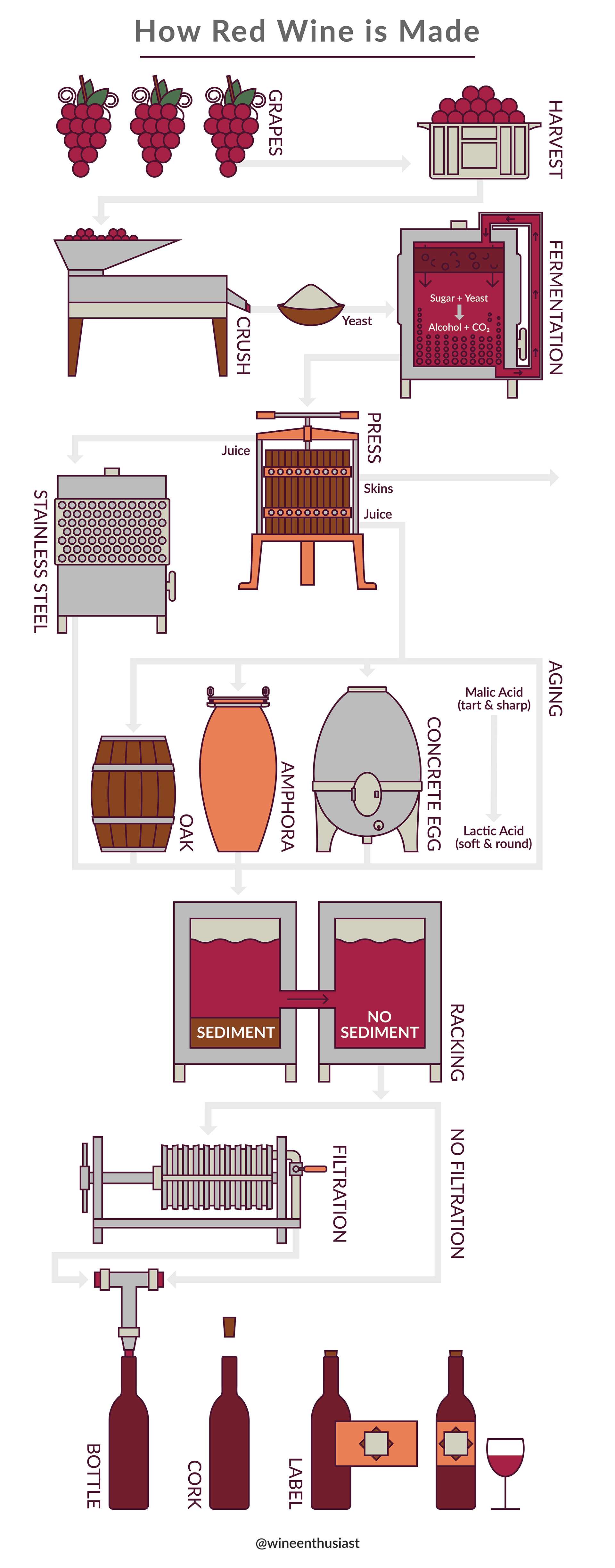
How Red Wine is Made 

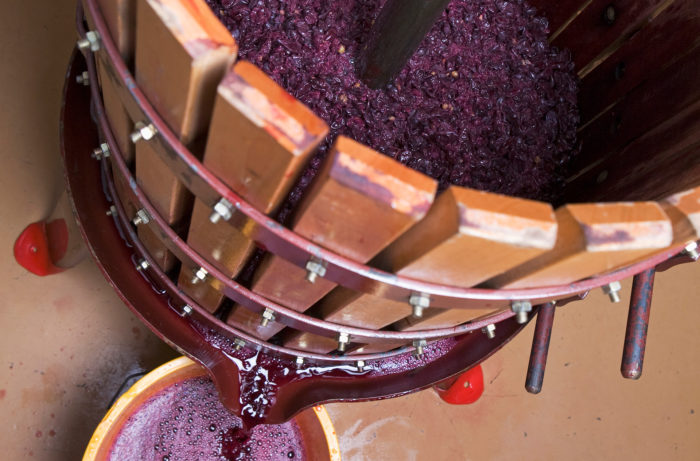
Wineries make red wine today much the same way they did 6,000 years ago in Greece and Persia. Dark-colored grapes are harvested, crushed, fermented, stirred and separated from the skins by a press. Voila! Red wine.

Better containers, presses and cellars have increased quality and efficiency of red wine production many times over, but it’s still essentially a simple process. Red wine production requires no cooking or ingredients besides grapes, yeast and, usually, sulfur dioxide as a preservative.

Red wine is made on the skins

Red wine is made like white wine, but with one major difference. Generally, it ferments with the grape skins and juice combined in a tank or vat. White wines are pressed before fermentation, separating the juice from the skins.

The skin contact in red wine production allows color, flavor and textural compounds to be integrated into the juice, while the yeast converts sugar to alcohol. The skins contain most of the good stuff that gives red wine its color, while the pulp mostly provides the juice.

Harvesting red-wine grapes and the crush

Red wine grapes are ready to harvest in late summer to early fall, several weeks after the initial green color of the grapes has turned to dark red or blue-black, a period called veraison.

Vineyard crews cut the grape bunches or clusters from the vines. That’s either done by hand or a self-propelled machine that shakes or slaps the grapes off their stems and collects the individual berries and juice.

Delivered to the winery, winemakers can also sort out mildewed grapes, unwanted raisins, leaves and debris. Clusters then go through a destemmer/crusher that removes the whole grape berries from the stems and may squeeze them slightly to get the juice flowing. Any juice created at these stages prior to pressing is known as free run. Machine-harvested grapes are already ready to ferment. Continue reading “How Red Wine is Made “

Trump’s Cheese Tariffs May Be His Most Normal Trade Policy

If you’re a fan of European cheeses, I’m sorry to report the price outlook is not Gouda.

The U.S. and the European Union have a long-running trade dispute over airplane subsidies. Each side alleges that the other is subsidizing its major commercial-aircraft manufacturer (Boeing and Airbus, respectively) in violation of World Trade Organization rules. The WTO says both sides are right: Boeing and Airbus both receive improper subsidies. Soon, the WTO will say how much in retaliatory tariffs each side may impose to punish the other for these violations. And in preparation for that decision, the U.S. has prepared a list of $25 billion worth of European exports we might subject to 100 percent tariffs.

The list reads like an order sheet from Dean & DeLuca.

Tariffs may be applied to cheeses including Gouda, Stilton, Roquefort, and Parmigiano-Regianno. Olive oil. Olives. Dried cherries. Apricot jam, peach jam, currant jelly, pear juice. Ham, including Proscuitto di Parma, Jamón Ibérico, Jambon de Bayonne and any of the other delicious European hams. Wine. Whiskey. Brandy (e.g., Cognac). If you might buy it to throw a fabulous cocktail party, it may soon be subject to a prohibitive tariff.

Meanwhile, the EU has released its own list of goods it might tariff because of our subsidies to Boeing — it includes live lobsters, orange juice, and rum.

Donald Trump, who doesn’t drink, says you shouldn’t worry about wine tariffs because the best wines are American anyway. But while high tariffs that upset coastal snobs would seem to combine two of Trump’s passions, his strategy of threatening these tariffs is actually one of the more ordinary parts of his trade policy. Long before Trump was president, the U.S. and Europe have exchanged punitive tariffs on luxury and specialty goods as tools to push for resolutions to valid trade grievances [ . . . ]

Read Full story at INTELLIGENCER: Trump’s Cheese Tariffs May Be His Most Normal Trade Policy

How to Taste Wine Like a Pro in Three Easy Steps 

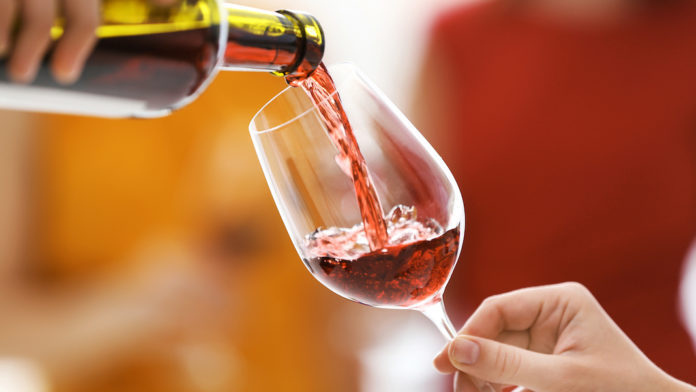
Just taking a sip is not the right way to taste wine. Fortunately, learning the process to taste wine doesn’t take too long.

1. Appearance

First, you hold your glass by the stem, not up around the top as you can often see in movies and TV series about wine. Look at everything: the appearance of the wine, which must be brilliant and clear; the color, whose depth, intensity and nuances give information about the grape variety or varieties, and its evolution which indicates the possible age of the wine. For example, for a red wine with an earthy red color, you would call it “brick,” which indicates that you are dealing with a rather old wine. The same goes for a white the color of old gold.

2. Smell

The next step is to bring out the aromas, rotate the glass a little. Professionals do it with their arms in the air, but a neophyte risks spilling and staining their clothes. Let your arms rest on the table and create a circular movement that will “shake” the wine and allow it to release aromas.

Using your nose, you can perceive any defects: the smell of cork or sometimes something musty, toasted. This is probably what is called reduction, as opposed to oxidation. This is a sign that the wine needs air; a decanter should help free it. The aromas must be clear and expressive. They could be primary and reminiscent of fresh fruit, with hints of vanilla, characteristic of barrel aging, or more or less evolved, attesting to a long stay in the cellar.

3. Flavor

Finally, it is in the mouth that you get a definitive idea of the wine by perceiving, through feedback, the heaviest aromas, and by tasting the flavors. The acidity, sweetness and bitterness (which attest to, among other things, the presence of tannins) constitute the body of the wine. What you’re looking for is an attractive harmony, an equilibrium, and above all, the answer to the only question that is worth asking: do I like this wine?

This article was first published on Le Point

Source: How to Taste Wine Like a Pro in Three Easy Steps – Frenchly