
Tag: Pauline Croze
A favorite of Pas de Merde, Pauline Croze is a French pop/folk singer and musician. She was born 4 May 1979 in Noisy-le-Sec.
She started to sing and play the guitar when she was fourteen and six years later she made her first demos with Quito of the group Señor Holmes. At this time she made her very first appearance on stage.
In 2003, she collaborated with Anne Claverie and Édith Fambuena of the Valentins in Transmusicales de Rennes, a work for which she is very well known.
She played as the support of Miossec, -M-, Bernard Lavilliers, Cali, Tryo or Lhasa.
In 2011, she collaborated with fellow French musician, Ben Mazué on his single, C’est léger, from his debut album.
Her first album Pauline Croze was released in February 2005, followed by Un bruit qui court in 2007. Her third album, Le Prix de l’Eden was released on 22 October 2012. She released Bossa Nova in 2016.
– Wikipedia
Listen to “The French Connection” Ep. 8

This Sunday’s FRENCH CONNECTION on WRIU 90.3 FM mourns the end of Summer with a theme, “Seasons in the Sun”
By Michael Stevenson
( This program originally aired on WRIU, Kingston, 90.3 FM on Sunday, August 24 )
“Seasons in the Sun” playlist, THE FRENCH CONNECTION :: WRIU 90.3 FM :: August 24, 2025:
- Gilbert Bécaud “Plein Soleil” (1964)
- Brigitte Bardot “La Madrague” (1963)
- Yael Naem “Playground Family / You Have Always Been” (from the Original Motion Picture Soundtrack Mon Bébé) 2019
- Jeanne Cherhal “Canicule” (2006)
- Françoise Hardy “Soleil” (1970)
- Toots Thielmans “Theme From Summer of ’42” (M. Legrand) rec. 1987 live concert
- Yves Montand “Les Feuilles Mortes” (m.Jacques Prévert, l.Joseph Kosma) lyrics for “The Autumn Leaves” by Johnny Mercer (recorded 1952)
- This Is the Kit “Recommencer” (Kate Stables, 2021)
- Henri Salvador “Jardin d’Hiver” (Henri Salvador, Keren Ann & Benjamin Biolay, 2000)
- Django Rheinhardt & the Quintet of the Hot Club of France “September Song” (m.Kurt Weil, l.Maxwell Anderson) recorded 1947
- Blossom Dearie “It Might As Well Be Spring” (Rogers & Hammerstein, recorded 1957)
- Jack Kerouac “October” (reading)
- Francis Cabrel “Octobre” (1994)
- Black Box Recorder “Seasons in the Sun” (Jacques Brel, recorded 1998)
- Camille Saint-Saëns “Carnival of the Animals” (composed 1886)
I Tell You It Is October!
by Jack Kerouac
There’s something olden and golden and lost
In the strange ancestral light,
There’s something tender and loving and sad
In October’s copper might.
End of something, old, old, old…
Always missing, sad, sad, sad…
Saying something…love, love, love…
Akh! I tell you it is October,
And I defy you now and always
To deny there is not love
Staring foolishly at skies
Whose beauty but God defies.
For in October’s ancient glow
A little after dusk
Love strides through the meadow
Dropping her burnished husk…
“I Tell You It Is October” appears in Jack Kerouac Collected Poems, published by The Library of America in 2012
Listen to “The French Connection” Ep. 7

This Sunday’s FRENCH CONNECTION on WRIU 90.3 FM celebrates the musical scores from four wonderful French films: Les Choristes from 2011, Amelie from 2001, Ascenseur pour L’échafaud from 1957, and Black Orpheus, from 1959.
( This program originally aired on WRIU, Kingston, 90.3 FM on Sunday, August 17 )
Notes:
Our guest in studio is mon ami Wayne Cresser, host of Picture This: Film Music on the Radio.
FIRST SET: from “Les Choristes” (2011) | Composed by Bruno Coulais; Performed by the Bulgarian Symphony Orchestra, with the boys choir Les Petits Chanteurs de Saint-Marc.
– “Les Avions En Papier”
– “Vois Sur Ton Chemin (Les Choristes)”
– “La Nuit”
– “Compère Guilleri”
– “Lueur D’été”
– “Cerf-Volanther notables”
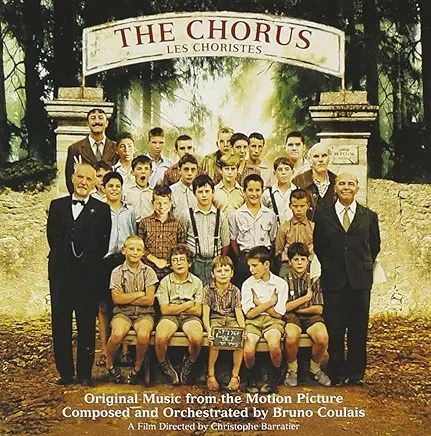
The story of Les Choristes was inspired by the origin of an actual boys’ choir The Little Singers of Paris.
At the 77th Academy Awards, Les Choristes was nominated for Best Foreign Language Film and Best Original Song (the latter for “Vois sur ton chemin“)
Notably, Les Choristes was director Christophe Barratier’s first feature film.
SECOND SET: from “Amelie” (2001) | Composed and performed by Yann Tiersen
– “La valse d’Amélie”
-“Comptine d’un autre été : L’Après-midi”
-“Les Jours tristes”
-“L’Autre valse d’Amélie”

Amélie is rated #37 among the “50 Greatest Romantic Comedies of All Time” by Rolling Stone magazine, and in 2025, the film ranked number 41 on The New York Times‘ list of “The 100 Best Movies of the 21st Century.”
Yann Tiersen is a French- Breton musician and composer. In just two weeks, he composed nineteen pieces for ”Amelie.”
Tiersen just recently released an introspective new album called Rathlin from a Distance | The Liquid Hour.
THIRD SET: “Ascenseur pour l’échafaud” (1957) | Composed and performed by Miles Davis
– “Sur L’autoroute”
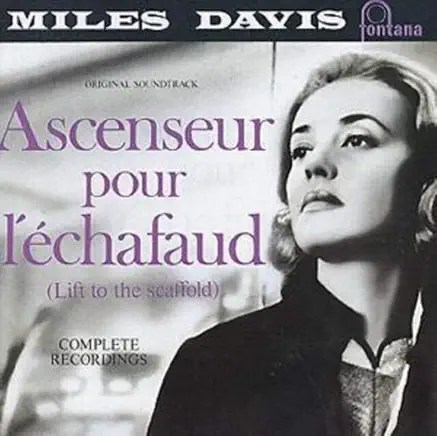
The soundtrack for Ascenseur pour Léchafaud, scored by American trumpeter Miles Davis, became an instant jazz classic, known for its atmospheric, moody, and improvisational style – perfectly complementing the film noir mood of Louis Malle’s movie.
On December 4,1 957, Davis brought his four sidemen to a French recording studio without any practice or preparation. Once the plot of the film was explained, Miles and his band improvised what would become the classic soundtrack.
The musical ideas explored on Ascenseur pour L’échafaud paved the way for Miles Davis’s later masterpiece, “Kind of Blue”.
FOURTH SET: “Black Orpheus” (1959) | Composed by Antonio Carlos Jobim & Luis Bonfa
-“Manhã de Carnaval”
-“Manhã de Carnaval / La Chanson d’Orphée” performed by Pauline Croze
-“Samba de Orfeu”

Black Orpheus is a 1959 romantic tragedy film directed by French filmmaker Marcel Camus.
The film is particularly notable for its soundtrack by two Brazilian composers: Antônio Carlos Jobim, whose “Manhã de Carnaval” and “Samba de Orfeu” have become classics of bossa nova.
Black Orpheus won the 1960 Academy Award for Best Foreign Language Film.
CLOSING SONG: Sidney Bechet “Si Tu Vois Ma Mere” (1952)
Chanson Du Jour: T’es Beau
English Translation by Frenchlations
You’re beautiful,
You’re beautiful because you’re brave
To look deep into the eyes
Of the one who challenges you to be happy
You’re beautiful,
You’re beautiful as a silent scream,
Strong as a precious metal,
who fights to heal its bruises,
It is like an old tune,
A few notes in torment,
That force my heart,
That force my joy,
When I think of you,
Now.
It is no good,
It is no good saying to myself that it is better this way,
Even if it still hurts,
I don’t have any silent refuge.
It is beautiful,
It is beautiful because it is stormy,
With this weather I know very little,
The words that stay at the corner of my eyes.
It is like an old tune,
A few notes in torment,
That force my heart,
That force my joy,
When I think of you.
You, you’re leaving the stage
Without a weapon and without hatred
I’m afraid to forget,
I’m afraid to accept,
I’m afraid of the living,
Now.
You’re beautiful…
Pauline Croze’s youthful looks

Thought, composed and recorded between confinements and restrictions linked to the health crisis, the new album “Après les heures grises”, by Pauline Croze, was released on October 8. The singer, on tour throughout France, returns to the music that punctuated her childhood and adolescence.
Where did you spend your childhood and in what environment?
I grew up in a pavilion in Villemomble, in the Parisian suburbs. Before becoming a psychoanalyst, my mother worked in an Italian tourist office (she had dual nationality). My father started his career as a professor of physics, then a consultant at the Ministry of National Education, where he tested the brand new CD-ROMs of educational software. Fan of cinema, he had a large film library in which we could draw what interested us. I was a pretty lonely child. I had very few friends and enjoyed drawing a lot. Rather very good student at the beginning of my schooling, I let myself go over the years. I still managed to get my baccalaureate by doing the bare minimum.
Did your parents listen to music?
At home there was music all day, especially on weekends. The style varied from room to room. In the living room, my parents liked the opera, Léo Ferré, but also Julien Clerc for my mother and Boby Lapointe for my father. My two older sisters had very opposite tastes. In their rooms, one loved to listen to French variety (Patrick Bruel and Mylène Farmer), the other rock with very sharp choices (Jimi Hendrix and Frank Zappa). I loved to navigate from one room to another, open to discovering all these different styles of music. Added to this was the radio, which I listened to every night to fall asleep and which gave me the possibility of always hearing new artists.
What’s your favorite childhood song?
The favorite song of my childhood is that of the TV movie Sandokan, which played in the Club Dorothée, interpreted by Joël Prevost. She had a very dynamic and elated side. We felt we were dealing with a hero. I would put the 45 on my channel and walk around the house singing it very enthusiastically. Performing a song for a child is a special exercise, and Joël Prévost did it really well. As a teenager, I remember listening to Strange Fruit, by Billie Holiday, and Stairway to Heaven, by Led Zeppelin, on repeat, whose vocal and melodic virtuosity fascinated me.
Continue reading “Pauline Croze’s youthful looks”
 Pas De Merde