Listen to radio broadcast featuring French composers Georges Auric, Georges Delerue, Frances Lai and Yann Tierson

By Wayne Cresser and Michael Stevenson

Yann Tiersen
“Let’s play with sound, forget all knowledge and instrumental skills, and just use instinct – the same way Punk did” – Yann Tiersen
PICTURE THIS – FILM MUSIC ON THE RADIO : WRIU 90.3 FM 9/21/25

Georges Auric (1899–1983)

Auric was a versatile and significant figure in 20th-century French music and culture. 

  • A member of Les Six: As one of the prominent members of the group of avant-garde composers known as Les Six, he rebelled against late-Romanticism and Impressionism, advocating for a more modern, populist, and distinctively French style.
  • Major film scores: He composed over 100 film scores, many for prominent directors, including his longtime collaborator Jean Cocteau. His famous film scores include:
    • Beauty and the Beast (1946)
    • Moulin Rouge (1952), which produced the popular song “Where Is Your Heart?”
    • The Wages of Fear (1953)
    • Roman Holiday (1953)
  • Administrator of French music: Auric also held significant administrative positions, including director of the Paris Opéra and chairman of the French performing rights society, SACEM. 

Georges Delerue (1925–1992)

Dubbed “The Mozart of Cinema” by the newspaper Le Figaro, Delerue was one of the most prolific and influential film composers of his generation. 

  • Prolific career: He wrote more than 350 scores for film and television, with his signature style blending classical orchestration with romantic, lyrical melodies.
  • French New Wave collaborator: His distinctive style shaped the sound of the French New Wave, notably through his collaborations with director François Truffaut on films such as Jules and Jim (1962) and Day for Night (1973).
  • Hollywood success: His success extended to Hollywood, where he scored notable films, including:
    • A Little Romance (1979), for which he won an Academy Award
    • Platoon (1986)
    • Steel Magnolias (1989) 

Francis Lai (1932–2018)

Lai was an Oscar-winning composer whose work helped define the “easy listening” and popular instrumental music of his era. 

  • Popular melodies: He was a gifted melodist known for his emotionally expressive themes. His music gained massive global recognition through his collaboration with director Claude Lelouch, for whom he scored almost 40 films.
  • Global hits: His most famous and influential works include:
    • The romantic theme from A Man and a Woman (1966), which earned him a Golden Globe nomination.
    • The iconic, Oscar-winning score for Love Story (1970). The theme, “Where Do I Begin?”, became an international pop standard.
  • Classical crossover influence: Lai’s success demonstrated that a film score could become a hit in its own right, influencing the popular music charts and inspiring a new generation of “classical crossover” artists

Listen to “The French Connection” Ep. 9

This Sunday’s FRENCH CONNECTION on WRIU 90.3 FM may be the last

( This program originally aired on WRIU, Kingston, 90.3 FM on Sunday, August 31, 2025 )

THE FRENCH CONNECTION:: WRIU 90.3 FM :: August 31, 2025:
  • Francis Cabrel “Quin l’esquimau” (Bob Dylan)
  • Jeanne Cherhal “Super 8″
  • Rodolphe Burger “Stephanie Says” (Lou Reed)
  • Jain “Come” (2017)
  • Jain “Makeba” (2017)
  • Liz & Lisa “Fais Do Do”
  • Pomme “Ceux qui Revent
  • Pierre Bensusan “Le Lendemain de la Fete”
  • Léo Ferré “Je t’dore a Legal” (Ferre/Baudelaire)
  • Léo Ferré “Le Vampire” (Ferre/Baudelaire)
  • George Brassens “Puisque Vous Partez en Voyage” (Jean Sablon)
  • Asleep at the Wheel “Friendship First” (Brassens)
  • Francis Cabrel “Je t’amais, Je t’aime, Je t’aimerai”
  • Pierre Bensusan “So Long Michael”
  • Edith Piaf “Je Ne Regrette Rien”

Listen to “The French Connection” Ep. 8

This Sunday’s FRENCH CONNECTION on WRIU 90.3 FM mourns the end of Summer with a theme, “Seasons in the Sun”

By Michael Stevenson

( This program originally aired on WRIU, Kingston, 90.3 FM on Sunday, August 24 )

“Seasons in the Sun” playlist, THE FRENCH CONNECTION :: WRIU 90.3 FM :: August 24, 2025:
  • Gilbert Bécaud “Plein Soleil” (1964)
  • Brigitte Bardot “La Madrague” (1963)
  • Yael Naem “Playground Family / You Have Always Been” (from the Original Motion Picture Soundtrack Mon Bébé)  2019
  • Jeanne Cherhal “Canicule” (2006)
  • Françoise Hardy “Soleil” (1970)
  • Toots Thielmans “Theme From Summer of ’42” (M. Legrand) rec. 1987 live concert
  • Yves Montand “Les Feuilles Mortes” (m.Jacques Prévert, l.Joseph Kosma) lyrics for “The Autumn Leaves” by Johnny Mercer (recorded 1952)
  • This Is the Kit “Recommencer” (Kate Stables, 2021)
  • Henri Salvador “Jardin d’Hiver” (Henri Salvador, Keren Ann & Benjamin Biolay, 2000)
  • Django Rheinhardt & the Quintet of the Hot Club of France “September Song” (m.Kurt Weil, l.Maxwell Anderson) recorded 1947
  • Blossom Dearie “It Might As Well Be Spring” (Rogers & Hammerstein, recorded 1957)
  • Jack Kerouac “October” (reading)
  • Francis Cabrel “Octobre” (1994)
  • Black Box Recorder “Seasons in the Sun” (Jacques Brel, recorded 1998)
  • Camille Saint-Saëns “Carnival of the Animals” (composed 1886)

I Tell You It Is October!
by Jack Kerouac

There’s something olden and golden and lost
In the strange ancestral light,
There’s something tender and loving and sad
In October’s copper might.

End of something, old, old, old…
Always missing, sad, sad, sad…
Saying something…love, love, love…

Akh! I tell you it is October,
And I defy you now and always
To deny there is not love

Staring foolishly at skies
Whose beauty but God defies.

For in October’s ancient glow
A little after dusk
Love strides through the meadow
Dropping her burnished husk…

“I Tell You It Is October” appears in Jack Kerouac Collected Poems, published by The Library of America in 2012

Listen to “The French Connection” Ep. 7

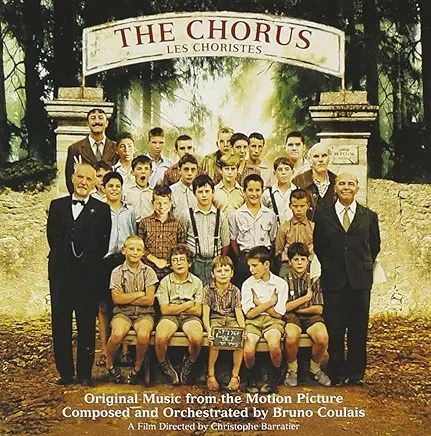
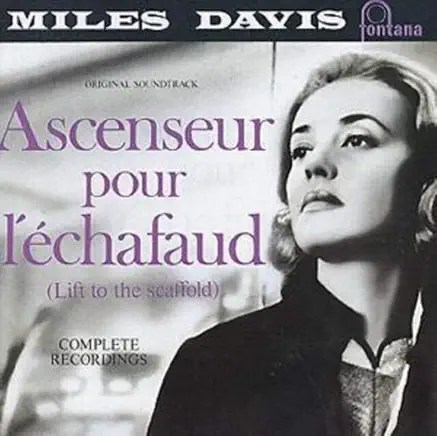
This Sunday’s FRENCH CONNECTION on WRIU 90.3 FM celebrates the musical scores from four wonderful French films: Les Choristes from 2011, Amelie from 2001, Ascenseur pour L’échafaud from 1957, and Black Orpheus, from 1959.


( This program originally aired on WRIU, Kingston, 90.3 FM on Sunday, August 17 )

The French Connection 8-17-25

Notes:

Our guest in studio is mon ami Wayne Cresser, host of Picture This: Film Music on the Radio.

FIRST SET: from “Les Choristes” (2011) | Composed by Bruno Coulais; Performed by the Bulgarian Symphony Orchestra, with the boys choir Les Petits Chanteurs de Saint-Marc.


– “Les Avions En Papier”
– “Vois Sur Ton Chemin (Les Choristes)”
– “La Nuit”
– “Compère Guilleri”
– “Lueur D’été”
– “Cerf-Volanther notables”

The story of Les Choristes was inspired by the origin of an actual boys’ choir The Little Singers of Paris.

At the 77th Academy Awards, Les Choristes was nominated for Best Foreign Language Film and Best Original Song (the latter for “Vois sur ton chemin“)

Notably, Les Choristes was director Christophe Barratier’s first feature film.


SECOND SET: from “Amelie” (2001) | Composed and performed by Yann Tiersen

– “La valse d’Amélie”

-“Comptine d’un autre été : L’Après-midi”

-“Les Jours tristes” 

-“L’Autre valse d’Amélie”

Amélie is rated #37 among the “50 Greatest Romantic Comedies of All Time” by Rolling Stone magazine, and in 2025, the film ranked number 41 on The New York Times‘ list of “The 100 Best Movies of the 21st Century.” 

Yann Tiersen is a  French- Breton musician and composer. In just two weeks, he composed nineteen pieces for ”Amelie.”

Tiersen just recently released an introspective new album called Rathlin from a Distance | The Liquid Hour.

THIRD SET: “Ascenseur pour l’échafaud” (1957) | Composed and performed by Miles Davis

– “Sur L’autoroute”

The soundtrack for Ascenseur pour Léchafaud, scored by American trumpeter Miles Davis, became an instant jazz classic, known for its atmospheric, moody, and improvisational style –  perfectly complementing the film noir mood of Louis Malle’s movie.

On December 4,1 957, Davis brought his four sidemen to a French recording studio without any practice or preparation. Once the plot of the film was explained, Miles and his band improvised what would become the classic soundtrack.

The musical ideas explored on Ascenseur pour L’échafaud paved the way for Miles Davis’s later masterpiece, “Kind of Blue”.

FOURTH SET: “Black Orpheus” (1959) | Composed by Antonio Carlos Jobim & Luis Bonfa

-“Manhã de Carnaval”

-“Manhã de Carnaval / La Chanson d’Orphée” performed by Pauline Croze

-“Samba de Orfeu”

Black Orpheus is a 1959 romantic tragedy film directed by French filmmaker Marcel Camus.

The film is particularly notable for its soundtrack by two Brazilian composers: Antônio Carlos Jobim, whose “Manhã de Carnaval” and “Samba de Orfeu” have become classics of bossa nova. 

Black Orpheus won the 1960 Academy Award for Best Foreign Language Film.

CLOSING SONG: Sidney Bechet “Si Tu Vois Ma Mere” (1952)

Movie Review: “Deception” (2021)

Directed by Arnaud Desplechin, Tromperie (also known as Deception, 2021) is a deeply introspective and thought-provoking adaptation of Philip Roth’s novel. Featuring Denis Podalydès and Léa Seydoux in the lead roles, the film explores the complex, often ambiguous relationship between a writer and his mistress, seamlessly blurring the boundaries between fiction and reality. With its richly layered dialogue and philosophical tone, Tromperie invites viewers into an exploration of love, memory, and the blurred lines of storytelling.

Set in the 1980s in London, the film follows Philip (Denis Podalydès), a successful American novelist, and his unnamed lover (Léa Seydoux), a married woman who visits him frequently in his writing studio. Their interactions unfold as a series of emotionally charged dialogues—sometimes tender, sometimes confrontational—exploring themes of desire, fidelity, and the power dynamics at play in creative relationships.

As Philip’s bond with his mistress deepens, he also reflects on his past relationships, including those with his wife, former lovers, and even characters from his own literary works. Tromperie delicately weaves the line between reality and fiction, challenging the viewer to question where the truth ends and the imagination begins.

The Nature of Fiction and Reality – The film encourages the audience to grapple with the distinctions between what is real and what Philip conjures in his mind as a writer.

Desire and Betrayal – The emotional undercurrents of love, passion, and infidelity form the crux of the story, reflecting the complexities and contradictions inherent in human relationships.

Exile and Identity – Set against the backdrop of Philip’s life as an American writer living in Europe, the film examines themes of cultural alienation, belonging, and the internal conflicts that shape both his personal and creative identity.

Premiering at the Cannes Film Festival in 2021, Tromperie earned critical acclaim for its sophisticated storytelling and the exceptional performances of its leads. Léa Seydoux delivers a mesmerizing portrayal of emotional depth, while Denis Podalydès embodies the intellectual yet morally complex character of Philip with subtle brilliance.

Unlike conventional narratives driven by action, Tromperie thrives on the power of words, remaining true to Roth’s literary style. Its cerebral approach and philosophical layers make it a captivating watch for those who appreciate dialogue-heavy, thought-provoking cinema. With its blend of romance, intellectual exploration, and literary elegance, Tromperie stands as a remarkable adaptation of one of Roth’s most compelling works, inviting reflection on the nature of love, identity, and the boundaries of storytelling.