This Sunday’s FRENCH CONNECTION on WRIU 90.3 FM celebrates the musical scores from four wonderful French films: Les Choristes from 2011, Amelie from 2001, Ascenseur pour L’échafaud from 1957, and Black Orpheus, from 1959.
( This program originally aired on WRIU, Kingston, 90.3 FM on Sunday, August 17 )
The French Connection 8-17-25
Notes:
Our guest in studio is mon ami Wayne Cresser, host of Picture This: Film Music on the Radio.
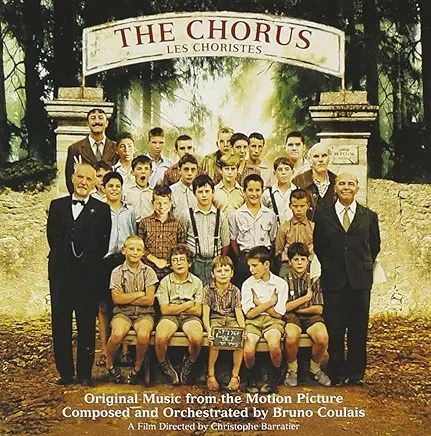
FIRST SET: from “Les Choristes” (2011) | Composed by Bruno Coulais; Performed by the Bulgarian Symphony Orchestra, with the boys choir Les Petits Chanteurs de Saint-Marc.
– “Les Avions En Papier” – “Vois Sur Ton Chemin (Les Choristes)” – “La Nuit” – “Compère Guilleri” – “Lueur D’été” – “Cerf-Volanther notables”
The story of Les Choristes was inspired by the origin of an actual boys’ choir The Little Singers of Paris.
At the 77th Academy Awards, Les Choristes was nominated for Best Foreign Language Film and Best Original Song (the latter for “Vois sur ton chemin“)
Notably, Les Choristes was director Christophe Barratier’s first feature film.
SECOND SET: from “Amelie” (2001) | Composed and performed by Yann Tiersen
– “La valse d’Amélie”
-“Comptine d’un autre été : L’Après-midi”
-“Les Jours tristes”
-“L’Autre valse d’Amélie”
Amélie is rated #37 among the “50 Greatest Romantic Comedies of All Time” by Rolling Stone magazine, and in 2025, the film ranked number 41 on The New York Times‘ list of “The 100 Best Movies of the 21st Century.”
Yann Tiersen is a French- Breton musician and composer. In just two weeks, he composed nineteen pieces for ”Amelie.”
Tiersen just recently released an introspective new album called Rathlin from a Distance | The Liquid Hour.
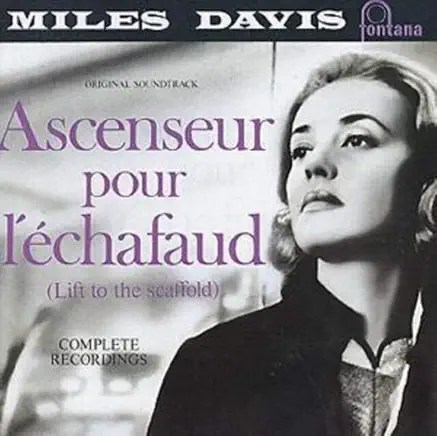
THIRD SET: “Ascenseur pour l’échafaud” (1957) | Composed and performed by Miles Davis
– “Sur L’autoroute”
The soundtrack for Ascenseur pour Léchafaud, scored by American trumpeter Miles Davis, became an instant jazz classic, known for its atmospheric, moody, and improvisational style – perfectly complementing the film noir mood of Louis Malle’s movie.
On December 4,1 957, Davis brought his four sidemen to a French recording studio without any practice or preparation. Once the plot of the film was explained, Miles and his band improvised what would become the classic soundtrack.
The musical ideas explored on Ascenseur pour L’échafaud paved the way for Miles Davis’s later masterpiece, “Kind of Blue”.
FOURTH SET: “Black Orpheus” (1959) | Composed by Antonio Carlos Jobim & Luis Bonfa
-“Manhã de Carnaval”
-“Manhã de Carnaval / La Chanson d’Orphée” performed by Pauline Croze
-“Samba de Orfeu”
Black Orpheus is a 1959 romantic tragedy film directed by French filmmaker Marcel Camus.
The film is particularly notable for its soundtrack by two Brazilian composers: Antônio Carlos Jobim, whose “Manhã de Carnaval” and “Samba de Orfeu” have become classics of bossa nova.
Black Orpheus won the 1960 Academy Award for Best Foreign Language Film.
CLOSING SONG: Sidney Bechet “Si Tu Vois Ma Mere” (1952)
Engineer, poet, actor, novelist, songwriter, jazz trumpeter, and record producer, Boris Vian was truly a symbol of the young post-war intellectuals of France.
Live concert from Studio 104 of the Maison de la Radio & de la Musique, as part of Arnaud Merlin’s Jazz on the Spot concerts. For immersive sound listening, listen with headphones 🎧
70 years ago, Louis Armstrong entered Decca’s New York studios to record two songs of French origin: “La Vie En Rose” and “C’est Si Bon.” Sy Oliver put together a terrific studio orchestra and arranged both songs for the date. The result was the biggest hit of Armstrong’s career to this point and two sides that have had ever-lasting appeal, especially “La Vie En Rose,” the only song to rival “What a Wonderful World” in terms of out-and-out popularity in the 21st century. Before we get too carried away, let’s listen to Armstrong’s original glorious performance to get in the right frame of mind:
Because the anniversary falls on a Friday, the day we peak inside “Satch’s Tracks,” it only makes sense to examine some of the French selections in Louis’s record collection.
Besides Armstrong’s version, “La Vie En Rose” is most associated with “The Little Sparrow,” Edith Piaf. And yes, Armstrong owned two Piaf LPs, one of which contained her legendary version of “La Vie En Rose”:
LAHM 1987.3.1497
And here is the audio of Piaf’s legendary performance:
However, Armstrong actually preferred another version of “La Vie En Rose” to Piaf’s. On this clip from one of Louis’s tapes, he’s trying to get some shy French fans to speak on tape and mentions that he loves the singing of Jacqueline Francois, feeling that her version of “La Vie En Rose” was smoother than Piaf’s:
Here is Armstrong’s copy of Francois’s Vox 10-inch LP, Jacqueline Francois Sings, containing “La Vie En Rose”:
LAHM 1987.3.1579
And here’s Francois’s version of “La Vie En Rose”:
On a later tape, Louis actually got all three versions of “La Vie En Rose”–Piaf’s, Francois’ and his own–and played them back-to-back-to-back. Here’s his catalog page:
LAHM 1987.2.22
For the sake of completeness, here is Louis’s copy of “La Vie En Rose,” marked with one of his homemade “Recorded” labels to denote that it had been copied to tape:
LAHM 1987.3.1630
As for the flip side, “C’est Si Bon,” we don’t have as many artifacts related to it in our Archives, but thanks to the efforts of Olivier Betti, we know a great deal about the backstory of the song. Olivier’s grandfather, Henri Betti, wrote the music for “C’est Si Bon,” which was outfitted with French lyrics by Andre Hornez. On February 28, 1948, the Nice Jazz Festival hosted a jam session at the Hotel Negresco that was attended by the likes of Django Reinhardt, Claude Luter and Louis Armstrong. At the session, Suzy Delair sang “C’est Si Bon” in French (Delair passed away this March at the age of 102). Armstrong apparently loved the song immediately and promised to record it when he got back to the United States. A recording ban was in effect at the time, but Armstrong eventually got around to it on June 26, 1950.
:
And for more on the history of “C’est Si Bon,” Olivier Betti has created a Facebook page and has contributed to the Wikipedia entry on the song, as well as this recent article in French. Thank you, Olivier for all of your efforts in telling the story of your grandfather’s wonderful song! Here is Louis’s copy, with the “Recorded” label, alas, no longer affixed.
LAHM 1987.3.1630
“La Vie En Rose” and “C’est Si Bon” were recorded during a prolific period for Armstrong at Decca thanks to the efforts of producer Milt Gabler. A host of Armstrong’s Sy Oliver-arranged singles were originally collected on a 10-inch LP, Satchmo Serenades; Louis’s copy is on display in the den of the Louis Armstrong House Museum.
Eventually a few more tracks were added to turn it into a 12-inch LP, of which Louis owned a Argentinian pressing, Satchmo Seranatas (transforming our two anniversary tracks into “La Vida Color De Rosa” and “Es Tan Bueno”)!
LAHM 1987.3.819
And if you’d like to listen to Satchmo Serenades on Spotify, here’s the link:
Finally, one more memento from the Armstrong Collection, a Decca brochure printed for Armstrong’s 1953 tour of Japan, focusing on “La Vie En Rose” and “C’est Si Bon” and even including lyrics of both so you can sing along while listening:





 Pas De Merde