
View this post on InstagramA post shared by Paris Match (@parismatch_magazine) on
Tag: enviromentalism
‘In the end, the power of love is all’
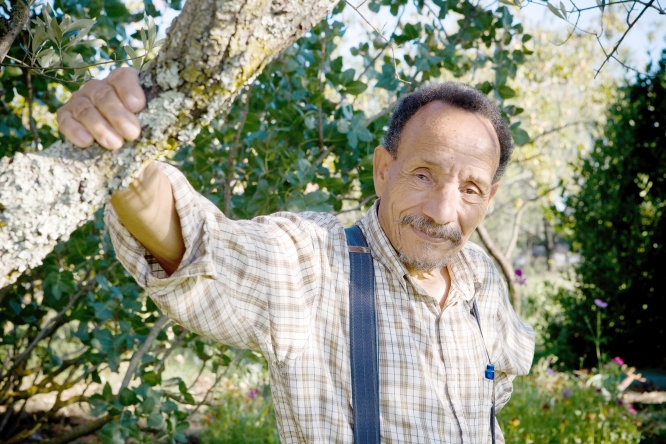
As one of France’s most admired environmentalists, Pierre Rabhi advocates a simplified existence in order to live a sustainable, happy life. Jane Hanks falls under the sage’s spell in an exclusive interview
Pierre Rabhi is a French farmer, writer, philosopher and environmentalist who is well known to the French as a man who has been promoting an alternative, simpler way of life for many years, long before it became fashionable. He is now 80, but retirement is not for him as he continues to strive to create what for him would be a better world, with less emphasis on making money and more on being happy with what we already have.
Just recently a report from the government environment and energy management agency body Ademe quoted an Ipsos study which found that most households thought they had a total of 34 electronic pieces of equipment, but in fact the figure is closer to an astonishing 99 and that people buy three times more now than in 1960.
One of Pierre Rabhi’s many books, Vers la Sobriété Heureuse, was translated into English last year, The Power of Restraint. What did he mean by this title?
“We live in a world where there is part of it which is suffering from over consumption and throws too much away, and another part where there is still famine. We produce 40% more than we need.
“One fifth of our world, of which I am a part, uses four fifths of the world’s resources. I cannot morally accept that situation. To change that we need to adopt more modest lifestyles. In our society we have more than enough to eat, but even then we are not happy.
“There is no joie de vivre. People in the West are always worrying about what they do not have, rather than enjoying what they do have. If we were producing all these goods and people were satisfied, then maybe our civilisation would have been successful, but people are not happy, so we must change things.”
Source THE CONNEXION: ‘In the end, the power of love is all’
Mystery seaweed threatens French Caribbean
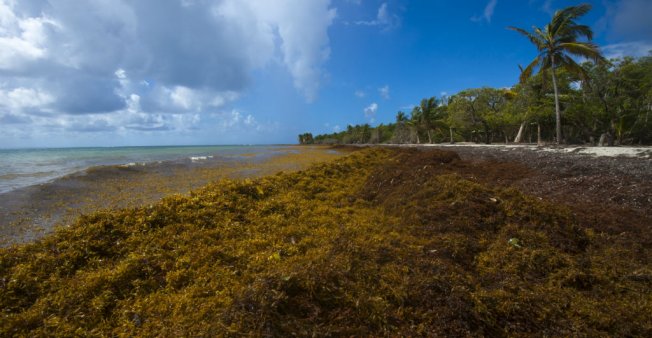
During a trip to the French overseas territory Guadeloupe on Friday, President Emmanuel Macron pledged to keep a promise to clean up toxic Sargassum seaweed within 48 hours of it running aground.Like the rest of the Caribbean, the Antilles suffered in 2011 from an unprecedented invasion of Sargassum seaweed (sometimes known as gulf weed). The problem recurred in 2015 and then on an even larger scale in 2018. The brown seaweed poses potential health risks. The mounds of Sargassum that accumulate on the beach can reach as high as two feet and release hydrogen sulfide and ammonia as it rots.
The colourless, toxic and highly flammable gas smells like rotten eggs. Inhaling it in small doses can trigger eye and respiratory irritation.Former French minister for the environment Nicolas Hulot presented a €10 million plan in June to help combat the problem. His subsequent resignation set off a flurry of panic in the islands over whether the government would renege on its pledge to help with the problem. [ . . . ]
CONTINUE at FRANCE 24: Mystery seaweed threatens French Caribbean – France 24
Urban Farming Flourishes in Paris | urban farming
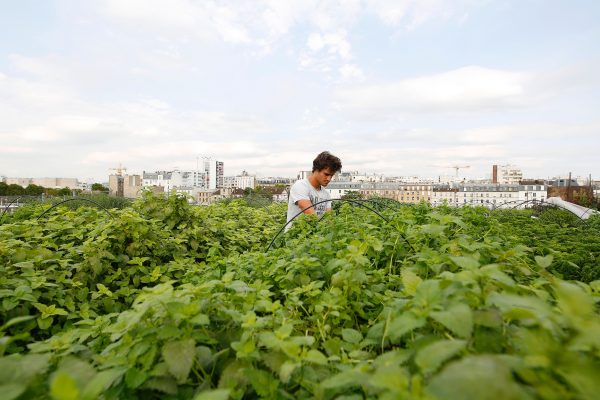
PARIS—Sidney Delourme gets really passionate when showing pictures of his ambitious project. For now, it is just a huge rooftop in Paris overlooking rails and old towers with the Montmartre hill in the background, but his drawings show plans for green and wooden spaces.The 31-year-old is developing a huge urban farm in the heart of Paris, which is often cited for its lack of green space compared to its large population size. A study by MIT’s Sensible City Lab published in January found that Paris is the least green city among 10 major cities studied.
We were only seven project developers…Today, we can estimate that there are anywhere between 200 to 300 projects under development
People like Delourme want to change that. With his working-partner and co-founder Sarah Msika, they are in the process of securing further funding to turn the rooftop of a former railway site into an innovative urban farm covering 7,000 square meters (1.7 acres).
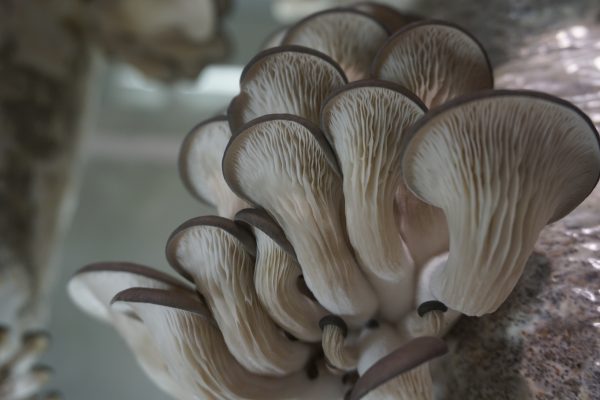
The duo intend to plant purple basil, chocolate mint, ancient lettuce, and edible flowers in the farm. The facility will have many innovative features, including a greenhouse that gets its heat from a data center located below, hydroponics cultures—a method of growing plants in water rather than in soil—and space for permaculture. Plans are also in place to include a store to sell some of the produce, as well as areas for educational activities [ . . . ]
Continue at: Urban Farming Flourishes in Paris | urban farming
 Pas De Merde