Movie Review: “Deception” (2021)

Directed by Arnaud Desplechin, Tromperie (also known as Deception, 2021) is a deeply introspective and thought-provoking adaptation of Philip Roth’s novel. Featuring Denis Podalydès and Léa Seydoux in the lead roles, the film explores the complex, often ambiguous relationship between a writer and his mistress, seamlessly blurring the boundaries between fiction and reality. With its richly layered dialogue and philosophical tone, Tromperie invites viewers into an exploration of love, memory, and the blurred lines of storytelling.

Set in the 1980s in London, the film follows Philip (Denis Podalydès), a successful American novelist, and his unnamed lover (Léa Seydoux), a married woman who visits him frequently in his writing studio. Their interactions unfold as a series of emotionally charged dialogues—sometimes tender, sometimes confrontational—exploring themes of desire, fidelity, and the power dynamics at play in creative relationships.

As Philip’s bond with his mistress deepens, he also reflects on his past relationships, including those with his wife, former lovers, and even characters from his own literary works. Tromperie delicately weaves the line between reality and fiction, challenging the viewer to question where the truth ends and the imagination begins.

The Nature of Fiction and Reality – The film encourages the audience to grapple with the distinctions between what is real and what Philip conjures in his mind as a writer.

Desire and Betrayal – The emotional undercurrents of love, passion, and infidelity form the crux of the story, reflecting the complexities and contradictions inherent in human relationships.

Exile and Identity – Set against the backdrop of Philip’s life as an American writer living in Europe, the film examines themes of cultural alienation, belonging, and the internal conflicts that shape both his personal and creative identity.

Premiering at the Cannes Film Festival in 2021, Tromperie earned critical acclaim for its sophisticated storytelling and the exceptional performances of its leads. Léa Seydoux delivers a mesmerizing portrayal of emotional depth, while Denis Podalydès embodies the intellectual yet morally complex character of Philip with subtle brilliance.

Unlike conventional narratives driven by action, Tromperie thrives on the power of words, remaining true to Roth’s literary style. Its cerebral approach and philosophical layers make it a captivating watch for those who appreciate dialogue-heavy, thought-provoking cinema. With its blend of romance, intellectual exploration, and literary elegance, Tromperie stands as a remarkable adaptation of one of Roth’s most compelling works, inviting reflection on the nature of love, identity, and the boundaries of storytelling.

A List of Books for Buddhist-Christian Dialogue

by Carl McColman

Are you interested in exploring the richness of dialogue and interspiritual practice between Christianity and Buddhism? If so, then here’s enough literature to keep you going for a while. Each of the books on the following list has some sort of connection with both Christianity and Buddhism.

Some of these titles are academic studies, some the writings of monastics, others geared toward the laity. Some are books by Christians about Buddhism, or by Buddhists about interfaith dialogue; by Christians who find meditation a helpful adjunct to their primarily Christ-centered faith, or by persons who identify as “dual practitioners,” seeking an authentic path that is simultaneously faithful to both the Gospel and the Dharma. One or two are by Christians, about Christian spirituality, but informed by the author’s Buddhist practice.

Thomas Merton and the Dalai Lama, 1968. Copyright of the Merton Legacy Trust and the Thomas Merton Center at Bellarmine University. Used with permission.


This list is rather weighted toward the Christian side of the conversation. I would love to include more Buddhist authors and more Buddhist perspectives on Christianity, but I’m not as familiar with the Buddhist side of this conversation. While the most popular topic of these books is meditation, some are more narrowly focused on matters such as theodicy or psychology.

I have only read a fraction of these books myself, so I offer them here with no endorsement other than my own interest in the subject. I have tried to avoid listing books that promote one religion at the expense of the other; but since I have not read all the following titles, it’s possible that books like that have been listed. Please keep in mind that interreligious dialogue is a messy business and it is inevitable that the books on this list will represent a variety of perspectives on both Christianity and Buddhism. The bottom line: you are advised to read with a discerning mind. 


  1. A. William McVey, Existentialism and Christian Zen: An East/West Way to Christ
  2. Addison Hodges Hart, The Ox-Herder and the Good Shepherd: Finding Christ on the Buddha’s Path
  3. Aelred Graham, Zen Catholicism: A Suggestion
  4. Aelred Graham, Conversations: Christian and Buddhist
  5. Ama Samy, SJ, Zen: Awakening to Your Original Face
  6. Ama Samy, SJ, Zen Heart, Zen Mind: The Teachings of Zen Master Ama Samy
  7. Ama Samy, SJ, Zen: the Wayless Way
  8. Antony Fernando & Leonard Swidler, Buddhism Made Plain: An Introduction for Christians and Jews
  9. B. Alan Wallace, Mind in the Balance: Meditation in Science, Buddhism and Christianity
  10. Bieke Vandekerckhove, The Taste of Silence
  11. Bonnie Bowman Thurston, ed., Merton & Buddhism: Wisdom, Emptiness & Everyday Mind
  12. Brian J. Pearce, OP, We Walk the Path Together: Learning from Thich Nhat Hanh & Meister Eckhart
  13. Buddhadasa Bhikku, Christianity and Buddhism
  14. Carrin Dunne, Buddha and Jesus: Conversations
  15. China Galland, Longing for Darkness: Tara and the Black Madonna
  16. Christopher Collingwood, Zen Wisdom for Christians
  17. D. T. Suzuki, Mysticism: Buddhist and Christian: The Eastern and Western Way
  18. David G. Hackett, The Silent Dialogue: Zen Letters to a Trappist Monk
  19. Denise Lardner Carmody and John Tully Carmody, Serene Compassion: A Christian Appreciation of Buddhist Holiness
  20. Donald W. Mitchell, Spirituality and Emptiness: The Dynamics of Spiritual Life in Buddhism and Christianity
  21. Donald W. Mitchell & James A. Wiseman, eds., Finding Peace in Troubled Times: Buddhist and Christian Monastics on Transforming Suffering
  22. Donald W. Mitchell & James A. Wiseman, eds., The Spiritual Life: Gethsemani Encounters
  23. Donald W. Mitchell & William Skudlarek, OSB, eds., Green Monasticism: A Buddhist-Catholic Response to an Environmental Calamity
  24. Donovan Roebert, The Gospel for Buddhists and the Dharma for Christians
  25. Edward L. Shirley, Zen Mind, Franciscan Joy
  26. Elaine MacInnes, The Flowing Bridge: Guidance on Beginning Zen Koans
  27. Elaine MacInnes, Light Sitting in Light: A Christian’s Experience of Zen
  28. Elaine MacInnes, Teaching Zen to Christians: Orientation Talks for Beginners
  29. Elaine MacInnes, Zen Contemplation for Christians: A Bridge of Living Water
  30. Elizabeth Harris and John O’Grady, eds., Meditation in Buddhist-Christian Encounter: A Critical Analysis
  31. Elizabeth West, Happiness Here & Now: The Eightfold Path of Jesus Revisited with Buddhist Insights
  32. Ellen Birx, Embracing the Inconceivable: Interspiritual Practice of Zen and Christianity
  33. Gordon Peerman, Blessed Relief: What Christians Can Learn from Buddhists about Suffering
  34. Gustav Ericsson, My Christian Journey With Zen
  35. Heinrich Dumoulin, SJ, Christianity Meets Buddhism
  36. Hikaru Nakamura, Saint Young Men (Multiple Volumes)
  37. His Holiness the Dalai Lama, The Good Heart: A Buddhist Perspective on the Teachings of Jesus
  38. His Holiness the Dalai Lama, Spiritual Advice for Buddhists and Christians
  39. Hugo Enomiya-Lassalle, Living in the New Consciousness
  40. Hugo Enomiya-Lassalle, The Practice of Zen Meditation
  41. Hugo Enomiya-Lassalle, Zen Meditation for Christians
  42. Hugo Enomiya-Lassalle, Zen: Way to Enlightenment
  43. J. K. Kadowaki, Zen and the Bible
  44. James Arraj, Christianity in the Crucible of East-West Dialogue / God, Zen and the Intuition of Being (2 Volumes in 1) 
  45. James William Jones, The Mirror of God: Christian Faith as Spiritual Practice, Lessons from Buddhism and Psychotherapy
  46. James Wiseman and Donald Mitchell, eds., The Gethsemani Encounter: A Dialogue on the Spiritual Life by Buddhist and Christian Monastics
  47. Jan Willis, Dreaming Me: Black, Baptist and Buddhist
  48. Janet Conner, The Lotus and the Lilly: Access the Wisdom of Buddha and Jesus to Nourish Your Beautiful, Abundant Life
  49. Jean-Yves Leloup, Compassion and Meditation: The Spiritual Dynamic Between Buddhism and Christianity
  50. Jeroan Witkam, The Eye Aware: Zen Lessons for Christians
  51. John Cowan, Taking Jesus Seriously: Buddhist Meditation for Christians
  52. John P. Cobb, Jr., Beyond Dialogue: Toward a Mutual Transformation of Christianity and Buddhism
  53. John P. Keenan, The Emptied Christ of Philippians: Mahāyāna Meditations
  54. John P. Keenan, The Gospel of Mark: A Mahayana Reading
  55. John P. Keenan, The Meaning of Christ: A Mahayana Theology
  56. Kenneth S. Leong, The Zen Teachings of Jesus
  57. Kim Boykin, Zen for Christians: A Beginner’s Guide
  58. Kristin Johnson Largen, What Christians Can Learn from Buddhism: Rethinking Salvation
  59. Leo D. Lefebure, The Buddha and the Christ: Explorations in Buddhist and Christian Dialogue
  60. Marco Pallis, A Buddhist Spectrum: Contributions to the Christian-Buddhist Dialogue
  61. Marcus Borg, Jesus and Buddha: The Parallel Sayings
  62. Mark Heim, Crucified Wisdom: Theological Reflection on Christ and the Bodhisattva
  63. Mary Jo Meadow, Christian Insight Meditation: Following in the Footsteps of John of the Cross
  64. Mary Jo Meadow, Gentling the Heart: Buddhist Loving-Kindness Practice for Christians
  65. Maurice O’C Walshe, Buddhism and Christianity: A Positive Approach
  66. Nadra Nittle, bell hooks’ Spiritual Vision: Buddhist, Christian, and Feminist
  67. Patricia Hart Clifford, Sitting Still: An Encounter with Christian Zen
  68. Patrick Henry, ed., Benedict’s Dharma: Buddhists Reflect on the Rule of Saint Benedict
  69. Patrick Henry and Donald K. Swearer, For the Sake of the World: The Spirit of Buddhist and Christian Monasticism
  70. Paul F. Knitter, Without Buddha I Could Not Be a Christian
  71. Paul Knitter & Roger Haight, Jesus & Buddha: Friends in Conversation
  72. Paul Louis Metzger with Kyogen Carlson, Evangelical Zen: A Christian’s Spiritual Travels with a Buddhist Friend
  73. Paul O. Ingram, A Modern Buddhist-Christian Dialogue
  74. Paul O. Ingram, ed., Buddhist-Christian Dialogue: Mutual Renewal and Transformation
  75. Paul O. Ingram, Buddhist-Christian Dialogue in an Age of Science
  76. Paul O. Ingram, The Process of Buddhist-Christian Dialogue
  77. Paul O. Ingram, Theological Reflection at the Boundaries
  78. Paul Mommaers, Mysticism, Buddhist and Christian: Encounters with Jan van Ruusbroec
  79. Peter Baekelmans, The Hidden “God”: Towards a Christian Theology of Buddhism
  80. Peter Feldmeier, Christianity Looks East: Comparing the Spiritualities of John of the Cross and Buddhaghosa
  81. Peter Feldmeier, Experiments in Buddhist-Christian Encounter: From Buddha-Nature to the Divine Nature
  82. Perry Schmidt-Leukel, ed., Buddhism and Christianity in Dialogue: The Gerald-Weisfeld Lectures 2004
  83. Perry Schmidt-Leukel, The Celestial Web: Buddhism and Christianity, A Different Comparison
  84. Peter Feldmeier, Christianity Looks East: Comparing the Spiritualities of John of the Cross and Buddhaghosa
  85. Raimon Panikkar, The Silence of God: The Answer of the Buddha
  86. Richard Bryan McDaniel, Catholicism and Zen
  87. Rita M. Gross and Terry C. Muck, eds., Buddhists Talk about Jesus, Christians Talk About the Buddha
  88. Rita M. Gross and Terry C. Muck, eds., Christians Talk About Buddhist Meditation, Buddhists Talk about Christian Prayer
  89. Robert Aitken and David Steindl-Rast, The Ground We Share: Everyday Practice, Buddhist and Christian
  90. Robert Jingen Gunn, Journeys Into Emptiness: Dogen, Merton, Jung and the Quest for Transformation
  91. Robert Kennedy, Zen Gifts to Christians
  92. Robert Kennedy, Zen Spirit, Christian Spirit: The Place of Zen in Christian Life
  93. Robert Magliola, Facing Up to Real Doctrinal Difference: How Some Thought-Motifs from Derrida Can Nourish the Catholic-Buddhist Encounter
  94. Robert Powell, Christian Zen: The Essential Teachings of Jesus Christ
  95. Robert Sohl and Audrey Carr, eds., The Gospel According to Zen
  96. Roger Corless, The Vision of Buddhism
  97. Roger Corless and Paul F. Knitter, eds., Buddhist Emptiness and Christian Trinity: Essays & Explorations
  98. Rose Drew, Buddhist and Christian?: An Exploration of Dual Belonging
  99. Ross Thompson, Buddhist Christianity: A Passionate Openness
  100. Ross Thompson, Wounded Wisdom: A Buddhist and Christian Response to Evil, Hurt and Harm
  101. Ruben L. F. Habito, Be Still and Know: Zen and the Bible
  102. Ruben L. F. Habito, Experiencing Buddhism: Ways of Wisdom and Compassion
  103. Ruben L. F. Habito, Healing Breath: Zen for Christians and Buddhists in a Wounded World
  104. Ruben L. F. Habito, Living Zen, Loving God
  105. Ruben L. F. Habito, Total Liberation: Zen Spirituality and the Social Dimension
  106. Ruben L. F. Habito, Zen and the Spiritual Exercises
  107. Seiichi Yagi and Leonard Swidler, A Bridge to Buddhist-Christian Dialogue
  108. Steve Smith, Eastern Light: Awakening to Presence in Zen, Quakerism and Christianity
  109. Susan J. Stabile, Growing in Love and Wisdom: Tibetan Buddhist Sources for Christian Meditation
  110. Susan Walker, ed., Speaking of Silence: Christians and Buddhists on the Contemplative Way
  111. Thich Nhat Hanh, Going Home: Jesus and Buddha as Brothers
  112. Thich Nhat Hanh, Living Buddha, Living Christ
  113. Thich Nhat Hanh and Daniel Berrigan, The Raft is Not the Shore: Conversations Toward a Buddhist-Christian Awareness
  114. Thomas G. Hand, Always a Pilgrim: Walking the Zen Christian Path
  115. Thomas Merton, Mystics and Zen Masters
  116. Thomas Merton, The Asian Journal of Thomas Merton
  117. Thomas Merton, Thomas Merton on Zen
  118. Thomas Merton, Zen and the Birds of Appetite
  119. Thomas Ragland, The Noble Eightfold Path of Christ: Jesus Teaches the Dharma of Buddhism
  120. Tilden H. Edwards, Jr., “Criss-Crossing the Christian-Buddhist Bridge” in Tarthang Tulku, ed., Reflections of Mind: Western Psychology Meets Tibetan Buddhism
  121. Tom Chetwynd, Zen and the Kingdom of Heaven
  122. Tony Luke, Way of Zen, Way of Christ: Satori and the Kingdom of God
  123. Valerie Brown, Hope Leans Forward: Braving Your Way Toward Simplicity, Awakening, and Peace
  124. William Johnston, Christian Zen: A Way of Meditation
  125. William Johnston, The Mirror Mind: Zen-Christian Dialog
  126. William Johnston, The Still Point: Reflections on Zen and Christian Mysticism
  127. William McVey, Existentialism and Christian Zen: An East/West Way to Christ
  128. William Skudlarek OSB, Demythologizing Celibacy: Practical Wisdom from Buddhist and Christian Monasticism
  129. Willigis Jäger, Mysticism for Modern Times
  130. Winston L. King, Buddhism and Christianity: Some Bridges of Understanding
  131. Wolfgang Kopp, Free Yourself of Everything: Radical Guidance in the Spirit of Zen and Christian Mysticism

Are there any other books that belong on this list — especially by Buddhists who are engaged in some form of Buddhist-Christian dialog? Please let me know, and if you have any opinions about some of the titles on this list, I’d like to hear that as well.

Happy reading. And please note: If you follow the links of the books mentioned in this post and purchase them or other products from Amazon.com, I receive a small commission from Amazon. Thank you for doing so — it is the easiest way you can support this blog.

Source: A List of Books for Buddhist-Christian Dialogue – Carl McColman

This forgotten news that led to the legalization of contraception in France 

Marie-Andrée Lagroua Weill-Hallé, founder in March 1956 of the association “Maternité heureux”, which will become the French Movement for Family Planning in 1960, in April 1968 in Paris (Photo by AFP)
In “Sad pregnancies”, the historians Danièle Voldman and Annette Wieviorka exhume the case of the couple Bac, a news item became a fact of society, which gave birth in the 1950s to the movement for contraception.

It is a defect of the manufacture of the law in France. Very often, those who change the course of history are given a unique name, that of the minister or the elected representative who presents the text to the Assembly. Thus, years of collective struggles and activist work to raise awareness of public opinion and the political sphere are invisible to the benefit of the courage of one person, who receives all the merits. This is the case of the Veil Act, authorizing abortion (abortion) in 1975, and a fortiori the Neuwirth Act, named after Senator Lucien Neuwirth, who authorizes contraception in 1967. His fiftieth birthday (in 2017 ) has shown that the thirties have little memory, unlike the law Veil. This is to say if his genealogy has gone to the trap in the collective memory.

“Five pregnancies in five years”

In Sad pregnancies – The case of the married Bac (1953-1956) , published this January 10th at Seuil, they go back to the origin of the movement in favor of contraception in France. This one would not have emerged without the chance meeting between the gynecologist Marie-Andrée Lagroua Weill-Hallé, founder of the association Happy Maternity (which became Family Planning) and a news item in the mid-1950s, of which she knew how to seize herself. In 1954, Ginette and Claude Bac, aged 25, were sentenced to seven years’ imprisonment for letting their fourth child, who was eight months old, die for want of care.

The case of the husband and wife Bac is not at first one. The press is largely indifferent to the fate of this working-class couple, whose drama is struggling to find a place in the news column. Le Monde is still an article, the day after the judgment: “Unworthy parents are sentenced to imprisonment” , without seeking further. L’Humanité specifies in an intertitle that Ginette Bac knew “five pregnancies in five years” . Nobody thinks then that the case Bac will question the law of 1920 prohibiting propaganda contraceptives and plead for the fight of women to control their fertility.

“To move, to understand, you need a tragic story”

In exhuming their legal record, Danièle Voldman and Annette Wieviorka describe in detail the miserable living conditions of the couple in Saint-Ouen, and the fatal sequence of unwanted births, to the drama of the death of their granddaughter. The day after that, her father – who was working overtime to feed his four children – said to the commissioner: “It was you who during your observations showed me the horror of the condition of my child because I examined him then closely and naked . I thought about deportee body visions “. He had never seen his baby undressed. Ginette Bac’s lawyer, Odile Flory (last survivor of the case, with whom the authors spoke in 2017), may point to a tragedy of misery and lack of information, nothing helps .

In parallel with this case, the gynecologist Marie-Andrée Lagroua Weill-Hallé (this “heroic fighter of the heroic times, the first of them, even” ) observed in the United States the advances of the birth control(birth control) under the influence of feminist and anarchist activist Margaret Sanger, who founded the Planned Parenthood. It is with reference to this experience that Lagroua Weill-Hallé founded the family planning a few years later. Returning to France, she pleads in a scientific journal for a challenge to the 1920 law. She denounces the inequalities between rich and poor families in the practice of birth control, and the bullying suffered by women hospitalized after an abortion. The schizophrenia of the representatives of the law vis-a-vis the means contraceptives is patent according to her. But his article has no echo.“To move, to gain acceptance, to understand, requires a tragic story capable of upsetting public opinion and making it accessible to the issue of birth control. This will be the Case Bac “, write the historians.

Church and PCF in ambush 

During the second trial of the couple Bac, following a defect form, in 1955, she is a spontaneous witness. His speech impresses. The media relay it. It makes the jury understand the consequences of non-voluntary maternity, so that the sentence of the spouses is reduced to two years in prison, already accomplished. Faced with resistance from the medical community, she organized a press campaign , “for the free access of French women to the means to avoid unwanted pregnancies”, with the journalist at LibérationJacques Derogy. The taboo is broken. Yet it will take another dozen years for contraceptive activists to win. Besides the Catholic Church, they face an unexpected opponent: the PCF.“The road to the liberation of women passes by social reforms, by the social revolution, and not by abortion clinics” , dares to declare the secretary general of the “great party of the working class”, Maurice Thorez, who fears that the proletarian transforms himself into a pleasure-giver, and turns away from the revolution … “Their de facto alliance delayed for a dozen years the end of the penalization of the contraceptive propaganda with the vote of the law Neuwirth on December 19, 1967 “ , Conclude Annette Wieviorka and Danièle Voldman.

Danièle Voldman, Annette Wieviorka, Sad Pregnancy, The Case of the Spouses Bac (1953-1956) , 192 p., 18 € (released on January 10)

Source: This forgotten news that led to the legalization of contraception in France – Les Inrocks

A Cookbook Created From Picnicking In Paris

The newly released cookbook Paris Picnic Club is not only a collection of international recipes with fresh and sometimes powerful tastes but is also an inadvertent guidebook to mainstream and offbeat markets and food stores within Paris. One premise of the book is that cooking within a Parisian home kitchen (often small and lacking storage space) requires frequent shopping. If you are in Paris and searching for Breton artichokes, Arcachon oysters, Alsatian cherries, Brillat-Savarin cheese or Korean red chili flakes—the book’s sidebars and recipe introductions will direct you to food outlets that include La Grand Epicerie on Rue de Sèvres, the Korean supermarket on Rue Saint-Anne or Sébastien Gaudard Pâtisserie in Montmartre.

Yet you don’t have to live in Paris to enjoy this cookbook.

Paris Picnic Club illustrates how Parisian and French foods celebrate the cuisines of varied cultures. Continue reading “A Cookbook Created From Picnicking In Paris”

The stuff of the best 2017 wine reads: Everyman advice, a con man, a legendary region


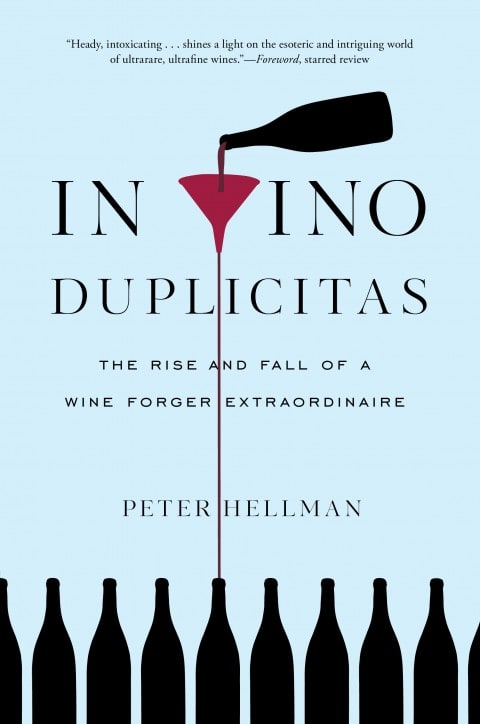
WINE | Our columnist’s top picks include works by Jon Bonné, Peter Liem and Peter Hellman.

Wine writers attempt to reveal wine’s mysteries, strip away its pretensions, simplify its immense variety. Of course, if we ever succeed, no one would need us anymore.

The latest to try is Jon Bonné, with “ The New Wine Rules: A Genuinely Helpful Guide to Everything You Need to Know ” (Ten Speed Press, $15). This slim volume of practical advice — each of the 89 new “rules” is just a few paragraphs — headlines this holiday season’s books for the wine lovers on your gift list.

Bonné is an authoritative voice. He is a senior contributing editor for Punch, an online drinks publication, a former wine editor of the San Francisco Chronicle, author of “The New California Wine” and the forthcoming “The New French Wine,” and an occasional contributor to The Washington Post Food section.

As you might suspect, the premise of “The New Wine Rules” is that the old rules no longer apply. Bonné told me in an interview that he didn’t want to write the traditional basic wine book. “You can Google grape varieties,” he said. “I wanted to write for people who are already buying wine and want to know enough about it to enjoy it, and maybe to hold their own when they run up against someone who claims to know everything about wine in an obnoxious way.” [ . . . ]

Read More: The stuff of the best 2017 wine reads: Everyman advice, a con man, a legendary region

The fascination with Fidel Castro of Saint-Germain-des-Prés 60s

In the 1960s, French intellectuals and artists, Gérard Philipe Jean-Paul Sartre, flocked to Havana, fascinated by the Cuban revolution. For them, Fidel Castro, died on the night of Friday to Saturday, will incarnate “hope”, at least for a time.Fidel Castro arrived when Stalinism was beginning to decline in ideals. He embodied hope, as something salutary, “said Jean Daniel, co-founder of L’Observateur, which then journalist with L’Express, met with Cuban in 1963. When on 1 January 1959, on the balcony of Santiago city Hall Cuba, Castro proclaimed the “beginning of the Revolution,” it is not yet a Marxist. But it is undeniably left and represents a great hope to some intellectuals after the Stalinist debacle.

https://www.youtube.com/watch?v=G1H_2G3UDY4

Read Full Story: The fascination with Fidel Castro of Saint-Germain-des-Prés 60s