Françoise Hardy, French pop singer and fashion muse, dies aged 80

Singer and actor who wrote some of her country’s biggest pop hits had suffered with lymphatic cancer for many years

Françoise Hardy, whose elegance and beautifully lilting voice made her one of France’s most successful pop stars, has died aged 80.

Her death was reported by her son, the fellow musician Thomas Dutronc, who wrote “Maman est partie,” (or in English, “mum is gone”) on Instagram alongside a baby photo of himself and Hardy.

Hardy had lymphatic cancer since 2004, and had undergone years of radiotherapy and other treatments for the illness. In 2015, she was briefly placed in an induced coma after her condition worsened, and had issues with speech, swallowing and respiration in the years since. In 2021, she had argued in favour of euthanasia, saying that France was “inhuman” for not allowing the procedure.

Hardy was born in the middle of an air raid in Nazi-occupied Paris in 1944, and raised in the city, mostly by her mother. Aged 16, she received her first guitar as a present and began writing her own songs, performing them live and auditioning for record labels. In 1961, she signed with Disques Vogue.

Inspired by the French chanson style of crooned ballads as well as the emerging edgier styles of pop and rock’n’roll, Hardy became a key part of the yé-yé style that dominated mid-century French music. It was named after the predilection for English-language bands of the time to chant “yeah”, and Hardy had a hand in its coinage: an early song, La Fille Avec Toi, began with the English words: “Oh, oh, yeah, yeah.”

The self-penned ballad Tous les garçons et les filles was her breakthrough in 1962, and sold more than 2.5m copies; it topped the French charts, as did early singles Je Suis D’Accord and Le Temps de L’Amour. In 1963, Hardy represented Monaco at the Eurovision song contest and finished fifth.

Her growing European fame meant she began rerecording her repertoire in multiple languages, including English. Her 1964 song All Over the World, translated from Dans le Monde Entier, became her only UK Top 20 hit, but her fame endured in France, Italy and Germany. In 1968, Comment te Dire Adieu, a version of It Hurts to Say Goodbye (originally made famous by Vera Lynn) with lyrics by Serge Gainsbourg, became one of her biggest hits.

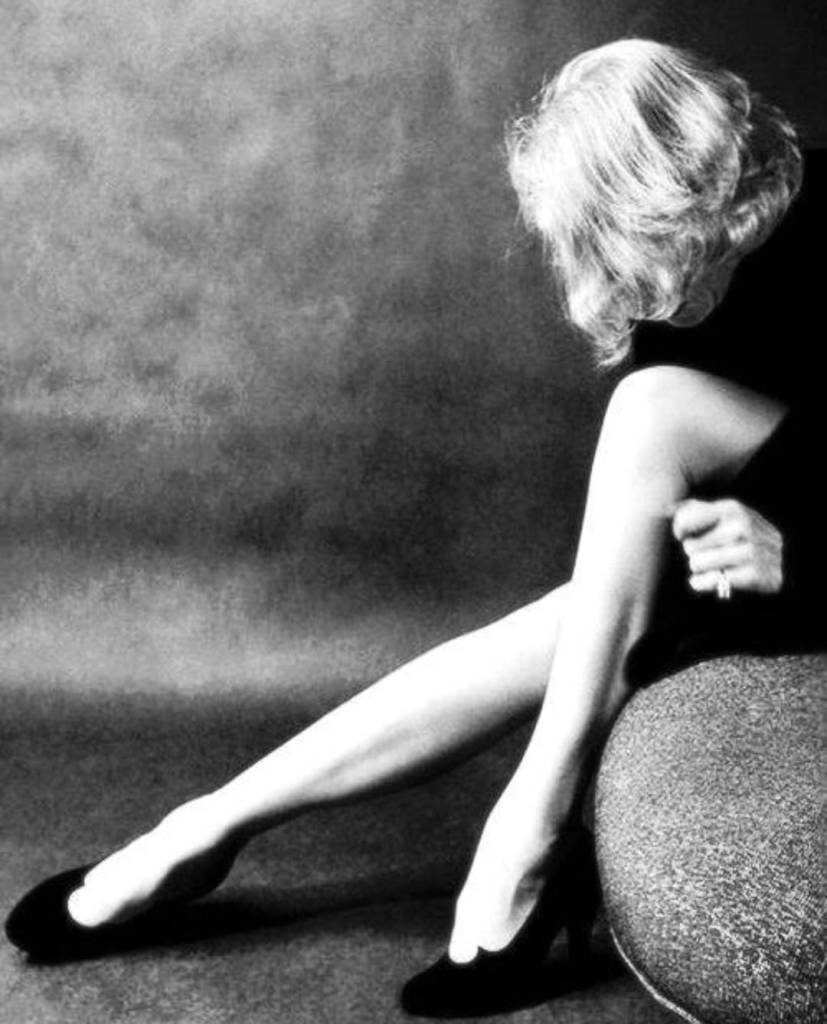
Hardy’s beauty and deft aesthetic – which encompassed cleanly silhouetted tailoring alongside more casual looks, including knitwear and rock-leaning denim and leather – defined the seeming effortlessness of 20th-century French cool. She became a muse to designers including Yves Saint Laurent and Paco Rabanne, and was also a frequent subject for fashion photography, shot by the likes of Richard Avedon, David Bailey and William Klein. Later, designer Rei Kawakubo would name her label Comme des Garçons after a line in a Hardy song.

Hardy was an object of adoration to many male stars of 60s pop including the Rolling Stones and David Bowie. Bob Dylan wrote a poem about her for the liner notes of his 1964 album Another Side of Bob Dylan, beginning: “For Françoise Hardy, at the Seine’s edge, a giant shadow of Notre Dame seeks t’ grab my foot …”

She was also courted by directors, appearing in films by Jean-Luc Godard, Roger Vadim, John Frankenheimer and more.

Hardy left Disques Vogue amid financial disputes, and signed a three-year deal with Sonopresse in 1970. This creatively rich period saw her record with Brazilian musician Tuca on 1971’s highly acclaimed La Question, and continue her multi-lingual releases, but by the contract’s end her stardom had waned and it was not renewed.

She spent the mid-1970s chiefly focused on raising her son Thomas with her partner, musician and actor Jacques Dutronc. Releases restarted with 1977’s Star, and Hardy embraced – not always enthusiastically – the sounds of funk, disco and electronic pop. A longer hiatus in the 1980s was punctuated by 1988’s Décalages, billed as her final album, though she returned in 1996 with Le Danger, switching her palette to moody contemporary rock. She released six further albums, ending with Personne D’Autre in 2018.

Having first met in 1967, she and Jacques Dutronc married in 1981 – “an uninteresting formality”, she later said of marriage in general – and separated in 1988, though they remained friends. She is survived by him and their son.


Source: Françoise Hardy, French pop singer and fashion muse, dies aged 80 | Françoise Hardy | The Guardian

Why has French President Emmanuel Macron announced snap elections after EU Parliament poll defeat?

Macron’s Renew party suffered a stinging defeat in the European elections, securing just 15.2% of the votes to the far-right National Rally’s 31.5%, according to provisional results.

By Alice Tidey

French President Emmanuel Macron announced on Sunday evening that he would dissolve the national assembly after the far-right National Rally crushed his centrist Renew party in European elections.

In a five-minute video address released on social media shortly after 21:00 CET, Macron said that “after having carried out the consultations provided for in Article 12 of our Constitution, I have decided to give you back the choice of our parliamentary future by voting.”

“I am therefore dissolving the National Assembly this evening,” he added.

His address came just one hour after his centrist Renew party was handed a heavy blow by coming in a very distant second in the European elections to the RN, where both parties scored 15.2% and 31.5% respectively.

‘Unprecedented defeat’

Jordan Bardella, the RN’s lead candidate for these elections, had in his victory speech delivered shortly after the provisional results came out at 20:00 CET, called for such a move.

“The President of the Republic cannot remain deaf to the message sent this evening by the French people. First of all, he must abandon the agenda he was preparing to implement: de-indexation of retirement pensions, the new rise in energy prices from this summer,” Bardella told supporters.

“We solemnly ask him to take note of this new political situation, come back to the French people and organise new legislative elections.”

“This unprecedented defeat for the current government marks the end of a cycle and day one of the post-Macron era, which it is up to us to build,” he added.

Extreme right is ‘downfall of our country’

Macron retorted in his address that “the rise of the nationalists and demagogues is a threat not only to our nation but also to our Europe and to France’s place in Europe and in the world”.

“The extreme right is both the impoverishment of the French people and the downfall of our country. So at the end of this day, I can’t pretend that nothing has happened,” he added.

He said the national ballot, which is to be held on June 30 for the first round and on July 7 for the second, is a “serious and weighty decision” and an “act of trust”.

“Confidence in you, my dear compatriots, in the ability of the French people to make the right choice for themselves and for future generations. Confidence in our democracy, in giving a voice to our sovereign people, nothing is more republican,” he also said.

Legislative elections are usually held in France every five years, weeks after a new president has been elected. The next ones should therefore have been held in mid-2027.

The snap elections are a massive gamble for Macron, who lost his absolute majority in the national assembly after being re-elected in 2022.

His Renew party then secured just 169 seats in the 577 hemicyle, with allies from other centrist parties including MoDem and Horizons supplying another 81 seats [ . . . ]

Continue at source: Why has French President Emmanuel Macron announced snap elections after EU Parliament poll defeat? | Euronews