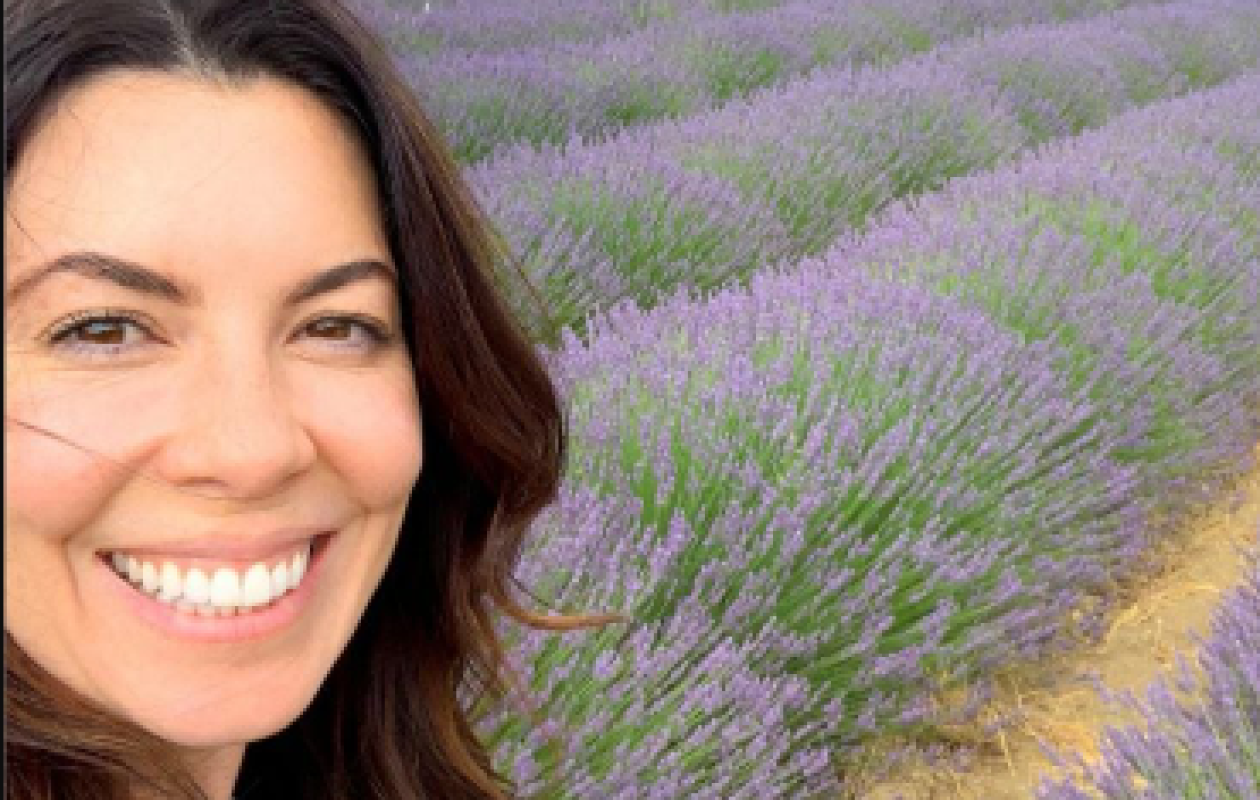
Suffering from burnout, an American woman asks ChatGPT where to move and ends up in the Gard region

Uzes
Suffering from burnout, an American woman asks ChatGPT where to move and ends up in the Gard region.

Thanks to ChatGPT, an American woman changed her life. Exhausted by her tech career in San Francisco, Julie Neis left everything behind to settle in Uzès, in the south of France.

Every morning, Julie Neis sits down at a table in the Place aux Herbes, in the heart of Uzès in the Gard region, to enjoy a coffee facing the fountain. This peaceful routine in the south of France is something the American woman would never have imagined without the help of… ChatGPT, reports CNN.

Originally from Michigan and raised in Texas, Julie Neis enjoyed a long and successful career in tech in San Francisco. But after years of stress and exhaustion, she nearly burned out. Seeking to regain balance, she turned to France, a country she had discovered as a teenager and where she had previously lived in Paris. Unable to choose a new destination, she trusted her decision to ChatGPT.

She’s selling everything to move to France

After describing his situation, values, and desires (a relaxed lifestyle, local markets, a pleasant climate, and an international community), the artificial intelligence assistant offered him two options: Sarlat-la-Canéda and Uzès. The AI ​​ultimately chose the latter, deeming it more accessible and dynamic.

A few months later, Julie left the United States, sold her car, and landed in Nice with just two suitcases. From there, she took the train to Avignon before driving to Uzès. Upon arrival, she says she felt a connection: the medieval streets, the light, and the friendly atmosphere were exactly what she was looking for. She settled into a small furnished apartment, explored the market, the cafés, and the gentle pace of life in the South.

Constrained, but a peaceful life.

Far from the hustle and bustle of Silicon Valley, Julie is rediscovering the pleasure of connecting with people without work being the primary topic of conversation. While she acknowledges that small-town life has its drawbacks (shops closed on Sundays, trips to Nîmes or Avignon for certain wanderers), she appreciates the peace and quiet, the close-knit community, and the more affordable cost of living.

Her YouTube channel, French Julie Travels, allowed her to meet other expats and build a circle of friends. She now organizes retreats and culinary tours to share her French way of life. This fresh start, she explained to CNN, has allowed her to regain her mental balance after years of exhaustion. Julie is now considering buying a property in Uzès, convinced that ChatGPT made the right choice.

Source: Suffering from burnout, an American woman asks ChatGPT where… | Seneweb –
The Aperitif Tales: When Words Take to the Air

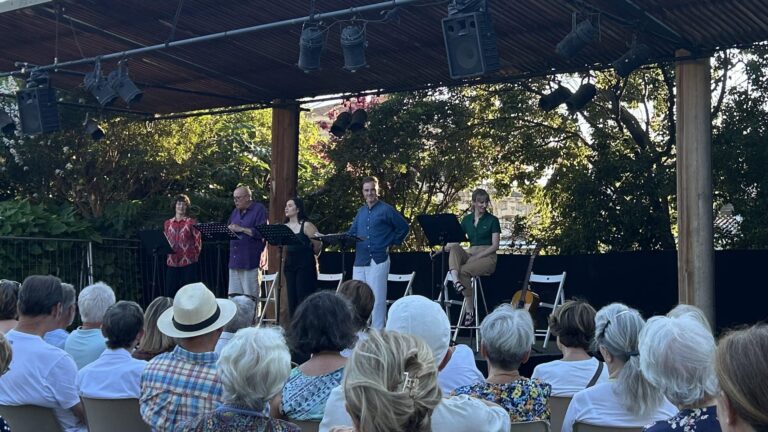
Every evening, the Coulée Verte transforms into an open-air stage with the “Contes d’Apéro”. An hour of living literature without any artifice. 

Here, there’s no need for a red curtain or spotlights. Just a stage and a few chairs for the audience. Every evening at 7 PM, the kiosk of the Théâtre National de Nice on the Coulée Verte becomes a literary stage. One evening, one century: that’s the theme set for this summer. From the 16th to the 21st century, the texts span all genres: theatre, poetry, novels, philosophy…  and to accompany it all: a non-alcoholic aperitif offered to everyone.

The opening phrase: “It is better to do than to say” and the evening begins. No set, no costumes, just the voice. Victor Hugo, Alfred de Musset, Flaubert… Lucrèce Borgia, On ne badine pas avec l’amour, Correspondence. Each reading lasts about ten minutes and flows seamlessly.

“They are very good actors, they manage to bring the texts to life. It’s a real living reading”, says Didier, visiting from Marseille. A theater enthusiast, he is discovering the Contes d’Apéro for the first time. However, he observes one detail: “It’s a shame there are only gray hairs. Not a young person in the audience.” Sitting next to him, Nicole his aunt, adds “I am a regular. This is my second time this year. It’s friendly and original. I love coming here.”

Ending with poetry and song

After a poetic interlude with Rimbaud, Baudelaire and Victor Hugo, the evening ends with a song. Everyone hums Le Temps des cerises by Yves Montand, in a wonderful collective energy. And to close the evening, a little literary quiz on themes of clever quips. Who will find the author of these fine words?

The Contes d’Apéro continue until August 3rd every evening of the week at 7 PM. Each evening, a new century, a new atmosphere but always under the open sky and with heart.

Source: The Aperitif Tales: When Words Take to the Air – Nice Premium EN

Comme une Française: Need-to-know vocabulary for your next visit to Paris

Joyeux Noël! It’s easy enough to discover the translation of “Merry Christmas” in French, but as an It’s no secret that travel (and total immersion) is one of the best ways to learn a language. You may not be able to physically travel to Paris right now, but we can go on a virtual tour of the city together! In today’s lesson, I’ll walk you through the different “arrondissements” of Paris, pointing out common landmarks and explaining why the city is arranged in this way. Repeat after me as I slowly pronounce some new vocabulary words. Then, let me know in the comments: did you learn anything new?

Géraldine

The U.S. may be ready to see cicadas gone, but this French village has a statue, a song and ceramics in their honor

In France, the insects are associated with summer and sun.

By Rick Noack

LE BEAUSSET, France — The five-foot blue iron cicada dangles upside-down from a metal branch, bulging eyes staring at the sky. It appears ready to launch itself at any moment at cars moving through the traffic circle below.

The $34,000 statue was inaugurated last year as a proud defense of the seasonal insect, after complaints from tourists who had dared to ask if the din emanating from the trees could be stopped with an application of insecticide.

The chorus of cicadas, or “cigales,” as they are called here, is an annual and generally beloved phenomenon in southern France, especially in the region of Provence. And the village of Le Beausset, with a population of about 10,000 people and an unknown number of cicadas, is the self-proclaimed cicada capital.

Across the region, visitors can buy cicada postcards and cicada tablecloths and ceramic cicadas in more than three dozen colors. For the biggest fans, shops in Le Beausset’s neighboring town of Le Castellet sell versions that release their deafening sounds whenever anyone comes close.

And so as residents of Le Beausset and across France’s south await the annual chirping of the insects — expected later this month — many here have watched reaction to the U.S. “zombie cicada invasion” with a mix of bewilderment and surprise.

Image without a caption

They understand that the cicada species dominant in southern France emerge in lower density than the 17-year periodical cicadas that have roiled the East Coast this summer. But few here would think of the insect as an edible snack. Or something worthy of 911 noise complaints.

Continue reading “The U.S. may be ready to see cicadas gone, but this French village has a statue, a song and ceramics in their honor”

What Americans can expect when traveling to France during the pandemic

By Andrew Kunesh

As of today, June 9, 2021, France has reopened to tourists from a handful of nations, including the U.S. Those coming from the U.S. must possess proof of vaccination and a negative COVID-19 test to gain entry to the country without mandatory quarantine.

I’m a huge fan of France and was ecstatic to hear the reopening news. Naturally, I hopped on one of the first flights to Paris (CDG) that arrived just hours after the new regulations went into effect.

Here, I’ll give you a look at my experience entering France under the new coronavirus entry restrictions.

I’ll start with a quick overview of what Americans need to bring for entry to France and then discuss my travel experience, from checking in at New York-JFK to clearing customs at Paris (CDG).

Let’s get started!

Overview of France’s entry requirements (and what to bring)

Vaccinated Americans can now visit France for tourism. (Photo by Clint Henderson/The Points Guy)

Today, France implemented a “stoplight” system for tourists entering the country. There are three different colors: green, orange and red. Those coming from green countries can enter without restriction if vaccinated, while those in red countries are mostly barred from entry except for essential purposes.

French COVID stoplight system map
(Image courtesy of the French Government)

Orange is the largest category and contains most of the countries outside of the Schengen area. This includes the U.S., U.K., Canada and Mexico, among others.

Entry requirements are very straightforward. According to the French Government (PDF link), vaccinated Americans (and vaccinated travelers from other orange countries) can enter France with the following:

  • Proof of your vaccination — the following vaccines are accepted:
    • AstraZeneca
    • Johnson & Johnson
    • Moderna
    • Pfizer
  • negative COVID-19 test:
    • PCR within 72 hours of boarding
    • Antigen within 48 hours of boarding

Note that you must wait a set amount of time after your COVID-19 vaccine in order to enter France. The wait time depends on which vaccine you received:

  • Two weeks after the second injection for two injection vaccines (Pfizer, Moderna, AstraZeneca)
  • Four weeks after the injection for single injection vaccines (Johnson & Johnson)

Unvaccinated persons coming from orange countries are not allowed entry to France unless he or she has a “compelling reason” for their visit or is a French citizen, EU national or holds one of a handful of French visas.

Additionally, unvaccinated travelers are subject to tougher restrictions:

  • Proof of a negative COVID test, either:
    • PCR within 72 hours of boarding
    • Antigen within 48 hours of boarding
  • Antigen test on arrival
  • Mandatory seven-day self-quarantine

In other words: if you’re coming from an orange country, you can only visit for tourism if you’re fully vaccinated.

Related: What you need to know about COVID-19 vaccines in the US

COVID-19 restrictions in France

Many COVID-19 restrictions in France have been eased alongside the border reopening. That said, there are still some restrictions in place that you should be aware of if you plan to visit France immediately.

  • There is an 11 p.m. curfew, with a fine for breaking it
  • Indoor dining at cafés and restaurants around the country have resumed indoor dining at 50% capacity, with a maximum of six people allowed per table
  • Outdoor dining has resumed at full capacity
  • Museums are open, albeit with capacity restrictions

Many of these restrictions are set to be lifted at the end of the month. So if you’re a night owl, consider pushing your trip back a few weeks [ . . . ]

Continue at source: What Americans can expect when traveling to France during the pandemic

Paris medics fear worst of COVID wave still to come

In the COVID-19 intensive care unit of the Antony Private Hospital south of Paris, no bed stays free for long and medics wonder when their workload will finally peak.

As one recovered elderly patient is being wheeled out of the ward, smiling weakly, boss Jean-Pierre Deyme is on the phone arranging the next arrival and calling out instructions to staff.

Louisa Pinto, a nurse of nearly 20 years’ experience, gestures to the vacated room where a cleaner is already at work, scrubbing down the mattress for the next arrival.

“The bed won’t even have time to cool down,” she says as the patient monitoring system beeps constantly in the background.

For now, everything is stable in the 20-odd beds around her where COVID-19 victims lie inanimate, in a silent battle with the virus.

Paris is going through a third wave of the pandemic which risks putting even more strain on saturated hospitals than the first wave in March and April last year.

“With what’s coming in April, it’s going to be very complicated,” says Pinto, a mother of three who hasn’t had a holiday since last summer and like other staff will be cancelling a planned break this month [ . . . ]

Continue at Medical Xpress: Paris medics fear worst of COVID wave still to come