Cannes Film Review: Jeanette: The Childhood of Joan of Arc

Bruno Dumont

Cannes Film Review: Jeanette: The Childhood of Joan of Arc by Sam C. Mac

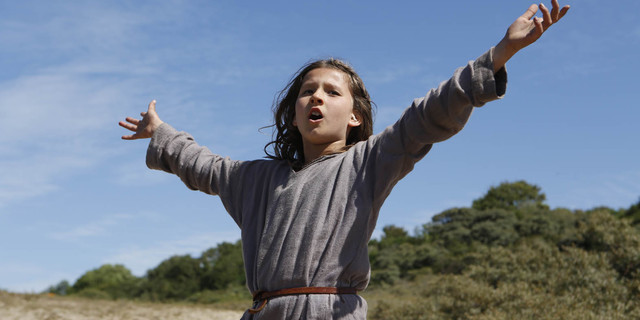
Bruno Dumont follows his oddball 2016 Cannes competition entry Slack Bay with the bold and more divisive rock opera Jeanette: The Childhood of Joan of Arc. And as with Slack Bay and 2014’s Li’l QuinquinJeanette’s provocations—sacred subject matter paired with pounding death-metal bass drums—add to its sense of humor. A sample scene: a sheep bleating off screen while an earnest hymnal is sung into the camera. Even the frequently out-of-tune singing and chintzy synthesizer soundtrack add to a sense of levity and play, a tone Dumont’s never pulled off as comfortably as he does here [ . . . . ] More at source: Cannes Film Review: Jeanette: The Childhood of Joan of Arc | The House Next Door | Slant Magazine

Review: ‘Paris Can Wait,’ at Least Until After the Crème Brûlée

“Paris Can Wait,” a smugly affluent Euro trifle and the first narrative feature from Eleanor Coppola (the wife of Francis Ford Coppola), is little more than an indulgent wallow in gustatory privilege. By the time the final meal is devoured, you’ll be wanting nothing so much as an antacid.

Inspired by similar events in Ms. Coppola’s past, the story fusses around Anne (an overqualified Diane Lane) as she trundles from Cannes to Paris in an old Peugeot. Anne’s husband, a frantic Hollywood producer (a barely seen Alec Baldwin), has been urgently summoned to Budapest. So his amiable French business partner, Jacques (Arnaud Viard), has offered to drive Anne to her destination — via seemingly every notable restaurant en route.

What follows is a Michelin-starred commercial for French cuisine gussied up as Anne’s journey of self-discovery. When not inhaling jus d’agneau and crème brûlée — and a cheese basket the size of a small fishing boat — the two visit famous landmarks and exchange flirty glances. But when Anne finally peels off her pantyhose, it isn’t to indulge in a roadside quickie; it’s to repair the Peugeot’s broken fan belt. So practical, these American women!

Between promoting her son-in-law’s band and tediously freeze-framing Anne’s amateur snapshots, Ms. Coppola (best known for her riveting 1991 documentary about the making of “Apocalypse Now”) never realizes Anne as more than a bland accessory who lets men tell her what to eat. Unlike Martine (Élise Tielrooy), a forthright Venusian beauty from Jacques’s past.

“You’ll never forget your travels with Jacques,” Martine promises, flushed with remembered ecstasies. Oh, Martine, I’m pretty sure we will.

“Jeannette, the childhood of Joan of Arc”, the musical of Bruno Dumont after Charles Péguy

“Jeannette, the childhood of Joan of Arc” is a musical. This writing, do not expect a dish in sauce of the style “The Ten Commandments”, version Élie Chouraqui and Pascal Obispo, or an adaptation in the mode “Joan of Arc Superstar”. There are, at the beginning, the texts that Charles Péguy dedicated to the Maid of Orleans: “Joan of Arc”, dating from 1897 while he was still an atheist, and “The mystery of the charity of Jeanne d ‘Arc’, of 1910, when he regained the Catholic faith. That already marks its difference. Then there is the look of Bruno Dumont. The director of ” Ma Loute ” presented in Cannes last year, and ” P’tit Quinquin ” in 2014, [ . . . ]

It would be a pity to limit the gaze on this film to those gags who often hold anachronism. It goes much further than that.

Source: “Jeannette, childhood of Joan of Arc”, the musical of Bruno Dumont after Charles Péguy

In Search of… The Dardenne Brothers’ ‘Unknown Girl’ revisits their theme of ordinary people facing moral dilemmas 

Belgian filmmakers Jean-Pierre and Luc Dardenne have been making movies together since the 1980s. The brothers, who write, direct and produce, are best-known for their breakout films, La Promesse (1996), about a young man (Jérémie Renier) whose father (Olivier Gourmet) trafficks African immigrants, and Rosetta (1998), a portrait of a disenfranchised teenager (Émilie Dequenne) who undermines a friend in order to get steady work. Nearly all of the Dardenne Brothers’ movies are about working-class characters who are compelled to make difficult decisions. Their latest feature, The Unknown Girl (opening Sept. 8 from IFC Films), represents a slight departure: Its protagonist is an ambitious medical doctor.Jenny Davin (Adèle Haenel) is middle-class. At the beginning of The Unknown Girl, she is on the verge of leaving her current position to join [ . . . ]

Read Full Review: In Search of… The Dardenne Brothers’ ‘Unknown Girl’ revisits their theme of ordinary people facing moral dilemmas | Film Journal International

Mireille Darc: the most beautiful roles of the great grasshopper

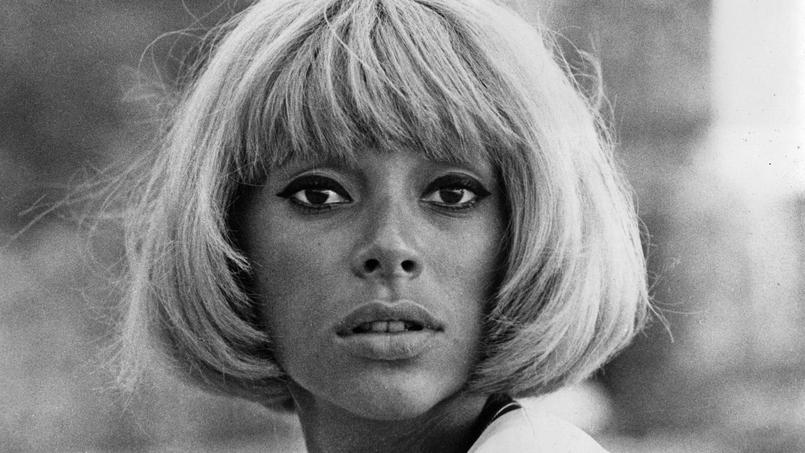
Mireille Darc, who just left us at the age of 79, was able to invent in the 60s a new kind of woman liberated with mutinous charm under the leadership of Georges Lautner and Michel Audiard. In the second part of her career, influenced by Delon, she encamped darker roles as in Ice Breasts .

A film gave him her nickname. In 1965, Mireille Darc became the great grasshopper forever. An actress apart from the crazy chic that sticks perfectly to her time. Men, and not just anyone, would transform her into a symbol of the liberated woman who would take power in the 1970s.

After a few appearances in the early 1960s, Mireille Darc became famous with the comedy Pouic-Pouic by Jean Girault. She is Patricia Monestier, the half-ingenious, half-sophisticated daughter of a businessman who [ . . . ]

Read More at: Mireille Darc: the most beautiful roles of the great grasshopper

Review: Two Animated Orphans Make Their Way to Paris in ‘Leap!’

Nit-picking will get you nowhere with the target audience of “Leap!,” an animated movie for tweens — they’re unlikely to care about critical quibbles. As for the adults who’ll get dragged to the theater: You’ve seen it all before, though it’s pleasant enough to watch again.Beginning at a French orphanage sometime around the 1880s, this good-natured tale finds 11-year-old Félicie (voiced by Elle Fanning) and her friend Victor (Nat Wolff) ready to run away to Paris, where she hopes to become a ballerina and he an inventor. After this generic pair is chased by the orphanage overseer (Mel Brooks, criminally underused) they arrive in the big city [ . . . ] Read Complete NYTimes Review