France’s Netflix Rival Salto Will Launch in 2020 

All those French shows you wish you could stream could now be available on a new French streaming service, Salto.

Today, French regulators gave the go ahead to three of the country’s major broadcasters to start a joint online video streaming service, Salto, which is expected to launch in early 2020.

France Televisions (a public company) and M6 Groupe and TF1 Groupe (two private companies) are partnering for the venture.

Billed as a French alternative to Netflix, the service will feature French content from a variety of broadcasters and studios as well as some live channels. France Televisions owns France 2, France 3, France 4, France 5 and France Ô, M6 Groupe owns M6, W9, and 6ter, and TF1 Groupe owns TF1, TMC, TFX, TF1 and LCI. To avoid creating a streaming monopoly for the channels, the streaming site’s three broadcasting backers agreed to limit the use of their own content on the site to 40 percent of the offerings available.

In a press release announcing the verdict, Salto stated that the three companies are “combining their forces and proposing an ambitious, local response to the new expectations of the public, all while further reinforcing their active participation in French and European culture.”

Hollywood Reporter noted that’s Salto’s budget would be about $56 million for the first year.

The announcement of the French streaming service came in June 2018, but it only became a reality when regulators gave the go-ahead on August 12. France’s national competition regulator, Autorité de la concurrence, specified in a press release that the trio of broadcasters will have to submit to a series of agreements that will reduce the risk of “coordination” between the broadcasters to acquire the rights to French programs. The three parent companies also won’t be able to cross-promote the platform and their channels.

France isn’t the first country to start its own streaming service. In the U.K., the two largest broadcasters, ITV and the BBC, are launching BritBox, which offers the “best of British” TV and movies. Once given regulatory approval, BritBox will go live, likely this year.

While BritBox is available in North America, it has not yet been announced if Salto will be available Stateside.

Source: France’s Netflix Rival Salto Will Launch in 2020 – Frenchly

Movies at the Louvre

The Louvre and mk2 proposed to revisit eight unforgettable films under a new eye.

[TROISCOLEURS translation Google] Just below the majestic Clock Pavilion and the silent statues that surround it, couples of dancers try their hand at tango and some players improvise a game of ping-pong, while others have decided to go straight to the table. aperitif, a glass of wine and plates in the hand. It is between her royal walls that Isabelle Adjani ran, her hands bloody and her face pale, to escape her destiny in Patrice Chéreau’s La Reine Margot , released in 1994.

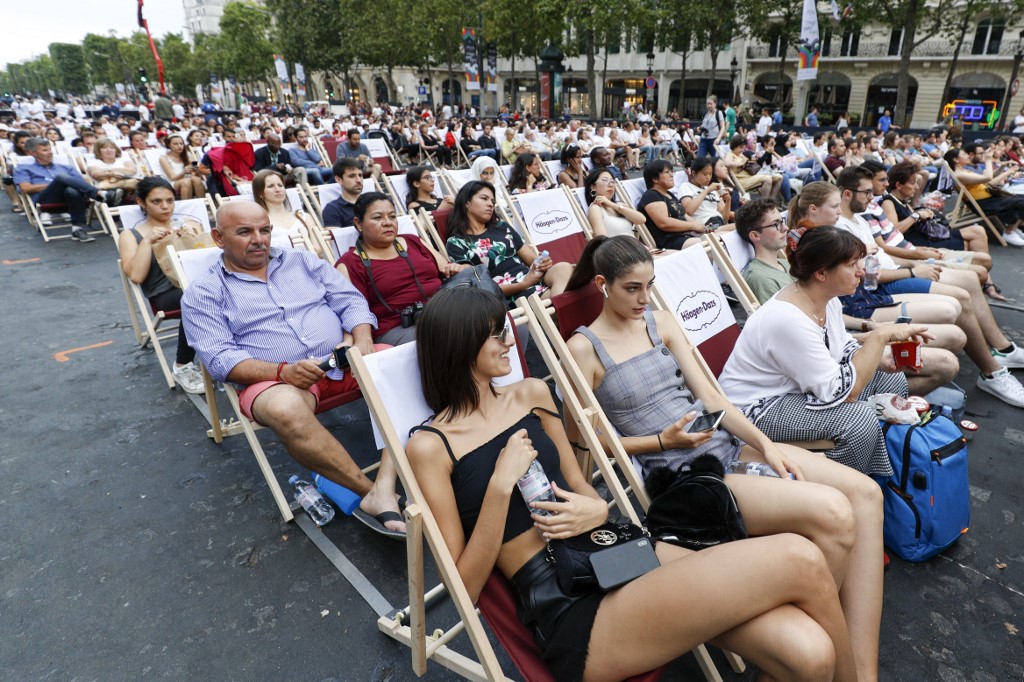
And it is in this place full of history and memory film that the Louvre Museum, in partnership with mk2, has chosen to install for a week in its courtyard Carrée ephemeral screen, to offer spectators to see for free at open sky 8 films both popular and demanding. On a canvas 24 meters high, designed as a window to the world where the arid landscapes of Indiana Jones and the Last Crusade parade , the French campaigns of Faces Villages and the romantic New York of When Harry meets Sally , curious and regulars have rediscovered these cult works in a dreamlike setting.

It is 22h when daylight begins to decline. The dance floor suddenly empties, the sound of boules balls stops and the food truck odors are more distant. As an air mixed with nostalgia fleet forward on the faces of the spectators, who are just coming to see this fourth evening a movie-like declaration of love in the 7 th art: Cinema Paradisoof Giuseppe Tornatore. While Alfredo and Totò’s complicit faces, hidden behind their projection booth, invade the screen on Ennio Morricone’s score, we feel that these images resonate between the columns of the palace like distant and intimate memories in the audience , until this magical sequence of the outdoor cinema-club where the storm breaks out, and which suddenly opens a magnificent mise-en-abyme to the audience.

Because it is the idea of ​​a unifying cinema, able to federate all ages and all sensibilities, which forms the thread of the event, and that we feel even more palpable in the forefront. last night, where The Journey of Chihiro from Hayao Miyazaki is shown. For some, it’s an outdoor reunion with a movie that terrorized and amazed their childhood – like Justine, who saw the film when it was released in 2001 when she was only 10 years old. For others, this nocturnal event has the taste of the first time-like Dana, who discovers with amazement the richness of this initiatory tale about the fears of childhood and the power of imagination. Like the spectators who have lost none of their ingenuity and are still trembling at the sight of the witch of Yubaba and know by heart the mimicry of Sans-Face, the film has not taken a wrinkle. It was perhaps only necessary to see him again in this unreal place and out of time to notice it.

Source: Report: Cinema Cinema Louvre Nightlife – TROISCOULEURS

Paris to host free outdoor French film screenings (with English subtitles)

Free outdoor cinema screenings in Paris this summer will show French films with English subtitles, to help Anglophones keep abreast of French culture.

Cinema club Lost in Frenchlation – which regularly screens French films with English subtitles, is hosting three free outdoor screenings over the summer.

The first screening is romance Fidelio, L’Odysée d’Alice.

It is on Friday, July 12th at Mairie du 11ème, 12 Place Léon Blum, with a free concert at 8.30pm, followed by the screening at 10.30pm.
The second is American comedy mash-up La Classe Américaine on Saturday, July 20th at Mob Hôtel, 6 Rue Gambetta, in Saint-Ouen at 10pm.
And the third in the series is comedy La Nouvelle Ève on Friday, August 9th at Mairie du 11ème. The screening at 9.30pm, preceded by short movies.
The outdoor screenings are in addition to Lost in Frenchlation’s usual programme, which includes the new Jean Dujardin comedy Le Daim on  Friday, July 19th at Club de L’Étoile/Champs-Élysées.
Before the screening there is an optional Eiffel Tower Movie Tour at 5:30pm, drinks from 7pm, a stand-up comedy show (in English) at 8pm, followed by the screening at 8.30pm. €15 Full Price, €13 for students.

See the full schedule at http://lostinfrenchlation.com/

Source: Paris to host free outdoor French film screenings (with English subtitles) – The Local

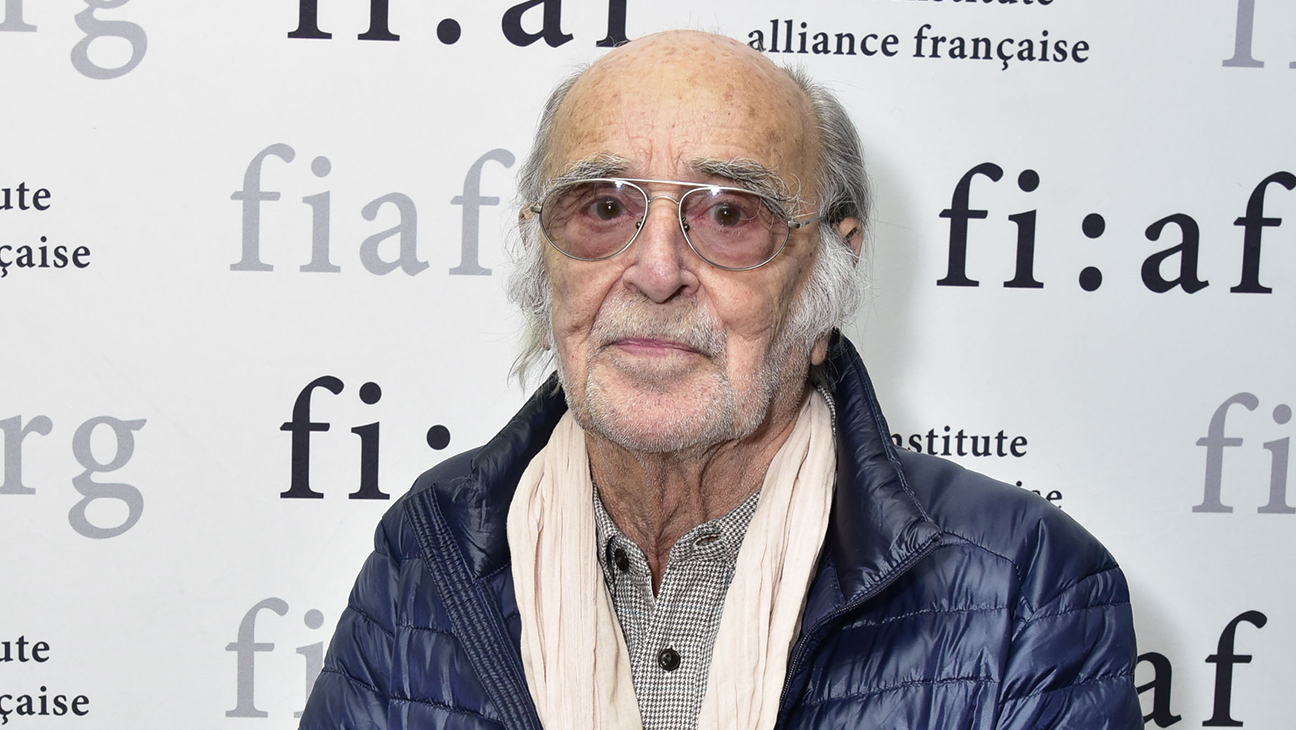
Pierre Lhomme, Legendary French Cinematographer, Dies at 89

He was behind the look of films like Jean-Pierre Melville’s ‘Army of Shadows’ and Jean Eustache’s ‘The Mother and the Whore.’

Pierre Lhomme, the French cinematographer behind such films as Army of ShadowsThe Mother and the WhoreCamille Claudel and Cyrano de Bergerac, has died. He was 89.

Lhomme died July 4 in Arles, France, the French Society of Cinematographers told The Hollywood Reporter.

Lhomme received a César award in 1989 for his work on Camille Claudel, which was directed by former cameraman Bruno Nuytten. He received a second César in 1991 for Jean-Paul Rappeneau’s Cyrano de Bergerac, which also won a technical prize at Cannes.

Among his 60-odd credits are films by Chris Marker (Le Joli Mai, which Lhomme co-directed, and A bientôt, j’espère), Robert Bresson (Four Nights of a Dreamer), Marguerite Duras (Les Mains NégativesLe Navire Night), Claude Miller (This Sweet SicknessDeadly Circuit) and Alain Cavalier (Le combat dans l’îlePillaged).

Lhomme also shot several Merchant-Ivory features, including the James Ivory-directed QuartetMauriceJefferson in Paris and Le Divorce, and Ismail Merchant’s Cotton Mary. His last feature credit was on Le Divorce, which he lensed in 2003.

Born in Boulogne-Billancourt on April 5, 1930, Lhomme studied briefly in the U.S. before trying to make it as a jazz musician in Paris in the late 1940s and early ’50s. He was then accepted into the prestigious École nationale supérieure Louis-Lumière, a highly technical film school whose alumni includes fellow cinematographers Henri Decaë (The 400 Blows), William Lubtchansky (Shoah) and Philippe Rousselot (A River Runs Through ItBig Fish) and directors like Gaspar Noé and Jean-Jacques Annaud.

Lhomme graduated from Louis-Lumière in 1953 and began working as an assistant cameraman and camera operator on films like Philippe de Broca’s The Love Game and Jean Becker’s Man Called Rocca. He also befriended several directors of the budding French New Wave, working as an operator on Eric Rohmer’s first feature, The Sign of the Lion, and co-directing Marker’s 1962 Paris-set documentary, Le Joli Mai.

His first feature credit as a cinematographer was on Robert Darène’s 1958 pirate adventure The Amorous Corporal, for which he was co-credited with Marcel Weiss.

Lhomme went on to shoot dozens of features from the 1960s up to the late 1990s. One of his most memorable early collaborations was on Jean Eustache’s sprawling 220-minute drama The Mother and the Whore, which he shot in high-contrast 16mm black-and-white.

Starring Jean-Pierre Léaud, Bernadette Lafont and Françoise Lebrun, the film was made on a tiny budget and became a minor sensation in France during the post-May ’68 years. Lhomme worked again with Eustache on the hybrid fiction-documentary A Dirty Story, starring Michael Lonsdale and Jean-Noël Picq and released theatrically in 1977.

Lhomme’s most renowned work was on Jean-Pierre Melville’s 1969 French Resistance epic Army of Shadows, starring Lino Ventura and Simone Signoret. Shot in monochrome color tones that channeled the somber, stifling atmosphere of Vichy France during the World War II, the film was a hit at home but wasn’t released in the U.S. until 2006, where it grossed more than $700,000 in theaters and was widely hailed as a masterpiece.

“It was only after Army of Shadows that I felt like a real cinematographer,” Lhomme told the French-Canadian newspaper Le Devoir in 2007. “Melville asked me to do things I’d never tried before. I remember when I messed up a shot that came out so dark, you couldn’t see anything. Melville said, ‘Don’t worry, we’ll put some nice music there.’”

Along with his César awards, Lhomme received a Prix Premio Gianni di Venanzo, named after the Italian cinematographer of , in 2005, and a lifetime achievement prize at the Camerimage festival in Poland in 2008. He was also crowned an Officer of the Order of Arts and Letters and a Chevalier of the Legion of Honor in France.

During a 12-hour interview that Lhomme gave with students at the French film school La Fémis in 2014, he summed up his approach to cinematography this way: “I never had a fixed or preconceived idea about cinema … One of the main skills of a good cameraman is to be able to pass from one director to another and adapt to their different worlds. What I loved above all else was working with talented people.”

Source: Pierre Lhomme, Legendary French Cinematographer, Dies at 89

Netflix’s ‘Huge in France’ Is Almost Great

Netflix’s new fish-out-of-water comedy about a European megastar who relocates to Los Angeles is a strange kind of failure.

There are moments during Huge in France when you can perceive what the show might have been—a semi-satirical, semi-screwball comedy about the acute insanity of modern-day fame. The new eight-part Netflix series exists in a meta universe similar to HBO’s Entourage, in that it’s loosely based on the real experiences of an actor and comedian, Gad Elmaleh. The plight of the show’s Gad (he refers to himself in the third person, alors, c’est vraiment Gad) is that he’s a huge star. In France. In real life, this is also true for Elmaleh, who by most metrics is a bona fide celebrity: He has 1.8 million Instagram followers, he once sold out Paris’s Olympia theater for a record-breaking seven consecutive weeks, and his former partner is the granddaughter of Prince Rainier III of Monaco and Grace Kelly. In France, Elmaleh is Jerry Seinfeld. In America, though? If a celebrity lands in a city where no one has ever heard of him, does he make a sound? Continue reading “Netflix’s ‘Huge in France’ Is Almost Great”

Top 150 Most Anticipated Foreign Films of 2019: #12. Ahmed – Jean-Pierre & Luc Dardenne 

Ahmed – Jean-Pierre & Luc Dardenne

Top 150 Most Anticipated Foreign Films of 2019: Ahmed – Jean-Pierre & Luc Dardenne. 

Ahmed

The Dardenne Bros. turn their socially minded lens to religious extremism with their eleventh narrative feature, Ahmed. As usual, the Dardennes are collaborating with production company Les Films du Fleuve, returning to a template which saw them find early success by using a cast of unknowns. Having twice won the Palme d’Or (Rosetta, 1999; L’enfant, 2005), the duo are the most celebrated directors to have come from Belgium, making any of their projects of instant note. Besides their Palme wins, their offerings almost always leave Cannes with a major prize, including the Ecumenical Jury Prize for 2002’s Le fils, Best Screenplay for Lorna’s Silence in 2008, the Grand Jury Prize for 2011’s The Kid with a Bike, and again the Ecumenical Jury Prize for 2014’s Two Days, One Night (which also resulted in an Oscar nod for Marion Cotillard). Their 2016 feature The Unknown Girl (read review) was their only effort to leave the festival unrewarded.

The Dardennes turn to another topical issue with Ahmed, religious fundamentalism. While details are scarce, the plot concerns a young man who plots to kill his teacher following his extremist interpretation of the Quran. Early details are reminiscent of similar territory explored by Rachid Bouchareb in his 2016 Belgian set The Road to Istanbul, which explores a mother’s journey to search for her radicalized teenager.

Read about the Top 150 at: Top 150 Most Anticipated Foreign Films of 2019: #12. Ahmed – Jean-Pierre & Luc Dardenne – IONCINEMA.com