
Catherine Ringer des Rita Mitsouko photographiée par Youri Lenquette en 1990

Catherine Ringer des Rita Mitsouko photographiée par Youri Lenquette en 1990
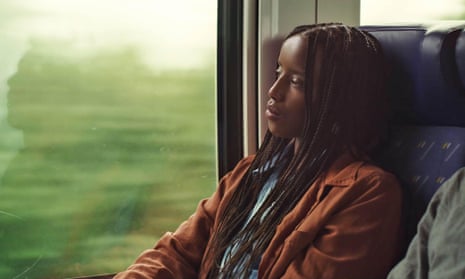
Alice Diop’s award-winning courtroom drama doubles as an unsentimental study in empathy with one of the year’s most mesmerising performances
By Guy Lodge
At this year’s Venice film festival, Alice Diop’s unblinking stunner Saint Omer was handed the prize for best debut film – a reward that would have seemed inadequate if it hadn’t shortly afterwards taken the grand prix in the main competition, and inaccurate under any circumstances. Diop’s film is only a debut if you’re happy to disregard documentary as a lesser branch of cinema that somehow doesn’t count; as her first dramatic feature, Saint Omer merely extends the clear-eyed gaze and burning social interest of her non-fiction work into new narrative terrain, with nary a tremor of uncertainty. Films like We showed Diop has form in braiding truth, storytelling and intense human scrutiny; Saint Omer isn’t so very different.
The surprise is that Diop’s entry into fiction takes the form of a courtroom drama, among the most rigidly procedural and rule-bound genres in the medium – only to strip it of its expected structures and rhythms, centring disordered interior feeling amid unyielding legal process. The case, drawn from a real-life 2016 headline-maker in France, is stark and horrifying: legally straightforward, perhaps, but psychologically tumultuous. Young Senegalese Frenchwoman Laurence Coly (Guslagie Malanda, often scarcely moving a muscle while giving one of the year’s most mesmerising performances) is accused of murdering her infant daughter. She doesn’t deny the act, but claims sorcery was to blame, sticking calmly to her story over days of frustrating testimony – shot by Claire Mathon with penetrating stillness, allowing the viewer to take in her micro-shifts in expression and intonation, her consistency of comportment, her occasionally lofty turns of phrase, as she repeats her awful confession over and over.
The audience, like the jury, can decide for themselves how much they believe her, but Diop isn’t interested in making a wholly objective screen Rorschach test. Instead, she assumes the conflicted viewpoint of a nominally detached observer, successful author and fellow Senegalese descendant Rama (Kayjie Kagame), who sees Medea-type dynamics in Coly’s story, and aims to write something about it. She’s not prepared, however, for the tacit connection she feels with this infamous stranger, as a woman, as an African and as an expectant mother. By inviting us into Rama’s perspective, Diop’s stoic, wholly unsentimental study in empathy invites audiences to consider their own affinities and prejudices regarding this case – how they can bring us closer to, or further from, an unhappy truth.
The humane austerity that Diop brings to what could have been luridly emotive true-crime material is quietly radical: the film’s steady, soulful watchfulness might point to her instincts as a documentarian, but also suggests the imposition of a non-western narrative sensibility on a story where Hollywood has shaped our instincts and expectations. In a script largely sewn from court records, Diop permits herself one climactic speech, delivered with measured calm and minimal table-banging, and one musical flourish: Nina Simone’s rendition of Little Girl Blue, played patiently in full, aching with recognition for legions of unheard Black women. But otherwise, this extraordinary film won’t be pushed toward convention, catharsis or conclusion: Diop, like her uncertain observer, is both ally and analyst to one woman’s riveting, unreliable history.
Source: Best films of 2023 in the UK: No 7 – Saint Omer | Movies | The Guardian

Identical twin sisters play a pair of mysterious playmates in Petite Maman, an enchanting film that achieves an emotional depth that eludes many movies twice its length.
Source: ‘Petite Maman’ review: The best family movie you’ll see in a while : NPR
The writer and director Céline Sciamma makes beautiful movies about girls and young women navigating the complexities of gender and sexual identity. You can tell as much from their titles: Tomboy, Girlhood, Portrait of a Lady on Fire.
Her wonderful new film, Petite Maman, is no less focused on the inner lives of its female characters. But it’s also something of a departure: This is Sciamma’s first work to earn a PG rating, and it’s both the best family movie and the best movie about a family that I’ve seen in some time.
It tells the gently surreal story of Nelly, an 8-year-old girl played by the remarkable young Joséphine Sanz, who has long brown hair and a sharp, perceptive gaze. Nelly’s just lost her maternal grandmother after a long illness. Now, she watches as her parents go about the solemn task of packing up Grandma’s house — the very house where Nelly’s mother, Marion, grew up years earlier. To pass the time, Nelly plays in the woods surrounding the house. It’s there that she meets another 8-year-old girl, who also happens to be named Marion. She’s played by Gabrielle Sanz, Joséphine’s identical twin sister.
This eerie encounter naturally raises a lot of questions: Who is Marion, and why does she look so much like Nelly? Is this forest the backdrop for a modern-day fairy tale, or have we slipped through a hole in the space-time continuum? Sciamma is in no hurry to provide the answers. The title Petite Maman — which translates literally as “Little Mom” — provides a bit of a clue. But one of the pleasures of this movie is the way it casually introduces a series of strange events as if there were nothing strange about them at all.
At times the movie feels like a live-action version of Hayao Miyazaki’s anime fantasies like Ponyo or My Neighbor Totoro: full of childlike wonderment, but also very matter-of-fact in its approach to magic. Rather than being puzzled by the situation, Nelly and Marion simply accept it and become fast friends. You accept it, too, mainly because the Sanz sisters have such a sweet and funny rapport onscreen.
Sciamma’s camera follows the girls as they run around the woods, gathering leaves and branches to build a hut. Eventually Marion invites Nelly over to her house, which looks an awful lot like Nelly’s grandmother’s house. There, the girls giggle as they cook up a messy pancake breakfast and act out a hilariously elaborate murder mystery. Few recent movies have so effortlessly captured the joy and creativity of children at play.
Petite Maman itself plays a kind of game with the audience, and you figure out the rules as you watch. You learn to tell the girls apart based on slight differences in hairstyle and the colors that they wear. You also get to know a few of the adult characters hovering on the periphery: At one point, Nelly introduces her father to her new best friend, and if he thinks there’s anything weird about this, he doesn’t show it. Meanwhile, Nelly’s mother — the older Marion — has temporarily left the house, needing some time to herself to grieve her mother’s death.
And without a hint of didacticism, Petite Maman reveals itself as very much a movie about grief, about how a child learns to cope with sudden loss and inevitable change. It’s also about how hard it is to really know who your parents were before they became your parents. But in this movie, Nelly gets the rare chance to see or perhaps imagine her mother as the sweet, sensitive, independent-minded young girl she used to be.
Although Petite Maman is decidedly different from Sciamma’s art-house touchstone Portrait of a Lady on Fire, they’re structured in similar ways: In both films, two female characters are granted a brief, even utopian retreat from the outside world and something mysterious and beautiful transpires. If that’s not enough of an enticement, you should know that Petite Maman runs a tight 72 minutes and achieves an emotional depth that eludes many movies twice its length. It’s funny, sad, full of enchanting possibilities and over far too soon — sort of like childhood itself.
Awarded the Golden Lion in Venice, Audrey Diwan’s second film delivers a moving adaptation of the novel, and the story, by Annie Ernaux.
40 years old, Audrey Diwan has already been a journalist at Glamor , editorial director of Stylist , writer, collection director, screenwriter, and finally, director. Until this magnificent Golden Lion unanimously awarded in Venice for L’Événement , his second film, adapted from the book by Annie Ernaux [ . . . ]
Continue story at Vogue: Why “L’Événement” is the most beautiful French film of 2021
Lucien de Rubempré (formidable Benjamin Voisin) is a young poet unknown in 19th century France. He has high hopes and wants to forge a destiny. He left the family printing press in his native province to try his luck in Paris on the arm of his protectress, Louise de Bargeton (Cécile de France). Soon delivered to himself in the fabulous city, the young man will discover the backstage of a world doomed to the law of profit and pretense.
“Lost Illusions”, a tale in the form of a triptych, was considered by Balzac as a major element of his great work, “The Human Comedy”. Inspired to the writer by his own experience in the field of printing, the book recounts the greatness and glory of his hero before his downfall.
Capitalism, unscrupulous journalists, traitors and mercantilism are strong ingredients of the story that has nothing to envy of the contemporary era. “Balzac was a visionary,” Cécile de France told RTS at the Zurich Film Festival. In fact, social networks are just missing to embody 2021. “But even at the time, we listened to the one who spoke the loudest,” adds Benjamin Voisin, who plays a very convincing Lucien de Rubempré.
The director of the film, Xavier Giannoli (“When I was a singer”, “Marguerite”), shot as close as possible to the places where the story took place as Balzac wrote it. And it feels. The meticulous and personalized costumes down to the smallest detail, the redeveloped streets of Paris in the 1920s, the theaters recreated from scratch, everything contributes to making the film a success in terms of aesthetics and restoring the atmosphere of the time. “We, the actors, are like children. We like to dress up and have fun. During the filming, everything was very probable and it was magical, we were amazed and that obviously helped us to play our characters”, explains Cecile from France.
The film was shot in 2019, long before the coronavirus pandemic. “I was lucky to be able to be present on the set every day. It was an extraordinary pleasure to see all these people around me passionate about this project,” says Benjamin Voisin. An initiatory journey from purity to degradation, Xavier Giannoli’s film magnifies its actors, whom he loves passionately. “He seeks beauty in each of us, despite the darkness of the film,” continues Cécile de France.
“Lost Illusions” is served by a five-star cast: Gérard Depardieu, Xavier Dolan, Jeanne Balibar, Vincent Lacoste, the late Jean-François Stévenin and Louis-Do de Lencquesaing appear on the film poster. “Being surrounded by such a band is a great gift for life”, concludes Benjamin Voisin.
Interview by Pierre Philippe Cadert
Web adaptation: Melissa Härtel
“Lost Illusions”, by Xavier Giannoli, to be discovered from October 20 on French-speaking screens.
Antoinette, a school teacher, is looking forward to her long planned summer holidays with her secret lover Vladimir, one of her pupils’ father. When she learns that Vladimir cannot come because his wife organized a surprise trekking in the Cévennes National Park with their daughter and a donkey to carry their load, Antoinette decides to follow their track, by herself, with her own stubborn donkey.
A very beautiful film, both funny and touching, which makes you want to return to France and go hiking in the Cévennes and carrying in its suitcase “Travel with a donkey in the Cévennes” by Robert Louis Stevenson.
Le Petit Journal
Antoinette, a Parisian schoolteacher, has an extra-marital relationship with Vladimir, the father of one of her students. The latter abandons him for the summer holidays to go hiking in the Cévennes with his wife and daughter. Neither one nor two, Antoinette also decides to make “the way of Stevenson” accompanied by Patrick, a recalcitrant donkey. If the beginnings are more than laborious, a beautiful relationship is established between the two protagonists and Patrick even comes to guide Antoinette in her love choices. Laure Calamy, always just as fair, finds the perfect tone and does not give in to cliché or caricature
 Pas De Merde