How a Gang of Thirsty Thieves Stole Over $500,000 Worth of Wine

ONE DECEMBER NIGHT IN 2014, a group of wine aficionados congregated in front of Thomas Keller’s famed French Laundry restaurant. They hadn’t called ahead to see if the Yountville, California, institution, which has an infamous, months-long waitlist, could accommodate them. Since it was Christmas night, the restaurant wasn’t even open.

Regardless, the crew got what they came for. They broke in and walked out with over $500,000 worth of wine, including some of the most coveted bottles in the world.

Nearly four years later, investigators have recovered all but a handful of the 110 missing bottles. Earlier this year, the Department of Justice released a statement confirming that two of the thieves—Alfred Georgis and Davis Kiryakoz—also conspired with others to steal and transport fine wines from Alexander’s Steakhouse in Cupertino, California (that theft clocked in at $32,000). Additionally, Kiryakoz admitted that he’d been part of a group that swiped $290,000 worth of wine in 2013, from San Francisco’s Fine Wines International, according to SF Gate. Both men have since been sentenced to time in prison.


That this band of thieves pulled off several large heists is remarkable. The bandits planned sophisticated, well-surveilled thefts—they robbed the French Laundry, for instance, the day after it closed for a months-long renovation. No one was on the premises, so they easily pried open the door, then stepped into the wine cellar. The French Laundry’s state-of-the-art alarm system—which had been deactivated, for once—didn’t stop them either. And not just any thief could have absconded with such valuable booty. Continue reading “How a Gang of Thirsty Thieves Stole Over $500,000 Worth of Wine”

Morbier and Mont d’Or cheese behind 10 deaths in France 

Ten people died and another 80 fell ill in France after eating contaminated Morbier and Mont d’Or cheese in a salmonella outbreak that health authorities knew about, a new report has revealed.

An investigation by France Inter radio said the two cheeses made in the Franche-Comté region in the east of the country from unpasteurised milk were at the root of the outbreak in late 2015 and early 2016.

The investigation produced a document which showed that in January 2016 national health authorities had discovered an unusually high number of salmonella contaminations in France that was centred on Franche-Comté.

Five cheese making companies in the region, between them making 60 different brands, were later identified as being at the source of the contaminations that began in November 2015 and continued until April the following year.

Those who died in the outbreak were old people who were physically weak or who suffered from another illness.

Jean-Yves Mano, the president of the CLCV consumer association, said he was surprised that a product recall had not been ordered of products that might have been infected with salmonella, which can cause nausea, vomiting, diarrhea and stomach pain in those affected.

“We do not understand why a general alert was not issued by state officials, or at least information given on what precautions to take,” he told France Inter.

The state food agency, the Direction générale de l’alimentation (DGAL), said there were two reasons why a recall was not ordered.

The first was that it would have allegedly been very difficult to identify which exact brand of the cheeses were contaminated because there were a total of 60 that were produced in the cheese-making firms where the outbreak originated.

The second was that by the time the authorities found out where the outbreak had come from, the contaminated cheeses had already been consumed and the new batches in the cheesemakers’ premises were not infected.

“It is perhaps due to these two factors that this contamination was not in the media, even though all the data was public nothing was hidden,” said Fany Molin of the DGAL food agency.


Source: Morbier and Mont d’Or cheese behind 10 deaths in France – The Local

5 wines to help you ring in spring

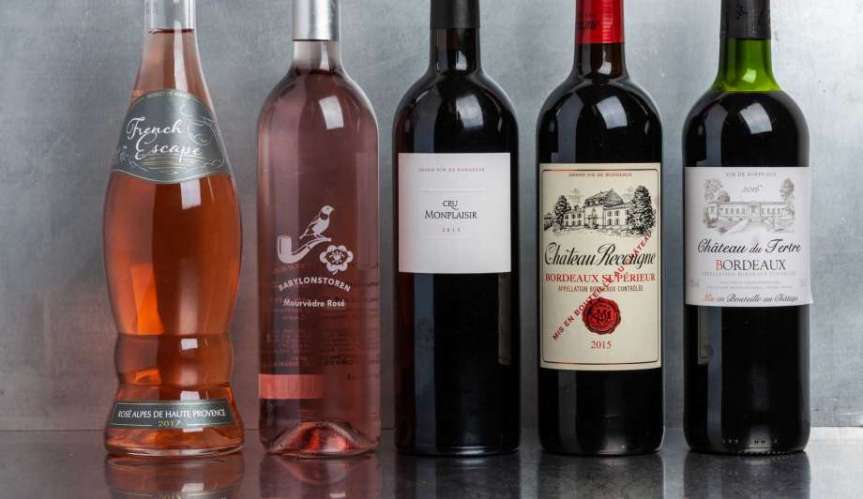
Here are three more examples of outstanding inexpensive Bordeaux from the 2015 and 2016 vintages. And since the weather is finally changing, it’s time to stock up on rosés for the summer.

Chateau Recougne Bordeaux ;Superieur 2015/ Bordeaux, France, $16

This wine is an overachiever. It hails from near the small city of Libourne, adjacent to the appellation of Fronsac, but it tastes as though its sights are set a little farther east in Saint-Emilion. It’s merlot at its best – big and warm, like the feeling of satisfaction you get from a trickle of sweat down your back after a long day and a job well done. Alcohol by volume: 14 percent.Cru Monplaisir Bordeaux Superieur 20152. [ . . . ]

Read more about these great values: 5 wines to help you ring in spring – SFGate

Bordeaux Wine Firm Found Guilty of Fraud

A leading Bordeaux négociant firm has been found guilty of fraud for passing off table wine as more lucrative appellation wine, and for illegally mixing appellations, vintages and châteaus to the extent that the labels no longer represented what was in the bottle. Bordeaux’s Criminal Tribunal handed down the guilty verdict April 5 against Grands Vins de Gironde (GVG), fining the company nearly $500,000 (with half the fine suspended).”It is a substantial offense,” said Judge Caroline Baret, telling the courtroom that the victims were both supermarket shoppers, who were being unfairly duped, and the image of French wine, which risked being tarnished in foreign markets.Eric Marin, GVG’s former director of purchasing and cellar manager, was also found guilty and given an $18,000 suspended fine. Charges related to a period when he was no longer in his post were dropped [ . . . ]

More at: Bordeaux Wine Firm Found Guilty of Fraud | News | News & Features | Wine Spectator

French chefs could be forced to present diners with ‘doggy bags’ 

France could force all restaurants to provide doggy bags in an attempt to cut down on waste and overcome traditional Gallic resistance to taking food home after eating out.The radical plan to make “le doggy bag” compulsory in restaurants, bistros and cafes has been adopted by a parliamentary committee in an amendment to a wider food bill, which will be debated next month.The overall aim is to halve food waste by 2025 [ . . . ]

More: French chefs could be forced to present diners with ‘doggy bags’