As COVID-19 cases exponentially increase in the U.S. and Western Europe, leaders impose rules on restaurants and bars in effort to decrease infection rates
Across the United States and Western Europe this past weekend, the COVID-19 pandemic continued to grow, spurring leaders to impose new restrictions to attempt to slow the spread of the coronavirus. Less than a week after Italy’s government shut down almost all schools and businesses, asking citizens to self-quarantine, France and Spain followed suit.
French Agriculture Minister Didier Guillaume tells Catherine Nicholson why he believes a transition to lower-chemical farming is essential and how he thinks it can be achieved.
Meanwhile, Green MEP – and organic farmer himself – Benoît Biteau tells us why what he learnt converting his father’s farm to greener practices can be replicated.
In our reports, we meet some of the mayors who have banned pesticides around their towns and find out more about the conflict with the farming community. We also meet French farmers who are testing how to reduce their dependence on chemical pesticides
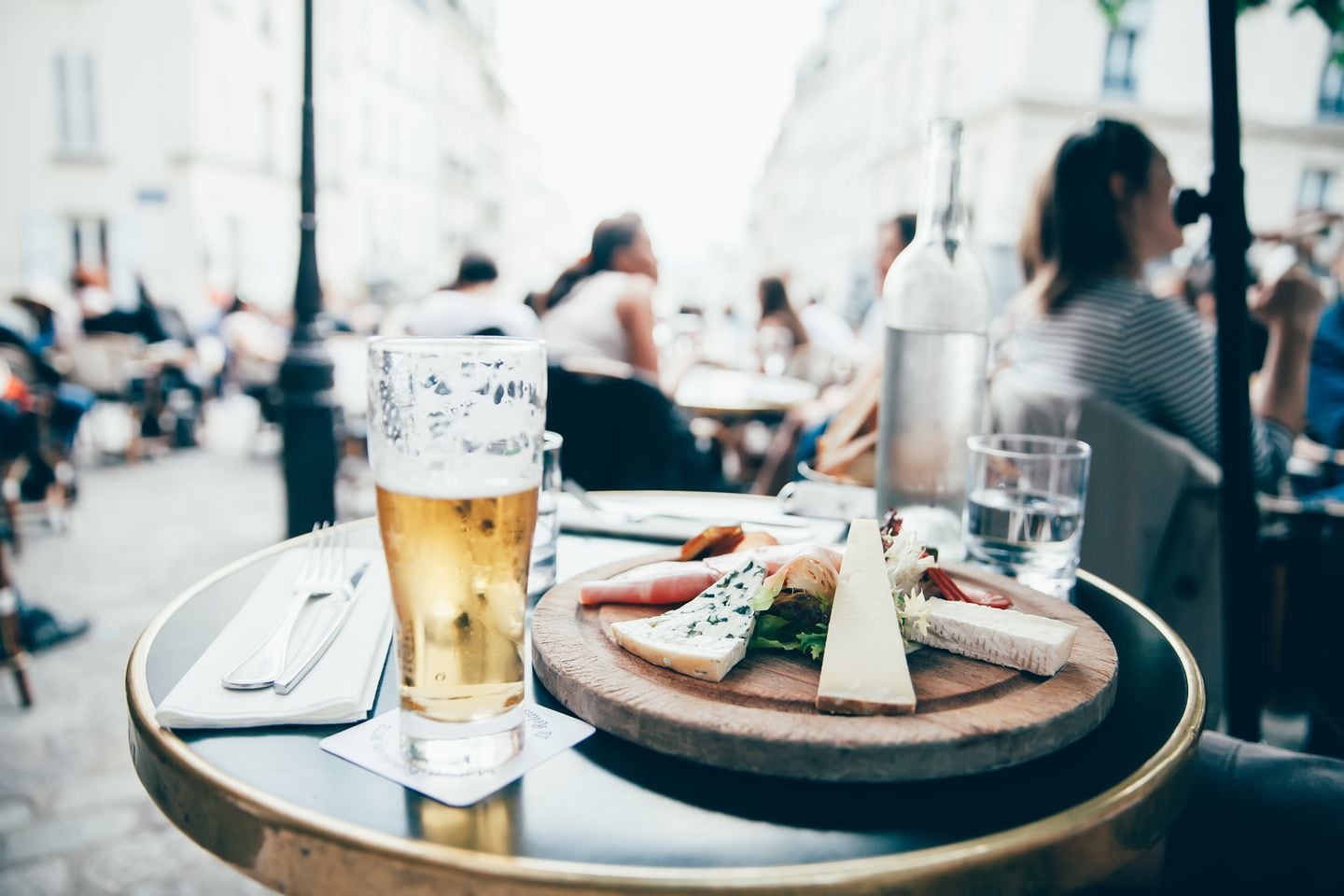
Brasserie might mean brewery, but only recently are Parisian establishments getting back to ale.
In Paris, you’re never far from a glass of wine. Step into a classic bistro and there will be good-value reds from the valleys of Rhone and Loire. Higher-end restaurants will inevitably point you in the direction of first-growth Bordeaux. New-wave wine bars are bursting with biodynamic Beaujolais. And a glass of Alsace riesling is de rigueur at a brasserie.
For a drinker interested in quality and value, wine can sometimes seem like the only option in this city. Every street, it seems, has its own cave à vin, complete with regional focus and invariably helpful staff, if you speak French. My favorites include Les Caves Saint-Martin on Rue du Faubourg Saint-Martin, where I once bought two bottles of an excellent grower champagne on the recommendation of the shop owner, and Trois Fois Vin on Rue Notre Dame de Nazareth.
The great food halls devote huge amounts of space to France’s most famous wine regions. I remember wandering into the recently reopened Galeries Lafayette food hall (“Lafayette Gourmet”) in 2014 to find acre upon acre of wine, the vast majority of it French (including 1,200 options from Bordeaux alone!). There were a few desultory shelves of beer.
It hasn’t always been like this: Brasserie, after all, means brewery. When Alsatians founded these palaces of gustatory gratification in the late 19th century, there was often brewing on-site. There still is at Brasserie Georges, which reinstalled a brewery in 2004, but that’s in Lyon. Paris’s mightiest brasseries long ago gave up grain for grape.
Beer is flowing in establishments with a young, energetic vibe
But things are changing. Breweries and bars are popping up throughout the city. It’s a young, energetic scene, exemplified by the annual Paris Beer Festival (formerly Paris Beer Week). That the name is in English rather than French is telling; much of Paris’s modern beer culture has more than a hint of Anglo-Saxon influence. That said, there’s a definite Gallic edge to places such as La Fine Mousse, an elegant bar and restaurant in the Marais, or breweries such as La Goutte d’Or, which uses ingredients reflecting the rich diversity of the local neighborhood.
The heart of this nascent Beervana can be found in northeast Paris, where rents are lower and the population younger. Around the Bassin de la Villette, a half-mile-long artificial lake in the 19th arrondissement, you’ll find Paname Brewing, a brewpub where the New England IPA is called Brexiteer (an example of how the French occasionally conflate “Anglo-Saxon” countries), and L’Atalante, with a huge outdoor terrace that fills up with young Parisians on summer evenings.
One of the most interesting breweries is Gallia: Originally founded in 1890, it was reestablished as a brand at the end of 2009. At first, the resurrected brand’s founders, Guillaume Roy and Jacques Ferté, focused on conservative pale lagers — but under head brewer Rémy Maurin, the range has expanded to encompass an impressive variety of flavors and styles.
It hasn’t gone unnoticed; in September, Heineken bought a minority share. Most bars in this city are tied to big brands such as Heineken or Kronenbourg. If they start offering customers the likes of Gallia, it’ll be a genuine game-changer.
It’s about time. Paris sits on the dividing line between northern Europe, where beer has traditionally held sway, and the wine-drinking south. Only Champagne, of France’s great wine regions, is further north, and it has (or had, until global warming) a fairly marginal grape-growing climate. This is natural beer country; it’s only right that Beaujolais, Bordeaux and the rest make room for la bière artisanale.
Will Hawkes is a freelance travel and drinks writer based in London.
Don’t get too attached to that pinot noir. New research suggests swapping out grapes to avoid climate catastrophe
January 31, 2020 at 7:00 AM EST
The prospect of hotter summers, warmer winters, drought and violent weather events have caused experts to warn of coming wine shortages and price increases, changing varietal character and, in some dire predictions, the extinction of some wines altogether.
Maybe there’s a fix, says a research paper in the journal Proceedings of the National Academy of Sciences.
The scientists’ computer models show that if we do nothing, global warming of 2 degrees Celsius would wipe out 56 percent of current wine-growing land; increase that to 4 degrees and an estimated 85 percent of grapes won’t be viable.
This team of researchers investigated whether using more heat-tolerant grapes would allow vineyards to adapt. They found that by reshuffling where certain grape varieties are grown, potential losses at 2 degrees of warming could be halved, and cut by a third if warming reached 4 degrees.
The researchers, led by Ignacio Morales-Castilla at the University of Alcalá in Spain and Elizabeth Wolkovich at the University of British Columbia at Vancouver, focused on 11 varieties of wine grapes including cabernet sauvignon, chardonnay, merlot, pinot noir, riesling, sauvignon blanc and syrah, as well as lesser-known varieties chasselas, grenache, monastrell (also known as mourvedre) and ugni blanc. Together, these account for a third of the total area planted to wine grapes and represent important parts of the wine industry in France, Australia, New Zealand and Chile.
The team used vintner and researcher archives to build a model for when each would bud, flower and ripen in wine-growing regions around the world under three different warming scenarios. Then it used climate change projections to see where those varieties would be viable in the future.
“Each variety has a different sensitivity to the climate,” says Ben Cook, one of the study’s authors and a professor at Columbia University’s Lamont-Doherty Earth Observatory and the NASA Goddard Institute for Space Studies. “Basically, replacing varieties with more climatically suitable varieties, called cultivar turnover, increases resilience to climate change. It’s a story of mitigation and adaptation.”
The researchers, led by Ignacio Morales-Castilla at the University of Alcalá in Spain and Elizabeth Wolkovich at the University of British Columbia at Vancouver, focused on 11 varieties of wine grapes including cabernet sauvignon, chardonnay, merlot, pinot noir, riesling, sauvignon blanc and syrah, as well as lesser-known varieties chasselas, grenache, monastrell (also known as mourvedre) and ugni blanc. Together, these account for a third of the total area planted to wine grapes and represent important parts of the wine industry in France, Australia, New Zealand and Chile.
The team used vintner and researcher archives to build a model for when each would bud, flower and ripen in wine-growing regions around the world under three different warming scenarios. Then it used climate change projections to see where those varieties would be viable in the future.
“Each variety has a different sensitivity to the climate,” says Ben Cook, one of the study’s authors and a professor at Columbia University’s Lamont-Doherty Earth Observatory and the NASA Goddard Institute for Space Studies. “Basically, replacing varieties with more climatically suitable varieties, called cultivar turnover, increases resilience to climate change. It’s a story of mitigation and adaptation.”
Cook says that changing out grape varieties isn’t the only solution to pushing back against the effects of climate change. Many vineyards are topographically complex and will allow microclimates, especially if vineyards move to higher ground. Moving vineyards to north-facing slopes might also slow the effects. And in France, Cook says, where irrigation is not utilized, watering could be employed.
“We wanted to give a different perspective on all those apocalyptic takes,” Cook says. “Winemakers are becoming more interested and aware of climate change and a lot of them are really concerned. They are seeing things they haven’t seen before, with storms and heat waves. But what you do about it is a complicated thing.”
Geoff Kruth, the president of GuildSomm, an international organization for sommeliers, says wineries are understandably concerned about the uncertainties of climate change, “but it’s important to remember that there are dozens human decisions — rootstocks, trellising, timing of vineyard work, etc. — that have significant impacts on how a vine reacts to a climate.”
Many wine industry experts have pointed to increased ripeness in grapes and higher alcohol levels as indications of climate change.
“The real reason wines got riper is that people wanted them to get riper. Generally, if you look at wines from the 2000s, you see more sugar in the grapes and more alcohol in the wines,” Kruth says. “People have been quick to associate this with climate change, when in reality it was conscious human decisions. Now you see the alcohols are dropping. It’s a consumer trend. The grower and winemaker have a strong hand in all of these things.”
Mike Heny, a longtime Virginia winemaker who makes wine for 15 vineyards in the state, points to steps that already have been taken around the world to address climate change.
“It’s a multipronged approach,” Henry says. “In Napa, people are removing the primary grape cluster so the secondary one is the one that gets turned into wine so you can push off ripening, which allows for lower potential alcohol and greater physiological maturity so you get greater flavors. People are leaving a bit more canopy, carrying a bigger fruit crop to delay ripening, picking earlier.”
Champagne is looking at England as a new venue for high-quality sparkling wines. In July, Bordeaux allowed a number of new grapes to be planted, he says. It was previously illegal to plant anything but the five main historic grapes. And in Italy, a new VCR program is working to breed traditional vinifera grapes like merlot with hybrids that are hardier and exhibit more resistance.
The question for Heny and other winemakers is whether consumers will be amenable to these changes.
“A mutt is better than a purebred when the going gets tough,” Heny says. “But people aren’t into drinking the mutt wines as much. At the end of the day, we have to make wines that people love.”
For a few years now, the wines of a small pocket of France have been the toast of the sommelier and wine shop owner community. But for most, Jura means very little (and no, we’re not talking about the Scotch whisky). It’s almost as though industry types have been trying to keep the secret, safeguarding a small but delicious supply of funky French wine just for themselves
Jura rests in the north of France, between the exalted vineyards of Burgundy and the Swiss border. Expectedly, it’s a bit chillier here, and there’s a nice mix of clay soils down low and sought-after limestone soils higher up. The “jura” name comes from a Celtic word for forest and there’s even a resident mountain range sporting the name. Continue reading “Jura, the French Wine Region You’ve (Probably) Never Heard of “→
The US President Donald Trump and French President Emmanuel Macron have agreed to hold the tariffs on French wine until the end of this year.
Last December, the US government announced that it is planning to implement 100% tariffs on $2.4bn worth of French goods as a response to France’s digital services tax.
The tariff will be implemented on wine and other French products, such as Le Creuset Dutch ovens, Hermès handbags and Roquefort cheese, announced Trump.
US-based wine importers protest that Trump’s tariff decision on French wine will impact their livelihoods.
The digital service tax is aimed at American companies such as Google, Apple, Facebook and Amazon (GAFA).
The French government also previously announced it will be imposing a 3% tax on the annual revenues of the US-based technological companies.
However, recent discussions between the Presidents have reportedly calmed the situation to some extent.
According to French diplomatic personnel, who addressed various media agencies, Macron and Trump have agreed to hold the tariff implementation plans and focus on continuing negotiations on digital tax at the Organisation for Economic Cooperation and Development (OECD).
President Macron tweeted saying he had a ‘great discussion’ with President Trump and that the two countries would ‘work together on a good agreement to avoid tariff escalation.’
Currently, a 25% tariff has been implemented by the US government on French wine due to Airbus trade dispute.




 Pas De Merde