The rehabilitation of Romy Schneider

As two film biopics of Romy Schneider are announced, it looks like Germany is finally reclaiming one of its most troubled daughters

BY: KATE CONNOLY [Orginally published Sept 2009]

The death of one of the German-speaking world’s best-known female actors could hardly have been more prosaic. Romy Schneider was found by her partner Laurent Petin, in their Paris apartment, sitting lifelessly at her desk. Slumped over the arm of her chair, an empty bottle of red wine in front of her, she had started to write a letter to a women’s magazine to cancel an interview. Her words broke off mid-sentence, the result of a heart attack, probably induced by a cocktail of drugs and alcohol. It was May 1982 and Schneider was just 43.

It is a scene which will be re-enacted in two film versions of the actor’s life due out next year, one called Romy, starring Jessica Schwarz for SWR, an affiliate of German broadcaster ARD, the other, Warner Bros’ A Woman Like Romy, starring German soap star Yvonne Catterfeld.

Variety magazine has described the Austrian Schneider as “a magnet for film-makers”. But it was not ever so. Germany is celebrating what would have been her 70th birthday this week and the commemorations, marked by the usual coffee table books, DVD re-releases and film posters, stand in stark contrast to the way the German-speaking world used to perceive her. She was viewed as something of a traitor for turning her back on Germany.

Unlike Dietrich or Hedy Lamarr, who both shunned Nazi Germany and were never fully forgiven for doing so, the younger Schneider’s “crime”, like many German stars before and since, was simply that she chose to make her fortune in the tougher but more lucrative film studios of Paris and Hollywood, where of course the most beautiful lovers also resided, rather than in the Germany of the economic miracle era.

The height of Schneider’s fame came with the hugely popular Sissi trilogy of the 1950s in which she played the 19th-century Bavarian princess who went on to became Empress of Austria. She later starred as a more mature Sissi once again in Luchino Visconti’s 1972 film Ludwig about the life of King Ludwig II of Bavaria.

She once complained: “Sissi sticks to me just like oatmeal.”

Indeed the Sissi roles somewhat overshadowed some of her other – arguably more memorable – film appearances, including Clive Donner’s What’s New Pussycat, Orson Welles’ The Trial and Jacques Deray’s The Swimming Pool, one of several films she made with her erstwhile lover Alain Delon.
Her early death certainly contributed to the mythical perception of her as the tortured woman of German film. After all her private tragedies certainly towered above the dramas in which she starred.

From the start her life was overshadowed by German history. She was born Rosemarie Albach in Vienna to her actor father, Wolf Albach-Retty, and her film-star mother, Magda Schneider. From their house they could see Hitler’s holiday domicile, Obersalzberg, where the Fuhrer received them, later declaring Magda to be his favourite actress. Romy would later claim her mother and Hitler had had an affair. It is perhaps no accident that she went on to play many Nazi-persecuted Jews.

She met Delon in 1959 and lived with him for five years, until one day he left her. His farewell note read: “Gone to Mexico with Natalie.” She slashed her wrists in response.

In 1966 she married the director Harry Meyen, a depressive due to the torture treatment he had received at the hands of the Gestapo as a “half-Jew”. He later hanged himself.

Her second marriage to her secretary Daniel Biasini ended in a divorce battle in 1981. She had an operation to remove a tumour on her kidneys, and then in the same year her 14-year-old son David punctured his femoral artery when climbing an iron-spiked fence at his step-grandparents’ home, and died.

“I’m just an unhappy 42-year-old woman and my name is Romy Schneider,” she said in one of her last interviews.

It has taken years since her death for Germans to fall in love with her. Two years ago she was voted Germany’s favourite actress by German broadcaster ZDF, and now, in time for her 70th, so many picture books and biographies have emerged that it seems her rehabilitation is almost complete. Next year the Filmmuseum on Potsdamer Platz will stage a glitzy Romy Schneider retrospective, complete with her costumes and jewellery.

It just goes to show that if you want to be loved, dying a young and tragic death helps no end.

Source: Kate Connolly: The rehabilitation of Romy Schneider | Film | The Guardian
Rodin’s paper cuttings exhibited for the first time, in Paris

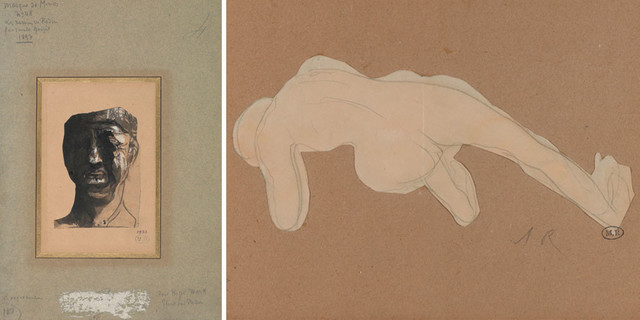
Rodin would it be a precursor of the papers glued, announcing the modernity of Matisse? A new facet of the work of the master of sculpture is to be discovered at the Musée Rodin: one realizes that all his life he cut figures, variations of his drawings that he glued, assembled, with a great freedom (until 24 February 2019).

Auguste Rodin (1840-1917) is a bit like Picasso, his inventiveness seems limitless and we always discover new aspects of his work. Beyond his drawings, full-fledged works that are not preparatory studies for his sculptures, Rodin has always cut and pasted figures.

The Musée Rodin retains some 7,500 drawings. “I have a great weakness for these little sheets of paper,” said Rodin. 250 are presented in the exhibition, including a hundred or so cut papers. “I have exposed almost all the paper cut, all that we have, and there is almost no outside (of the museum),” says Sophie Biass-Fabiani, heritage curator in charge of drawings at the museum Rodin and Commissioner of the [ . . . ]

Source: Rodin’s paper cuttings exhibited for the first time, in Paris

What’s Really Behind France’s Yellow Vest Protest?


It’s not just about the fuel tax; it’s about anger at ever-increasing burdens on the working class.

If the movement has managed to win such broad support thus far, it’s because it has clearly tapped into a deeper sense of social injustice. While that sentiment is shared nationwide to varying degrees, the protests themselves sprung up largely in rural areas and in what’s known as le périurbain: the sparsely populated outer bands of suburbs and metropolitan areas. These are parts of the country that suffer from high joblessness and rely heavily on state investment to keep their communities afloat, from unemployment benefits to the public rail network that connects them to larger cities.

Read full story at THE NATION: What’s Really Behind France’s Yellow Vest Protest? | The Nation

Charlélie Couture: an exhibition in Rodez before the release of a new album

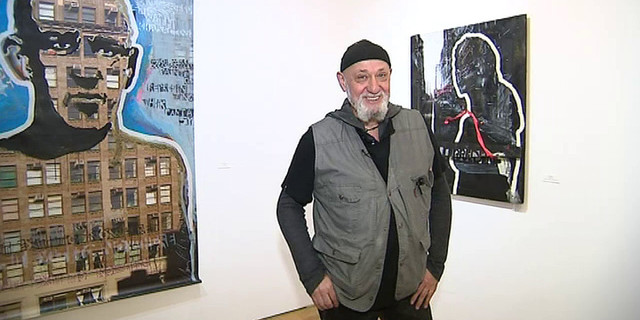
In the era of Trump, Charlelie Couture chose to return to France. He exhibited his works at the Vincent Cunillère Gallery in Rodez until December 29th. In January, the painter will give way to the singer with a new album very expected followed by a tour.

He had since his father’s death a foot in New York and a foot in France. Since the election of Donald Trump Charlelia has found his homeland. Between 2018 and 2019, its news is busy. The three passions of our man are in the spotlight

I have always conducted my three lives in parallel. Painting, music and poetry is what defines me. I am a sort of triathlete of creation.

Watch video interview at CultureBox: Charlélie Couture: an exhibition in Rodez before the release of a new album

‘In the end, the power of love is all’

Pierre Rabhi
Pierre Rabhi

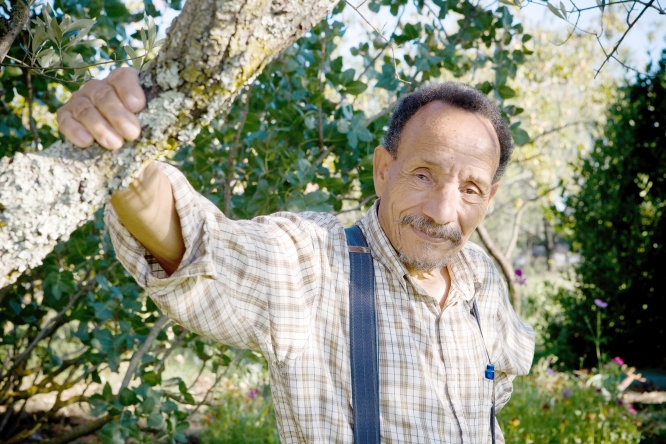
As one of France’s most admired environmentalists, Pierre Rabhi advocates a simplified existence in order to live a sustainable, happy life. Jane Hanks falls under the sage’s spell in an exclusive interview

Pierre Rabhi is a French farmer, writer, philosopher and environmentalist who is well known to the French as a man who has been promoting an alternative, simpler way of life for many years, long before it became fashionable. He is now 80, but retirement is not for him as he continues to strive to create what for him would be a better world, with less emphasis on making money and more on being happy with what we already have.

Just recently a report from the government environment and energy management agency body Ademe quoted an Ipsos study which found that most households thought they had a total of 34 electronic pieces of equipment, but in fact the figure is closer to an astonishing 99 and that people buy three times more now than in 1960.

One of Pierre Rabhi’s many books, Vers la Sobriété Heureuse, was translated into English last year, The Power of Restraint. What did he mean by this title?

“We live in a world where there is part of it which is suffering from over consumption and throws too much away, and another part where there is still famine. We produce 40% more than we need.

“One fifth of our world, of which I am a part, uses four fifths of the world’s resources. I cannot morally accept that situation. To change that we need to adopt more modest lifestyles. In our society we have more than enough to eat, but even then we are not happy.

“There is no joie de vivre. People in the West are always worrying about what they do not have, rather than enjoying what they do have. If we were producing all these goods and people were satisfied, then maybe our civilisation would have been successful, but people are not happy, so we must change things.”

Source THE CONNEXION: ‘In the end, the power of love is all’