January 30: Remembering Richard Brautigan on his birthday

BY 

He was a meteor.

He was an author of such works as Trout Fishing in AmericaIn Watermelon Sugar and The Hawkline Monster, wedged between the Beat Generation and the hippie movement. He showered readers of the 1960s and ’70s with inspiring spare, proletarian ideals in his novels.

He was a poet who foreshadowed the vise-like, smothering grip that technology has over us today in the poem “All Watched Over By Machines of Loving Grace.”

He was, as biographer and admirer William Hjortsberg noted in Jubilee Hitchhiker, a writer who combined an “easy offhand voice” with “concern for average working-class people, his matter-of-fact treatment of death, and his often-startling juxtaposition of wildly disparate images.”   

Then he was gone. Continue reading “January 30: Remembering Richard Brautigan on his birthday”

Paris’s Musée d’Orsay, from a train station to a world-class museum

Paris’s Musée d’Orsay, from a train station to a world-class museum

The Musée d’Orsay is the second most-visited museum in France after the Louvre. In 1986, this former Paris train station became a showcase for Impressionist art. The exhibition rooms are constantly evolving because only half the paintings are on display at any one time; the others are kept in the storeroom. Curators regularly renew the exhibits. Sometimes, the masterpieces require the expert care of restorers, who then have the delicate mission of bringing the paintings back to life. We take a closer look.

Camille Claudel: The Famous Sculptor Who Changed The History Of Art

Camille Claudel a French sculptor who broke moulds for women in art. Claudel “The Age of Maturity” legend whose achievement has left a lasting legacy and universally acknowledged as a great sculptor in her own right. 

By Sindhu Shivdas

Throughout history, there has been a famous sculptor who has withstood the test of time. Perhaps they are valued for their ability to create highly realistic figures or maybe they are prized for their willingness to push boundaries and defy expectations. Camille Claudel is one of the names that stood the test of time.

Bio:

Playing in two dimensions is easy enough, but what truly separates the women from the girls? Maybe it’s when you give up your easel for a tool belt and get to work with hammer and chisel. Such a sculptor was Camille a unique artist deeply involved in creating and constantly trying to open new doors.

Camille Claudel was born in 1864 in Fere-en-Tardenois, France. The French sculptor who defied gender based restrictions to pursue her art, She did her art studies at the Academie Colarossi in Paris, one of the handful of progressive art schools that accepted women students. Sculptor Alfred Boucher one of the most celebrated French sculptor of the late 19th century took Claudel under his wing and became her mentor for over three years, before moving to Florence.

Under Boucher’s guidance, she rented a workshop in 1882 with other young women sculptors including English sculptor Lipscomb. Claudel recognition for artistic talents came retrospectively and she is also remembered for her dramatic relationship with renowned sculptor Auguste Rodin. A major turning point in Claudel’s professional and personnel life occurred in the autumn of 1882, when Alfred Boucher left paris for Italy and asked his friend, the renowned sculptor Auguste Rodin, to take over supervising Claudel’s studio.

Being Rodin’s only female student, Claudel quickly proved her talents through contributions to some of Rodin’s most monumental works, including the hands and feet of several figures in The Gates of Hell. Working with Rodin she became romantically involved with him.

Camille Claudel and Auguste Rodin Passionate Love Affair

Claudel and Rodin shared a connection beyond sculpture, and by 1882 the pair was engaged in love affair.  Rodin was a married person got infactuated with Claudel’s style and encouraged her to exhibit and sell her works. He also used Claudel as a model for both individual portraits and anatomical elements on larger works, such as La Pensee and The kiss.

Since there was gender-based discrimination which was rife in the art world, Claudel couldn’t release some of her daring sculpture ideas and she turned to Rodin to collaborate with her in order to get them made. And this instead made Rodin to receive credit for her ideas. This led to the breakdown of their long-term relationship and Claudel struggled to gain recognition of her own.

Camille Fighting For Recognition

Although continued to be productive through the first several years of the 20th century, the loss of Rodin’s public endorsement made her to struggled to find support. And moreover commisions of her work were scant due to her highly individual style which did not suit conserative tastes at the time, which paved her to mental illness and poverty. Continue reading “Camille Claudel: The Famous Sculptor Who Changed The History Of Art”

My favorite French books of 2020

I LOVE to read. It’s a very big part of my life, and I use books to help me better understand the modern world that we live in. So far in 2020, I’ve read around 98 books (not including the stories I’ve read to my son 50+ times ;)!) I know that there are some bookworms in my community, so I thought I would share some of my favorite French books with you today. Whether you enjoy fiction or nonfiction, chick-lit or more serious subjects, I’ve got a recommendation for you! Enjoy 🙂
Take care and stay safe.

Comme une Française

😘 from Grenoble, France. Géraldine

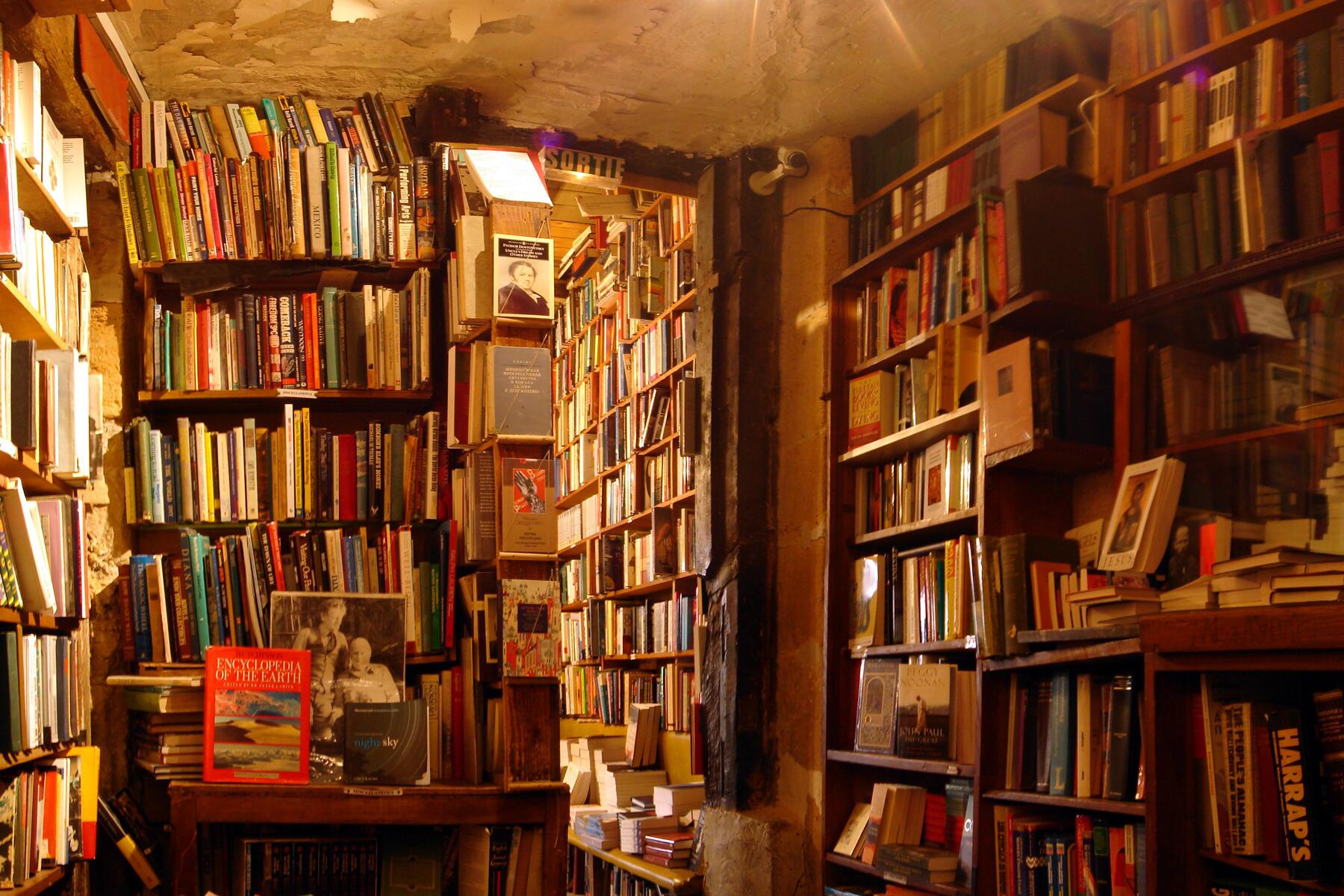
One of the Most Iconic Bookstores in the World Is in Trouble—but You Can Help

Shakespeare and Company has weathered many storms, but the pandemic has been the most devastating of them all.

For over a century the legendary bookstore Shakespeare and Company has beamed out from the Left Bank of Paris like a lighthouse of literature.

The former 16th-century monastery on Rue de la Bûcherie, and its previous site not far away at 12 Rue de l’Odéon, has been a home away from home for the Lost Generation in the 1920s and the Beatnik generation in the 1950s, a publisher and reading resource for the likes of James Joyce and Ernest Hemingway, and shelter for the estimated 30,000 “tumbleweeds”—young writers and enthusiasts allowed to stay for free—over the years.

But the economic disaster wrought by the coronavirus pandemic has hit independent bookstores in France, including this timeless Anglophone institution, hard. Deemed “non-essential” by the government even during the country’s second lockdown, they were forced to close to in-person customers, while commerce for online behemoths like Amazon has soared. Paris mayor Anne Hidalgo herself warned city-goers: “Don’t buy on Amazon. Amazon is the death of our bookshops and our neighborhood life.”

Continue reading “One of the Most Iconic Bookstores in the World Is in Trouble—but You Can Help”

When Women Were Birds

Photograph: Viola Loretti


By David Price

“Once upon a time, when women were birds,

there was the simple understanding that

to sing at dawn and to sing at dusk

was to heal the world through joy.

The birds still remember

what we have forgotten,

that the world is meant to be

celebrated.”

~Terry Tempest Williams

There comes a time when we must allow something timeless to touch us in order to truly change and move beyond our fixed attitudes and limited understanding of the mysteries of life. When it seems like all might end in disaster, it becomes a question of finding the deeper imagination of life, the enduring patterns and essential stories that reunite us to the pulse of nature and the heart of culture.” — Michael Meade

“In exile, we must do as the goddess Innana did, surrendering layer after layer of armour and adornment, until we are bare. We must then undergo a symbolic death of the old life in order to be reborn with greater resilience and a holy assignment to carry forward.

Excerpt from Belonging: Remembering Ourselves Home by Toko-pa Turner (belongingbook.com)

Mass has been canceled here because of the threat of plague but the sonorous bells have been ringing all morning. It’s a comforting sound in its feeling of community and it’s calling to worship the mystery.

The world is a mystery to be celebrated, not used as a tool to make us rich, or even to just survive. It is to be seen in its beauty, recognized as a mystery and consciously celebrated. The mystic vision that goes into art and poetry is needed now. We need to develop a deeper imagination of life. Our imagination of things now is poor. It’s poverty stricken. We are commanded now by circumstances to look again, more deeply, more lovingly, with closer attention. Continue reading “When Women Were Birds”