‘A Bite-Sized History of France’ delightfully combines French history with gastronomy

Napoleon’s most famous (and probably apocryphal) quote weaves together war and food: “An army marches on its stomach.” In a few short words, we are led to consider the immense logistics that make war possible, and the humanity of the people who wage it. It’s a fitting quote to introduce A Bite-Sized History of France, a new and impressive book that intertwines stories of gastronomy, culture, war, and revolution.

Each amuse bouche-sized chapter of “A Bite-Sized History of France” tackles a different theme, ranging from the relationship between the revolutionary government and potatoes to the connection between the thoughts of philosopher Jean-Jacques Rousseau and a search for “authentic” French food. The book delves back to the origins of seemingly eternal fixtures of French food culture (chocolate, raw oysters, sweet pastries) and teases out the meaning of their arrival. And it dives into serious historical events ranging from revolutions to sectarian massacres with real conviction, recapping many of the most significant political and military developments in France’s long history as it goes.

Throughout the book, the authors return to certain themes that tie together its many far-flung topics and tastes. Chief among these are the theme of inequality – an examination of how the rich and the poor pursue pleasure and sustenance is at the heart of “A Bite-Sized History of France” and that frame provides a window into economics, inequality, and revolution. Perhaps mostly strikingly, the authors tell the story of a famous Christmas Day feast for wealthy Parisian during the 1870 siege by Prussian troops. Food had seemingly run out, but for those with means, the zoo would serve as a kind of exotic butcher shop:

“[The meal] began with a stuffed donkey’s head, an inelegant successor to the usual porcine centerpieces of prewar banquets. The soup course included elephant consommé. This was followed by kangaroo stew, rack of bear in pepper sauce, and roasted camel à l’anglaise (a cheeky reference to what the French saw as the plainness of English cuisine.) The main course included le chat flanqué de rats (cat flanked by rats) and cuissot de loup, sauce chevreuil(wolf in deer sauce), a wry inversion of the natural order.” Continue reading “‘A Bite-Sized History of France’ delightfully combines French history with gastronomy”
The Years by Annie Ernaux review – a masterpiece memoir of French life

Annie Ernaux is long overdue to be recognised in Britain as one of the most important writers in contemporary France, and this edition of The Years ought to do the trick. Originally published there in 2008, it was immediately heralded as Ernaux’s masterpiece, her brief Remembrance of Things Past. It has been expertly rendered into English by Alison Strayer, who captures all the shadings of Ernaux’s prose, all its stops and starts, its changes in pace and in tone, its chatterings, its silences.

The book spans the timeframe from the author’s birth in 1940 up to 2006, and moves from her working-class upbringing in Normandy to her years teaching French literature in a lycée, living in the Parisian suburb of Cergy, raising two sons and eventually divorcing. But it is not a straightforward autobiography; rather it is told in a choral “we”, which sometimes shifts into the third person, so the author appears as “she”. This is as close in as it gets. In so doing, Ernaux puts paid (hopefully once and for all) to the idea that memoirs by women are about the small-scale, the domestic. She shows it is possible to write both personally and collectively, situating her own story within the story of her generation, without ever confusing the two. She reflects on the book she is writing even as she writes it, resolving: “There is no ‘I’ in what she views as a sort of impersonal autobiography. There is only ‘one’ and ‘we’, as if now it were her time to tell the story of the time-before.” [ . . . ]

Continue at THE GUARDIAN: The Years by Annie Ernaux review – a masterpiece memoir of French life | Books | The Guardian

It’s time to reclaim the legacy of Simone de Beauvoir and see feminism for what it is 

In the shadow of the horrific alleged rape in Unnao and alleged rape and murder in Kathua, and worldwide acknowledgment of workplace harassment of women (#MeToo, #TimesUp), feminism has an important role to play

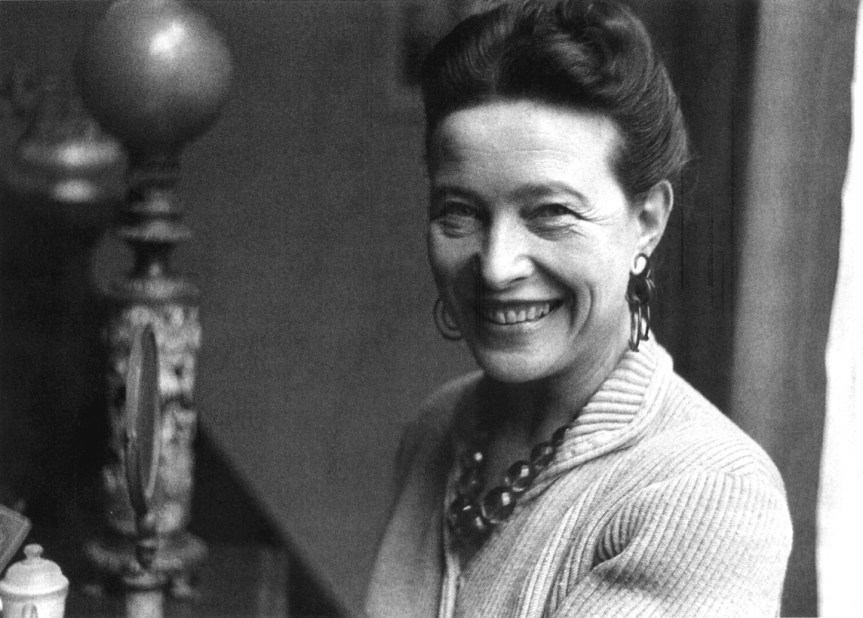
“One is not born, but rather, becomes a woman,” wrote Simone de Beauvoir in her seminal book The Second Sex. At the time, the book was considered so radical that the Vatican put it on the Index Librorum Prohibitorum (index of prohibited books). Beauvoir died at the age of 78 on this day 32 years ago, leaving behind a legacy of revolutionary thinking, activism, and having spurred the beginning of the ‘second wave’ of feminism.

Simone de Beauvoir
“One is not born, but rather becomes, a woman. One is not born a genius, one becomes a genius. Change your life today. Don’t gamble on the future, act now, without delay.” – Simone de Beauvoir

As an existentialist, Beauvoir believed that human beings create their own values through their consciousness, and not simply by some inborn “essence”. She drew upon this philosophy to describe the sex-gender distinction, in which she explains that there is a difference between biological sex assigned to a child at birth, and the social and historical construction of gender and the stereotypes that become associated with them. Her argument is that all children are born the same way, but become conditioned by the society around them to think that men must behave a certain way and women in certain others. She calls women the ‘second sex’ because historically, women have always been defined in relation to men, as though the male was the ideal — that women could only aspire to be, but can never really become [ . . . ]

Continue reading at: It’s time to reclaim the legacy of Simone de Beauvoir and see feminism for what it is | editorials | Hindustan Times

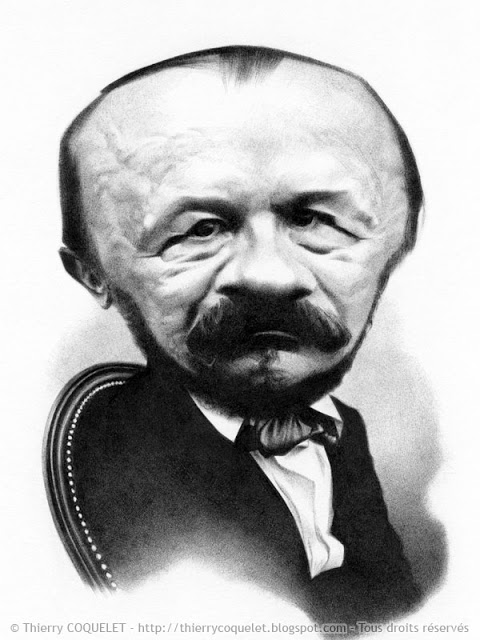
The French Writer Who Started The Realism Movement

Realism in literature has its origins in 19th century Europe. The French writer who is credited as having created the Realist movement is Honoré de Balzac. But, what is realism in literature and how did Balzac help to start it? In this article, we will go deeply into answering these two interrelated questions.

The best way to begin to understand realism in literature is by defining the term realism. As its most simple and broad, realism is a representation of reality.

Before the 19th century, writers were not interested in representing everyday life in their works. It is important to note, before we go any further that, realism is not the same as plausibility. Realism is the representation of everyday experiences and activities of the characters whereas plausibility means created a plot that has internal coherence.

So, when we say that before the 1800s writers did not depict everyday life in their work, it does not mean that everything produced before then was in the realm of fantasy. It is simply, that writers did not often write about ordinary people leading ordinary lives, at least not in the level of detail as some did from the 19th century.

But depicting everyday life is not enough for realism, this depiction must lack any romanticizing

Although Realism began in painting and literature (prose and plays) and then, in the twentieth century, to cinema.

Continue reading “The French Writer Who Started The Realism Movement”