Van Gogh’s Literary Influences

“Books and reality and art are the same kind of thing for me.”
– Vincent Van Gogh

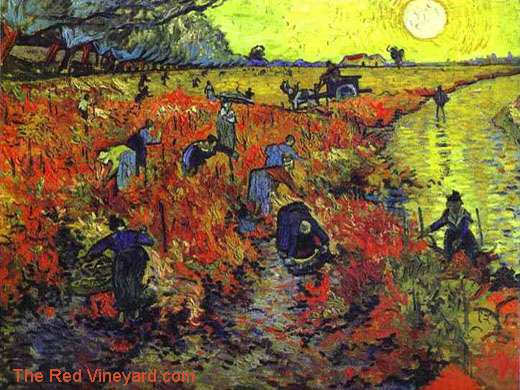
In 1888, Vincent Van Gogh sold The Red Vineyard, a vibrant field of color abuzz with laborers, to an intimate supporter of the hungry artist for today’s equivalent of $2000. These days, a single painting by Van Gogh More

In 1888, Vincent Van Gogh sold The Red Vineyard, a vibrant field of color abuzz with laborers, to an intimate supporter of the hungry artist for today’s equivalent of $2000. These days, a single painting by Van Gogh can go for as much $66m at Sotheby’s, and Van Gogh™ is a billion dollar industry. And the topper is that The Red Vineyard, if sold today, probably would be the single most expensive painting ever bought, not because it was the most popular artist’s best, but because it’s the only one he ever sold in his lifetime. (Wow.)

Over the decades there have been a number of film accounts of Van Gogh’s work and life, from Stanley Kubrick’s Kirk Douglas-driven Technicolor slave revolt from Black-and-White, to the more recent BBC biopic, Painted with Words, starring Benedict Cumberbatch with a script derived solely from Van Gogh’s written words. Continue reading “Van Gogh’s Literary Influences” →

Tati, much-loved French retailer, shuts up shop in Paris after 70 years

Tati, the much-loved cut-price clothing chain that has been a French retail institution for more than 70 years, is to close its original – and last – Paris store, after public transport strikes and the coronavirus crisis sent sales plunging by more than 60%.Founded by a Tunisian immigrant at the end of the second world war in the mainly west African Barbès district at the foot of Montmartre, Tati grew into more than 100 outlets around France, and its pink-and-white chequered carrier bags became a style statement for film stars and celebrities.

The company has been in difficulty for decades, having struggled to adapt its “pile ‘em high, sell ‘em cheap” strategy of the early postwar years to a more fashion-conscious clientele seduced by big fast-moving multinationals such as H&M or Primark. [ . . . ]

More at: Tati, much-loved French retailer, shuts up shop in Paris after 70 years | World news | The Guardian

French movies to stream: “Two Days, One Night

Two Days, One Night ★★★★☆

Masters of immersing you in other people’s grim predicaments whilst maintaining an essential lightness of touch, in 2014 Belgium’s Dardenne brothers teamed up winningly with the great French actress Marion Cotillard. The result was a fluid, Oscar-nominated drama that follows a desperate factory worker as she tries to persuade her colleagues to forgo their bonuses in order to save her job, in a highly unusual race against the clock. If you’ve yet to catch it, make it a must.
Watch now on iPlayer. | Source: The List

Marion Cotillard

Are French Restaurants More Likely than American to Survive the Lockdown?

France is not unique in seeing its service industry shut down in the midst of the COVID-19 pandemic. But compared to other countries, France has a robust safety net of social security, unemployment, and healthcare. France has also implemented emergency measures that may prevent many of these businesses from going under.

As French restaurants begin to slowly reopen for outdoor service, the culinary landscape in France looks very different when compared to the United States.

Government Aid: Two Countries, Two Philosophies

In March, President Emmanuel Macron said he would do “whatever it takes” to ensure that no company, big or small, collapsed under the financial weight of the pandemic. He announced 300 billion euros in loan guarantees and tax exemptions. The government also played a role in negotiating rent forgiveness for restaurants.

Perhaps even more helpful, at least in the short-term, were easy-to-access “solidarity funds:” 1500 euros per month given tax-free to small businesses, compounded with an additional allowance of up to 2500 euros from URSSAF, a social security union for small businesses. On April 15, Gérald Darmainn, Minister of Public Action and Accounts, also announced that the restaurant industry’s taxes and social charges – about 750 million euros – would be forgiven instead of merely suspended for the duration of administrative closure.

In the U.S., by contrast, most small restaurants didn’t qualify for loans, while huge corporations like McDonald’s and Shake Shack did. According to the New York Times, big chains were able to access “tens of millions of dollars while many smaller restaurants walked away with nothing when the $349 billion fund was exhausted [April 16].” The Los Angeles Times reported that those small businesses that did qualify were reluctant to apply for the Small Business Administration’s Paycheck Protection Program because of the “strings” attached to loans.

Restaurant Workers Feed Us, But Can They Eat?

As far as restaurant employees are concerned, in France, most are secure within the net of the country’s robust social structure. When forced closures were announced mid-March, restaurant workers were encouraged to first use up their paid vacation (an average of about five weeks per year) before becoming eligible for partial unemployment (the equivalent of 84 percent of their salary.) Continue reading “Are French Restaurants More Likely than American to Survive the Lockdown?” →