Bordeaux Wine Firm Found Guilty of Fraud

A leading Bordeaux négociant firm has been found guilty of fraud for passing off table wine as more lucrative appellation wine, and for illegally mixing appellations, vintages and châteaus to the extent that the labels no longer represented what was in the bottle. Bordeaux’s Criminal Tribunal handed down the guilty verdict April 5 against Grands Vins de Gironde (GVG), fining the company nearly $500,000 (with half the fine suspended).”It is a substantial offense,” said Judge Caroline Baret, telling the courtroom that the victims were both supermarket shoppers, who were being unfairly duped, and the image of French wine, which risked being tarnished in foreign markets.Eric Marin, GVG’s former director of purchasing and cellar manager, was also found guilty and given an $18,000 suspended fine. Charges related to a period when he was no longer in his post were dropped [ . . . ]

More at: Bordeaux Wine Firm Found Guilty of Fraud | News | News & Features | Wine Spectator

The Best Defense for French Wine Growers? Bats!

Wine, for when you want to party but still feel classy about it. Like all edible alcohol, wine comes from fermentation, and for millennia artisans have honed their craft at turning humble grapes into the drink of the gods. So suffice it to say growing good grapes is crucial to making good wine.

That’s why French wine growers have such a beef with moths. These thirsty bootleg butterfly bugs love swooping down and eating grapes right off the vine. They have the nerve to get between us and our wine! But fear not, a recent wine industry study revealed that in the War For Wine we have an animal kingdom ally in the fight against moths, an animal we’re already used to associating with superheroics. It turns out bats are the best natural defense wine can get.

It’s really just the food cycle wine growers should be thankful for. Of the 22 local Bordeaux bat species, researchers observed that 19 of them specifically love to feast on moths that target wine grapes. Droppings analysis confirmed that it was these harmful moths being preyed on. Other insects were spared.

With this knowledge, wine growers could use these bats to their advantage. They could act like organic pesticides, clearing the fields of insects while not introducing harmful chemicals into the ecosystem. It would take some effort though. The bats instinctively hunt in wilder regions, so they would have to be somehow funneled towards these domesticated vineyards [ . . . ]

Read morea at GREEK.com: The Best Defense for French Wine Growers? Bats! – Geek.com

Reinventing French malbec

The Argentinians may have changed the way we think of malbec, but here are three wines, mostly from Cahors, which show how France has reclaimed the grape, says David Williams

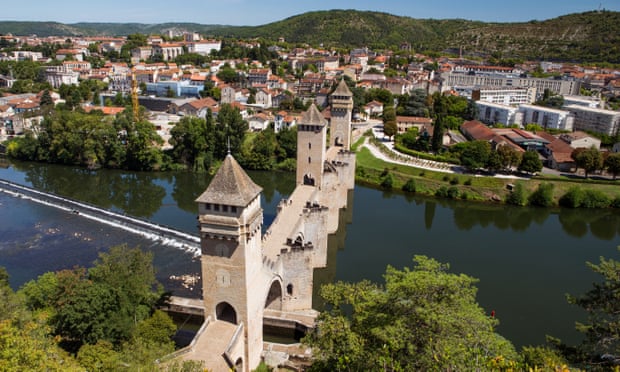
:: THE GUARDIAN :: The Argentinians have made malbec one of the great success stories of wine in the 2010s – the variously lush, chocolatey and perfumed reds they make from it now a fixture on every bottle-shop shelf and restaurant list. If this latter-day success was once a source of irritation to vignerons in the variety’s original home in southwest France, they have long since come to see it as an opportunity. Once abundant in Bordeaux, the region with the closest association with malbec today is Cahors, an appellation in the gently picturesque Lot Valley around the eponymous medieval city. The wines here were once famously chewy, dense, and dark – black wines by name and nature, and with malbec going by its local name, côt (although this was never seen on the label). Today, Sainsbury’s succulent ripe example fits seamlessly alongside its range of Argentinian malbecs [ . . .]

Read more at Source: THE GUARDIAN Reinventing French malbec | David Williams | Life and style | The Guardian

The British have Brexit. We French have our wine delusion

Sure, it occasionally leaves us horizontal, but it’s a proud part of our identity, says freelance journalist Marie Le Conte

If you want to become – or remain – the president of France, you have to touch a cow.

François Hollande touched a cow; Nicolas Sarkozy touched a cow; Jacques Chirac touched more cows than anyone can remember; and every party leader or Elysée hopeful has had to touch a cow at one point or other. It cannot be any cow: the ceremonial patting must occur at the Paris International Agricultural Show, an annual event that does exactly what it says on the tin, and is attended by every French politician worth their salt.

The fair often becomes the scene of minor gaffes as senior politicos trip over themselves to show just how provincial and normal they are, with predictable results – a particularly amusing example in 2015 involved the then prime minister, Manuel Valls, getting thoroughly sloshed.


“From the liver’s point of view, wine really is alcohol!” was the title of the letter, which pointed out that nearly 60% of all alcohol consumed in France is in wine, and that alcohol kills around 50,000 people a year in the country.

Emmanuel Macron didn’t appear drunk at the agriculture show last week, but alcohol did end up causing him a headache. Speaking to journalists from the regional press, the president admitted to drinking wine every day “with lunch and dinner”, and being a staunch believer in his predecessor Georges Pompidou’s saying: “Don’t piss off the French.”

“It is a danger to public health when young people binge-drink spirits or beer,” he added, “but wine isn’t the issue.” He then confirmed that his administration had no ambitions to make the Loi Évin, a law passed in 1991 putting restrictions on alcohol and tobacco, any stricter than it already is.

This clearly didn’t go far enough for Christophe Castaner, the secretary of state for parliamentary relations, who took it upon himself to add in a TV interview: “Let’s not get carried away – there’s alcohol in wine, but it’s not strong alcohol. Wine is a part of our culture, our tradition, our national identity. It’s not our enemy.”

Shockingly, this didn’t please everyone. In an open letter published by the newspaper Le Figaro on Monday, nine health professionals politely but firmly reminded the head of state and his minister that wine is – believe it or not – an alcoholic beverage like any other.

“From the liver’s point of view, wine really is alcohol!” was the title of the letter, which pointed out that nearly 60% of all alcohol consumed in France is in wine, and that alcohol kills around 50,000 people a year in the country.

That this needed to be said is quite remarkable, but perhaps unsurprising; behind that glass of red sipped at a family dinner lies an interesting quirk of the French, and how we like to see ourselves.

You see, French people are civilised. They care about the food they eat and the bottles they carefully pick to go with it. They look down on anyone unsophisticated enough to suggest that their habits might not be as refined as they think.

Sure, they might occasionally drink more wine than the food can soak up and find themselves horizontal, but they don’t get drunk like the British do. Over the Channel lies a an island of feral binge drinkers who do shots and throw up on themselves and pass out in public. Isn’t it ghastly? Like retired people showing their slides after a holiday, French expats in the UK and holidaymakers who have been there catalogue instances of the British binge culture –it’s almost a national sport.

Of course, data collected by the World Health Organisation in 2015 shows that French people drink nearly as much as their British counterparts – 11.6 litres of pure alcohol per capita compared with 12 – but this doesn’t matter.

Every country has their very own national delusions – Brexit certainly counts as one – and France is no exception.

In a way, Macron embodies a lot of ours. He arrogantly charmed his way into the presidency, frequently pontificates about philosophy, unashamedly talks about his love of classical novels and poetry, and is passionate to the point of absurdity about the French language.

France isn’t, in reality, the France we know from the movies, and everyone knows it deep down. But it doesn’t hurt to pretend once in a while. However, deciding that wine simply isn’t a normal alcoholic beverage because it happens to be quintessentially Gallic is not harmless, and though the current crop of politicians are knee-deep in patriotic cliches, future generations might finally decide to put health before tradition.

They just need to make sure they touch a cow first, if they want anyone to pay attention.

 Marie Le Conte is a French freelance journalist living in London | Source: The British have Brexit. We French have our wine delusion | Marie Le Conte | Opinion | The Guardian

A fantastic French red for just $15 a bottle 

RECOMMENDED | It’s from the Anjou, a region not usually associated with quality, but it is great.

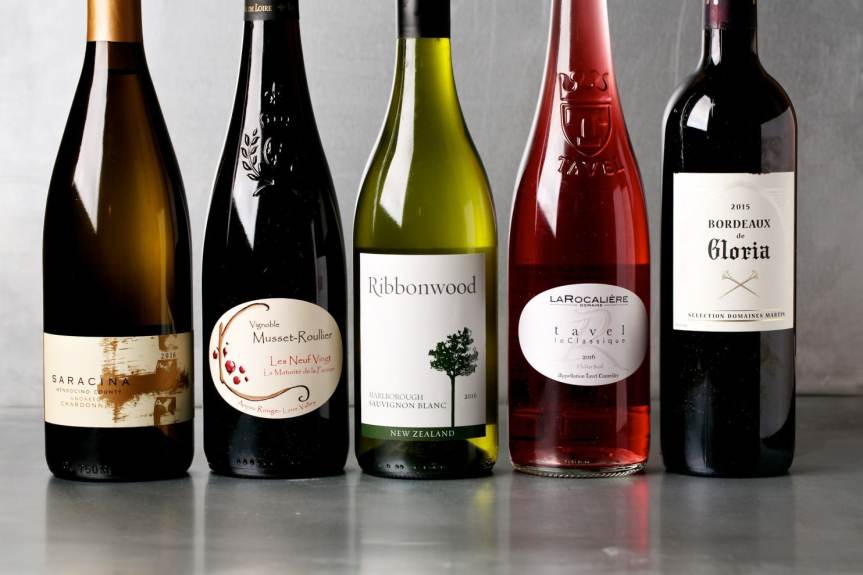
We usually don’t expect red wines from Anjou, a small subregion of France’s Loire Valley, to be any good, but here’s an example that will persuade even the most cynical wine skeptic to scour store shelves for obscure wines. I also recommend a refreshing New Zealand sauvignon blanc, a Tavel rosé to enjoy year-round, a lively California chardonnay and a second label from a popular Bordeaux chateau.

GREAT VALUE
Musset-Roullier Les Neuf Vingt “La Maturité de la Passion” Anjou Rouge 2014/2015

Loire Valley, France, $15

I’m on my soapbox here. There are some wines we simply refuse to believe in because they don’t come from high-profile regions with pedigrees and points. Anjou, in France’s Loire Valley, is known for light, insipid reds or rosés. But this wine should grab our attention. It’s 100 percent cabernet franc, the main red grape of the Loire, and yes, lighter in depth and body than more famous Loire appellations such as Chinon, Saumur or Bourgeuil. Aromatic with spicy white pepper and Bing cherry notes, it develops more complexity about 30 minutes after you pull the cork. The distributor is moving to the 2015 vintage; more stores, restaurants and wine bars should take a chance on it. ABV: 14 percent.

[ . . . ]

More: A fantastic French red for just $15 a bottle – The Washington Post