The Best Baguette in Paris

In a city where bread is both a point of pride and a daily ritual, being named the best baguette baker in Paris is a serious accolade

This year, that distinction belongs to Mickaël Reydellet, the man behind La Parisienne on Rue du Faubourg-Poissonnière in the 10th arrondissement, who has once again taken home the Grand Prix de la Baguette de Tradition Française.

It’s Reydellet’s second time claiming the title – his first win was in 2016 – underlining his standing as one of the capital’s top master bakers. Now in its 30th edition, the competition is run each year by the City of Paris in partnership with the Greater Paris Bakers’ Syndicate. Open exclusively to professional bakers within city limits, the contest comes with strict rules: baguettes must be between 50 and 55 centimetres long, weigh between 250 and 270 grams, and adhere to traditional French baking criteria in flavour, texture, and appearance. This year, 187 bakers entered, with each baguette judged blind by a panel of experts and enthusiasts.
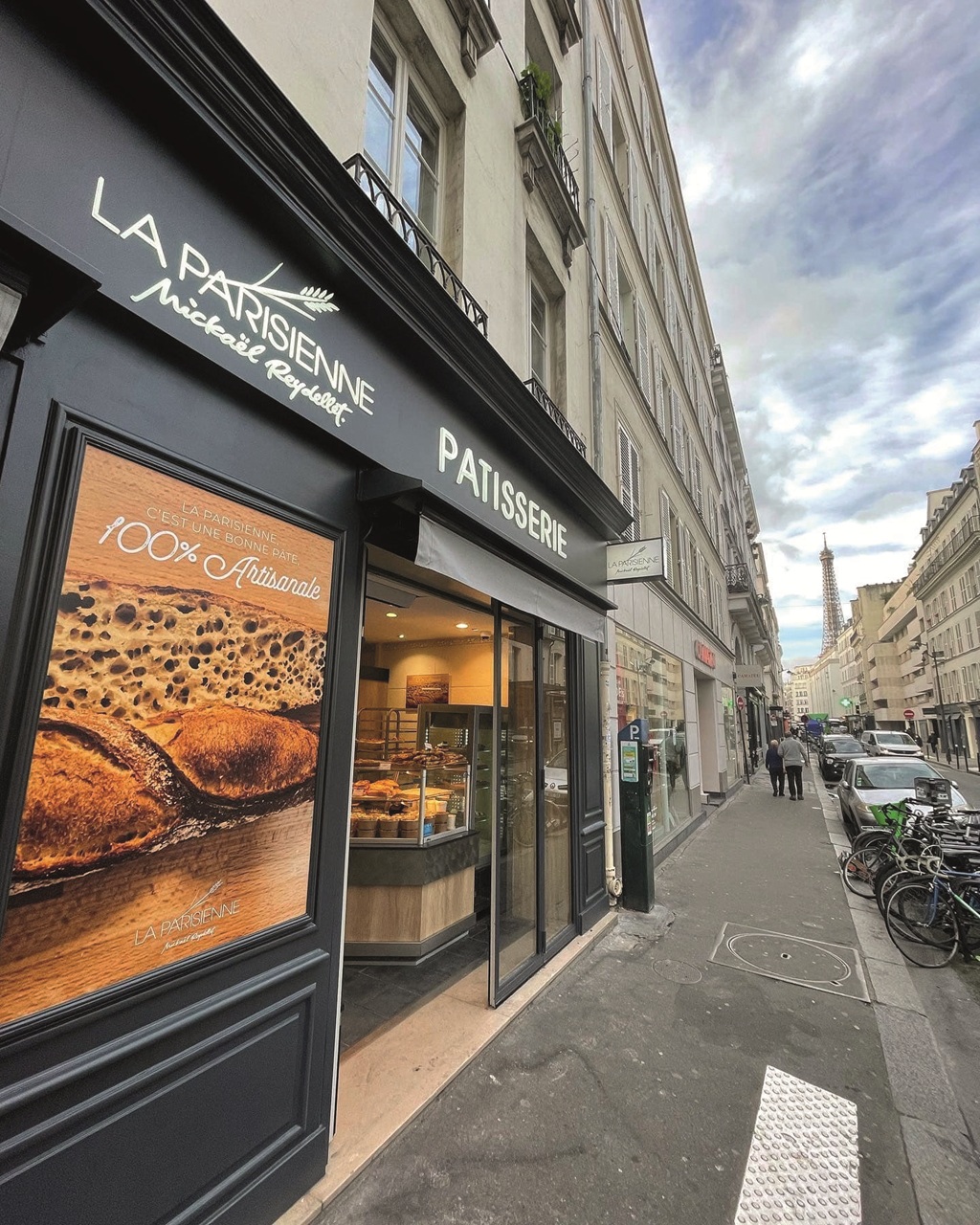
La Parisienne COPYRIGHT La Parisienne_Facebook

Reydellet’s standout baguette – beautifully golden, with a satisfying crunch and springy interior – earned him not only a €4,000 cash prize but also the honour of supplying bread to the Elysée Palace for the next year. From now on, the President’s daily baguette will come straight from La Parisienne’s ovens. It’s all right for some! For anyone else keen to taste this award-winning loaf, La Parisienne welcomes visitors every day at its friendly spot in the 10th. The award was officially presented on May 7 during the city’s annual Fête du Pain, a celebration of French baking, which is held in the shadow of Notre-Dame Cathedral.

www.boulangerielaparisienne.com


Source: The Best Baguette in Paris – France Today

The myth and reality of the Parisian woman

The actor Arletty, seen here in the film Hôtel du Nord, was one of many working-class French stars of the era (Credit: Alamy)

There is now a whole literary genre devoted to her mysterious allure. So what is the true essence of the Parisienne – asks Paris born-and-bred Agnès Poirier – and how did she evolve?

By Agnes Poirier

French women – Parisiennes in particular – have no idea of the fascination they inspire in foreigners – until the day they discover in a bookshop abroad the vast amount of literature dedicated to scrutinising their every move and mood. Sometimes written by Parisian women living abroad, or by foreigners living in Paris, this literary genre and lucrative niche market aims at educating its readers in Parisianisme and its many secrets.

Among them, in just the last few years: How to be a Parisian, Wherever You Are by Caroline de Maigret, Sophie Mas, Audrey Diwan and Anne Berest; Dress Like a Parisian by Aloïs Guinut; Parisian Chic by Inès de la Fressange and Sophie Gachet; and the recently published The New Parisienne by Lindsey Tramuta.

Tramuta’s interesting hybrid work – part coffee-table book with beautiful pictures and illustrations, part political pamphlet, and part guide book with addresses and tips – makes for an alluring proposal. The author wants to “lift the veil on the mythologised Parisian woman – white, lithe, ever fashionable, and recast the women of Paris as they truly are”. To do this she profiles forty Parisiennes who “don’t fit the mould”, from Paris mayor Anne Hidalgo to cookie maker Moko Hirayama, translator Poonam Chawla and many others – including political figures, entrepreneurs, influencers, designers, artists, writers and athletes.

Continue reading “The myth and reality of the Parisian woman”

French Restaurant Review: Benoît, Paris 

Benoit Restaurant

Opened since the 1910s, Benoit is a institution in the Parisian dining scene. Sometimes, nothing beats a cosy, traditional restaurant and its honest and delicious French food.

By Alexander Lobrano

Since traditional bistro cooking has increasingly become an expensive heirloom dining experience in Paris, Benoit is a place I happily keep close tabs on, regularly returning to revalidate its reputation as one of the capital’s great gastronomic institutions since it opened in 1912. Sitting in the Metro on my way to my most recent dinner here, I couldn’t help but feel nostalgic as I mused on my first meal in this charming dining room, with its brass coat racks, globe lamps and big service bar in the original dining room.

On a chilly wet September night in 1986 when the stone pavements of Paris were covered with slippery yellow appliqués of fallen chestnut and poplar leaves, I pulled back the heavy red velvet breeze-blocking curtains at Benoit and stepped inside. Newly arrived in Paris, I was living in a (now long-gone) hotel on the Rue Boissy d’Anglas, which meant I had to dine out every night, a daily inevitability I deeply dreaded.

Aside from an occasional lunch seated on a stool at an American coffee shop, I’d never eaten alone in a restaurant dining room, and I found this public display of my solitude excruciating. I squirmed non-stop, imagining that people thought I was pitifully friendless or eccentric – or both. I bolted through these meals as quickly as I could and avoided eye contact as well.

inside Benoit


Still, since I was living on a company expense-account it would have seemed foolish not to make the best of things, so I was working my way through the addresses found in a popular restaurant guidebook to Paris and had booked a table for one at Benoit.

Though I especially loathed what seemed like the eternity of standing by the reservation stand by myself, I was immediately mesmerized by the soft, glowing light of this intimate dining room, its velvet banquettes and the framed black-and-white photograph of a natty old man in a beret on the wall. I was greeted and seated immediately, though, and my waiter was an avuncular man with an immaculate white apron tied with a small tight knot in the middle of his barrel-like girth.

For some unknown but lucky reason, he was instantly amused by me, and after bringing me the menu, he returned with a flute of champagne, which panicked me, because I hadn’t ordered it and didn’t want my new employer to accuse me of extravagance. I fumblingly tried to wave the bubbles away, but he shook his head.

Avec ce temps de merde, il faut boire du champagne,” he insisted (‘with this crappy weather, one must drink champagne’); he was right, too, and the drink never showed up on my bill either. When he returned to take my order, he told me what I would be eating instead – leeks vinaigrette with toasted hazelnuts, boeuf aux carottes, and tarte Tatin (my first), washed down with a bottle of Cairanne. I was dumbstruck by his gastronomic domineering, but it was one of the best meals I’ve ever eaten. Why was he so kind to me? I’ve often wondered, but I can’t help but think that I may have reminded him of himself the day he’d climbed on a train somewhere deep in the French countryside as an innocent young man to move to Paris and make his way in the world.

In any event, Benoit has been a fixture in my life for nearly 40 years, and through various changes in ownership – Alain Ducasse bought it from the Petit family in 2005 – it’s never failed me. Meeting a friend for dinner the other night, however, I was disappointed by the distracted and disorganised welcome from a rather off-handed young woman, because given its prestige, Benoit deserves a seasoned maître d’.

But the menu continues to deliver in the most marvellous of old-school ways. My spouse is from Valenciennes, a small industrial city on France’s border with Belgium that I’ve visited many times, so I was glad to see this proud, hard-working little town’s gastronomic speciality still on the menu: la langue de Lucullus fine slices of smoked tongue interleaved with pâté de foie gras a rich but sumptuous treat. Onion soup and escargots in garlic butter, which my friend had, were also excellent versions of these monuments of Gallic gastronomy. Skate wing with a grenobloise sauce (lemon, capers, brown butter and croutons) was outstanding, as was the cassoulet, a long-running favourite of the regulars here, and the tête de veau ravigote, or boiled calf’s head. Sadly, these great French dishes are increasingly difficult to find in Paris as younger French diners prefer ‘light’ eating, including sushi, hamburgers and pizza.

Alas, the tarte Tatin, the upside-down tart of caramelised apples that left me stunned with pleasure when I ate it with spoonful after spoonful of ivory-coloured crème fraîche many decades ago is no longer on the menu. But the savarin (sponge cake) with armagnac is an excellent stand-in and so is the delightful vanilla mille-feuille.

To be sure, Benoit has become rather pricey – plan on spending about €80 a piece at dinner here, but as long as its heavy, red velvet curtains on a ceiling-mounted half-moon of brass continue to block the damp breezes of an often rainy city, we’ll always have Paris.

20 rue Saint-Martin, 4th arrondissement, Paris

Tel. (33) 01 42 72 25 76


Source: French Restaurant Review: Benoît, Paris – France Today

Louise Brooks at Zelli’s Club Royal Box

Actress Louise Brooks smiling for a close-up candid photo at Zelli’s Club Royal Box in Paris, France. (1929)

The Royal Box -Joe Zelli’s most famous nightclub, was located at 16bis rue Fontaine, Paris, and opened in 1922 and closed in 1932. It had a balcony with an American bar and “royal boxes”.
The Royal Box is considered the first ever nightclub in the world, with opening hours from midnight until dawn. It was the nocturnal home to many members of “The Lost Generation,” scores of expatriates who flocked to Paris after the First World War. Notable clients of The Royal Box included Ernest Hemingway, Cole Porter, Buster Keaton and Louise Brooks.