The Aperitif Tales: When Words Take to the Air

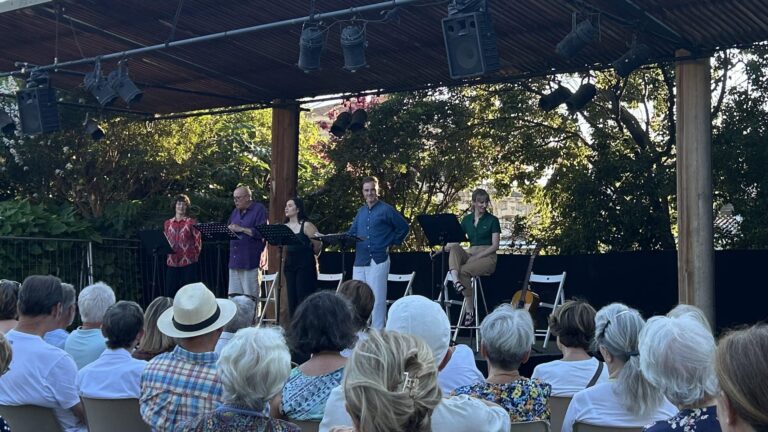
Every evening, the Coulée Verte transforms into an open-air stage with the “Contes d’Apéro”. An hour of living literature without any artifice. 

Here, there’s no need for a red curtain or spotlights. Just a stage and a few chairs for the audience. Every evening at 7 PM, the kiosk of the Théâtre National de Nice on the Coulée Verte becomes a literary stage. One evening, one century: that’s the theme set for this summer. From the 16th to the 21st century, the texts span all genres: theatre, poetry, novels, philosophy…  and to accompany it all: a non-alcoholic aperitif offered to everyone.

The opening phrase: “It is better to do than to say” and the evening begins. No set, no costumes, just the voice. Victor Hugo, Alfred de Musset, Flaubert… Lucrèce Borgia, On ne badine pas avec l’amour, Correspondence. Each reading lasts about ten minutes and flows seamlessly.

“They are very good actors, they manage to bring the texts to life. It’s a real living reading”, says Didier, visiting from Marseille. A theater enthusiast, he is discovering the Contes d’Apéro for the first time. However, he observes one detail: “It’s a shame there are only gray hairs. Not a young person in the audience.” Sitting next to him, Nicole his aunt, adds “I am a regular. This is my second time this year. It’s friendly and original. I love coming here.”

Ending with poetry and song

After a poetic interlude with Rimbaud, Baudelaire and Victor Hugo, the evening ends with a song. Everyone hums Le Temps des cerises by Yves Montand, in a wonderful collective energy. And to close the evening, a little literary quiz on themes of clever quips. Who will find the author of these fine words?

The Contes d’Apéro continue until August 3rd every evening of the week at 7 PM. Each evening, a new century, a new atmosphere but always under the open sky and with heart.

Source: The Aperitif Tales: When Words Take to the Air – Nice Premium EN

Movie Review: “Deception” (2021)

Directed by Arnaud Desplechin, Tromperie (also known as Deception, 2021) is a deeply introspective and thought-provoking adaptation of Philip Roth’s novel. Featuring Denis Podalydès and Léa Seydoux in the lead roles, the film explores the complex, often ambiguous relationship between a writer and his mistress, seamlessly blurring the boundaries between fiction and reality. With its richly layered dialogue and philosophical tone, Tromperie invites viewers into an exploration of love, memory, and the blurred lines of storytelling.

Set in the 1980s in London, the film follows Philip (Denis Podalydès), a successful American novelist, and his unnamed lover (Léa Seydoux), a married woman who visits him frequently in his writing studio. Their interactions unfold as a series of emotionally charged dialogues—sometimes tender, sometimes confrontational—exploring themes of desire, fidelity, and the power dynamics at play in creative relationships.

As Philip’s bond with his mistress deepens, he also reflects on his past relationships, including those with his wife, former lovers, and even characters from his own literary works. Tromperie delicately weaves the line between reality and fiction, challenging the viewer to question where the truth ends and the imagination begins.

The Nature of Fiction and Reality – The film encourages the audience to grapple with the distinctions between what is real and what Philip conjures in his mind as a writer.

Desire and Betrayal – The emotional undercurrents of love, passion, and infidelity form the crux of the story, reflecting the complexities and contradictions inherent in human relationships.

Exile and Identity – Set against the backdrop of Philip’s life as an American writer living in Europe, the film examines themes of cultural alienation, belonging, and the internal conflicts that shape both his personal and creative identity.

Premiering at the Cannes Film Festival in 2021, Tromperie earned critical acclaim for its sophisticated storytelling and the exceptional performances of its leads. Léa Seydoux delivers a mesmerizing portrayal of emotional depth, while Denis Podalydès embodies the intellectual yet morally complex character of Philip with subtle brilliance.

Unlike conventional narratives driven by action, Tromperie thrives on the power of words, remaining true to Roth’s literary style. Its cerebral approach and philosophical layers make it a captivating watch for those who appreciate dialogue-heavy, thought-provoking cinema. With its blend of romance, intellectual exploration, and literary elegance, Tromperie stands as a remarkable adaptation of one of Roth’s most compelling works, inviting reflection on the nature of love, identity, and the boundaries of storytelling.

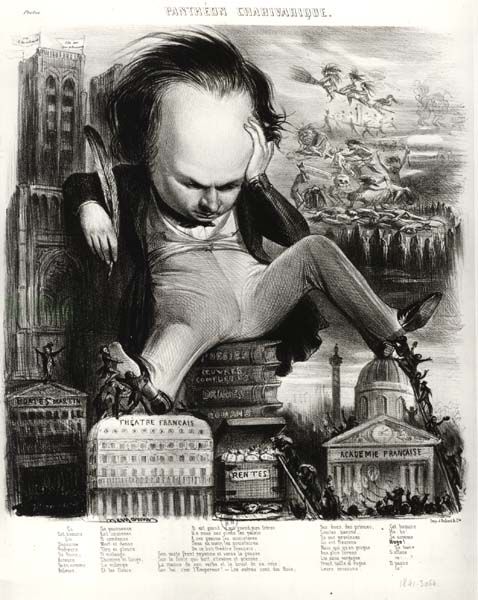
Victor Hugo à gros traits

From September 13, 2018 to January 6, 2019, the Maison Victor Hugo presents an exhibition an exhibition around the public image of Victor Hugo through the style of caricature. The poet’s fame and political commitment made him a favorite subject of the caricaturists of his time who often sketched him rather roughly and sometimes even ferociously. Among these renowned designers, it will be possible to find prestigious signatures such as Daumier, Doré, Cham, Gill, Lepetit, Nadar  [ … ]

Continue at : Victor Hugo à gros traits

The French Writer Who Started The Realism Movement

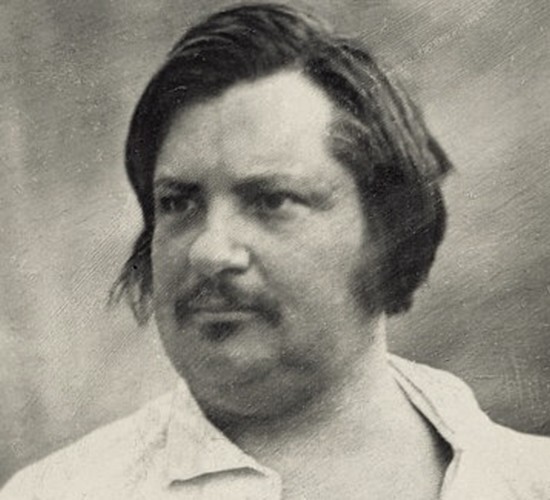
Realism in literature has its origins in 19th century Europe. The French writer who is credited as having created the Realist movement is Honoré de Balzac. But, what is realism in literature and how did Balzac help to start it? In this article, we will go deeply into answering these two interrelated questions.

The best way to begin to understand realism in literature is by defining the term realism. As its most simple and broad, realism is a representation of reality.

Before the 19th century, writers were not interested in representing everyday life in their works. It is important to note, before we go any further that, realism is not the same as plausibility. Realism is the representation of everyday experiences and activities of the characters whereas plausibility means created a plot that has internal coherence.

So, when we say that before the 1800s writers did not depict everyday life in their work, it does not mean that everything produced before then was in the realm of fantasy. It is simply, that writers did not often write about ordinary people leading ordinary lives, at least not in the level of detail as some did from the 19th century.

But depicting everyday life is not enough for realism, this depiction must lack any romanticizing

Although Realism began in painting and literature (prose and plays) and then, in the twentieth century, to cinema.

Continue reading “The French Writer Who Started The Realism Movement”

French-Moroccan writer Leïla Slimani wins Goncourt, France’s top literary prize – France 24


Moroccan-born Leila Slimani won France’s top literary prize, the Goncourt, on Thursday with a novel guaranteed to “scare the wits out of parents”. The chilling tale of a “perfect” nanny who murders the two children she is looking after, “Chanson douce” (roughly translated as “Sweet Song”) is based on the real-life story of a Dominican child-minder shortly to stand trial for the double murder of her charges in New York in 2012.The book – which begins with the words “the baby is dead” – is already a bestseller in France.

READ FULL STORY at Source: French-Moroccan writer Leïla Slimani wins Goncourt, France’s top literary prize – France 24