Listen to radio broadcast featuring French composers Georges Auric, Georges Delerue, Frances Lai and Yann Tierson

By Wayne Cresser and Michael Stevenson

Yann Tiersen
“Let’s play with sound, forget all knowledge and instrumental skills, and just use instinct – the same way Punk did” – Yann Tiersen
PICTURE THIS – FILM MUSIC ON THE RADIO : WRIU 90.3 FM 9/21/25

Georges Auric (1899–1983)

Auric was a versatile and significant figure in 20th-century French music and culture. 

  • A member of Les Six: As one of the prominent members of the group of avant-garde composers known as Les Six, he rebelled against late-Romanticism and Impressionism, advocating for a more modern, populist, and distinctively French style.
  • Major film scores: He composed over 100 film scores, many for prominent directors, including his longtime collaborator Jean Cocteau. His famous film scores include:
    • Beauty and the Beast (1946)
    • Moulin Rouge (1952), which produced the popular song “Where Is Your Heart?”
    • The Wages of Fear (1953)
    • Roman Holiday (1953)
  • Administrator of French music: Auric also held significant administrative positions, including director of the Paris Opéra and chairman of the French performing rights society, SACEM. 

Georges Delerue (1925–1992)

Dubbed “The Mozart of Cinema” by the newspaper Le Figaro, Delerue was one of the most prolific and influential film composers of his generation. 

  • Prolific career: He wrote more than 350 scores for film and television, with his signature style blending classical orchestration with romantic, lyrical melodies.
  • French New Wave collaborator: His distinctive style shaped the sound of the French New Wave, notably through his collaborations with director François Truffaut on films such as Jules and Jim (1962) and Day for Night (1973).
  • Hollywood success: His success extended to Hollywood, where he scored notable films, including:
    • A Little Romance (1979), for which he won an Academy Award
    • Platoon (1986)
    • Steel Magnolias (1989) 

Francis Lai (1932–2018)

Lai was an Oscar-winning composer whose work helped define the “easy listening” and popular instrumental music of his era. 

  • Popular melodies: He was a gifted melodist known for his emotionally expressive themes. His music gained massive global recognition through his collaboration with director Claude Lelouch, for whom he scored almost 40 films.
  • Global hits: His most famous and influential works include:
    • The romantic theme from A Man and a Woman (1966), which earned him a Golden Globe nomination.
    • The iconic, Oscar-winning score for Love Story (1970). The theme, “Where Do I Begin?”, became an international pop standard.
  • Classical crossover influence: Lai’s success demonstrated that a film score could become a hit in its own right, influencing the popular music charts and inspiring a new generation of “classical crossover” artists
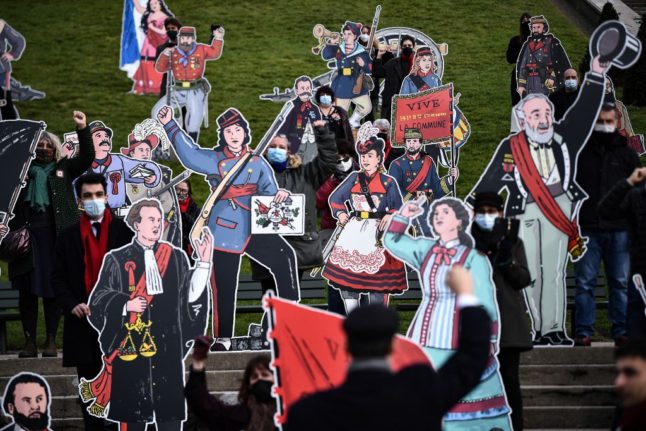
Commemoration begins of the bloody weeks of the Paris Commune of 1871

Paris has launched two months of events commemorating a radical experiment in people power, which continues to divide and inspire in equal measures 150 years later.

The 1871 Paris Commune, an uprising against a conservative government by working-class Parisians that was brutally crushed after 72 days, is one of the lesser-known chapters in French history.

But its memory still looms large in left-wing rebellions worldwide and in Paris with the towering Sacre-Coeur basilica in Montmartre, built by the victors on the ruins of the crushed Commune.

The revolt erupted after the Franco-Prussian war and ended in a bloodbath, with government troops massacring between 6,000 to 20,000 people during la semaine sanglante (bloody week) that ended the Parisians’ brief flirtation with self-rule.

Last week, Paris mayor Anne Hidalgo inaugurated a programme of 50 events commemorating the Commune, including exhibitions, plays, conferences and debates.

But with public sympathies still divided been the “Communards” and the “Versaillais” government, trying to rally Parisians around a shared reading of what Karl Marx described as “France’s civil war” is proving difficult. Continue reading “Commemoration begins of the bloody weeks of the Paris Commune of 1871”

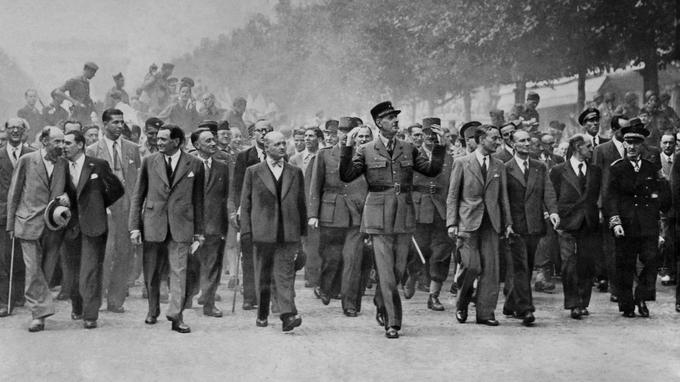
August 25, 1944, the liberation of Paris: “the greatest day since the storming of the Bastille” 

75 years ago, the capital was finally free from the German yoke. This historic day will remain, in the eyes of the whole world, the symbol of the renewal of France and democracy.

“There are minutes there, we all feel it, which exceed each of our poor lives.” This August 25, 1944, late afternoon, the atmosphere is solemn at the City Hall of Paris. General de Gaulle, who has just arrived suddenly in this high place of republican declarations, is received by the communist Georges Marrane, on behalf of the Paris committee of the Liberation, and by the Catholic Georges Bidault, president of the National Council of the Resistance (CNR), the successor of Jean Moulin. Paris has just been released in the middle of the afternoon from the Nazi yoke. Everything was done in haste. [ . . . ]

Continue at: August 25, 1944, the liberation of Paris: “the greatest day since the storming of the Bastille” 

The invention of France

Two hours north east of Paris is a famous battlefield. The defeated French leader was called Napoleon, but the battle was not Waterloo. It was Sedan, and lining up against the French, the Prussians. The defeated French leader was Napoleon’s nephew, le petit Napoleon, otherwise known as the emperor Napoleon III. This battle, in 1870, set up the dynamic that led to two world wars. | Audio

In the final Invention of France, Misha Glenny explores a crucial year for all western Europe. France was invaded, Paris bombarded, and Alsace occupied. January 18th 1871, a humiliating event – the proclamation of a new German empire, announced not in Germany but in the Palace of Versailles. Europe would never be the same.

With contributions from Thomas Kielinger, Jonathan Fenby, ambassador Sylvie Bermann, Andrew Hussey, Jeremy Black and Agnew Poirier. Plus contrubutions from Emile Zola’s novel, Le Debacle.

The producer in Bristol is Miles Warde. LISTEN to the BCC program

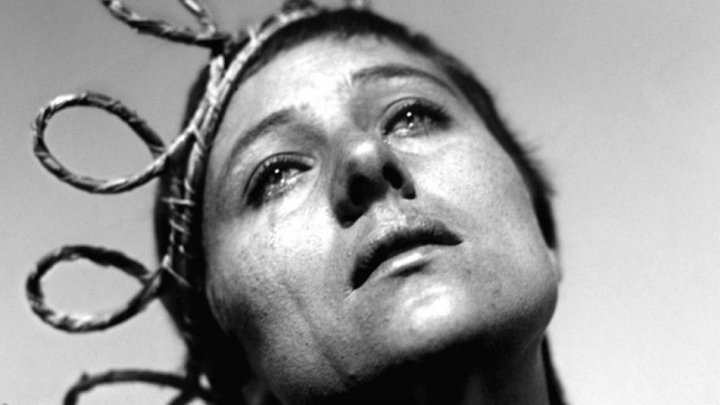
Falconetti as Joan of Arc

Belleville, the Secret Birthplace of Communism 

Learn why you’ve probably never learned about the Belleville Commune in French history class.

Belleville, which encompasses most of the 20th arrondissement of Paris, is a neighborhood that feels a bit like its own country. And that’s not just because the “Beautiful City” is currently Paris’s Chinatown, or, more accurately, its Little Saigon.

This sprawling quartier built on a hill was actually once a suburb of Paris, which was accumulated by the French capital in the early 1800s. But in 1871, the citizens of Belleville worked together with members of the Parisian working class to overthrow the French government in the quartier and form the Commune of Belleville, which lasted for 72 days and resulted in one of the biggest massacres in French history. In one week, known as “the Bloody Week,” more than 15,000 people were killed in Belleville’s fight for working class independence. This event even went on to inspire political leaders like Karl Marx when he wrote his infamous Communist Manifesto.

If you’ve enjoyed this little history lesson, don’t miss more videos from anti-tourist Messy Nessy Chic, including this adventure into the Paris catacombs to watch The Rocky Horror Picture Show.

Source: Belleville, the Secret Birthplace of Communism – Frenchly