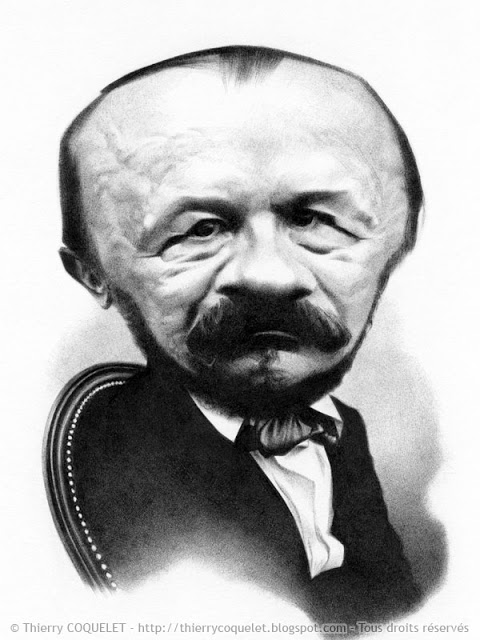
Born May 22, 1808 | More at Wikipedia

Born May 22, 1808 | More at Wikipedia

A young actress has lodged a complaint for rape against French film director Luc Besson, judicial sources said on Saturday, the latest in a string of sexual abuse allegations in the wake of the Harvey Weinstein scandal.
The filmmaker’s lawyer Thierry Marembert said he categorically denied the claims calling them “fantasist accusations”, adding that the complainant was someone he knew “towards whom he has never behaved inappropriately”. Police in Paris opened an investigation after the actress accused the 59-year-old “The Big Blue”, “Nikita” and “Leon” director of raping her, the judicial sources said. A “complaint has been made for acts qualifying as rape by the plaintiff which happened Thursday night into Friday in Paris,” they said, adding that police were investigating. News of the allegation emerged shortly before the closing ceremony of the Cannes Film Festival which was marked this year by an emotional speech by a Weinstein accuser.
Italian star Asia Argento, who has said she was raped by the Hollywood mogul at Cannes in 1997, told the ceremony he would never be welcome at the event again. “This festival was his hunting ground,” said Argento, who says she was 21 when Weinstein attacked her in his hotel room. Sources said Besson’s accuser went to police on Friday to file a complaint against Besson after the alleged assault at the Bristol hotel in the French capital.
The complainant said she had been in a relationship with him for around two years, stating she felt pressured into being intimate with him for professional reasons. One source close to the investigation said Besson was out of the country and had not been questioned. According to Europe 1 radio, which broke the story, Besson’s accuser said she had “drunk a cup of tea, then felt unwell and lost consciousness”.
The station quoted her as saying that when she came round she remembered being sexually assaulted. Giant of French cinema Besson, who is married to a film producer, has three children with his wife and two more from previous relationships. He has been married four times, including to US actress Milla Jovovich.

Monet spent the summer of 1870 at Trouville, the popular resort along the English Channel. In Beach at Trouville he depicts the guests of the fashionable Hotel des Roches Noires strolling up and down the boardwalk, as well as the effect of the sunlight reflected on land and water. While viewers today find these straightforward depictions of leisure time activities quite pleasing, they were actually controversial in the 1870s. Monet was criticized both for his choice of subject matter – which was considered too trite – and for his summary treatment of the human form.
Claude Monet (French, 1840-1926)
Beach at Trouville, c. 1870

YOU DON’T HAVE TO BE French to know what à la mode means. Even at the humble American diner, where Gallic influence is usually limited to French fries and French dips, desserts are tagged with the term. Pies, cakes, and even pancakes and waffles can come crowned with a scoop of ice cream: in other words, à la mode.
American menus were once replete with such wording. Meaning in the fashion in French, à la mode is a relic of a time when elite diners worldwide used coded terms from classical French cuisine. Today, that system of naming has all but vanished outside of France and French restaurant [ . . . ]
Continue at ATLAS OBSCURA: ‘À La Mode’ Is a Lonely Survivor of a French Culinary Code – Gastro Obscura
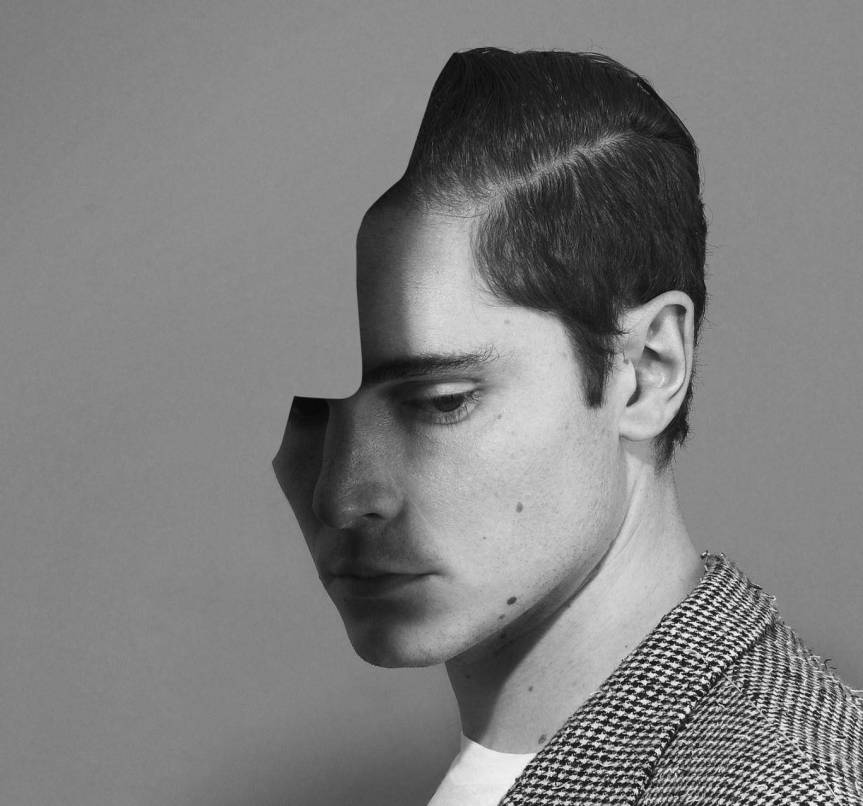
“We choose the way we’ll be remembered.” The first song Simon Carpentier and Victor Solf wrote as French electronic duo Her opens their self-titled debut album with those words. Both of them were afraid of the future at the time and needed to make a song about how they should be the ones to decide how they are remembered. No one else could decide.
“We Choose” was released after Carpentier’s death from cancer, aged 27, in August 2017. He and Solf had met over a decade ago at their school in the medieval town of Rennes, north France, forming Her in 2015 after their first band, electro-pop band The Popopopops, split two years earlier.
Knowing their time was limited, they mapped out how they wanted their debut album to sound, and how the entire project would be presented to the world. You’d be hard-pushed to find a record or another band to compare it to, and it’s not what you might expect from a French electronic act.
“Making this album was a very intense part of our life,” Solf says. He’s sat, in an orange roll-neck sweater and black trousers – handsome in a particularly French way, with a strong jaw and dark, close-cropped hair – at a venue in Paris where the first part of a documentary about Her will be shown, along with a live performance by him and his band members.
“It was really important for us to be able to produce our songs, to be really focused on the whole project,” he continues. “But it was also important to trust people and bring them in; we’d been working with our sound engineer for five years, even before Her, and he really helped us a lot on the production and the mixing.
“Sometimes you can’t see anymore what’s wrong with a song, so someone a little bit outside can help. It was the same with the musicians, Simon could play the guitar and the bass and I could play the keyboard and some drums, so we could have recorded it ourselves if we’d really wanted, but it’s not how we think about music. We started to work with three other musicians – without computers – in the studio, and it was really nice to have different opinions.” Continue reading “French electronic duo Her find immortality in their music”
 Pas De Merde