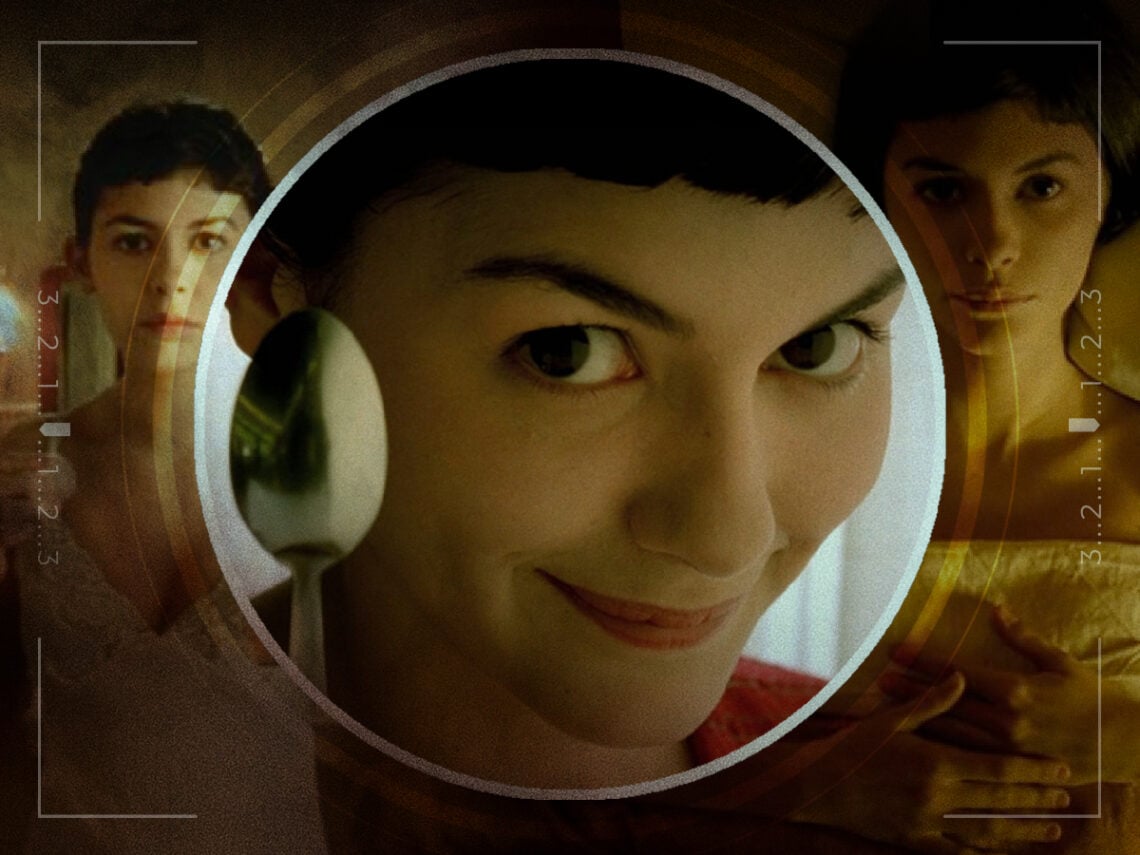
Listen to radio broadcast featuring French composers Georges Auric, Georges Delerue, Frances Lai and Yann Tierson

By Wayne Cresser and Michael Stevenson

Yann Tiersen
“Let’s play with sound, forget all knowledge and instrumental skills, and just use instinct – the same way Punk did” – Yann Tiersen
PICTURE THIS – FILM MUSIC ON THE RADIO : WRIU 90.3 FM 9/21/25

Georges Auric (1899–1983)

Auric was a versatile and significant figure in 20th-century French music and culture. 

  • A member of Les Six: As one of the prominent members of the group of avant-garde composers known as Les Six, he rebelled against late-Romanticism and Impressionism, advocating for a more modern, populist, and distinctively French style.
  • Major film scores: He composed over 100 film scores, many for prominent directors, including his longtime collaborator Jean Cocteau. His famous film scores include:
    • Beauty and the Beast (1946)
    • Moulin Rouge (1952), which produced the popular song “Where Is Your Heart?”
    • The Wages of Fear (1953)
    • Roman Holiday (1953)
  • Administrator of French music: Auric also held significant administrative positions, including director of the Paris Opéra and chairman of the French performing rights society, SACEM. 

Georges Delerue (1925–1992)

Dubbed “The Mozart of Cinema” by the newspaper Le Figaro, Delerue was one of the most prolific and influential film composers of his generation. 

  • Prolific career: He wrote more than 350 scores for film and television, with his signature style blending classical orchestration with romantic, lyrical melodies.
  • French New Wave collaborator: His distinctive style shaped the sound of the French New Wave, notably through his collaborations with director François Truffaut on films such as Jules and Jim (1962) and Day for Night (1973).
  • Hollywood success: His success extended to Hollywood, where he scored notable films, including:
    • A Little Romance (1979), for which he won an Academy Award
    • Platoon (1986)
    • Steel Magnolias (1989) 

Francis Lai (1932–2018)

Lai was an Oscar-winning composer whose work helped define the “easy listening” and popular instrumental music of his era. 

  • Popular melodies: He was a gifted melodist known for his emotionally expressive themes. His music gained massive global recognition through his collaboration with director Claude Lelouch, for whom he scored almost 40 films.
  • Global hits: His most famous and influential works include:
    • The romantic theme from A Man and a Woman (1966), which earned him a Golden Globe nomination.
    • The iconic, Oscar-winning score for Love Story (1970). The theme, “Where Do I Begin?”, became an international pop standard.
  • Classical crossover influence: Lai’s success demonstrated that a film score could become a hit in its own right, influencing the popular music charts and inspiring a new generation of “classical crossover” artists

‘Adam’s Sake’ Review: Could Laura Wandel Be Heir to Dardenne Brothers?

A thought-provoking procedural about the nurse trying to keep a single mom from losing custody of her child, from the promising ‘Playground’ director.

By Peter Debruge

Who decides what’s best for a child? In “Adam’s Sake,” a scrawny 4-year-old boy is admitted to the pediatric ward with a broken arm, which the doctors attribute to malnutrition. A social worker is called, and Adam’s mother — who’s hardly more than a child herself — is forbidden access to her son while hospital staff try to nurse him back to health. But Adam refuses to eat unless his mother is present, fighting against the feeding tubes the doctors have ordered.

All that is backstory that we piece together on the trot during the opening minutes of Belgian director Laura Wandel’s emotionally wrenching whirlwind, which is bolstered by a pair of terrific performances from Léa Drucker as Lucy, the pediatric department’s head nurse, and “Happening” star Anamaria Vartolomei as Adam’s mom, Rebecca — to say nothing of soulful newcomer Jules Delsart, the remarkable young actor who plays Adam.

From the get-go, we see Lucy attempting to mediate between the impatient doctor (Laurent Capelluto), an inflexible social worker (Claire Bodson) and desperate Rebecca, who’s been granted a narrow window of visitation on a probationary basis. The boy in turn clings to his mom’s neck, plaintively asking any who will listen whether she might be permitted to stay the night.

The stakes are life and death, as the medical staff makes clear. Meanwhile, Rebecca works at cross-purposes, smuggling in plastic containers of a runny porridge-like goop she insists on feeding Adam instead of the hospital food. Without proper sustenance, the boy risks additional fractures, which makes it especially difficult to watch the scene in which Rebecca throws out the prescribed meal while Lucy’s back is turned.

Over the course of a tight, intense 70-odd minutes, Wandel plunges audiences into the frantic hustle of this overtaxed hospital, observing through fresh eyes a world we know from so many TV dramas — much as she did the daunting turf of an elementary schoolyard in her stunning 2021 debut, “Playground.” In that film, Wandel developed a formal approach perfectly suited to her milieu, adopting the perspective of her 7-year-old protagonist as the first grader tried to make sense of her intimidating new surroundings. Adults, when seen, were either cropped at the waist (à la the teacher in “Peanuts” cartoons) or obliged to bend down into frame, engaging with the girl at eye level.

Wandel could have repeated that same tactic in “Adam’s Sake,” but instead of portraying the action from the poor kid’s point of view, she aligns herself with Lucy, employing a similarly dynamic observational style to that of her producer-mentor Luc Dardenne. Nimbly covering the action via a small handheld camera, cinematographer Frédéric Noirhomme shadows Lucy and the other characters via long unbroken takes, occasionally staring at the back of her protagonist’s head (as Dardenne often did in “Rosetta”).

It’s an audacious strategy, not intended to impress so much as to immerse, which distinguishes “Adam’s Sake” from countless hospital-set procedurals. Wandel wants her audience to weigh the philosophical aspects of the situation, revealing the behind-the-scenes power struggles and split-second decisions that complicate Lucy and her superiors’ ability to spare Adam.

Audiences — especially those with children of their own — may have a tough time dealing with Rebecca’s self-defeating behavior, which springs from a place of panic. Abandoned by Adam’s father, she has raised the boy this far on her own, but her instincts are off. It’s not clear whether what’s she’s feeding him is vegan or some kind of religiously sanctioned alternative, although Wandel has explicitly said that’s beside the point. Her focus is on the various hierarchies at play in this hospital, where parents typically have authority — and which this mom has somehow lost to the legal system.

Rebecca has cultivated a codependent dynamic with Adam whereby neither can stand to be apart from the other; she goes so far as to lock herself in the hospital bathroom with her son one moment, then all but kidnaps him the next. No wonder practically everyone on staff seems determined to restrain Rebecca and limit access to her son. Only Lucy seems to recognize that they need the mother’s cooperation in order for Adam to pull through, heroically bending the rules for his benefit.

Lucy may have Adam’s best interests in mind, but she finds herself at the bottom of a chain of command, in which Adam’s doctor, the ward supervisor (Alex Descas) and eventually the law stand in her way. The movie can feel a bit melodramatic at times, especially when Adam finally speaks his truth — a chilling line it’s hard to believe any child actually saying, which no one who sees it will soon forget. In the end, “Adam’s Sake” is not quite as effective a film as “Playground,” but it most certainly confirms Wandel as a filmmaker to be reckoned with.

Source: ‘Adam’s Sake’ Review: Could Laura Wandel Be Heir to Dardenne Brothers?

Movie Review: “Deception” (2021)

Directed by Arnaud Desplechin, Tromperie (also known as Deception, 2021) is a deeply introspective and thought-provoking adaptation of Philip Roth’s novel. Featuring Denis Podalydès and Léa Seydoux in the lead roles, the film explores the complex, often ambiguous relationship between a writer and his mistress, seamlessly blurring the boundaries between fiction and reality. With its richly layered dialogue and philosophical tone, Tromperie invites viewers into an exploration of love, memory, and the blurred lines of storytelling.

Set in the 1980s in London, the film follows Philip (Denis Podalydès), a successful American novelist, and his unnamed lover (Léa Seydoux), a married woman who visits him frequently in his writing studio. Their interactions unfold as a series of emotionally charged dialogues—sometimes tender, sometimes confrontational—exploring themes of desire, fidelity, and the power dynamics at play in creative relationships.

As Philip’s bond with his mistress deepens, he also reflects on his past relationships, including those with his wife, former lovers, and even characters from his own literary works. Tromperie delicately weaves the line between reality and fiction, challenging the viewer to question where the truth ends and the imagination begins.

The Nature of Fiction and Reality – The film encourages the audience to grapple with the distinctions between what is real and what Philip conjures in his mind as a writer.

Desire and Betrayal – The emotional undercurrents of love, passion, and infidelity form the crux of the story, reflecting the complexities and contradictions inherent in human relationships.

Exile and Identity – Set against the backdrop of Philip’s life as an American writer living in Europe, the film examines themes of cultural alienation, belonging, and the internal conflicts that shape both his personal and creative identity.

Premiering at the Cannes Film Festival in 2021, Tromperie earned critical acclaim for its sophisticated storytelling and the exceptional performances of its leads. Léa Seydoux delivers a mesmerizing portrayal of emotional depth, while Denis Podalydès embodies the intellectual yet morally complex character of Philip with subtle brilliance.

Unlike conventional narratives driven by action, Tromperie thrives on the power of words, remaining true to Roth’s literary style. Its cerebral approach and philosophical layers make it a captivating watch for those who appreciate dialogue-heavy, thought-provoking cinema. With its blend of romance, intellectual exploration, and literary elegance, Tromperie stands as a remarkable adaptation of one of Roth’s most compelling works, inviting reflection on the nature of love, identity, and the boundaries of storytelling.

French Film Review: Le Fil

Le Fil
Le Fil

Daniel Auteil directs and stars as a disillusioned criminal lawyer who has been appointed to defend a man accused of murdering his wife.

Daniel Auteil directs and stars as disillusioned criminal lawyer Jean Monier, who has been appointed to defend Nicolas Milik, a man accused of murdering his wife. While everything points to his guilt, Monier takes up the case, convinced of his innocence. As his investigations keep taking him back to the night of the murder and the family dynamics, he gets closer to his client, adding to the pressure to defend him. What began as an ordinary case will put him to the test.

Auteuil’s seasoned performance and Gadebois’ nuanced portrayal of Milik add depth to this courtroom thriller, which explores themes of moral ambiguity and redemption.

Director: Daniel Auteuil

Starring: Daniel Auteuil, Grégory Gadebois

Source: French Film Review: Le Fil – France Today

Flow review – beguiling, Oscar-winning animation is the cat’s whiskers

Latvian director Gints Zilbalodis’s enchanting eco-fable about a lone moggy in a flooded world is a triumph of imagination over budget

By Wendy Ide

Animation as a medium and fairytales as a subject have always been natural bedfellows. You only need to look at Disney’s princess industrial complex to understand that sparkle-dusted happily-ever-after is big business; that the appetite for this particular breed of magical thinking (plus associated merchandising and sequined tat) is enduringly healthy. But the beguiling, Oscar-winning, dialogue-free Latvian animation Flow, which tells of a solitary cat who must learn to cooperate with a mismatched pack of other species to survive a catastrophic flood, is a little different.

The fairytale here is not the story the picture tells – it’s the story of the film itself. Created by a tiny team with a minuscule budget of about £3m, and rendered entirely on the free open-source 3D software Blender, Flow has been on a journey: its premiere in Cannes; the haul of prizes (54 to date), culminating in the Oscar for best animated feature – that is the stuff of film industry fantasy.


While the limited budget certainly shows on screen at times, it also gave director Gints Zilbalodis a considerable degree of creative freedom. With more money comes compromise and consensus film-making, plus a tendency to spoon-feed the audience rather than challenge them. Flow, however, embraces mystery: we see a disaster unfold in the same way the animals do – with no warning or context.

Zilbalodis has chosen not to explain the recent history of what seems to be a post-apocalyptic but stunningly verdant, geographically unspecified world. There are signs, in the lush forest, of human habitation and the remnants of civilisation. The cat lives in a house that appears to have once been home to a kitty-obsessed sculptor. Feline statues of varying sizes stand like sentinels in the grounds; a half-finished carving still rests on a workbench. But whether the former inhabitant has been relocated or is long since dead – perhaps along with the rest of humanity – is left open to the audience to interpret, and your reading of the background to the story very much depends on how bleakly apocalyptic your worldview is.

The cat’s happy solitude in the abandoned building is interrupted by a sudden environmental disaster: rapidly rising flood waters submerge the house and the forest surrounding it. A last-minute reprieve comes in the shape of a drifting sailboat, but the cat is outraged to discover that the vessel must be shared with another passenger – an unflappable and permanently chilled-out capybara. As the boat drifts, it takes on other creatures: an acquisitive ring-tailed lemur with a weakness for shiny trinkets; a wise but haughty secretarybird; and an excitable goofball of a dog.

One of the most distinctive elements of Zilbalodis’s vision is his decision to let his animals remain animals, instead of attempting to squeeze them into the mould of personhood. The character design and animation of the creatures are where the film’s meagre budget is most evident, and yet behavioural details are minutely observed. The cat – a neat, slinky, self-contained little black moggy – is pure feline, from the insouciantly twitching tip of its tail to its testy chirrup of annoyance (all the animal sounds are real, rather than voice actors cosplaying) at having to share a space with other critters. As an alternative to stamping human personalities on them, Zilbalodis instead encourages us to see elements of ourselves in the animals.

Being a self-taught animator accustomed to working on his own (his previous feature film, Away, was an entirely solo project created on his computer), the director has revealed in interviews that he identifies most with the self-sufficient cat, who must learn to cooperate with others. And anyone with a tendency to hoard accessories and to overpack when travelling will feel a kinship with the lemur.

An eco-parable, Flow is not exactly mining new thematic territory; from Wall-E to Cartoon Saloon’s My Father’s Dragon to The Wild Robot and numerous Studio Ghibli pictures, animated movies dealing with imminent climate collapse are relatively plentiful. However, the approach of Flow, with its animals’-eye, in-the-moment immediacy and its resistance to cutesiness and anthropomorphism, is bracingly fresh and unexpected. The animation, meanwhile, transcends its financial constraints to achieve moments of shimmering, heart-swelling loveliness.

Deliberately enigmatic in approach, with its focus on tiny, cat-level details and a provocative hint that the end of humanity may not be the end of the world, Flow doesn’t hammer home a single message. Other takeaways include the need to work together to survive, the value of adaptability – and that cats will always push stuff off tables given half the chance.

Source: Flow review – beguiling, Oscar-winning animation is the cat’s whiskers | Animation in film | The Guardian