
Tag: covid-19
France’s ‘Deconfinement’ Plan
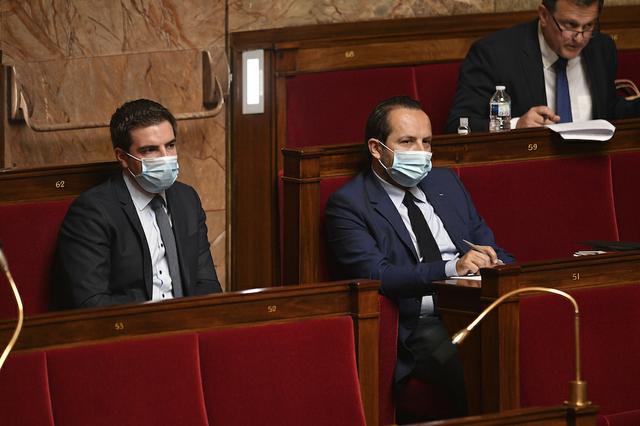
France has announced a carefully phased plan for easing the severe restrictions imposed in mid-March. The strategy is far more coherent, cautious and realistic than the miraculous ‘reopening’ envisioned by U.S. authorities.
On Tuesday, April 28, Prime Minister Édouard Philippe appeared before the French National Assembly to announce his government’s plan for releasing the French people from the confinement imposed on them since mid-March, when the severity of France’s COVID-19 problem first became apparent. The plan offers a tentative, reasonably detailed blueprint for rebuilding French social and economic life one step at a time.
Pandemic Shakes France’s Faith in a Cornerstone: Strong Central Government
SCEAUX, France — A couple of baguettes tucked under her arm, Maha Rambousek fiddled with a face mask that kept sliding off her nose. After a local decree made masks mandatory in public, she had quickly stitched it together, but was left confused when the policy was overturned two days later by the central government.
“We have some of the highest taxes and biggest public spending in the world, and the French people accept that because, implicitly, their protection was guaranteed by the state,’’ said Mr. Vermeren, who teaches at the University Paris 1 Panthéon-Sorbonne.
NY Times
“I don’t know who’s wrong or who’s right,’’ Ms. Rambousek said. “And I can’t turn to anybody for certainties.’’
The measure in Sceaux, a well-to-do suburb just south of Paris, was one of an increasing number of exceptional local challenges to the government’s handling of the coronavirus outbreak, which has shaken confidence in a cornerstone of French society: the primal authority of the centralized state.
The city of Perpignan lodged contagious patients in a hotel after the central government told people to self-isolate at home. Officials in the city of Marseille carried out widespread testing of both the sick and healthy even as the government ordered that only the seriously ill be tested. The city of Paris tightened a national lockdown by banning daytime jogging.
While France’s vaunted health care system has staved off disaster, France has suffered the world’s fourth-biggest death toll — now at 23,660 official deaths, behind the United States, Italy and Spain — a consequence, critics say, of the central government’s failure to anticipate the onslaught of the contagion.
That failure and a critical shortage of masks and testing kits — also resulting from gaps in state policies — led to the virus’s rapid early spread, prompting France to impose one of the word’s strictest nationwide lockdowns, now in its seventh week. [ . . . ]
Continue story at NY TIMES
Lockdown in Nice, France: What life is like for visitors to France during the coronavirus pandemic
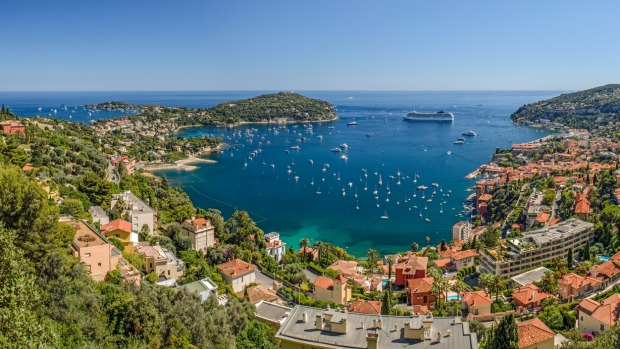
Stuck in a rented apartment 23 hours a day, a father and his teenagers cope with confinement in a beautiful hot spot.
Nice, France, is a city on hold. Its hotels are boarded up, its restaurants are shuttered, and its residents are confined to their homes 23 hours a day.
I detoured here on my way to Italy in mid-March, hoping to avoid a full lockdown. But a few days later, covid-19 slammed France with unexpected ferocity, and the entire country turned into a red zone.
Today my rented apartment is a cage. French police and military patrol the streets. My three teenage kids and I are only allowed out of the house for an hour a day. Curfew starts at 8pm. [ . . . ]
Continue at source: Lockdown in Nice, France: What life is like for visitors to France during the coronavirus pandemic
Francis Cabrel: Jour 42
Le Rue des Martyrs
“I can never be sad on the Rue des Martyrs,” I tell people when they ask me why I am such a cheerleader for my street. In the face of the unknown, I revel in the shared pleasure of conversations — however brief these days — with shopkeepers and take comfort in the spirit of community that lives on here.
 Pas De Merde