The French Connection celebrates “Barbara”

By Michael Stevenson

Our featured performer tonight on WRIU.org’s THE FRENCH CONNECTION is “Barbara” — one of the most important voices in French chanson.
Born Monique Andrée Serf, she performed under a single name – perhaps one name was all she needed.

Barbara

Barbara sang quietly, often from behind a piano, trusting words, silences, and emotion more than volume. Elle chante vrai.

Many of Barbara’s songs are tied directly to her life — sometimes painfully so.
She was Jewish, spent years in hiding during World War II, and was abused and later abandoned by her father. Those experiences don’t always appear explicitly in her lyrics, but they echo in her songs. La mémoire est partout — memory is everywhere.

  • PLAYLIST
    “La Femme d’Hector” (Brassens) 1956
    “Il Nous Faut Regarder” (Brel) 1956
    “Les Amis de Monsieur”, 1956
    “Dis, Quand Reviendras-tu”, 1964
    “Ma plus belle histoire d’amour”, 1967
    “Nantes”, 1964
    “La Solitude”, 1965
    “Göttingen”, 1965
    “Une Petite Cantate”, 1965
    “Mon Enface”, 1968
    – Martha Wainwright “Quand Reviendras-tu” (Barbara)
    – Francis Cabrel “Quand j’ame un fois j’aime pour toujours” (Desjardins)
Listen to The French Connection ::  December 28, 2025

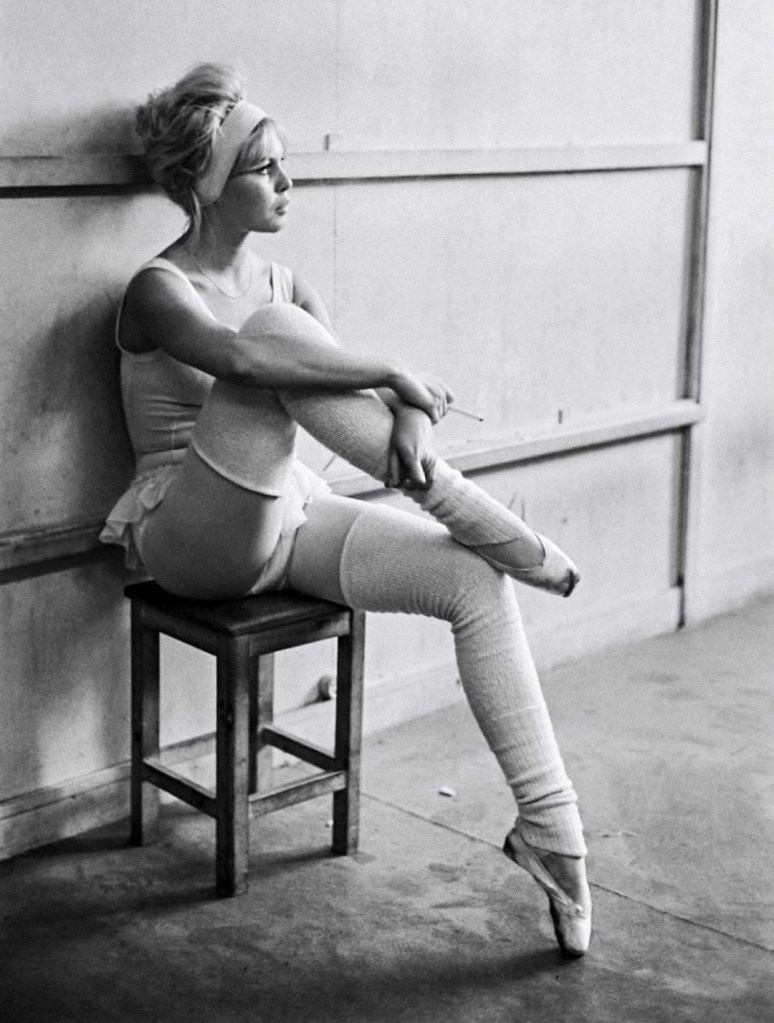
Bardot

DECEMBER 28, 2025 SALUT!

  • Boris Vian “J’Suis Snob”

REST IN PEACE, B.B.
“I gave my beauty and my youth to men, and now I am giving my wisdom and experience … the best of me, to animals.”

  • Brigitte Bardot “La Madrague” (1963)
  • Brigitte Bardot & Serge Gainsbourg “Bonnie & Clyde” (Serge Gainsbourg) (1967)

POST-WAR CHANSON
Smoky cafés, cobblestone streets, and a deep longing for a pre-war idealized Paris

  • Léo Ferré “Noël” (1961)
  • Catherine Sauvage “Avec Le Temps”
  • Léo Ferré “Le Vampire” (Baudelaire)
  • Barbara “Göttingen” (Monique Andrée Serf)
  • Barbara “Les Voyages” (Monique Andrée Serf)
  • Barbara “Ne Me quitte Pas (Jacques Brel)
  • Jacques Brel “Quand on n’a que l’amour” (Brel)
  • George Brassens “La Prière” (Francis Jammes / Brassens)
  • George Brassens “Le Piere Noël et le Petit Fille” (Brassens)
  • Catherine Sauvage “Black Trombone” (Serge Gainsbourg)
  • Léo Ferré “Saint Germaine des Pres” (Ferré)

Source: The French Connection :: Playlist and replay – WRIU 90.3 FM

Documentary: Barbara en liberté

On the eve of celebrating the 20th anniversary of her death, the image of Barbara, filtered by time, is somewhat distorted, frozen and sacralized. This documentary offers a rediscovery of the different facets of Barbara: much richer and more complex than a Music Hall tragedian, all at once, and always intensely, melancholic and funny, fanciful and demanding, romantic and liberated, accessible and distant.

Barbara “Nantes”

Monique Serf, dite Barbara (ou Barbara Brodi à ses débuts), est un auteur-compositeur-interprète français, née le 9 juin 1930 à Paris 17e et morte le 24 novembre 1997 à l’hôpital américain de Neuilly-sur-Seine (Hauts-de-Seine).

Sa poésie engagée, la beauté mélodique de ses compositions et la profondeur de l’émotion que dégageait sa voix lui assurèrent un public qui la suivit pendant quarante ans. Nombre de ses chansons sont devenues des classiques de la chanson française, notamment : Dis, quand reviendras-tu ?, Nantes, Göttingen, La Dame brune, L’Aigle noir, Marienbad ou encore Ma plus belle histoire d’amour.

Elle joua également dans nombre de films et de pièces de théâtre.