
Bardot being Bardot

Gigot is a 1962 American comedy film directed by Gene Kelly and starring Jackie Gleason. Gigot (Gleason) (the name means “leg of mutton” in French) is a mute Frenchman living in a cellar in the Ménilmontant district of Paris in the 1920s. He ekes out a hand-to-mouth existence as a janitor at his landlady’s apartment building. He is routinely treated with condescension by neighbors and often is made the butt of practical jokes. However, he is a decent and kindhearted fellow, traits not unnoticed by children and the animals he often feeds.
“Bonnard, Pierre and Marthe” (2024) by Martin Provost with Cécile de France, Vincent Macaigne, Stacy Martin, Anouk Grinberg, André Marcon, Grégoire Leprince-Ringuet is a magnificent biopic as well as a moving love story.
Pierre Bonnard would not be the painter that everyone knows without the enigmatic Marthe who alone occupies almost a third of his work. This is, over the course of half a century, the life of the “painter of happiness”, from the Parisian bourgeoisie, and his relationship with his muse who came from the people. From the moment they met, in 1893, it was love at first sight that lasted until 1942, mixing love, creations, jealousy, deception, reconciliation and marriage.
This is an excellent feature film where everything rings true. There is a good nature in these characters, in the dialogues which simply show the life of this couple from the time of the nabis until Marthe’s madness and death. Cécile de France is breathtaking and Vincent Macaigne is very credible. Visually it is very successful: the director of photography, Guillaume Schiffman, excels and thanks to the computer-generated images we can admire three overall shots of the Parisian skyline as well as two of Rome. Martin Provost offers us a very beautiful film
Le Cinéma

In this month’s subscriber essay, novelist Richard Milward travels back 55 years to the cobblestone-strewn streets of Paris, the release of France Gall’s album 1968, and discovers how a time of political upheaval had a profound impact on the happy-go-lucky genre of yé-yé
In this month’s subscriber essay, novelist Richard Milward travels back 55 years to the cobblestone-strewn streets of Paris, the release of France Gall’s album 1968, and discovers how a time of political upheaval had a profound impact on the happy-go-lucky genre of yé-yé
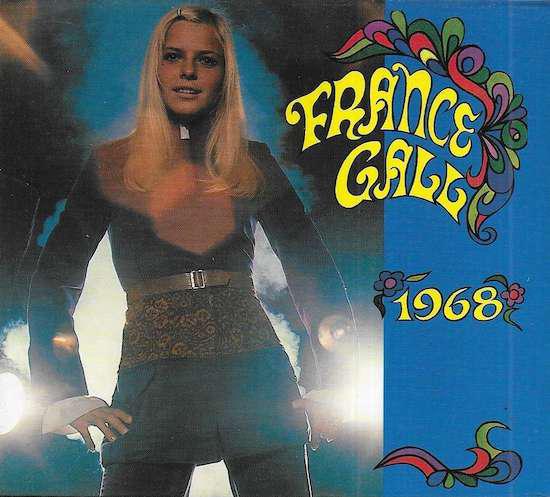
Three weeks before the first cobblestones were thrown in the explosive student revolt in Paris, May 1968, Télévision Suisse Romande broadcast the image of French yé-yé chanteuse France Gall’s small unconscious body carried down the hatch of the Savoie, a paddle steamboat floating on a frosty, overcast Lake Geneva. A strange funeral procession followed her down: a top-hatted illusionist, two muscular dancers dressed in sparkly forest-green bodysuits and white furry gilets, a dour Napoleon lookalike, comic singer Henri Dès in a purple Nehru jacket and pantaloons, and five ballerinas in bejewelled go-go boots and pastel-coloured wigs. A minute later, Gall would be upright again, dancing in the film’s grand psychedelic finale – but, with intense social and political upheaval looming, her mock death would unknowingly mark the symbolic death of yé-yé, the playful bubblegum pop movement that made Gall, Françoise Hardy, Sylvie Vartan, Chantal Goya, Annie Philippe and so many others famous between 1962 and 1968.
Gall’s mock funeral appeared in Gallantly, a 33-minute nautical caper promoting her seventh LP, 1968. Released in the first weeks of that year, the LP’s title and free-flowing flowery artwork seemed to promise 1968 would continue the carefree, loved-up hippy ideals of 1967 – and likewise the music within repeated many of the tropes of the Summer of Love sound: sitar-heavy exotica (‘Chanson Indienne’), chamber pop (‘Toi Que Je Veux’), North African slithering scales (‘Nefertiti’), hyperactive psych (‘Teenie Weenie Boppie’), cartoonish flute-led lounge jazz (‘Les Yeux Bleus’). Lyrically the LP is equally haphazard, taking in the perils of LSD, the pleasures of mini golf, Queen Nefertiti’s fragrant bandages, an insatiable flesh-eating giant, Anglo-Gallic dispute over the Channel Tunnel, the vicious love of a baby shark. While not wholly cohesive, 1968 is held together by Gall’s sweetly emphatic vocals: more than any other yé-yé singer, her sincerity and versatility enabled her to skip from genre to genre without ever tripping into parody or mawkishness. Throughout the mid 1960s, she was the embodiment of youthful optimism, consistently selling hundreds of thousands of records – but, by the time the stones and Molotov cocktails rained down on the Latin Quarter, she was no longer a fixture on French TV, her sales had slumped, her career seemingly irrelevant to this new, politicised youth [ . . . ]
Read Full Article at The Quietus: The Quietus | Features | Subscriber Area | Richard Milward On France Gall’s 1968 & The Death Of Yé-Yé
 Pas De Merde