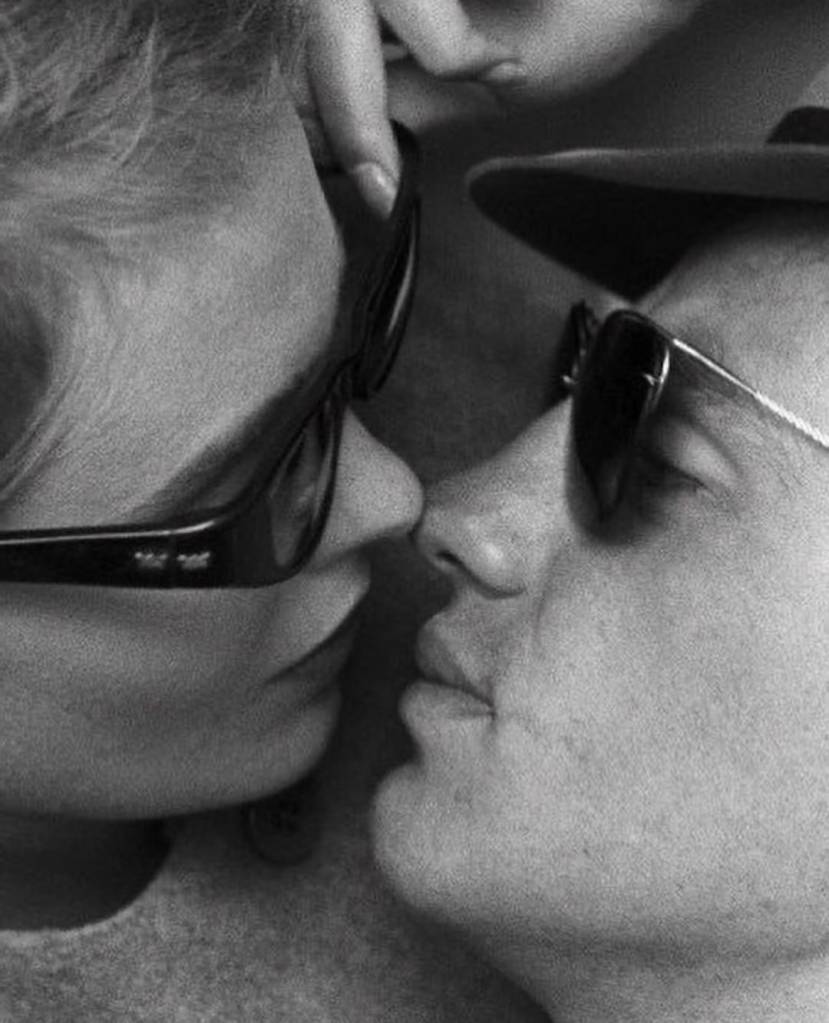
Françoise Hardy, French pop singer and fashion muse, dies aged 80

Singer and actor who wrote some of her country’s biggest pop hits had suffered with lymphatic cancer for many years

Françoise Hardy, whose elegance and beautifully lilting voice made her one of France’s most successful pop stars, has died aged 80.

Her death was reported by her son, the fellow musician Thomas Dutronc, who wrote “Maman est partie,” (or in English, “mum is gone”) on Instagram alongside a baby photo of himself and Hardy.

Hardy had lymphatic cancer since 2004, and had undergone years of radiotherapy and other treatments for the illness. In 2015, she was briefly placed in an induced coma after her condition worsened, and had issues with speech, swallowing and respiration in the years since. In 2021, she had argued in favour of euthanasia, saying that France was “inhuman” for not allowing the procedure.

Hardy was born in the middle of an air raid in Nazi-occupied Paris in 1944, and raised in the city, mostly by her mother. Aged 16, she received her first guitar as a present and began writing her own songs, performing them live and auditioning for record labels. In 1961, she signed with Disques Vogue.

Inspired by the French chanson style of crooned ballads as well as the emerging edgier styles of pop and rock’n’roll, Hardy became a key part of the yé-yé style that dominated mid-century French music. It was named after the predilection for English-language bands of the time to chant “yeah”, and Hardy had a hand in its coinage: an early song, La Fille Avec Toi, began with the English words: “Oh, oh, yeah, yeah.”

The self-penned ballad Tous les garçons et les filles was her breakthrough in 1962, and sold more than 2.5m copies; it topped the French charts, as did early singles Je Suis D’Accord and Le Temps de L’Amour. In 1963, Hardy represented Monaco at the Eurovision song contest and finished fifth.

Her growing European fame meant she began rerecording her repertoire in multiple languages, including English. Her 1964 song All Over the World, translated from Dans le Monde Entier, became her only UK Top 20 hit, but her fame endured in France, Italy and Germany. In 1968, Comment te Dire Adieu, a version of It Hurts to Say Goodbye (originally made famous by Vera Lynn) with lyrics by Serge Gainsbourg, became one of her biggest hits.

Hardy’s beauty and deft aesthetic – which encompassed cleanly silhouetted tailoring alongside more casual looks, including knitwear and rock-leaning denim and leather – defined the seeming effortlessness of 20th-century French cool. She became a muse to designers including Yves Saint Laurent and Paco Rabanne, and was also a frequent subject for fashion photography, shot by the likes of Richard Avedon, David Bailey and William Klein. Later, designer Rei Kawakubo would name her label Comme des Garçons after a line in a Hardy song.

Hardy was an object of adoration to many male stars of 60s pop including the Rolling Stones and David Bowie. Bob Dylan wrote a poem about her for the liner notes of his 1964 album Another Side of Bob Dylan, beginning: “For Françoise Hardy, at the Seine’s edge, a giant shadow of Notre Dame seeks t’ grab my foot …”

She was also courted by directors, appearing in films by Jean-Luc Godard, Roger Vadim, John Frankenheimer and more.

Hardy left Disques Vogue amid financial disputes, and signed a three-year deal with Sonopresse in 1970. This creatively rich period saw her record with Brazilian musician Tuca on 1971’s highly acclaimed La Question, and continue her multi-lingual releases, but by the contract’s end her stardom had waned and it was not renewed.

She spent the mid-1970s chiefly focused on raising her son Thomas with her partner, musician and actor Jacques Dutronc. Releases restarted with 1977’s Star, and Hardy embraced – not always enthusiastically – the sounds of funk, disco and electronic pop. A longer hiatus in the 1980s was punctuated by 1988’s Décalages, billed as her final album, though she returned in 1996 with Le Danger, switching her palette to moody contemporary rock. She released six further albums, ending with Personne D’Autre in 2018.

Having first met in 1967, she and Jacques Dutronc married in 1981 – “an uninteresting formality”, she later said of marriage in general – and separated in 1988, though they remained friends. She is survived by him and their son.


Source: Françoise Hardy, French pop singer and fashion muse, dies aged 80 | Françoise Hardy | The Guardian

Why has French President Emmanuel Macron announced snap elections after EU Parliament poll defeat?

Macron’s Renew party suffered a stinging defeat in the European elections, securing just 15.2% of the votes to the far-right National Rally’s 31.5%, according to provisional results.

By Alice Tidey

French President Emmanuel Macron announced on Sunday evening that he would dissolve the national assembly after the far-right National Rally crushed his centrist Renew party in European elections.

In a five-minute video address released on social media shortly after 21:00 CET, Macron said that “after having carried out the consultations provided for in Article 12 of our Constitution, I have decided to give you back the choice of our parliamentary future by voting.”

“I am therefore dissolving the National Assembly this evening,” he added.

His address came just one hour after his centrist Renew party was handed a heavy blow by coming in a very distant second in the European elections to the RN, where both parties scored 15.2% and 31.5% respectively.

‘Unprecedented defeat’

Jordan Bardella, the RN’s lead candidate for these elections, had in his victory speech delivered shortly after the provisional results came out at 20:00 CET, called for such a move.

“The President of the Republic cannot remain deaf to the message sent this evening by the French people. First of all, he must abandon the agenda he was preparing to implement: de-indexation of retirement pensions, the new rise in energy prices from this summer,” Bardella told supporters.

“We solemnly ask him to take note of this new political situation, come back to the French people and organise new legislative elections.”

“This unprecedented defeat for the current government marks the end of a cycle and day one of the post-Macron era, which it is up to us to build,” he added.

Extreme right is ‘downfall of our country’

Macron retorted in his address that “the rise of the nationalists and demagogues is a threat not only to our nation but also to our Europe and to France’s place in Europe and in the world”.

“The extreme right is both the impoverishment of the French people and the downfall of our country. So at the end of this day, I can’t pretend that nothing has happened,” he added.

He said the national ballot, which is to be held on June 30 for the first round and on July 7 for the second, is a “serious and weighty decision” and an “act of trust”.

“Confidence in you, my dear compatriots, in the ability of the French people to make the right choice for themselves and for future generations. Confidence in our democracy, in giving a voice to our sovereign people, nothing is more republican,” he also said.

Legislative elections are usually held in France every five years, weeks after a new president has been elected. The next ones should therefore have been held in mid-2027.

The snap elections are a massive gamble for Macron, who lost his absolute majority in the national assembly after being re-elected in 2022.

His Renew party then secured just 169 seats in the 577 hemicyle, with allies from other centrist parties including MoDem and Horizons supplying another 81 seats [ . . . ]

Continue at source: Why has French President Emmanuel Macron announced snap elections after EU Parliament poll defeat? | Euronews

How to Keep Criticism from Sinking Your Soul: Walt Whitman and the Discipline of Creative Confidence

“I do not trouble my spirit to vindicate itself or be understood.”

Re-examine all you have been told at school or church or in any book, dismiss whatever insults your own soul,” Walt Whitman (May 31, 1819–March 26, 1892) wrote in offering his timeless advice on living a vibrant and rewarding life in the preface to Leaves of Grass. When Whitman first published his masterpiece in 1855, it was met with indifference punctuated by bursts of harsh criticism. It is difficult to imagine just how insulting to the young poet’s soul such reception must have been, or what it took for him to dismiss it and carry on writing. What buoyed his spirit through the tidal wave of negativity was an extraordinary letter of appreciation from Ralph Waldo Emerson — the era’s most respected literary tastemaker and Whitman’s greatest hero, whose 1844 essay The Poet had inspired Leaves of Grass. The young poet wore Emerson’s praise of “incomparable things said incomparably well” like an armor, almost literally — he carried the letter folded in his shirt-pocket over his heart, regularly reading it to friends and lovers.

It is certainly easier, though never easy, to dismiss what insults one’s soul when it comes from critics who haven’t earned one’s confidence — “Take no notice of anyone you don’t respect,” Jeanette Winterson offered in her ten wise rules of writing. But to dismiss criticism that insults the soul from someone we respect — or, harder still, love — requires superhuman strength of spirit. How do we hold on to the integrity and solidity of our conviction and vision, be it creative or existential, when it is being challenged and censured by a person we regard with high intellectual esteem and tenderness of heart?

Whitman modeled this exquisitely in an encounter with Emerson himself.

On a crisp February afternoon in 1860, five years after the publication of Leaves of Grass, the two men took a two-hour walk along Boston Common. They had by then befriended one another and formed a courteous, frank relationship embodying Emerson’s ideal of friendship“A friend is a person with whom I may be sincere.” That winter day, Whitman found Emerson to be “in his prime, keen, physically and morally magnetic, arm’d at every point, and when he chose, wielding the emotional just as well as the intellectual.” When the criticism came, Whitman knew it sprang from that selfsame source — a quality of character he deeply respected, even revered. And yet, rather than coming undone by self-doubt, he was able to stay rooted in his own values and vision.

Writing in Specimen Days (public library) — the endlessly rewarding collection of prose fragments and diary entries, which gave us Whitman on the wisdom of treesthe power of musicthe essence of happinessthe “meaning” of art, and optimism as a force of resistance — he recounts:

During those two hours he was the talker and I the listener. It was an argumentstatement, reconnoitring, review, attack, and pressing home, (like an army corps in order, artillery, cavalry, infantry,) of all that could be said against that part (and a main part) in the construction of my poems, “Children of Adam.” More precious than gold to me that dissertation — it afforded me, ever after, this strange and paradoxical lesson; each point of E.’s statement was unanswerable, no judge’s charge ever more complete or convincing, I could never hear the points better put — and then I felt down in my soul the clear and unmistakable conviction to disobey all, and pursue my own way. “What have you to say then to such things?” said E., pausing in conclusion. “Only that while I can’t answer them at all, I feel more settled than ever to adhere to my own theory, and exemplify it,” was my candid response. Whereupon we went and had a good dinner at the American House. And thenceforward I never waver’d or was touch’d with qualms, (as I confess I had been two or three times before).

Emerson — the patron saint of self-reliance, who exhorted: “Trust thyself: every heart vibrates to that iron string.” — no doubt appreciated this orientation of spirit. Whitman’s first and foremost biographer, the great naturalist John Burroughs, goes even further in his sublimely poetic 1896 biography Whitman: A Study:

In many ways was Whitman, quite unconsciously to himself, the man Emerson invoked and prayed for — the absolutely self-reliant man; the man who should find his own day and land sufficient; who had no desire to be Greek, or Italian, or French, or English, but only himself; who should not whine, or apologize, or go abroad; who should not duck, or deprecate, or borrow; and who could see through the many disguises and debasements of our times the lineaments of the same gods that so ravished the bards of old.

To be sure, Whitman did not dismiss criticism wholesale — rather, he separated the wheat from the chaff through the sieve of confidence and surefooted creative vision. But criticism, he believed, could be far more valuable than praise. In Leaves of Grass, he wrote under the heading “STRONGER LESSONS”:

Have you learn’d lessons only of those who admired you and were tender with you? and stood aside for you?
Have you not learn’d great lessons from those who reject you, and brace themselves against you? or who treat you with contempt, or dispute the passage with you?

The kind of criticism he readily dismissed was that of the professional critics and opinionators — those aimed at tearing down rather than improving a writer’s art, for their judgments are based on the standards of their time and therefore tend to censure any vigorous break with convention. Such critics are apt to pronounce any work of true originality bad, and then to embody W.H. Auden’s incisive observation that “one cannot review a bad book without showing off.”

Burroughs noted this in his praiseful biography of Whitman, composed at a time when the poet was still more rejected than celebrated by his era:

There are no more precious and tonic pages in history than the records of men who have faced unpopularity, odium, hatred, ridicule, detraction, in obedience to an inward voice, and never lost courage or good-nature.

[…]

Every man is a partaker in the triumph of him who is always true to himself and makes no compromises with customs, schools, or opinions.

Whitman himself had proclaimed in Leaves of Grass:

I do not trouble my spirit to vindicate itself or be understood.

Later in life, he would reflect:

Has it never occurr’d to any one how the last deciding tests applicable to a book are entirely outside of technical and grammatical ones, and that any truly first-class production has little or nothing to do with the rules and calibres of ordinary critics?… I have fancied the ocean and the daylight, the mountain and the forest, putting their spirit in a judgment on our books. I have fancied some disembodied human soul giving its verdict.

[…]

The quality of BEING, in the object’s self, according to its own central idea and purpose, and of growing therefrom and thereto — not criticism by other standards, and adjustments thereto — is the lesson of Nature.

Illustration by Margaret C. Cook for a rare 1913 edition of Leaves of Grass. (Available as a print.)

Whitman’s poetry, founded upon the unshakable foundation of his creative and spiritual vision, eventually catapulted him to the top of the English-language literary pantheon. Leaves of Grass endures as one of the most beloved poetic works of all time, having influenced generations of writers and buoyed ordinary livers of life through the worst existential upheavals — such is the power of poetic truth channeled with unwavering stability of confidence and vision.

Complement with Descartes on the crucial difference between confidence and pride, Bruce Lee on willpower and self-esteem, and some excellent advice from great writers on how to survive criticism, then revisit Whitman on creativitydemocracy, his advice to the young, and his most direct definition of happiness.

Source: How to Keep Criticism from Sinking Your Soul: Walt Whitman and the Discipline of Creative Confidence – The Marginalian