Why does Pope Francis want us to watch the movie “Babette’s Feast”?

Last night at Maison de Pas De Merde, we watched one of our favorite films Babette’s Feast, to celebrate Valentine’s Day. My wife Linda introduced me to this film some 25 years ago, and we both still love it.

This film is also a favorite of Pope Francis, to whom we also offer a Valentine’s Day kiss.

Read more about Francis’ admiration for Gabriel Axel’s masterpiece in this column from Aleteia 
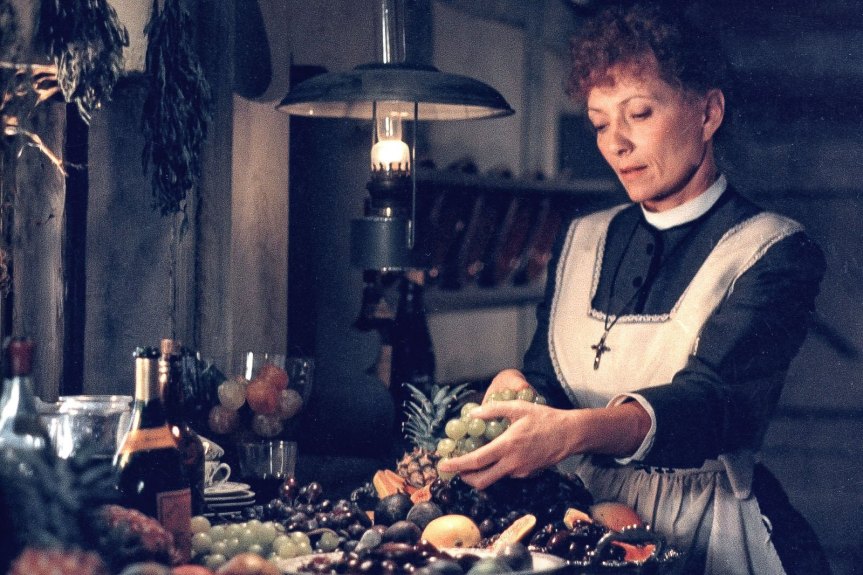
Babette prepares her feast

In a recent interview Pope Francis again brought up his favorite movie, the 1987 film Babette’s Feast. He mentioned the Danish film while speaking with Avvenire, bringing it up in response to questions about those who criticized his ecumenical endeavors. Pope Francis compared the rigid behavior of those opposed to his ecumenical outreach to the rigid townspeople portrayed in Babette’s Feast.

This is the not the first time Pope Francis has referenced his favorite film. He even referenced it in Amoris laetitia, making Babette’s Feast probably the first film ever to be mentioned in a papal document.

So why does Pope Francis love this movie so much and continue to recommend it? What are the spiritual lessons we can learn from this movie? Continue reading “Why does Pope Francis want us to watch the movie “Babette’s Feast”?”
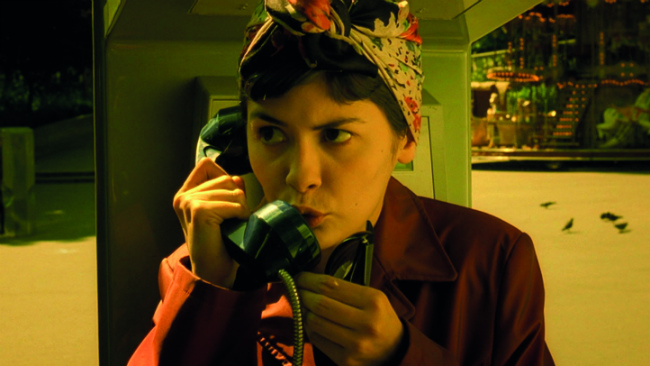
My Life in Paris: Montmartre, Movies and Machine Guns, An Essay

In her latest must-read column from Paris, Theadora Brack pays homage to her favorite film, “Le Fabuleux Destin d’Amélie Poulain.”

The sky is electric blue and the air is chilly. Propped up against a rock wall near Brassaï’s 285 steps on rue Foyatier, I watch the carousel spin under the gaze of the Sacré-Cœur. As a nearby street band plays Quizás, Quizás, Quizás over and over, the aroma of Nutella crêpes, salted French fries, and barbe à papa(cotton candy) tickles my nose.

Here in Montmartre’s fabric district, winged scissors graffiti rule the skinny rues. Easily unravelled by the mere sight of spools of yarn, patches, pompoms, and tassels, along with furbelows, bonnets, and bolts of toile de Jouy, this shiny sequinned quarter has never failed to woo my inner do-it-yourselfer.

It’s eleven in the morning. I’m waiting for the doors of Halle Saint-Pierre to open.

IN AMÉLIE’S FOOTSTEPS

Housed in a former 19th-century food market, the museum is similar in spirit to Switzerland’s Collection de l’Art Brut and Baltimore’s American Visionary Art Museum, featuring both contemporary and historic works by self-taught and fringe artists. The current exhibition gives props to movie props, specifically ones created by filmmakers Marc Caro and Jean-Pierre Jeunet. Over the moon, my hands are shaking. See, I’m about to pay homage to my favourite movie: Le Fabuleux Destin d’Amélie Poulain.

I’ve seen the green-filtered confection at least 50 times. If it’s a crime, then I am guilty! But my declaration doesn’t stop there [ . . . ] More at source: My Life in Paris: Montmartre, Movies and Machine Guns, An Essay

Chanson du Jour: Theme from “The Shape of Water”

I always say that to compose is to think. Playing is good, it’s useful, but it’s how your intellect puts the ideas together that will bring hands to write or to play. So, it’s really a combination of many things; hearing sounds, hearing layers of counterpoints, of chords.

We were talking about water…I must admit—it was completely unconscious, but the melody I wrote for the opening scene is actually made of waves. I did not do that on purpose, but by being completely immersed in this love and these water elements, I wrote a melody that plays arpeggios like waves.

I could have written another melody that’s not playing waves. That’s why it’s important, before you compose, that your intellect work, and combine with your instinctive emotions that come from watching the film.
– Composer Alexandre Desplat / Deadline

French cinema goes online with ‘My French Film Festival’  

From January 19th to February 22nd, a wide range of French feature length and short movies are available for viewing online via local platforms, free of charge in many regions of the world, or for a small fee in others. In this week’s Culture in France, RFI’s Rosslyn Hyams reports on the event called, ‘My French Film Festival’.

‘My French Film Festival’ is France’s annual, month-long online film festival. Last year seven million viewers across the world from the Americas to China were able to watch French films which released in the previous year in France.

Usually French films can only be seen outside of cinema theatres or Alliance Française French culture centres abroad, after three years.

‘My French Film Festival’ is now eight years-old, and offers a selection of about 30 films, features, shorts (available for free) and a documentary. This year, it also includes a few classics as well as a competition, which has an audience award. Ten French feature films and ten French shorts are competing.

Among the selection is Guillaume Canet’s Rock n ‘Roll – a successful comedy starring Marion Cotillard, and with an appearance by the late Johnny Halliday. There is also Ava, a first feature by Léa Mysius which premièred at the Critic’s Week in Cannes in May 2017, and The Last Metro – François Truffaut’s memorable 1980 wartime drama starring Catherine Deneuve and Gérard Dépardieu.

For details of how to access the festival which is open to all click here.

Source: French cinema goes online with ‘My French Film Festival’ – RFI

UniFrance presents a French Cinema Award to Juliette Binoche

On January 19, during the official opening of the 20th Rendez-Vous with French Cinema event in Paris, UniFrance presented a French Cinema Award to Juliette Binoche at the French Ministry of Culture. The award was handed to the actress by French Culture Minister Françoise Nyssen in the presence of a large number of movie industry professionals [ . . . ]

More at source: UniFrance presents a French Cinema Award to Juliette Binoche – uniFrance Films