
Category: Movies
Laetitia Dosch, le goût du malaise – TROISCOULEURS

A bearded realistic singer, a nude theater fighter wearing a python, an extraterrestrial man with twisted gestures, a false comic … The main actress of La Bataille de Solferino , who likes to put her audience to the test, has a reckless career as a performer. Expansive and passionate, she told us her crazy adventures
Before interviewing Laetitia Dosch, we hang out a bit on the Internet to gather some biographical elements. We could see her at the filmmaker Shanti Masud, or in the series So be they on ARTE, she played Shakespeare with Erik Ruf and danced with the Spanish performer La Ribot. On the sites of several dramatic centers, there is also talk of a show entitled Laetitia makes fart, led by a ” talent mimic “, a ” real woman orchestra with irresistible humor “, which ” could be as small as – daughter of Hara-Kiri as Jim Carrey’s niece . The presentation text is full of superlatives: ” nonsensical madness “, ” tonic “, ” ” droll “, ” smashing humor “, ” surrealist
” … It’s almost indigestible as the entire lexical field of humor passes. And it’s a bit suspicious, too [ . . . ]
Read more at Source: Laetitia Dosch, le goût du malaise – TROISCOULEURS
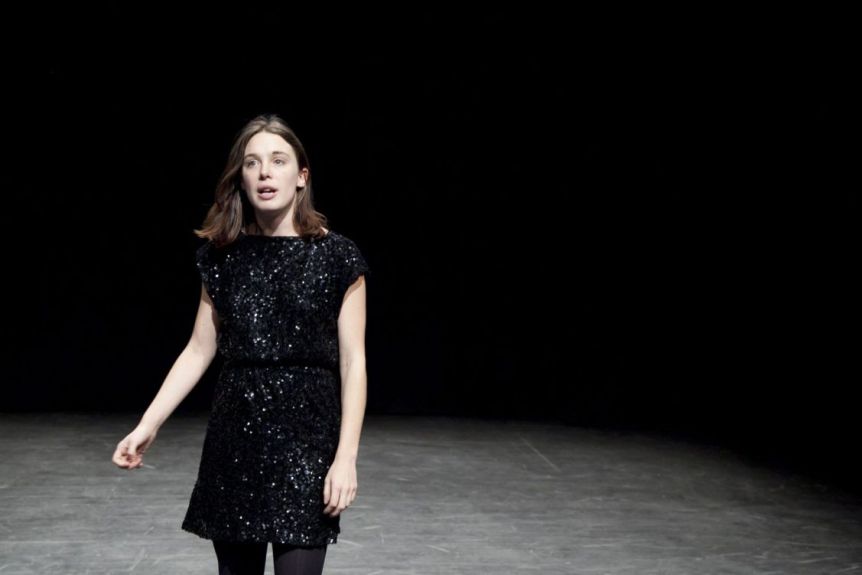
Trailer: Birdy Wouf Wouf
Review: À Voix Haute
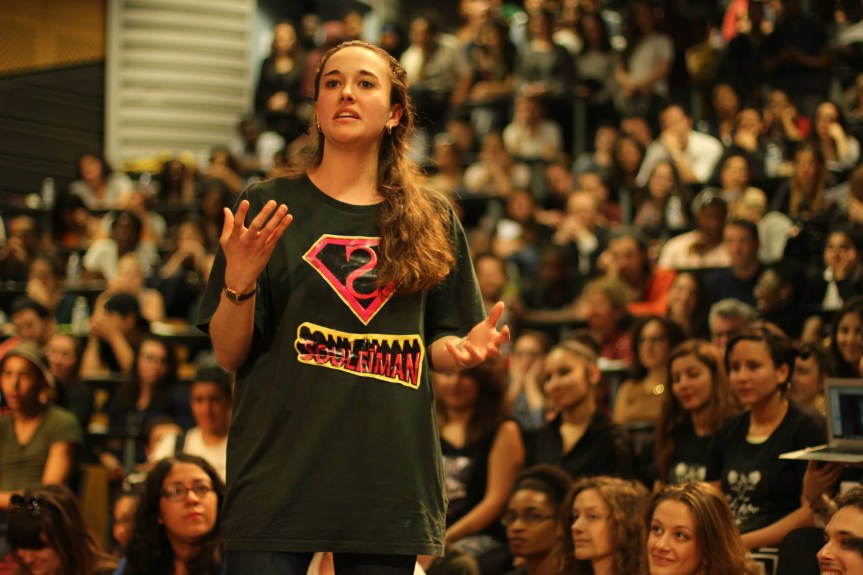 Speak Up is a stylish, moving, funny, and well-paced documentary, released in France as À voix haute, la force de la parole.
Speak Up is a stylish, moving, funny, and well-paced documentary. But most importantly, makes you smile. Released in France as À voix haute, la force de la parole, we caught its UK premiere this Wednesday.
I was sceptical that a film about university students learning to speak would be able to hold my attention for 90 minutes, let alone entertain me. I was wrong – it’s the best documentary I’ve seen so far at Raindance. Set in the University of Saint Denis, just outside Paris, it follows a class of young people as they embark on a thirty-day challenge to prepare for a public speaking competition.
A documentary like Speak Up lives or dies by its editing, and this one’s is superb. There is no narrator; the story is told through footage of lessons, interviews with students, and culminates in the competition itself. Because the class is small (around 20) and the editing is razor-sharp, we quickly get acquainted with its vibrant characters – students and teachers alike. They are almost all witty and likeable, all the more so as the film develops and their eloquence increases.
The individuals in the class have many different cultures, life experiences, pet subjects and senses of humour, and this shines through in their public speaking. Not only does the film exhibit the power well-thought-out speech can wield, it shows anybody can learn to do it, and do it well.
We meet Elhadj, a young man who as a teenager escaped a fire in his house by jumping from a sixth floor window, becoming homeless for a number of years. He speaks poignantly about how language is one of the most powerful weapons anyone can have. If he had the right words at the right time, he says, his life could have turned out very differently.
I was so surprised that a film like this could evoke so much joy in me. I was smiling almost constantly – from the hilarious footage of lessons that brought back memories of classroom banter, to the heartwarming stories of the students and their ineffable willingness to persevere with the mostly barmy lessons their eccentric teachers threw at them.
This review is going to be shorter than most of my other Raindance dispatches, purely because you should just go and watch this film. It’ll hook you in from the beginning, and spit you out the other end. My one qualm was that it’s in French, so reading subtitles and facial expressions simultaneously was sometimes difficult. But I guess there’s not much they could have done about that.
Source- THE PANOPTIC: Speak Up (À voix haute, la force de la parole)
The Prayer
To stop using drugs, twenty-two-year-old Thomas joins an isolated community in the mountains. Run by former drug addicts, the members overcome their addiction through prayer and work. Here Thomas discovers friendship, rules, love, and faith. | uniFrance
Movie Review: Montparnasse Bienvenue
SCREENDAILY
A fearless, powerhouse performance by Laetitia Dosch infuses every frame of Montparnasse Bienvenue (Jeune Femme), the kinetic, incident-packed portrait of rudderless yet resilient Paula, a 31-year-old woman in emotional free-fall. This first film by writer-director Léona Serraille is full of snap and surprises as energetic scatterbrain Paula ricochets from situation to situation after getting dumped by a lover — her former teacher and prominent photographer Joachim (Gregoire Monsaingeon) — with whom she lived for a decade. Following its debut in Cannes (Un Certain Regard) this should travel.
We meet Paula pounding on a door — first with her fist and then with her forehead — demanding to be let in. In a sequence at the hospital where the resulting gash is treated, we witness Paula’s manic gift for navel-centered gab and her oblivious knack for casually insulting the very people trying to help her. She’s a walking train wreck who manages to lurch from station to station as we look on. There’s literally never a dull moment. [ . . . ] READ FULL REVIEW
 Pas De Merde