
Category: Mon Dieu
France and Religion
New Pope Was Strong Supporter of Pope Francis, Say Friends

Rev. Mark Francis, a friend of Prevost since the 1970s, told Reuters the cardinal was a firm supporter of his predecessor’s papacy, and especially of the late pontiff’s commitment to social justice
By Joshua McElwee
VATICAN CITY (Reuters) — Robert Prevost, the choice of the world’s Catholic cardinals to serve as leader of the 1.4-billion-member Church, is the first pope from the United States and a relative unknown on the global stage.
Aged 69 and originally from Chicago, Prevost has spent most of his career as a missionary in Peru and became a cardinal only in 2023. He has given few media interviews.
He takes the papal name Leo XIV, and succeeds Pope Francis, who had led the Church since 2013.
Rev. Mark Francis, a friend of Prevost since the 1970s, told Reuters the cardinal was a firm supporter of his predecessor’s papacy, and especially of the late pontiff’s commitment to social justice issues.
“He was always friendly and warm and remained a voice of common sense and practical concerns for the Church’s outreach to the poor,” said Francis, who attended seminary with Prevost and later knew him when they both lived in Rome in the 2000s.
“He has a wry sense of humour, but was not someone who sought the limelight,” said Francis, who leads the U.S. province of the Viatorian religious order.
Prevost first served as a bishop in Chiclayo, in northwestern Peru, from 2015 to 2023, and became a Peruvian citizen in 2015, so he has dual nationalities.
Pope Francis brought him to Rome that year to head the Vatican office in charge of choosing which priests should serve as Catholic bishops across the globe, meaning he has had a hand in selecting many of the world’s bishops.
Jesus Leon Angeles, coordinator of a Catholic group in Chiclayo who has known Prevost since 2018, called him a “very simple” person who would go out of his way to help others.
Leon Angeles said Prevost had shown special concern for Venezuelan migrants in Peru, saying: “He is a person who likes to help.” More than 1.5 million Venezuelans have moved to Peru in recent years, partly to escape their country’s economic crisis.
In a 2023 interview with the Vatican’s news outlet, Prevost focused on the importance of evangelization to help the Church grow.
“We are often preoccupied with teaching doctrine … but we risk forgetting that our first task is to teach what it means to know Jesus Christ,” he said.
Prevost said during a 2023 Vatican press conference: “Our work is to enlarge the tent and to let everyone know they are welcome inside the Church.”
‘He knows how to listen’
Prevost was born in 1955 and is a member of the global Augustinian religious order, which includes about 2,500 priests and brothers, operates in 50 countries and has a special focus on a life of community and equality among its members.
He has a bachelor’s degree from Villanova University in Philadelphia, a master’s from the Catholic Theological Union in Chicago, and a doctorate in Church law from the Pontifical College of St. Thomas Aquinas in Rome.
Prevost first went to Peru as a missionary in 1985, returning to the United States in 1999 to take up a leadership role in his religious order.
He later moved to Rome to serve two six-year terms as head of the Augustinians, visiting many of the order’s communities across the world. He is known to speak English, Spanish, Italian, French and Portuguese.
Returning to Rome in 2023, Prevost generally did not take part in many of the social events that attract Vatican officials throughout the city.
Leon Angeles said he is a person with leadership skills, “but at the same time, he knows how to listen. He has that virtue.”
“The cardinal has the courtesy to ask for an opinion, even if it’s from the simplest or most humble person,” she said. “He knows how to listen to everyone.”
(Reporting by Joshua McElwee; Additional reporting by Marco Aquino in Lima; Editing by Keith Weir and Janet Lawrence)
Source: New Pope Was Strong Supporter of Pope Francis, Say Friends | Sojourners
Interview with Matthew Fox: Essential Writings on Creation Spirituality
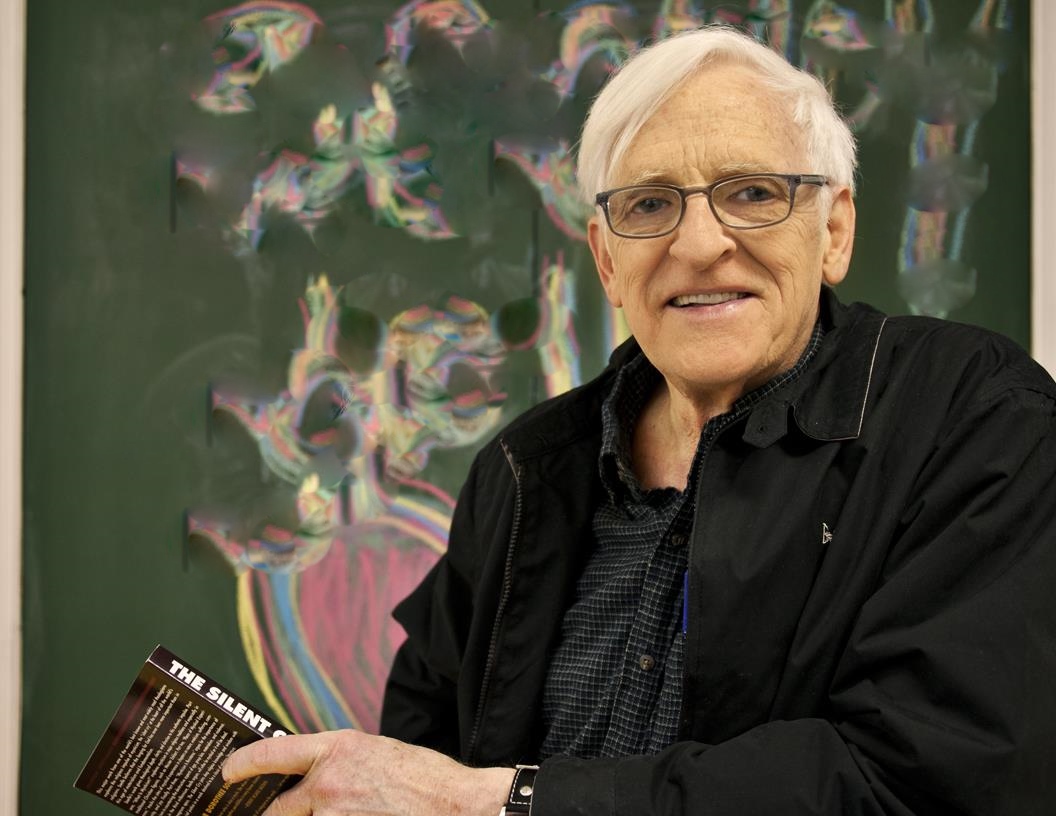
A conversation with Matthew Fox and Andrew Harvey
Interview of Matthew Fox by Andrew Harvey regarding the New Book Matthew Fox: Essential Writings on Creation Spirituality (Orbis, 2022) edited by Charles Burack.
Andrew Harvey: Hello. It is a very great joy for me to be here with you to celebrate the extraordinary book that has just come out, Matthew Fox: Essential Writings on Creation Spirituality, with an excellent introduction by Charles Burack, who oversaw the book. Matthew, this book is essentially a compendium of everything that you have devoted your life to. You have been, for me, not just a very great friend and not just a great mentor, but you’ve been in your vast fierceness, your unified burning life, someone who constantly enkindles me and irradiates me and so many others, with the flames of your blazing charity.
The publication of this book, my friends, is far more than just a new book and spiritual event, it is nothing less than the distillation of a lifetime’s passion for love and truth and justice. And it comes to us at a moment in our tragic and burning world when we need its clarity, its grounded joy, and its summons to sacred action on behalf of the whole glory of creation.
So thank you, Matt, so deeply from the bottom of my heart.
Matthew Fox: Thank you and congratulations on your new book, Love is Everything: A Year with Hadewijch of Antwerp, coming out just this very day, also a special moment.
Andrew Harvey: Hadewich invites us to listen to the great voices of the sacred feminine Christ which is returning.
Matthew Fox: Yes, and you are a perfect megaphone for that important shift in consciousness from the patriarchal version of the masculine to a balance of the healthy sacred feminine along with a healthy masculine, so this is a very special day and I might add that I was honored to write a very short Forward to that book as well, so I feel part of it.
Andrew Harvey: And what a wonderful way to begin, because one of the extraordinary contributions of your book is a new vision, both of the sacred feminine and the sacred masculine. This enables us to enter the sacred marriage of transcendence and Immanence that really does birth in us the fullness of who we can be and what the full vision of what the creation is.
One of the things you say, and it’s such an arresting and thrilling formulation, is that we need to reimagine the sacred marriage as a fusion of the Green Man and the Black Madonna and it came to me last night reading Hadewich how to reach and thank her for this extraordinary journey that I’ve been on. That the authentic sacred feminine is also a marriage of the green woman and the Black Madonna of Mary and Kali have someone totally in her being radiant with the freshness and vitality of what Hildegard of Bingen calls be viriditas or “greening power.” They align themselves with the fierce energy of compassion and the molten sacred energy for transformation of the world. So with your formulation you’ve changed the whole conversation.
But I want to begin by asking you. Where are we? This book is coming out in a terrifying moment for the whole human race.
Matthew Fox: That is true, of course, we are literally facing extinction, you know. People are acting up and acting out, and nations are doing so nations led by authoritarian leaders or authoritarian wannabe leaders and climate change, above all, is bearing down on us. Just this week, as you know, Europe set records everywhere for heat and, of course, where I live here in northern California, we’ve got the Yellowstone Park on fire like never before, and these wildfires are happening all around the world and hurricanes and floods that go with them and the droughts with all the implications for agriculture, so severe. And, of course, the melting of the glaciers and ice. Where will we be getting our water in the future? So this is truly a time to meditate on extinction, at the same time that we do what hope really is as defined by David Orr: “Hope is a verb with the sleeves rolled up.”
We have to go to work, and that includes an inner work which, as you alluded to earlier, includes the balance of the sacred masculine and feminine, but it includes a lot of things and includes a renewed commitment to justice and to carrying on the fight whether we’re talking racial justice or economic justice or gender justice or eco-justice–all these issues are on the table.
And, of course, all this is familiar to readers of Tikkun magazine because Tikkun itself stands for a healing of the of the world and that is the Jewish understanding of redemption–it’s not about some private salvation thing, where you get to heaven climbing on other people’s backs–it’s about the survival of the whole–of the Community, and today the Community is homo sapiens’ version of humanity.
Let us include in our vision of humanity all these striking dangers that face us, but at the same time, we want to embrace what our strong points are as a species. Yes, we’re discussing our shadow; that’s not a surprise—it appears in 90% of the headlines of our papers and on the Internet every day, but also let us welcome, for example, the Webb telescope–what a marvelous accomplishment as a species! What other species has done this, that we can bring back into our living rooms and our personal computers the first galaxy and the first stars from 13.8 billion years ago? From way back then the very universe is speaking to us. Just that alone is an amazing accomplishment of our intelligence and our curiosity and our willingness to pursue it.
Of course, it was created by people from, I think, over 30 countries and thousands of scientists have contributed to it, so it shows that the human community with a guided and shared purpose can accomplish an awful lot. So we have to meditate on the good things that our species has brought forth, including the courage and wisdom of Gandhi or Mandela or King or Dorothy Day or Sojourner Truth or Isaiah and Jesus, and the other prophets of the world including Black Elk. Our species is such a mixed bag. Here we have the Pope going to Canada to confess the sins of the Catholic Church and indigenous children ripped from their families and culture and put into white schools–a horrible, horrible story that is finally coming out. So we do have to pay attention to the suffering of the world and how are we going to contribute to healing it. And to survival if that’s still possible given climate change. If we don’t get honest about it and pull out of denial about what’s really facing us, we will go extinct.
I think that among things we have things going for us is the return of the feminine and the women’s movement has brought that forward and women scholarship for sure and like you say, the recovery of the great women mystics and mysticism itself, by men and women, is a real contribution to bringing forward to what has been a patriarchal era for thousands of years, bringing a balance back. Like Dorothy Soelle says, mysticism itself is the language for healthy religion and for feminism because it deconstructs the notion of simply a vertical relationship to an all-powerful divinity. So, our capacity for creativity cannot be underestimated–that’s why I don’t count our species out yet–we are capable of massive transformation, but it’s got to begin in the inside it’s got to begin with a revolution in values; and this, I think, is what mystics offer us and prophets the world over, and certainly Jesus was about that. So were the prophets who preceded him and those who have come after. So don’t cut our species out yet if we can see that the handwriting is on the wall if we still have time. Scientists are saying we have seven years. If we still have time, we can change our ways profoundly out of necessity–I do think nothing moves the human species like necessity, and the necessity is there, so that’s the kind of time we’re living in and I think we have to dig deep into our souls. Continue reading “Interview with Matthew Fox: Essential Writings on Creation Spirituality”
Traditionalists who tried to overthrow Pope Francis wait for their moment at the conclave
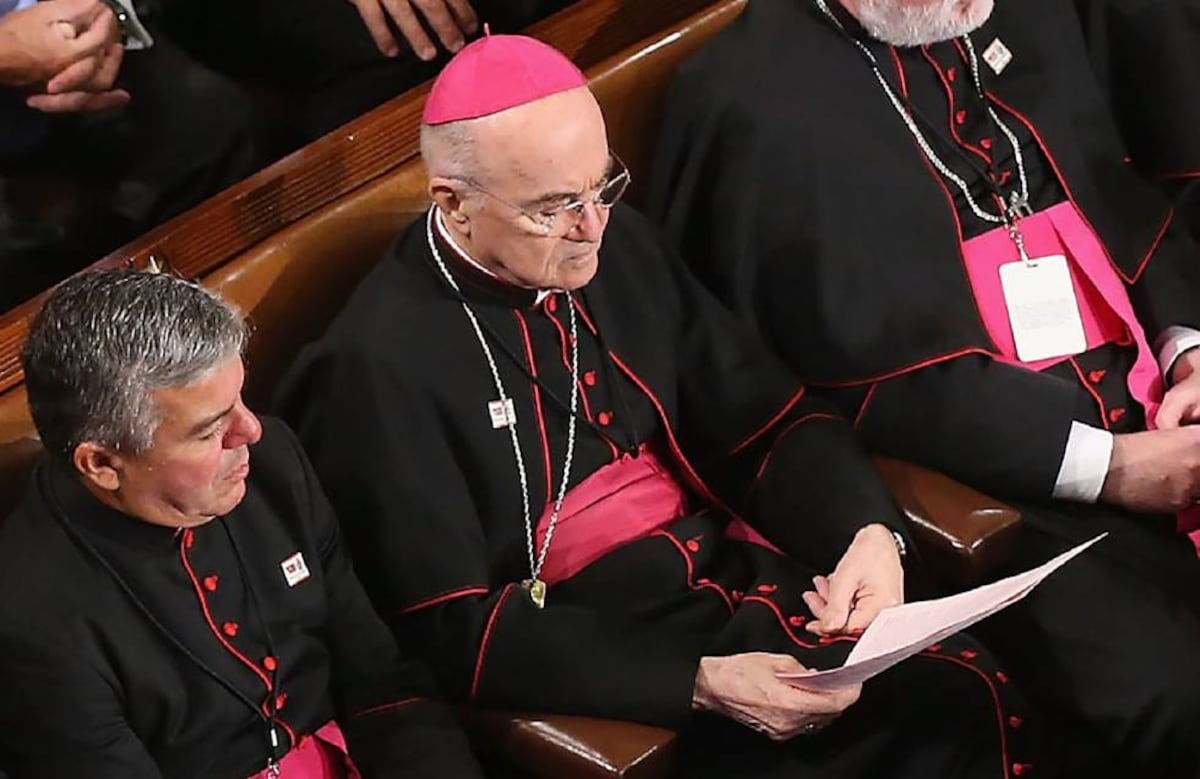
For a long time, a sector of the Church directed and financed from the US attempted to depose the Vatican leader in order to impose its own identity-based ideology
By Daniel Verdu
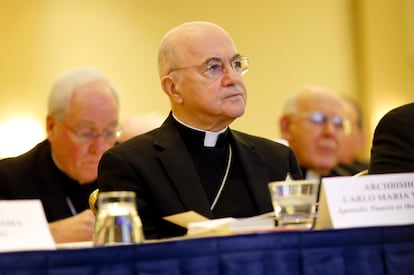
On the morning of August 26, 2018, while the Pope was visiting Ireland with the usual entourage of journalists and Vatican staff, the bomb dropped. Archbishop Carlo Maria Viganò, a former Vatican envoy in Washington between 2011 and 2016 and a heavyweight within the Curia, accused the Pontiff in an 11-page letter of having covered up the abuses of Cardinal Theodore McCarrick, and demanded his resignation. The violent tone of that letter and the accusations it contained were the culmination of a campaign that had begun a few years earlier within the Holy See to overthrow a Pope they considered too progressive, a heretic even. The attempted schism was directed and financed from the United States, where Donald Trump was spending his first term in the White House and in search of a cultural and ideological narrative capable of flourishing on the Judeo-Christian roots of the Western world. And the Vatican, from that perspective, could not be governed by a Pope who was an environmentalist, tolerant of homosexuality, an anti-capitalist, and, above all, extremely belligerent toward the anti-immigration policies that characterized Trump’s first presidency.
There have always been tensions and internal struggles in the history of the Roman Catholic Church. Unity and avoiding schism were an obsession. But never in contemporary history had a Pope been so violently targeted. And, above all, it was completely unusual for the Pontiff’s enemies to come from the traditionalist sector, supposedly the keeper of the essence of Catholicism. Until then, such battles had been fought only by far-right groups like the Society of St. Pius X, founded by the rebel French archbishop Marcel Lefebvre, who was excommunicated in 1988 after ordaining four priests without Rome’s permission.
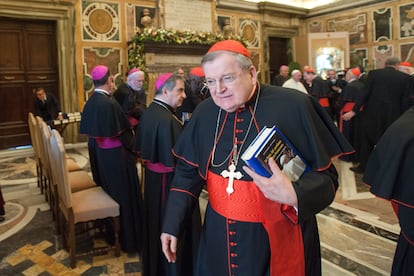
The symptoms had been clear for some time. Steve Bannon, Donald Trump’s chief advisor before his fall from grace, a sort of Elon Musk avant la lettre, settled into the penthouse of the Hotel De Russie on the luxurious Via del Babuino. From there, he began receiving Italian and European leaders who viewed the Pope unfavorably: from Matteo Salvini to Trump himself. Bannon attempted to open a sort of school of populism on the outskirts of Rome, increasing the pressure through sympathetic media. The American Cardinal Raymond Burke became the political arm of this new movement within the Vatican, and together with other cardinals such as the excellent theologian Gerhard Müller, they began to hatch a plan to expose Francis’s alleged lack of intellectual preparation.
“It began early, in the summer of 2013, when it was already clear that many U.S. bishops didn’t recognize him as one of their own,” notes Massimo Faggioli, a professor in the department of theology and religious sciences at Villanova University in Philadelphia. “American conservatives thought that after John Paul II and Benedict XVI, their destiny was forever marked by neoconservatism. And the Pope didn’t allow it. That was his sin,” he adds.
In the United States, there are approximately 72.3 million baptized people, almost a quarter of the population. But the influence of Catholics has grown in recent years. A third of the members of Congress practice that faith, according to a study by the Pew Research Center. Vocations to one of the richest churches in the world have fallen more than anywhere else, and pedophilia scandals, with the now-famous Boston case, wreaked havoc. However, the obsession with the Vatican of the new White House occupants and neoconservative power circles has continued to grow.
One of the impressions that always haunted Bergoglio was that Benedict XVI’s resignation in 2013, despite having been a gesture of generosity and humility, had opened a rift in the Church that the conservative sector seized upon to wage its struggle. The fiction that was established was that if there were two men dressed in white strolling through the Vatican gardens, why not close ranks around the more conservative one? Ratzinger, an excellent theologian, though not skilled in personal relationships, never accepted that role. But some oversights and the influence of his personal secretary, Georg Gänswein, who was at odds with Francis, caused some slip-ups.
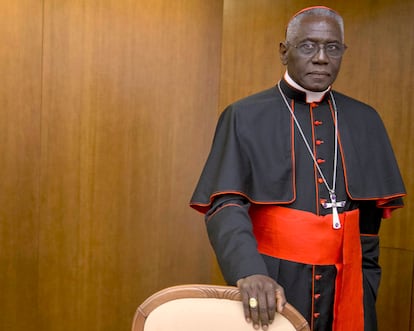
The height of tension came five years ago with the publication of a book that the Pope Emeritus was supposedly co-authoring with the ultra-conservative Cardinal Robert Sarah, in which he strongly opposed optional celibacy and, above all, the ordination of married men (From the Depths of Our Hearts). This was an issue on which Francis was due to address the synod on the Amazon, and which turned the publication into an act of interference.
Francis kept up the fight to the bitter end. On February 10, in fact, he sent a letter to the U.S. bishops (195 dioceses) denouncing the Trump administration’s program of mass deportations. The letter infuriated Tom Homan, known as the border czar. “He has a wall around the Vatican, does he not? I wish he’d stick to the Catholic Church and fix that and leave border enforcement to us,” he replied. “He never let himself be intimidated. He responded all those years with appointments, trips, documents. And the things he didn’t do, like the appointment of female priests, it was because he didn’t believe in it,” Faggioli argues.
The Joe Biden administration provided temporary relief, but the American Church itself was already deeply divided. “These are cultural and social universes that have grown in a different way. It’s a Catholicism that is more based on identity. That’s why we now find ourselves at a critical point with this conclave. There is a neoconservative movement that began in the 1980s. And the Vice President of the United States, J. D. Vance, is one of its exponents. They have a long-term strategy to return to a certain traditionalism that will not end with the conclave, no matter what.” In an ironic twist of fate, perhaps his way of dealing with this struggle, Francis dedicated part of his last day on this Earth to receiving Vance at the Vatican.
A List of Books for Buddhist-Christian Dialogue

by
Are you interested in exploring the richness of dialogue and interspiritual practice between Christianity and Buddhism? If so, then here’s enough literature to keep you going for a while. Each of the books on the following list has some sort of connection with both Christianity and Buddhism.
Some of these titles are academic studies, some the writings of monastics, others geared toward the laity. Some are books by Christians about Buddhism, or by Buddhists about interfaith dialogue; by Christians who find meditation a helpful adjunct to their primarily Christ-centered faith, or by persons who identify as “dual practitioners,” seeking an authentic path that is simultaneously faithful to both the Gospel and the Dharma. One or two are by Christians, about Christian spirituality, but informed by the author’s Buddhist practice.

This list is rather weighted toward the Christian side of the conversation. I would love to include more Buddhist authors and more Buddhist perspectives on Christianity, but I’m not as familiar with the Buddhist side of this conversation. While the most popular topic of these books is meditation, some are more narrowly focused on matters such as theodicy or psychology.
I have only read a fraction of these books myself, so I offer them here with no endorsement other than my own interest in the subject. I have tried to avoid listing books that promote one religion at the expense of the other; but since I have not read all the following titles, it’s possible that books like that have been listed. Please keep in mind that interreligious dialogue is a messy business and it is inevitable that the books on this list will represent a variety of perspectives on both Christianity and Buddhism. The bottom line: you are advised to read with a discerning mind.
- A. William McVey, Existentialism and Christian Zen: An East/West Way to Christ
- Addison Hodges Hart, The Ox-Herder and the Good Shepherd: Finding Christ on the Buddha’s Path
- Aelred Graham, Zen Catholicism: A Suggestion
- Aelred Graham, Conversations: Christian and Buddhist
- Ama Samy, SJ, Zen: Awakening to Your Original Face
- Ama Samy, SJ, Zen Heart, Zen Mind: The Teachings of Zen Master Ama Samy
- Ama Samy, SJ, Zen: the Wayless Way
- Antony Fernando & Leonard Swidler, Buddhism Made Plain: An Introduction for Christians and Jews
- B. Alan Wallace, Mind in the Balance: Meditation in Science, Buddhism and Christianity
- Bieke Vandekerckhove, The Taste of Silence
- Bonnie Bowman Thurston, ed., Merton & Buddhism: Wisdom, Emptiness & Everyday Mind
- Brian J. Pearce, OP, We Walk the Path Together: Learning from Thich Nhat Hanh & Meister Eckhart
- Buddhadasa Bhikku, Christianity and Buddhism
- Carrin Dunne, Buddha and Jesus: Conversations
- China Galland, Longing for Darkness: Tara and the Black Madonna
- Christopher Collingwood, Zen Wisdom for Christians
- D. T. Suzuki, Mysticism: Buddhist and Christian: The Eastern and Western Way
- David G. Hackett, The Silent Dialogue: Zen Letters to a Trappist Monk
- Denise Lardner Carmody and John Tully Carmody, Serene Compassion: A Christian Appreciation of Buddhist Holiness
- Donald W. Mitchell, Spirituality and Emptiness: The Dynamics of Spiritual Life in Buddhism and Christianity
- Donald W. Mitchell & James A. Wiseman, eds., Finding Peace in Troubled Times: Buddhist and Christian Monastics on Transforming Suffering
- Donald W. Mitchell & James A. Wiseman, eds., The Spiritual Life: Gethsemani Encounters
- Donald W. Mitchell & William Skudlarek, OSB, eds., Green Monasticism: A Buddhist-Catholic Response to an Environmental Calamity
- Donovan Roebert, The Gospel for Buddhists and the Dharma for Christians
- Edward L. Shirley, Zen Mind, Franciscan Joy
- Elaine MacInnes, The Flowing Bridge: Guidance on Beginning Zen Koans
- Elaine MacInnes, Light Sitting in Light: A Christian’s Experience of Zen
- Elaine MacInnes, Teaching Zen to Christians: Orientation Talks for Beginners
- Elaine MacInnes, Zen Contemplation for Christians: A Bridge of Living Water
- Elizabeth Harris and John O’Grady, eds., Meditation in Buddhist-Christian Encounter: A Critical Analysis
- Elizabeth West, Happiness Here & Now: The Eightfold Path of Jesus Revisited with Buddhist Insights
- Ellen Birx, Embracing the Inconceivable: Interspiritual Practice of Zen and Christianity
- Gordon Peerman, Blessed Relief: What Christians Can Learn from Buddhists about Suffering
- Gustav Ericsson, My Christian Journey With Zen
- Heinrich Dumoulin, SJ, Christianity Meets Buddhism
- Hikaru Nakamura, Saint Young Men (Multiple Volumes)
- His Holiness the Dalai Lama, The Good Heart: A Buddhist Perspective on the Teachings of Jesus
- His Holiness the Dalai Lama, Spiritual Advice for Buddhists and Christians
- Hugo Enomiya-Lassalle, Living in the New Consciousness
- Hugo Enomiya-Lassalle, The Practice of Zen Meditation
- Hugo Enomiya-Lassalle, Zen Meditation for Christians
- Hugo Enomiya-Lassalle, Zen: Way to Enlightenment
- J. K. Kadowaki, Zen and the Bible
- James Arraj, Christianity in the Crucible of East-West Dialogue / God, Zen and the Intuition of Being (2 Volumes in 1)
- James William Jones, The Mirror of God: Christian Faith as Spiritual Practice, Lessons from Buddhism and Psychotherapy
- James Wiseman and Donald Mitchell, eds., The Gethsemani Encounter: A Dialogue on the Spiritual Life by Buddhist and Christian Monastics
- Jan Willis, Dreaming Me: Black, Baptist and Buddhist
- Janet Conner, The Lotus and the Lilly: Access the Wisdom of Buddha and Jesus to Nourish Your Beautiful, Abundant Life
- Jean-Yves Leloup, Compassion and Meditation: The Spiritual Dynamic Between Buddhism and Christianity
- Jeroan Witkam, The Eye Aware: Zen Lessons for Christians
- John Cowan, Taking Jesus Seriously: Buddhist Meditation for Christians
- John P. Cobb, Jr., Beyond Dialogue: Toward a Mutual Transformation of Christianity and Buddhism
- John P. Keenan, The Emptied Christ of Philippians: Mahāyāna Meditations
- John P. Keenan, The Gospel of Mark: A Mahayana Reading
- John P. Keenan, The Meaning of Christ: A Mahayana Theology
- Kenneth S. Leong, The Zen Teachings of Jesus
- Kim Boykin, Zen for Christians: A Beginner’s Guide
- Kristin Johnson Largen, What Christians Can Learn from Buddhism: Rethinking Salvation
- Leo D. Lefebure, The Buddha and the Christ: Explorations in Buddhist and Christian Dialogue
- Marco Pallis, A Buddhist Spectrum: Contributions to the Christian-Buddhist Dialogue
- Marcus Borg, Jesus and Buddha: The Parallel Sayings
- Mark Heim, Crucified Wisdom: Theological Reflection on Christ and the Bodhisattva
- Mary Jo Meadow, Christian Insight Meditation: Following in the Footsteps of John of the Cross
- Mary Jo Meadow, Gentling the Heart: Buddhist Loving-Kindness Practice for Christians
- Maurice O’C Walshe, Buddhism and Christianity: A Positive Approach
- Nadra Nittle, bell hooks’ Spiritual Vision: Buddhist, Christian, and Feminist
- Patricia Hart Clifford, Sitting Still: An Encounter with Christian Zen
- Patrick Henry, ed., Benedict’s Dharma: Buddhists Reflect on the Rule of Saint Benedict
- Patrick Henry and Donald K. Swearer, For the Sake of the World: The Spirit of Buddhist and Christian Monasticism
- Paul F. Knitter, Without Buddha I Could Not Be a Christian
- Paul Knitter & Roger Haight, Jesus & Buddha: Friends in Conversation
- Paul Louis Metzger with Kyogen Carlson, Evangelical Zen: A Christian’s Spiritual Travels with a Buddhist Friend
- Paul O. Ingram, A Modern Buddhist-Christian Dialogue
- Paul O. Ingram, ed., Buddhist-Christian Dialogue: Mutual Renewal and Transformation
- Paul O. Ingram, Buddhist-Christian Dialogue in an Age of Science
- Paul O. Ingram, The Process of Buddhist-Christian Dialogue
- Paul O. Ingram, Theological Reflection at the Boundaries
- Paul Mommaers, Mysticism, Buddhist and Christian: Encounters with Jan van Ruusbroec
- Peter Baekelmans, The Hidden “God”: Towards a Christian Theology of Buddhism
- Peter Feldmeier, Christianity Looks East: Comparing the Spiritualities of John of the Cross and Buddhaghosa
- Peter Feldmeier, Experiments in Buddhist-Christian Encounter: From Buddha-Nature to the Divine Nature
- Perry Schmidt-Leukel, ed., Buddhism and Christianity in Dialogue: The Gerald-Weisfeld Lectures 2004
- Perry Schmidt-Leukel, The Celestial Web: Buddhism and Christianity, A Different Comparison
- Peter Feldmeier, Christianity Looks East: Comparing the Spiritualities of John of the Cross and Buddhaghosa
- Raimon Panikkar, The Silence of God: The Answer of the Buddha
- Richard Bryan McDaniel, Catholicism and Zen
- Rita M. Gross and Terry C. Muck, eds., Buddhists Talk about Jesus, Christians Talk About the Buddha
- Rita M. Gross and Terry C. Muck, eds., Christians Talk About Buddhist Meditation, Buddhists Talk about Christian Prayer
- Robert Aitken and David Steindl-Rast, The Ground We Share: Everyday Practice, Buddhist and Christian
- Robert Jingen Gunn, Journeys Into Emptiness: Dogen, Merton, Jung and the Quest for Transformation
- Robert Kennedy, Zen Gifts to Christians
- Robert Kennedy, Zen Spirit, Christian Spirit: The Place of Zen in Christian Life
- Robert Magliola, Facing Up to Real Doctrinal Difference: How Some Thought-Motifs from Derrida Can Nourish the Catholic-Buddhist Encounter
- Robert Powell, Christian Zen: The Essential Teachings of Jesus Christ
- Robert Sohl and Audrey Carr, eds., The Gospel According to Zen
- Roger Corless, The Vision of Buddhism
- Roger Corless and Paul F. Knitter, eds., Buddhist Emptiness and Christian Trinity: Essays & Explorations
- Rose Drew, Buddhist and Christian?: An Exploration of Dual Belonging
- Ross Thompson, Buddhist Christianity: A Passionate Openness
- Ross Thompson, Wounded Wisdom: A Buddhist and Christian Response to Evil, Hurt and Harm
- Ruben L. F. Habito, Be Still and Know: Zen and the Bible
- Ruben L. F. Habito, Experiencing Buddhism: Ways of Wisdom and Compassion
- Ruben L. F. Habito, Healing Breath: Zen for Christians and Buddhists in a Wounded World
- Ruben L. F. Habito, Living Zen, Loving God
- Ruben L. F. Habito, Total Liberation: Zen Spirituality and the Social Dimension
- Ruben L. F. Habito, Zen and the Spiritual Exercises
- Seiichi Yagi and Leonard Swidler, A Bridge to Buddhist-Christian Dialogue
- Steve Smith, Eastern Light: Awakening to Presence in Zen, Quakerism and Christianity
- Susan J. Stabile, Growing in Love and Wisdom: Tibetan Buddhist Sources for Christian Meditation
- Susan Walker, ed., Speaking of Silence: Christians and Buddhists on the Contemplative Way
- Thich Nhat Hanh, Going Home: Jesus and Buddha as Brothers
- Thich Nhat Hanh, Living Buddha, Living Christ
- Thich Nhat Hanh and Daniel Berrigan, The Raft is Not the Shore: Conversations Toward a Buddhist-Christian Awareness
- Thomas G. Hand, Always a Pilgrim: Walking the Zen Christian Path
- Thomas Merton, Mystics and Zen Masters
- Thomas Merton, The Asian Journal of Thomas Merton
- Thomas Merton, Thomas Merton on Zen
- Thomas Merton, Zen and the Birds of Appetite
- Thomas Ragland, The Noble Eightfold Path of Christ: Jesus Teaches the Dharma of Buddhism
- Tilden H. Edwards, Jr., “Criss-Crossing the Christian-Buddhist Bridge” in Tarthang Tulku, ed., Reflections of Mind: Western Psychology Meets Tibetan Buddhism
- Tom Chetwynd, Zen and the Kingdom of Heaven
- Tony Luke, Way of Zen, Way of Christ: Satori and the Kingdom of God
- Valerie Brown, Hope Leans Forward: Braving Your Way Toward Simplicity, Awakening, and Peace
- William Johnston, Christian Zen: A Way of Meditation
- William Johnston, The Mirror Mind: Zen-Christian Dialog
- William Johnston, The Still Point: Reflections on Zen and Christian Mysticism
- William McVey, Existentialism and Christian Zen: An East/West Way to Christ
- William Skudlarek OSB, Demythologizing Celibacy: Practical Wisdom from Buddhist and Christian Monasticism
- Willigis Jäger, Mysticism for Modern Times
- Winston L. King, Buddhism and Christianity: Some Bridges of Understanding
- Wolfgang Kopp, Free Yourself of Everything: Radical Guidance in the Spirit of Zen and Christian Mysticism
Are there any other books that belong on this list — especially by Buddhists who are engaged in some form of Buddhist-Christian dialog? Please let me know, and if you have any opinions about some of the titles on this list, I’d like to hear that as well.
Happy reading. And please note: If you follow the links of the books mentioned in this post and purchase them or other products from Amazon.com, I receive a small commission from Amazon. Thank you for doing so — it is the easiest way you can support this blog.
Source: A List of Books for Buddhist-Christian Dialogue – Carl McColman
U.S. bishops will cease refuge resettlement work with government after Trump funding freeze

The U.S.C.C.B. said it would not renew its cooperative agreements with the federal government related to children’s services and refugee support after its longstanding partnerships with the government in those areas became “untenable.”
By Kate Scanlon
WASHINGTON (OSV News) — The U.S. Conference of Catholic Bishops said it would not renew its cooperative agreements with the federal government related to children’s services and refugee support after its longstanding partnerships with the federal government in those areas became “untenable.”
Earlier this year, the Trump administration suspended a federal refugee resettlement program as part of its broader effort to enforce its hardline immigration policies. The ensuing halt in federal funding for the USCCB’s refugee resettlement services is the subject of ongoing litigation, and it prompted the conference to lay off about a third of the staff in its Migration and Refugee Services Office in February.
A spokesperson for the USCCB told OSV News the bishops were seeking reimbursement of $24,336,858.26 for resettlement services (PRM and ORR programs) that was still pending payment as of April 7.
“This situation has been brought to us by the decisions of the government,” Anthony Granado, associate general secretary for policy and advocacy for the USCCB, told OSV News.
Despite decades of partnership with the USCCB’s Migration and Refugee Services, across administrations of both parties, including the first Trump administration, Granado said, “we’ve been placed in an untenable position now.”
“It is clear that the government has decided that it wishes to go about doing this in a different way that doesn’t include us, and so we were kind of forced into this position,” Granado said.
Archbishop Timothy P. Broglio, president of the USCCB and head of the U.S. Archdiocese for the Military Services, said in an April 7 statement it was “heartbreaking” to announce the bishops’ conference would not renew its “existing cooperative agreements with the federal government related to children’s services and refugee support.”
“This difficult decision follows the suspension by the government of our cooperative agreements to resettle refugees,” he said. “The decision to reduce these programs drastically forces us to reconsider the best way to serve the needs of our brothers and sisters seeking safe harbor from violence and persecution. As a national effort, we simply cannot sustain the work on our own at current levels or in current form.”
Citing the government’s suspension of the cooperative agreements to resettle refugees, Archbishop Broglio said that the conference has “been concerned with helping families who are fleeing war, violence, and oppression find safe and secure homes.”
“Over the years, partnerships with the federal government helped expand lifesaving programs, benefiting our sisters and brothers from many parts of the world,” Archbishop Broglio said. “All participants in these programs were welcomed by the U.S. government to come to the United States and underwent rigorous screening before their arrival. These are displaced souls who see in America a place of dreams and hope. Some assisted American efforts abroad at their own risk and more seek a place to worship and pray safely as they know God calls them.”
He said, “Our efforts were acts of pastoral care and charity, generously supported by the people of God when funds received from the government did not cover the full cost.”
Federal law requires that unaccompanied refugee minors be cared for, and the Department of Health and Human Services’ Office of Refugee Resettlement historically has turned to faith-based organizations, including the USCCB, to carry out this work.
A spokesperson for HHS did not immediately respond to a request for comment from OSV News about its cooperative agreement with the USCCB.
Granado said the conference’s cooperative agreements with the federal government were “really about people.”
“From the church’s perspective, this is about responding to the Gospel command — Jesus says in the Gospel, ‘I was a stranger and you welcomed me,’” he said, referencing Jesus Christ’s words in Matthew 25:35-40 regarding his final judgement. “This has been a blessing and a beautiful part of the USCCB and the Catholic Church in the United States.”
The children and refugees impacted “are real people, real families” as well as “the staff whose work will be impacted,” Granado said.
As the agreements end, Archbishop Broglio added, “we will work to identify alternative means of support for the people the federal government has already admitted to these programs. We ask your prayers for the many staff and refugees impacted.” The USCCB, Archbishop Broglio said, “will continue advocating for policy reforms that provide orderly, secure immigration processes, ensuring the safety of everyone in our communities.”
“We remain steadfast in our commitment to advocating on behalf of men, women, and children suffering the scourge of human trafficking,” he said. “For half a century, we have been willing partners in implementing the government’s refugee resettlement program. The Gospel’s call to do what we can for the least among us remains our guide. We ask you to join us in praying for God’s grace in finding new ways to bring hope where it is most needed.”
 Pas De Merde