Bastille Day: How literary writings see the French Revolution

The storming of the Bastille prison on July 14, 1789, is seen as a defining event in the French Revolution. But how does the revolution affect writers, poets, painters and other creative minds?

By Mohammad Asim Siddiqui

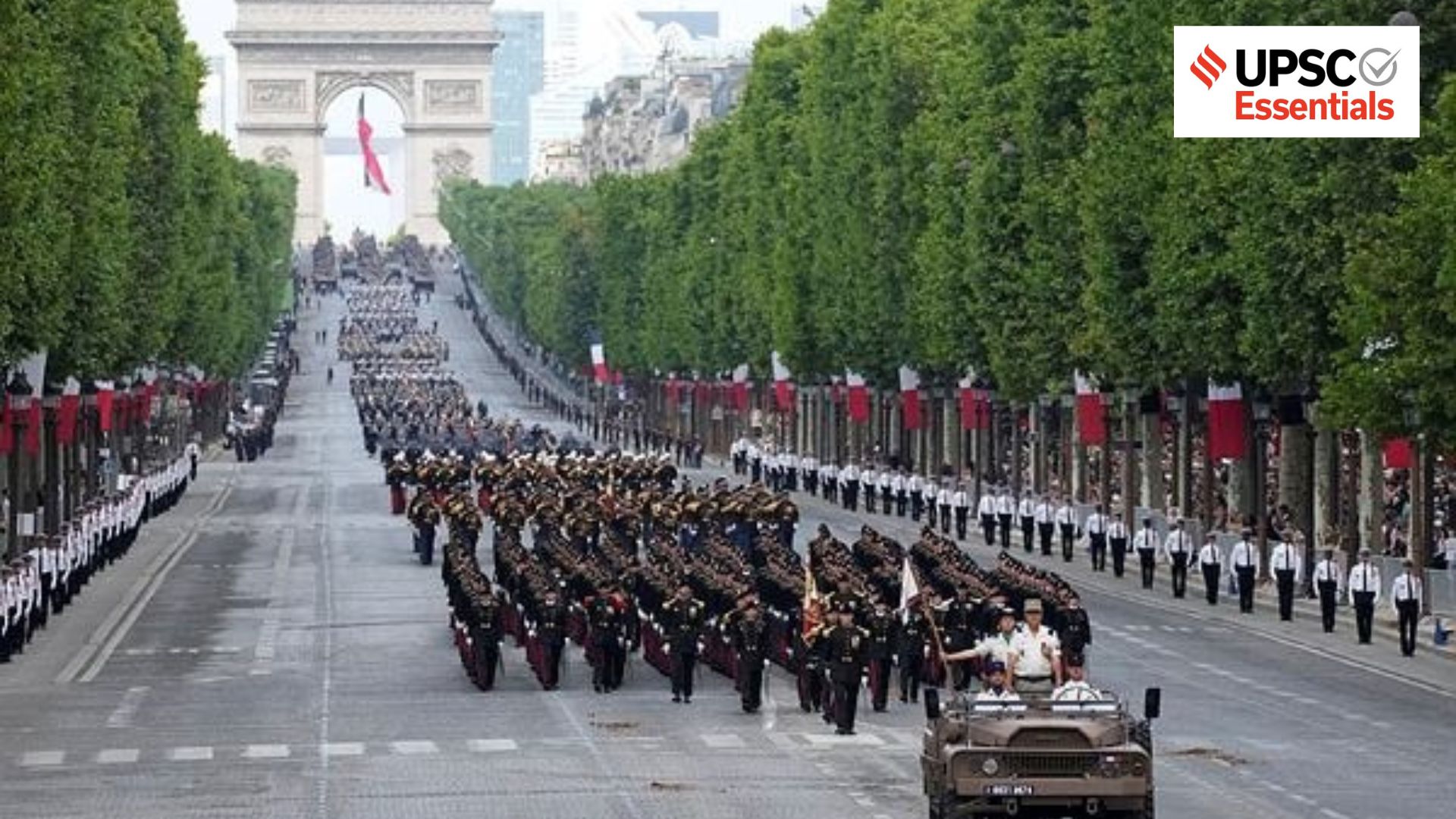
France celebrates Bastille Day to commemorate the storming of the Bastille prison on July 14, 1789, a defining event in the French Revolution. The Bastille was originally built as a castle in Paris in the 14th century to protect the city. But it was later used as a prison and came to symbolise the brute and arbitrary powers of the king.

The historiography of the French Revolution offers varied perspectives on the events, with some celebrating its revolutionary character and others highlighting the violence that accompanied it. For instance, British historian Eric Hobsbawm in Echoes of the Marseillaise: Two Centuries Look Back on the French Revolution (1990) focuses on the positive takeaways of the Revolution – Liberté, Égalité, Fraternité (liberty, equality and fraternity), the spirit of the Enlightenment, and the overthrow of aristocracy by the middle class.

He also laments many historians’ and writers’ emphasis on the violence and destruction associated with the Revolution. Hobsbawm considers historian Simon Schama’s bestselling book Citizens: A Chronicle of the French Revolution (1989), which highlights the violent nature of the Revolution through an engaging narrative. He sees it as part of a tradition in England established by Edmund Burke’s Reflections on the Revolution in France (1790), Charles Dickens’ A Tale of Two Cities (1859), and many other popular works.

But how do Romantic poets like William Blake, William Wordsworth, and P B Shelley depict the French Revolution? Why does Albert Elmer Hancock say that the French experience “humanised” Wordsworth? Why does Jane Austen deliberately avoid discussing directly the events of the French Revolution that so disturbed her world, but incorporate many of her responses to those events in her writing? Continue reading “Bastille Day: How literary writings see the French Revolution”

This is fascism

[Propaganda images by Trump supporter Jon McNaughton]

Fascism starts with talk, not tanks. With democratic elections, not a coup. And it takes hold thanks to people who think things won’t move quickly—until they do just that.

By Rosan Smits

Fascism starts with talk, not tanks. With democratic elections, not a coup. And it takes hold thanks to people who think things won’t move quickly—until they do just that.

On February 18, 2025, a video appeared on X. An officer from Enforcement and Removal Operations can be  The sky over the Seattle airport is overcast. Jet engines can be heard idling in the background.

Then: the clinking of chains. We see a blue plastic crate, filled with metal restraints. Someone lays them out on the tarmac—one set of cuffs per person. People are cuffed tightly, hands and feet. The camera shows no faces, only bodies and steel. The video ends with a shackled prisoner climbing the boarding stairs with difficulty, his restraints hitting against the metal steps.

The title of the post: “ASMR: Illegal Alien Deportation Flight 🔊”. The abbreviation is a jarring reference to the type of YouTube video that soothes and  Distant whispers, the rhythmic patter of raindrops, the rustling of leaves in the wind. And in this case, the sound of heavily chained men being deported.

Fascism is back. This time no swastikas, Nazi flags, or deadly bureaucracy, but MAGA hats, right-wing extremist memes, and a triumphant fist held high. No ghettos or concentration camps, but data-driven manhunts and “detention facilities” in El Salvador and Guantanamo Bay. No SS officers or brownshirts, but  and a Capitol mob.

It’s perfectly clear: the US president, Donald Trump, is putting together a fascist regime. And fast. Not only Trump’s   But what’s more, internationally renowned scholars—the indisputable experts when it comes to fascism—are now 

Their warnings still meet with resistance. For many, the label “fascism” is inextricably tied to the Holocaust and should be left in the past out of respect for the six million murdered Jews. Others see the term as exaggerated and alarmist: every fascist so far pales in comparison to Adolf Hitler. Accusing Trump of fascism, they feel, is like yelling “FIRE!” just because someone, somewhere has lit a small flame—a distraction from the very real challenges facing the United States.

And yet it’s precisely that resistance to using the word fascism that’s typical of how fascism works. Fascism thrives by playing down what was previously seen as extremist. And once that happens, any warnings get dismissed as overly alarmist.

Trump takes it to the next level: anyone who accuses him of being fascist  It’s a tried and true tactic to sap language of meaning: If everyone calls their adversaries “fascist,” the word loses its power to warn people about actual fascism.

Instead of continuing to debate whether or not Trump can be called a fascist, it’s better to understand why experts are alerting us. To do that, it’s essential we understand how fascism works, so we can recognize today’s variants, in the US and beyond.

The function of fascism

Fascism conjures up images of the death and destruction of the Third Reich, Benito Mussolini’s Blackshirts, Francisco Franco’s generals, or perhaps the white hoods of the Ku Klux Klan. When you think of fascism, you think of its most visible and extreme outgrowths. But while everyone has some idea of what fascism means, there’s no clear definition.

In order to recognize fascism as a wider phenomenon, we shouldn’t look to those visible extremes, says Professor Emeritus Robert Paxton, author of the seminal work The Anatomy of Fascism (2005). According to Paxton, we should look at what function fascism serves for politicians 

That function is strategic. Fascism is a way to take political grievance, shared by members of a dominant group in society, and mobilize it against some supposed “enemy,” often aided by a degree of societal breakdown during a time of crisis. It’s similar in that sense to sometimes called 

But where populist leaders stretch the ground rules of democracy, fascists take things further. They change the rules, seize absolute power, and destroy those seen as foes, using violence if need be.

Fueling this strategy is emotion, not some coherent set of ideological convictions. Ultranationalism and an unshakable belief in the “survival of the fittest” are always part of fascism, but aside from that, there’s no unifying story.

“A fascist just has to be a storyteller,”  The fascist’s words matter, in the sense that they must provoke rage. But what he says, and whether it’s true, matters a great deal less. The fascist simply has to “find a pulse and hold it.”

Continue reading “This is fascism”

How World War Two changed how France eats

More than 80 years after D-Day, the recipes and ingredients introduced during France’s wartime occupation are slowly making a comeback.

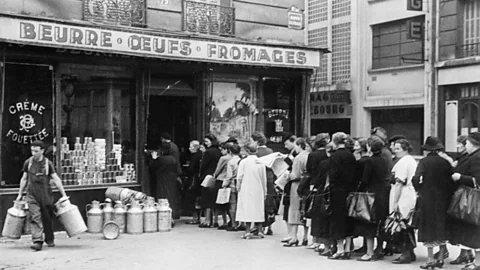
By June 1940, German forces had blitzed through France in just six weeks, leading more than half of the country to be occupied. As a result, French staples like cheese, bread and meat were soon rationed, and by 1942 some citizens were living on as few as 1,110 calories per day. Even after World War Two ended in 1945, access to food in France would continue to be regulated by the government until 1949.

Such austerity certainly had an impact on how the French ate during and just after the war. Yet, more than 80 years after Allied forces landed in Normandy to begin liberating the nation on D-Day (6 June 1944), few visitors realise that France’s wartime occupation still echoes across the nation’s culinary landscape.

In the decades following WW2, the French abandoned the staples that had got them through the tough times of occupation; familiar ingredients like root vegetables and even hearty pain de campagne (country bread) were so eschewed they were nearly forgottenBut as wartime associations have slowly faded from memory, a bevy of younger chefs and tastemakers are reviving the foods that once kept the French alive.

There aren’t many French residents old enough to vividly recall life in wartime France today, and fewer still would deign to discuss it. Author Kitty Morse only discovered her great-grandparents’ “Occupation diary and recipe book” after her own mother’s death. Morse released them in 2022 in her book Bitter Sweet: A Wartime Journal and Heirloom Recipes from Occupied France.

“My mother never said any of this to me,” she said.

Aline Pla was just nine years old in 1945 but, raised by small-town grocers in the south of France, she remembers more than others might. “You were only allowed a few grams of bread a day,” she recalled. “Some [people] stopped smoking – especially those with kids. They preferred trading for food.”

Such widespread lack gave rise to ersatz replacements: saccharine stood in for sugar; butter was supplanted by lard or margarine; and instead of coffee, people brewed roots or grains, like acorns, chickpeas or the barley Pla recalls villagers roasting at home. While many of these wartime brews faded from fashion, chicory coffee remained a staple, at least in northern France. Ricoré – a blend of chicory and instant coffee – has been on supermarket shelves since the 1950s. More recently, brands like Cherico are reimagining it for a new generation, marketing it as a climate-conscious, healthful alternative traditional coffee.


Alamy When France was occupied, staples like cheese, bread and meat rationed (Credit: Alamy)
When France was occupied, staples like cheese, bread and meat rationed (Credit: Alamy)

According to Patrick Rambourg, French culinary historian and author of Histoire de la Cuisine et de la Gastronomie Françaises, if chicory never wholly disappeared in France, it’s in large part thanks to its flavour. “Chicory tastes good,” he explained. “It doesn’t necessarily make you think of periods of austerity.”

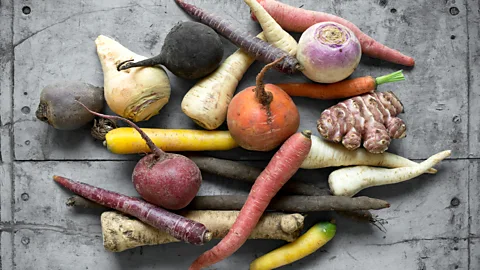
Other products did, however, such as swedes and Jerusalem artichokes, which WW2 historian Fabrice Grenard asserted “were more reserved for animals before the war.” The French were nevertheless forced to rely heavily on them once potato rationing began in November 1940, and after the war, these vegetables became almost “taboo”, according to Rambourg. “My mother never cooked a swede in her life,” added Morse.

Two generations later, however, Jerusalem artichokes, in particular, have surged to near-omnipresence in Paris, from the trendy small plates at Belleville wine bar Paloma to the classic chalkboard menu at bistro Le Bon Georges. Alongside parsnips, turnips and swedes, they’re often self-awarely called “les legumes oubliés“(“the forgotten vegetables”) and, according to Léo Giorgis, chef-owner of L’Almanach Montmartre, French chefs have been remembering them for about 15 years.

“Now you see Jerusalem artichokes everywhere, [as well as] swedes [and] golden turnips,” he said. As a chef dedicated to seasonal produce, Giorgis finds their return inspiring, especially in winter. “Without them, we’re kind of stuck with cabbages and butternut squash.”

According to Apollonia Poilâne, the third generation of her family to run the eponymous bakery Poilâne, founded in 1932, a similar shift took place with French bread. Before the war, she explained, white baguettes, which weren’t subject to the same imposed prices as sourdough, surged to popularity on a marketplace rife with competition.  But in August 1940, bread was one of the first products to be rationed, and soon, white bread was supplanted by darker-crumbed iterations bulked out with bran, chestnut, potato or buckwheat. The sale of fresh bread was forbidden by law, which some say was implemented specifically to reduce bread’s palatability.

“I never knew white bread!” said Pla. When one went to eat at a friend’s home during wartime, she recalled, “You brought your bread – your bread ration. Your own piece of bread.”

Hunger for white bread surged post-war – so much so that while Poilâne’s founder, Pierre Poilâne, persisted in producing the sourdoughs he so loved, his refusal to bake more modern loaves saw him ejected from bakery syndicates, according to his granddaughter, Apollonia. These days, however, the trend has come full circle: Baguette consumption fell 25% from 2015 to 2025, but the popularity of so-called “special” breads made with whole or heirloom grains is on the rise. “It’s not bad that we’re getting back to breads that are a bit less white,” said Pla.

For Grenard, however, the most lasting impact the war left on French food culture was a no-waste mindset. “What remains after the war is more of a state of mind than culinary practices,” he said. Rambourg agreed: “You know the value of food when you don’t have any.” Continue reading “How World War Two changed how France eats”

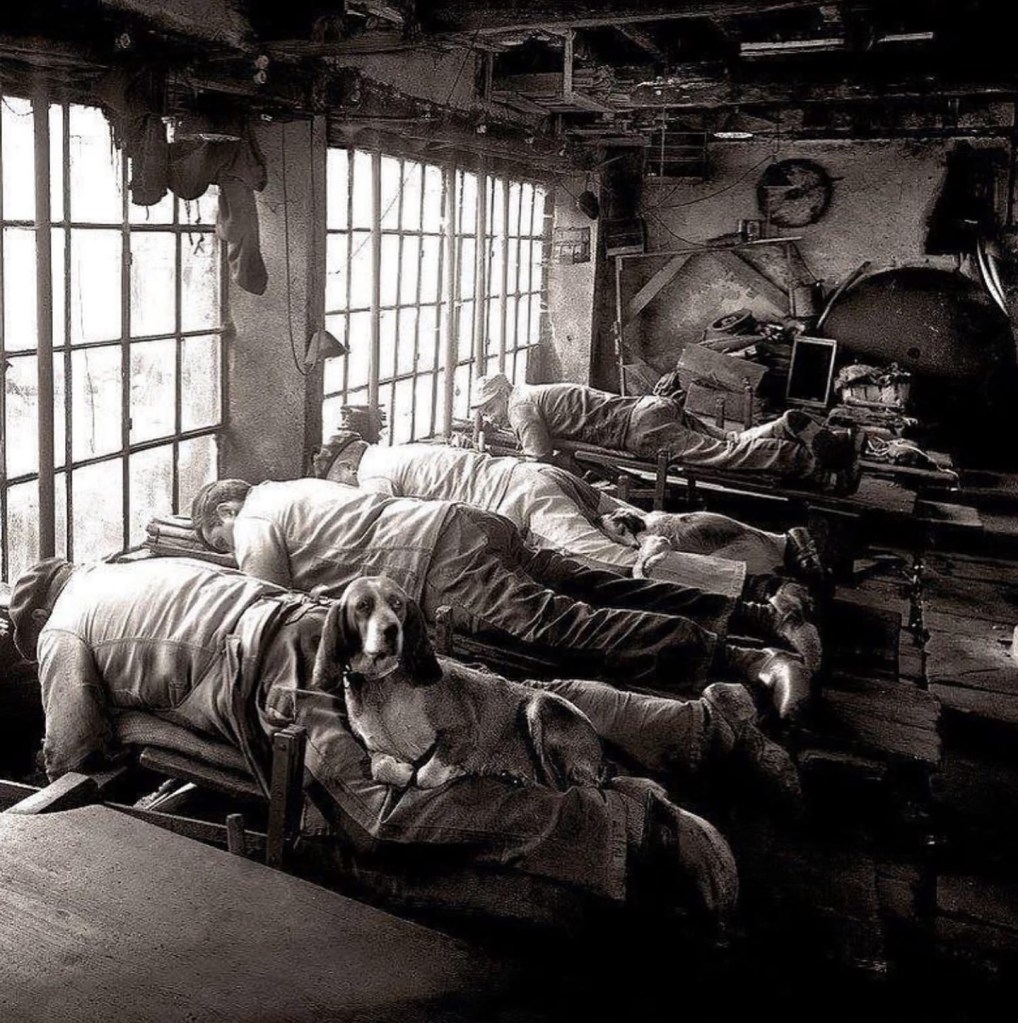
Knife grinders in Thiers, France circa 1902

Knife grinders in Thiers, France circa 1902.

These knife grinders had the nickname of ventres jaunes or ‘yellow stomachs’ referring to the yellow dust released by the grinding wheels.

By laying face down, these yellow stomachs would save their backs from being hunched over all day.

Workers were encourage to bring their dogs to not only keep them company but to act as heaters to keep them warm by having the dogs lie on their legs!