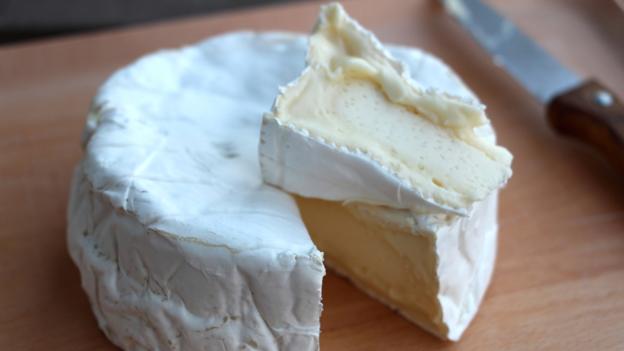
The end to a French cheese tradition?

Camembert

After years of lobbying, industrial producers are now allowed to make camembert with pasteurised milk. As a result, one of France’s beloved cheeses may be disappearing – for good.

In the heart of Normandy’s Pays d’Auge region, about an hour’s drive inland from the D-Day beaches on France’s northern coast, lies the 200-person village of Camembert, surrounded by white-and-brown cows grazing in lush green pastures.

It is here that, according to legend, a woman named Marie Harel sheltered a priest who, like many following the French Revolution, was given a choice: swear allegiance to the new Republic or die at the guillotine. The refractory priest elected to flee, escaping to England through Normandy, and encountering Harel along the way. To thank her for her hospitality, the priest ostensibly shared the recipe for brie, a cheese from the region around Paris, which Harel made using local Normande milk and the moulds for washed-rind Livarot, thus inventing a new cheese that, as tradition dictated, she named after the village where she made it: camembert.

While the validity of the legend is impossible to confirm, culinary anthropologist Georges Carantino maintains that it is rooted in fact.

“In any case, it evokes that there was indeed a transmission of the techniques from an area like Brie, where this type of cheese is very old, to [Pays d’Auge], where it is a much more recent addition to the landscape.”

No matter how the technique arrived, the Normandy region that had previously produced only washed-rind cheeses like Livarot or Pont l’Evêque suddenly began making bloomy-rinded cheese like brie in the 18th Century, and camembert has been inextricable from Camembert ever since.

Of course, it would be unfair to say that camembert is merely brie made in Normandy. While the cheeses are made with the same Penicillium camemberti spore and thus boast a similar downy white mould, flavour-wise, camembert exists somewhere between the milder, buttery Brie de Meaux and the rich, meaty Brie de Melun. This can be attributed, at least in part, to the fact that while Brie de Meaux is made primarily with rennet fermentation and Brie de Melun with lactic fermentation, camembert is made with a bit of both – a process facilitated by the rich, raw milk of local Normande cows with which camembert should always be made, at least in the mind of a true turophile.

The result is a cheese that is rich, mushroomy and complex in flavour – and unfortunately, it may be disappearing from the nation’s culinary landscape for good.

Camembert, like many cheeses, is protected by the Institut National de l’Origine et de la Qualité (INAO), a unique French organisation that strictly governs the manufacture of 46 cheeses (and 300 wines) via the French Appellation d’Origine Contrôlée (AOC) and equivalent European Appellation d’Origine Protégée (AOP) labels. This institution aims to protect terroir, the French notion that a product is inextricably linked to the place where it is made, from traditional manufacturing processes down to unique microorganisms in the air.

But the governing of camembert has long been more complex than most. In the 19th Century, thanks to the creation of the small wooden box in which the cheese is still sold today and the simultaneous rise of train transport, camembert became quite easy to stack and ship. As a result, it was soon enjoyed by people from all over France. Since this rise in popularity predated AOP cheese regulations by several decades, camembert fans from Anjou to the Pyrenees began making their own versions, inexorably divorcing camembert from its Norman terroir.

Today, the word camembert refers not to a specific cheese, but rather to a cheese type made the world over – in fact, it was a Quebecois camembert that was dubbed the best in the category worldwide at this year’s World Championship Cheese Contest in the US state of Wisconsin – a snub that French magazine VSD called ‘stinging’ and ‘shameful’.

Despite the loss of the word, locals did finally earn AOC status for the traditional cheese in 1983, when the INAO developed an official charter, not for ‘camembert’ but for the phrase ‘Camembert de Normandie’. The cheese, it was decided, would be obligatorily made in Normandy, with the raw milk of pastured herds of cows ‘in a process of genetic evolution’ towards the Normande breed (a rule that was modified to specify that, at first, 25%, and then, in 2017, 50% of the herd be made up of Normande cattle).

By this point, however, even Normandy camembert no longer belonged to the small, artisanal producers that had once handmade this cheese throughout the region, ladling it into moulds in five distinct layers, as tradition dictates. Industrial giants such as Lactalis had set up shop and wanted their product to sport the AOP label. The caveat? They wanted to use pasteurised milk. Continue reading “The end to a French cheese tradition?”

Noise Day. The indestructible Jain has shaken the gardens of Palud

She gave everything for her last concert in France. The French artist had the festival-goers sit, jump and sing, chaining his acid pop-electro tracks. The public is conquered.

She arrived alone on the big stage of the Festival of Noise. But the French singer knows how to occupy the space. Dressed in her usual blue jumpsuit, Jain stamps, runs and leaps, bringing the festival-goers into her folly.

“I want to see everyone jumper! “ Repeated the artist, tireless. The public moves and she asks for more. Everyone sits and hands in the air, she proposes to dance like a zombie and launches a competition of “ola”. Jain has fun, in communion with his audience.

His titles, all too rhythmic, are linked: Souldier , Oh Man , Alright , or the mythical Come , on the guitar, on which she does not forget to extend the microphone to some festival-goers well placed (or not) in the first ranks . The singer announces, she wants to turn the gardens into a “giant nightclub. “

After an hour and a quarter of show, she concludes on Makeba , with emotion. After four years of touring, this is the last concert of the electro-pop artist in France, who will continue performances in Japan.

She thanks “the best of the public” , completely under her spell.

“It’s a discovery and we are amazed by all its energy! “ Wonder Nicole and Laurent.

“I had already seen it in concert and today it was even better! She’s sending ! “ Exclaims Patricia. She especially appreciated the exchange with the festival-goers. “We get caught up in the game.”

Jain? It was simply Jain-ial.

Source: Noise Day. The indestructible Jain has shaken the gardens of Palud

Interview with Lionel Limiñana with translation

M. Pas de Merde

Monsieur Pas De Merde’s biggest regret after his three week vacation in France was narrowly missing a live performance by my favorite French rock band – The Limiñanas (they played a short drive outside Paris on same day I was flying out of CDG.)
The Limiñanas have been together for nearly 10 years and at now the top of their game. Here’s a great interview with the band’s co-founder Lionel Limiñana. Some will appreciate the English translation. Keep listening after the interview, as the stream has some awesome music tracks that follow.
Rock on, mes amis!

Calanques the Stunning Fjords of Provence

The Fjords of Provence

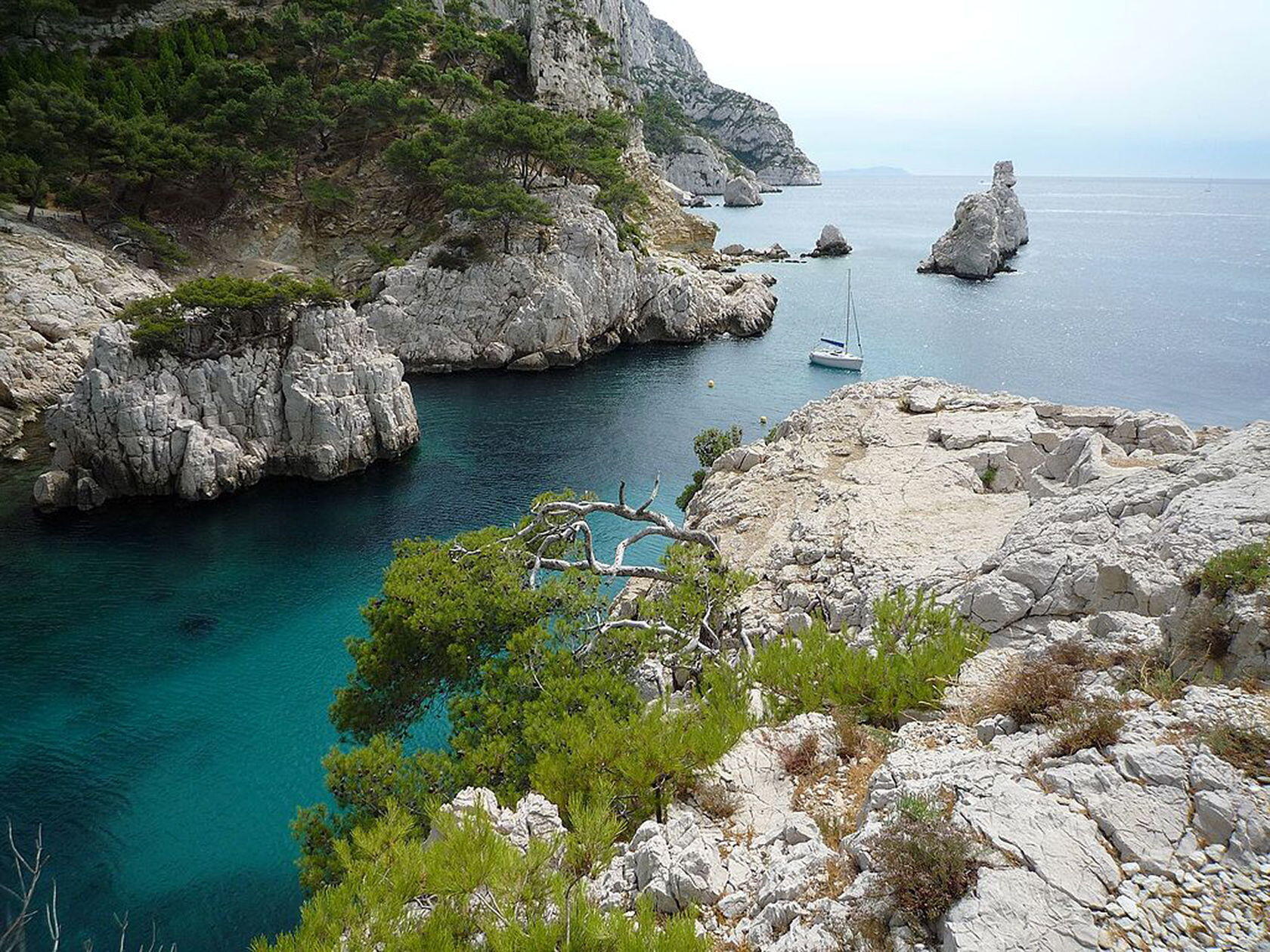
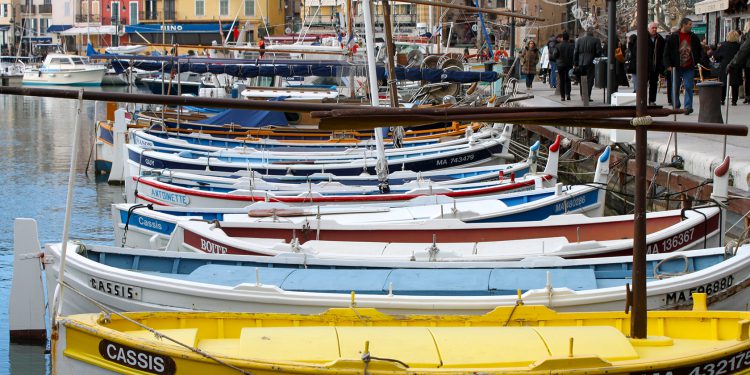
Just east of Marseille lays the charming coastal town of Cassis, nestled at the bottom of steep, vineyard-covered hills that come almost to the sea. It’s so adorably cute that you might think you are walking into a postcard. There’s nothing better than a stroll through town followed by a bowl of fish soup or some moules-frites at one of the many restaurants that line the docks.

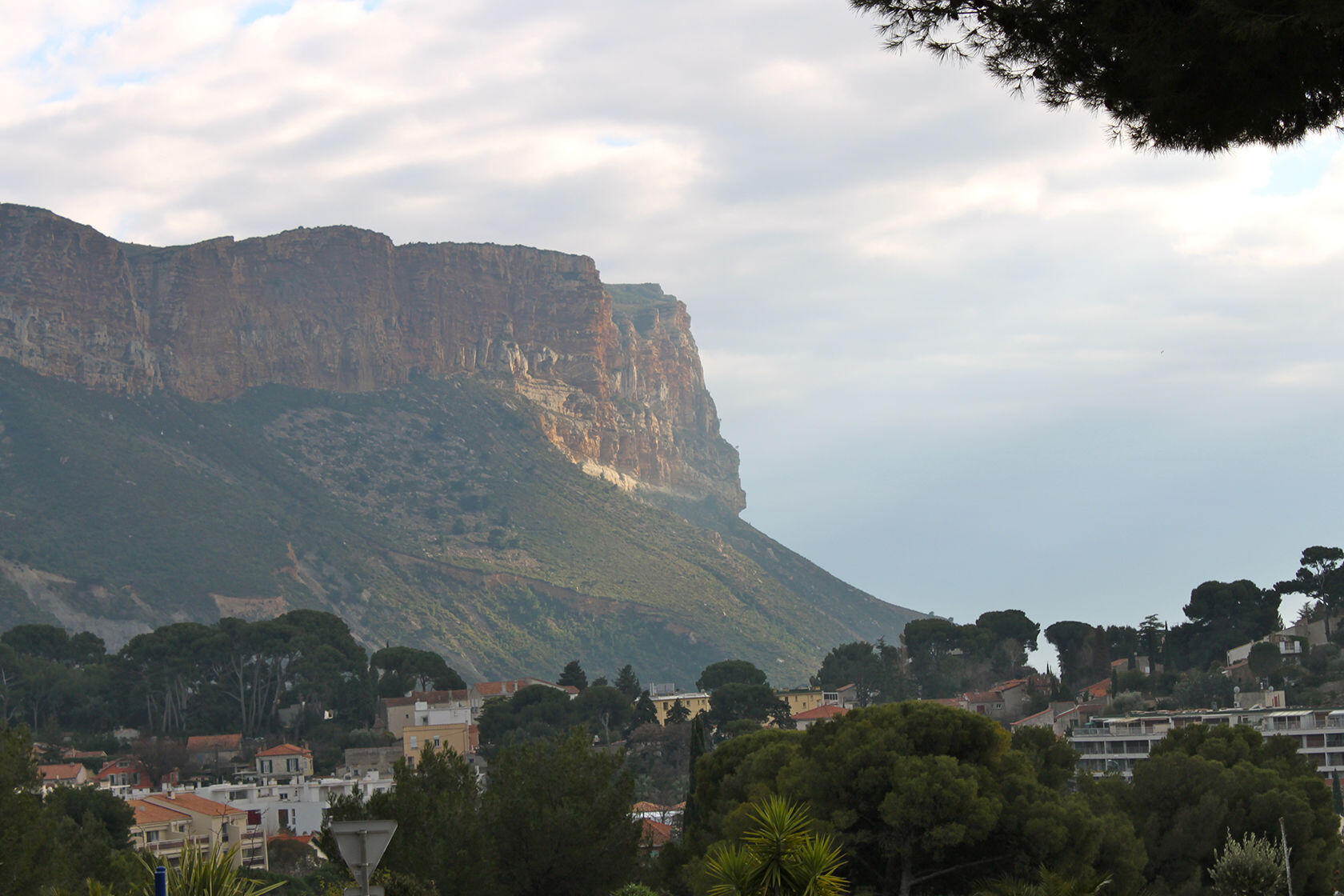
The setting of Cassis is dramatic. Besides those vineyards, Cap Canaille—the highest cliff in France—towers over the town on its east side. And to the west are the beautiful and rugged calanques, the so-called mini fjords of France [ . . . ]

Continue at PERFECTLY PROVENCE: Calanques the Stunning Fjords of Provence

Moriarty “Jimmy”


Jimmy won’t you please come home?
Where the grass is green and the buffaloes roam
Come see Jimmy your uncle Jim
Your auntie Jimmie and your cousin Jim
Come home Jimmy because you need a bath
And your grandpa Jimmy is still gone daft
Now there’s buffalo Jim and buffalo Jim
And Jim buffalo now didn’t you know
Jim Jim Jimmy its your last cigarette
But there’s buffalo piss and it’s all kind of wet
Jambo Jimmy you’d better hold your nose All roads lead to roam with the buffaloes
And the Buffaloes used to say
be proud of your name
The Buffaloes used to say
be what you are
The Buffaloes used to say
roam where you roam
The Buffaloes used to say
do what you do
Well you’ve gotta have a wash but you can’t clean your name
You’re now called Jimmy you’ll be Jimmy just the same
The keys are in a bag in a chest by the door
One of Jimmy’s friends has taken the floor
Jimmy won’t you please come home
Where the grass is green and the buffaloes roam
Dear old Jimmy you’ve forgotten you’re young
But you can’t ignore the buffalo song
And the Buffaloes used to say
be proud of your name
The Buffaloes used to say
be what you are
The Buffaloes used to say
roam where you roam
The Buffaloes used to say
do what you do
If you remember you’re unknown Buffaloland will be your home

Monsieur
Pas de Merde

I was introduced to Rosemary Standley’s music a few years back in her collaboration with Brazilian cellist Dom La Nena “Birds On a Wire” – a fine tribute to Leonard Cohen. I loved Standley’s voice, which reminded me a bit of the plainly beautiful vocals of the late Kate McGarrigle (listen to “Talk to Me of Mendocino”).
Crazy, that I somehow had bypassed Standley’s work as lead singer for the Paris-based band Moriarty, which is now my favorite. I say “crazy,” since I listen to French music and Americana music all the goddamn time – often switching from a Francis Cabrel CD to a Lucinda Williams.

Now, I’m catching up as quickly as possible to the band, which is now over 20 years old. YouTube and Spotify Moriarty binges have been a daily exercise. The band’s Live double album Echoes From the Borderline shows the band at the top of their game. Recorded in 2017 (Moriarty regards it as their 10th anniversary album) there’s 24 songs recorded all about the globe – and they are all fucking fantastic.

I have to see this band live – perhaps in Paris or New York? Hell, I’ll even take Fall River!