
A short documentary of 1969 can be called: “8 minutes with Marie Laforêt, personal life and work
Category: Culture
Pope Leo signs first exhortation, ‘Dilexi te,’ focused on love for the poor
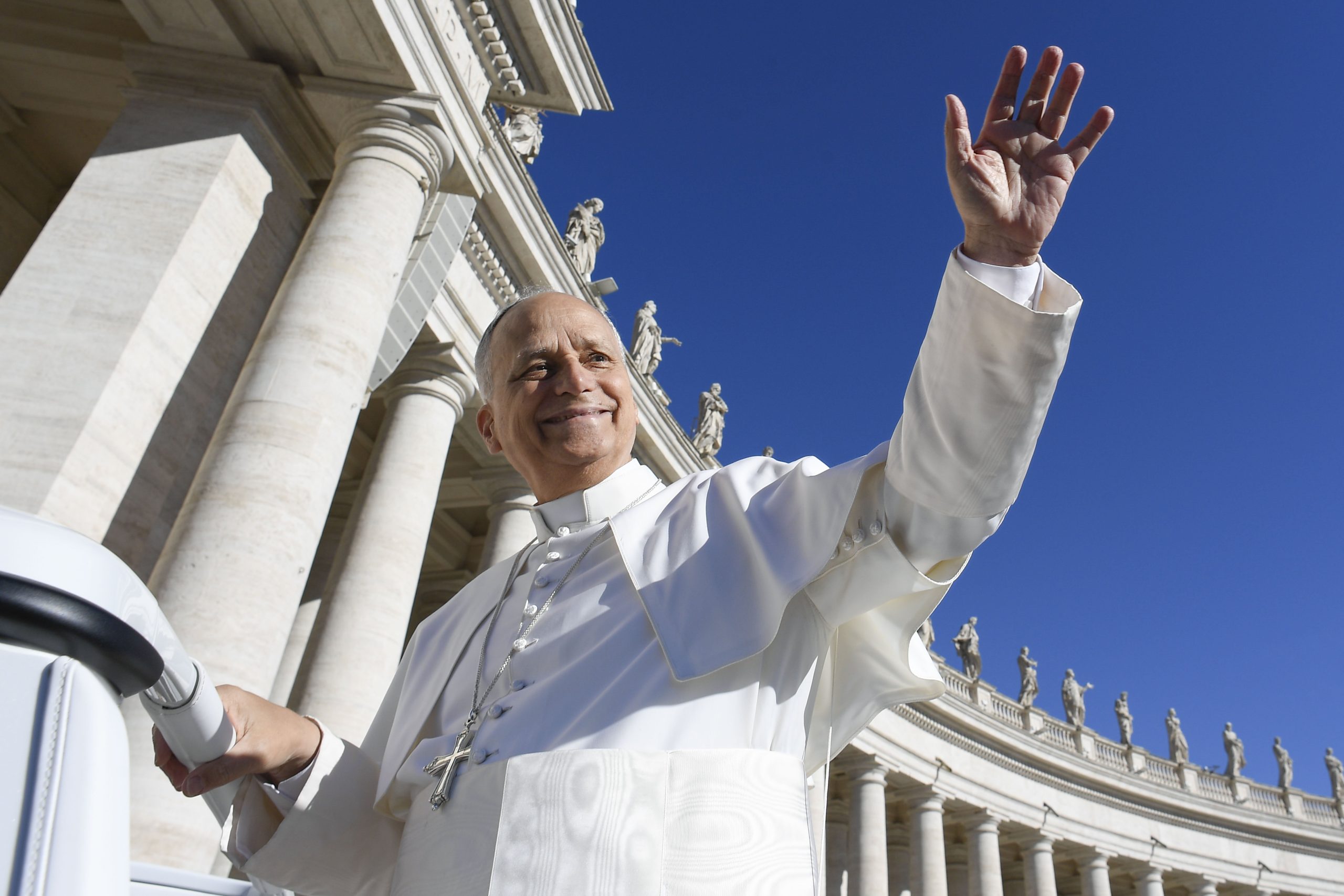
The document, which will be issued Oct. 9, can be seen as a companion document to “Dilexit nos,” the fourth and final encyclical issued by Pope Francis.
By Gerard ‘Connell
Pope Leo XIV this morning, Oct. 4, signed his first major document, an apostolic exhortation called “Dilexi te” (“I have loved you”), which will focus on love for the poor. The Vatican said it will be published next Thursday, Oct. 9, and emphasized that Leo signed it on the feast of St. Francis of Assisi, whose embrace of poverty is well known.
The title of the exhortation comes from Revelation 3:9, the last book of the bible. It can be seen as a companion document to “Dilexit nos” (“He loved us”), the fourth and final encyclical issued by Pope Francis on “the human and divine love of the heart of Jesus Christ,” published on Oct. 24, 2024. While that encyclical called believers to focus on the love of Jesus, this new document, begun under Francis and completed by Leo, emphasizes the call to believers to love the poor as Jesus did.
It is hardly surprising that Pope Leo should devote his first major document to the poor. Since his ordination in 1982 he has spent almost half of his priestly life, some 20 years, working as a missionary among the poor in Peru. Moreover, the fact that an early draft of the exhortation had been prepared during the last part of Francis’ pontificate, opened the path for Leo to complete it. Pope Francis also completed a document begun by his predecessor, Benedict XVI: “Lumen Fidei” was published on June 29, 2013.
Leo’s exhortation is expected to show his continuity with Francis in relation to the poor and the reality of poverty in today’s world. The first Jesuit pope had time and again emphasized that “the poor are at the heart of the Gospel,” and he showed not just in words but in multiple concrete ways his love for the poor, including ensuring that people in need were present at his funeral.
Leo, his Augustinian successor, has built on that original draft to produce his first apostolic exhortation. The document is about 40 pages (some 20,000 words) and is rooted in what scripture and church teaching say about the poor, and highlights the need for justice in today’s world.
Already, during his first five months as pope, Leo has spoken frequently about the poor, poverty in the world, and the impact of war and climate change in many countries across the globe. In his interview with Elise Ann Allen, senior correspondent for Crux, for her biography of him, for example, Leo significantly emphasized that “the continuously wider gap between the income levels of the working class and the money that the wealthiest receive” is contributing to the polarization in today’s world. He cited the fact that “C.E.O.s that 60 years ago might have been making four to six times more than what the workers are receiving, the last figure I saw, it’s 600 times more than what average workers are receiving. Yesterday the news [said] that Elon Musk is going to be the first trillionaire in the world. What does that mean and what’s that about? If that is the only thing that has value anymore, then we’re in big trouble.”
Pope Leo believes the church offers a different approach to inequality, as he explained in his homily to Caritas workers during Mass in Albano on Aug. 17, when he said: “I encourage you not to distinguish between those who assist and those who are assisted, between those who seem to give and those who seem to receive, between those who appear poor and those who feel they are offering their time, skills, and help. We are the church of the Lord, a church of the poor, all precious, all subjects, each bearer of a singular Word of God. Everyone is a gift to others.”
At the Jubilee audience this morning, Oct. 4, the American missionary pope again returned to the theme of poverty when he commented on the Gospel (Lk 16:13–14) that speaks about the challenge of serving God rather than wealth. He noted that some listeners mocked Jesus’ teaching on poverty because “his discourse on poverty seemed absurd to them. More precisely, they felt personally affected because of their attachment to money.”
He recalled how St. Francis of Assisi, a follower of Jesus, embraced evangelical poverty even at the cost of breaking with his family but, he said, St. Clare’s decision was “even more striking; a young woman who wanted to be like Francis, who wanted to live, as a woman, free like those brothers.”
He described Clare as “a courageous and countercultural young woman,” who lived in a city that considered itself Christian but whose radical embrace of the Gospel appeared revolutionary. “Then, as today, one must choose! Clare chose, and this gives us great hope,” he said.
He concluded, “Let us pray to be a church that does not serve money or itself, but the Kingdom of God and his justice. A church that, like Saint Clare, has the courage to inhabit the city in a different way.” In this Jubilee Year, he said, “we must choose whom we will serve: justice or injustice, God or money.”
The Vatican said Pope Leo’s exhortation will be presented at a press conference on the morning of Oct. 9 by Cardinals Michael Czerny, prefect of the Dicastery for the Service of Integral Human Development, and Konrad Krajewski, the papal almoner. They will be assisted by Frédéric-Marie Le Méhauté, the provincial of the Friars Minor for France and Belgium, who will join the conversation by video call, and by Sr. Clémence, of the Little Sisters of Jesus, from the Tre Fontane community in Rome
Source: Pope Leo signs first exhortation, ‘Dilexi te,’ focused on love for the poor – America Magazine
Born on this date: Brigitte Bardot, September 28, 1934, in Paris, France.
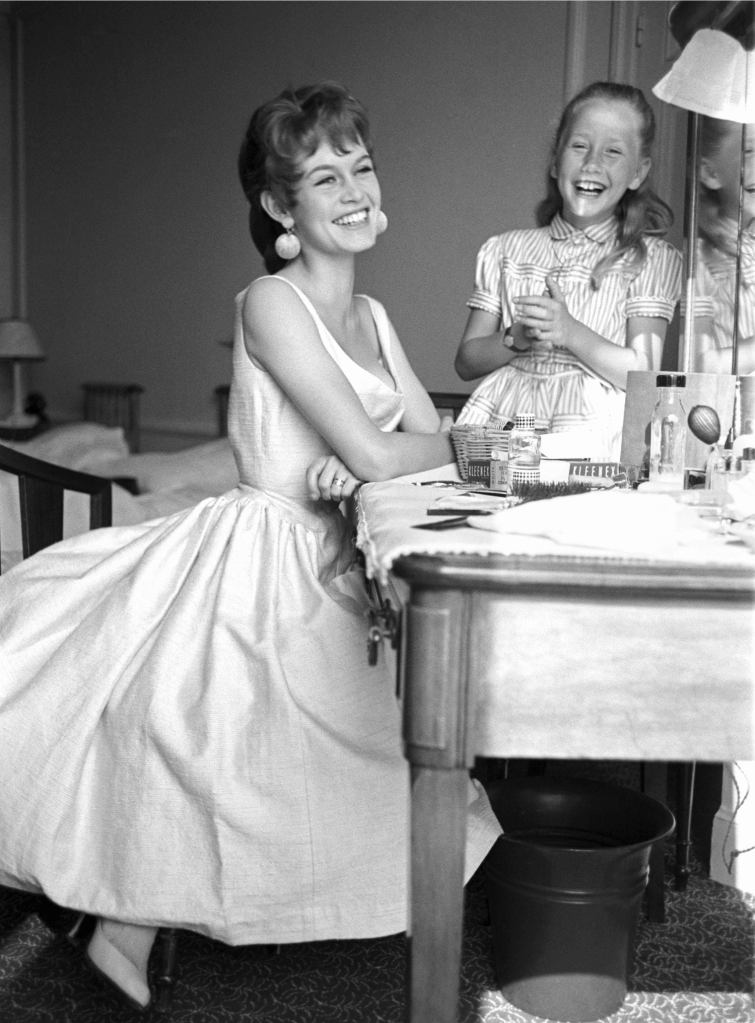
Magnifique anniversaire Brigitte Bardot !
Brigitte Bardot et Brigitte Fossey photographiées par Jack Garofalo au Festival de Cannes, 1955
Listen to radio broadcast featuring French composers Georges Auric, Georges Delerue, Frances Lai and Yann Tierson
By Wayne Cresser and Michael Stevenson

Georges Auric (1899–1983)
Auric was a versatile and significant figure in 20th-century French music and culture.
- A member of Les Six: As one of the prominent members of the group of avant-garde composers known as Les Six, he rebelled against late-Romanticism and Impressionism, advocating for a more modern, populist, and distinctively French style.
- Major film scores: He composed over 100 film scores, many for prominent directors, including his longtime collaborator Jean Cocteau. His famous film scores include:
- Beauty and the Beast (1946)
- Moulin Rouge (1952), which produced the popular song “Where Is Your Heart?”
- The Wages of Fear (1953)
- Roman Holiday (1953)
- Administrator of French music: Auric also held significant administrative positions, including director of the Paris Opéra and chairman of the French performing rights society, SACEM.
Georges Delerue (1925–1992)
Dubbed “The Mozart of Cinema” by the newspaper Le Figaro, Delerue was one of the most prolific and influential film composers of his generation.
- Prolific career: He wrote more than 350 scores for film and television, with his signature style blending classical orchestration with romantic, lyrical melodies.
- French New Wave collaborator: His distinctive style shaped the sound of the French New Wave, notably through his collaborations with director François Truffaut on films such as Jules and Jim (1962) and Day for Night (1973).
- Hollywood success: His success extended to Hollywood, where he scored notable films, including:
- A Little Romance (1979), for which he won an Academy Award
- Platoon (1986)
- Steel Magnolias (1989)
Francis Lai (1932–2018)
Lai was an Oscar-winning composer whose work helped define the “easy listening” and popular instrumental music of his era.
- Popular melodies: He was a gifted melodist known for his emotionally expressive themes. His music gained massive global recognition through his collaboration with director Claude Lelouch, for whom he scored almost 40 films.
- Global hits: His most famous and influential works include:
- The romantic theme from A Man and a Woman (1966), which earned him a Golden Globe nomination.
- The iconic, Oscar-winning score for Love Story (1970). The theme, “Where Do I Begin?”, became an international pop standard.
- Classical crossover influence: Lai’s success demonstrated that a film score could become a hit in its own right, influencing the popular music charts and inspiring a new generation of “classical crossover” artists
Listen to “The French Connection” Ep. 9

This Sunday’s FRENCH CONNECTION on WRIU 90.3 FM may be the last
( This program originally aired on WRIU, Kingston, 90.3 FM on Sunday, August 31, 2025 )
THE FRENCH CONNECTION:: WRIU 90.3 FM :: August 31, 2025:
- Francis Cabrel “Quin l’esquimau” (Bob Dylan)
- Jeanne Cherhal “Super 8″
- Rodolphe Burger “Stephanie Says” (Lou Reed)
- Jain “Come” (2017)
- Jain “Makeba” (2017)
- Liz & Lisa “Fais Do Do”
- Pomme “Ceux qui Revent
- Pierre Bensusan “Le Lendemain de la Fete”
- Léo Ferré “Je t’dore a Legal” (Ferre/Baudelaire)
- Léo Ferré “Le Vampire” (Ferre/Baudelaire)
- George Brassens “Puisque Vous Partez en Voyage” (Jean Sablon)
- Asleep at the Wheel “Friendship First” (Brassens)
- Francis Cabrel “Je t’amais, Je t’aime, Je t’aimerai”
- Pierre Bensusan “So Long Michael”
- Edith Piaf “Je Ne Regrette Rien”
How Paris Tackled Pollution in the River Seine

Following a century-long ban due to pollution, Parisians and tourists can now swim in designated areas of the River Seine.
By Kelly Yu
The iconic River Seine opened its banks to swimmers on July 5, marking the end of a swimming ban that had been in place since 1923 due to severe contamination in its waters.
For decades, the river has been polluted by E.coli, enterococci bacteria and other contaminants, with industrial waste, sewage overflow, and urban runoff making it unsafe for swimming.
Paris’s outdated combined sewer system, dating back to city planner Baron Georges-Eugène Haussmann’s 19th-century city planning, allowed untreated wastewater to flow directly into the river during heavy rainfall.
By the 1970s, about 60% of the city’s sewage was being dumped untreated into the river, and fish species had decreased to just three.
The historic reopening followed a €1.4 billion (US$1.6 billion) cleanup operation to make the river swimmable in time for the 2024 Paris Olympics, with open-water swimmers and triathletes competing in its specially treated waters.
Bastien Xu, a Parisian businessman who was among the first to take a dip when the ban was lifted, described it as a symbolic moment for the city: “The Seine River has always been seen as romantic, but now people can actually swim in it instead of just looking at it.”
“I was really excited. I felt lucky that we can swim there now after it wasn’t allowed for 100 years. My older French neighbors were envious because they never got the chance when they were young,” Xu told Earth.Org.
Continue reading “How Paris Tackled Pollution in the River Seine” Pas De Merde