Bertrand Tavernier, veteran French director of Round Midnight, dies aged 79

Acclaimed film-maker won a string of awards for a wide variety of films, including crime and film noir, as well as his celebrated film about a jazz musician

Bertrand Tavernier, the veteran French director of a host of acclaimed films including A Sunday in the Country, Round Midnight and These Foolish Things, has died aged 79. The news was announced by the Institut Lumière, the film organisation of which he was president. No cause of death was given.

Tavernier’s output was prolific: he made his directorial debut in 1974 with The Clockmaker of St Paul and worked continuously until 2013, when he released his final feature film, The French Minister. He also took in a wide variety of material, from crime and noir, to comedy, jazz and historical drama.

Born in Lyon in 1941, Tavernier was the son of magazine publisher René Tavernier, whose anti-Nazi principles would greatly influence Bertrand. Like the generation of French New Wave directors that slightly preceded him, Tavernier grew up as a film obsessive; having moved to Paris after the war, he founded his own magazine and managed to get a job as an assistant director to Jean-Pierre Melville on the 1961 film Léon Morin, Prêtre. By his own admission, he was so bad as an AD that Melville instead made him the publicist for its follow-up, Le Doulos. It was in this role that Tavernier made his first mark in the film industry, working as a publicist on a series of New Wave classics, including Jean-Luc Godard’s Contempt and Agnés Varda’s Cleo de 5 à 7. “We were the first film publicists who were film buffs – we only accepted the films we liked,” he told the Guardian in 2008.

Continue reading “Bertrand Tavernier, veteran French director of Round Midnight, dies aged 79” →

Opinion | What France does not understand about racism and safe spaces

In a country where the circles of power are overwhelmingly White and male, the fact that many important decisions are made by exclusively White groups would be a good reason to spark outrage.

Centering spaces around the voices of those who experience oppression is the only way for them to identify strategies to deconstruct structural inequalities.

Mélanie Luce is the first woman of color to lead the UNEF, a progressive student union founded in 1907 in France. When she joined a news show to speak about the precarious social conditions of students, she could not guess that she would soon be the center of national attention. Luce admitted that the union sometimes organized safe spaces to support students of color, and the interviewer labeled the initiative as “closed to White people.”

The outrage quickly spread across the political landscape. Education Minister Jean-Michel Blanquer called the meetings “racist,” “deeply outrageous” and potentially “leading to things that look like fascism.” He added he was exploring the legal grounds to prevent the meetings.

In the Senate, the right-wing party the Republicans drafted a letter to the justice minister, claiming the meetings did not comply with “French values,” as if there were no racial issues in France. Legislator Julien Aubert alerted the Paris prosecutor and said in a statement that the interior minister should consider the dissolution of the UNEF, backing the viral hashtag #dissolutionunef. [ . . . ]

Continue at WASHINGTON POST: Opinion | What France does not understand about racism and safe spaces – The Washington Post

This Pauline Croze concert is superb. Bien sûr!

As águas de março não apenas fecham o verão como cantava Tom Jobim, mas trazem também, todos os anos, a promessa de uma intensa e diversificada programação cultural em torno da Francofonia. E para abrir a edição deste ano, um concerto em voz e violão de Pauline Croze seguida da apresentação do cantor Sévérin serão apresentados no dia 15 de março, às 19h, nos canais YouTube e Twitch da Aliança Francesa Brasil.

Continue reading “This Pauline Croze concert is superb. Bien sûr!” →

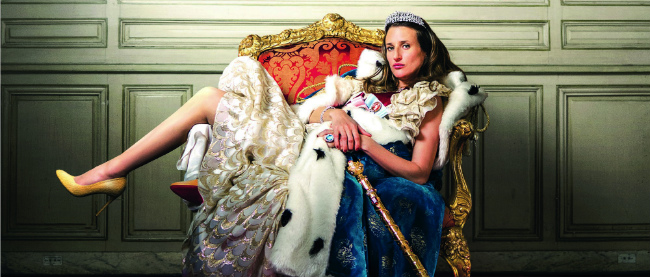
French Cinema and Stars: Profile of Actress Camille Cottin

Camille Cottin
Camille Cottin

Gutsy and utterly shameless, meet the queen of provocation who burst through the small screen, all guns blazing.

Long before she conquered the box office, Camille Cottin packed a punch as TV’s most fearless, and reviled, provocatrice; thanks to her irreverent breakthrough sketch show Connasse. No wonder. Armed with a hidden camera, the ballsy comédienne blazed through Paris, under the guise of her obnoxious alter-ego Camilla, dolling out insults, incensing taxi drivers, taunting joggers and ruffling paper-pushers.

But Cottin truly came into her own in 2015, when she brazenly clambered on the gates of Kensington Palace (unhurried bobbies eventually dragged the baying thesp down), only to later burst through the Changing of the Guard as a crew secretly filmed her antics for cringe-worthy spin-off movie Connasse, Princesse des coeurs; this time charting Camilla’s efforts to hunt down and marry Prince Harry. She spent two days in jail for the privilege.

Stoically facing the gaol not to break character on her illicit spree was the game-changer which propelled the loose canon overnight from fringe comic to bona fide star. Since her spell as the rabble-rouser, she has become the darling of French cinema, totting up a string of (relatively conservative) roles, including a remote social worker in Cigarettes et Chocolat Chaud and feisty gay impresario in Cédric Klapisch’s hit series Dix Pour Cent. Her cheek even nabbed her a coveted part in Allied opposite Brad Pitt. Worth every mortifying second behind bars, surely…

10-Second CV: A screen star’s life in one take

Name: Camille Cottin

Born: December 1, 1978 in Paris

Early career: After graduating, she made ends meet as a secondary school English teacher while taking acting lessons. She eventually joined a high- profile troupe in 2009. She enjoyed her first taste of fame in 2013, when she was cast as loudmouth Camilla in sketch show Connasse.

I know the face… She appeared as Monique in World War Two romantic thriller Allied alongside Hollywood royalty Brad Pitt and Marion Cotillard.

Where will we see her next? She currently stars as Juliette Binoche’s iron-willed daughter in awards-tipped comedy Telle mère, telle fille. The second series of her hit show Dix Pour Cent is currently airing in France. It’ll be available on Netflix soon.

C’est pas vrai! She feared police would arrest her before she’d even reached the gates of Kensington Palace, ruining Connasse’s pivotal scene. She needn’t have worried. It took an age for guards to notice the baying woman hanging on for dear life.

Source: French Cinema and Stars: Profile of Actress Camille Cottin

10 Amazing Places To Visit In The South Of France – Hand Luggage Only

Doesn’t matter if you’ve been before or if you’re a first-timer – the South of France is one place that’s guaranteed to be an easy yes when it comes to deciding where to holiday. The beautiful beaches, amazing food and plethora of cute little French villages to pop into only serve to add more to the appeal of this sunny part of France (or indeed, to the envy of your friends visiting these beautiful French towns and cities).

So it’s decided! You definitely want to visit the South of France this summer. Now that we can take that for granted – the next question is, where to visit. It’s not like you can just visit ‘The South of France” – that’s like attempting to booking plane tickets to “Asia” – you need to be a tad more specific!

To help you along your merry way, here are 10 places you need to visit in the South of France.

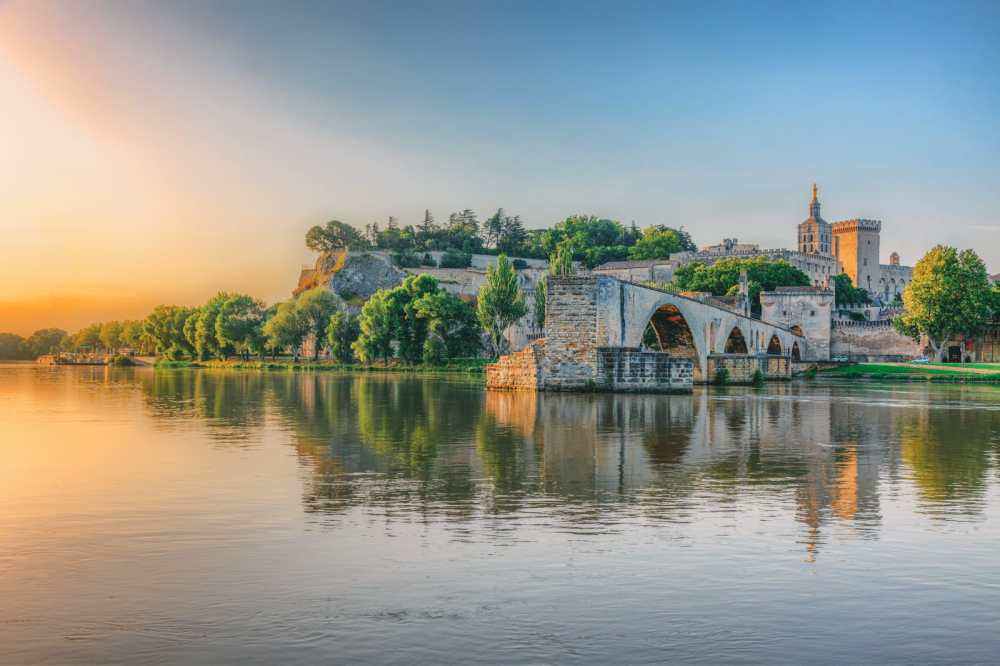
1.) Avignon

Places To Visit In The South Of France (15)

Avignon is a city steeped in rich religious history and with the requisite stunning architecture that you’d come to expect from such a place. There was a time in the middle ages when this charming city was the centre of western Christendom.

No fewer than six papal conclaves were held in the breathtaking (UNESCO World Heritage) Palace of the Popes in the 14th century, and this building still has fascinating little relics from this time, such as the invaluable gothic frescoes on the walls of the papal apartments.

Essentially, if you want a city break that’s filled with amazing sights to see and perhaps aren’t too bothered by catching some rays on the beach, then Avignon is perfect for you!

Oh, almost forgot to add – the magnificent ruins of Pont Saint-Bénézet (also known as the Pont d’Avignon) pokes out across the Rhône and is also a UNESCO World Heritage sight worth seeing in the city. Shift down a gear and browse the arty walled town, take a cruise on the river, and see if you can come for the Theatre Festival in July when the city becomes one giant stage. Continue reading “10 Amazing Places To Visit In The South Of France – Hand Luggage Only” →