Femme Fatale, Fallen Woman, Spy: Looking for the Real Mata Hari

Mata Hari
Mata Hari


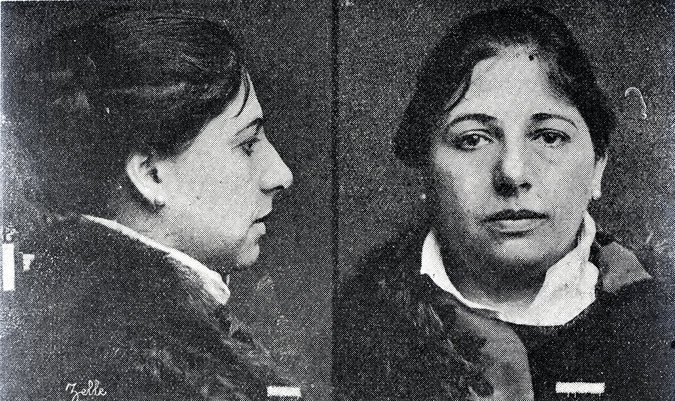
In December 1915, Margaretha Zelle, the woman known to all the world as the exotic dancer Mata Hari, was traveling by ship from one of her lovers in Paris to another in The Hague. The international sex symbol was famous for provocative routines in a nude body stocking with a bejeweled bra and golden headdress. Sometimes she would tell people she was a Javanese princess or the daughter of an Indian temple dancer, but only rarely would she reveal that she was Dutch.It was the middle of World War I and her circuitous route took her through British waters, where the authorities stopped the boat to question those on board.After looking at Zelle’s papers, and searching her possessions, they made a note: No evidence of anything had been found on her person, but she was nevertheless a “bold sort of woman who is not above suspicion.”

In the charged atmosphere of the war, this was enough for the authorities to call for her arrest if she ever tried to enter the United Kingdom again. A copy of their report was sent to the French secret service, where it landed on the desk of a French military intelligence officer, George Ladoux [ . . . ] Read full story NY Times


In “Rest”, Charlotte Gainsbourg explores the sharp edges of grief

CHARLOTTE GAINSBOURG is full of nervous energy, switching from sitting on the sofa to the floor, pouring streams of green tea. It has been nearly eight years since the release of her last studio album, the critically acclaimed “IRM”, and her long hair has since been lopped off into a bob. She will release “Rest”, her new album, on November 17th, and is starring in two upcoming films—“The Snowman”, an English-language crime drama, and “Promise at Dawn”, a French adaptation of a novel by Romain Gary.Notoriously shy, she is still no stranger to exposure. Her parents—Serge Gainsbourg, France’s most revered musician, and Jane Birkin, an English actress and singer—courted the tabloid obsession with their scandalously chic family. Ms Gainsbourg began her music career aged 12 with “Lemon Incest”, a duet with her father (the sort of thing which would make less avant-garde tweenagers combust with embarrassment). Even now, at 46, she appreciates her father’s attentions as an artistic collaborator. “I like touchy subjects and things that make you uncomfortable,” she says. She remembers being in the spotlight with him fondly. “The way for my father to tell me that he loved me was through the media. He wasn’t very outgoing in private; he disguised his feelings much more.”

Continue reading “In “Rest”, Charlotte Gainsbourg explores the sharp edges of grief”

Why Greek Feta is the healthiest cheese in the world

Feta is Greece’s most famous cheese and according to many recent reports from dieticians and doctors around the world, it’s also the healthiest cheese option in the world

Feta is a soft brined cheese characterised by few to no holes and unlike many French cheeses, it has no skin. The nutritional benefits will depend on exactly what brand and type of Feta you purchase [ . . . ]

Source: Tornos News | Report: Why Greek Feta is the healthiest cheese in the world

How to decode a French wine label

Buying a French wine can often be intimidating for those without an intimate knowledge of the language on the label. Unlike New World wines which often focus on the grape varietal used to make the wine, French wineries have typically relied on their place of origin and other information on the label to tell the consumer a story about the liquid contents in the bottle. In theory, a French wine label tells [ . . . ]

Full Story at: How to decode a French wine label | The Chronicle Herald

The erotic songs lost in translation

When Serge Gainsbourg died in 1991, France’s then-president François Mitterrand mourned the loss of “our Baudelaire, our Apollinaire,” the man who had “elevated song to the level of art.” In a career spanning five decades, Gainsbourg embraced everything from chanson, mambo and yé yé to rock, reggae and electronica, incorporating lyrics that were in turn profound, witty or provocative and at times utterly obscene. Frequently employing ingenious wordplay that would give the lyrics two, if not three different meanings his compositions remain wholly original and uniquely out of time [ . . . ]

More at: BBC – Culture – The erotic songs lost in translation