
Author: THE HOBBLEDEHOY
Michael Stevenson, aka Dai Bando, Johnny Foreigner, Monsieur Pas De Merde, is a blogger of French and British culture. His blogs "Pas De Merde" and "The Hobbledehoy" have been called "marvelous" by some, and "meh" by others.
Audrey Tautou’s eight best films
Pas de Merde loved Amelie of course, but The Da Vinci Code was horrible. What do you think of this list?
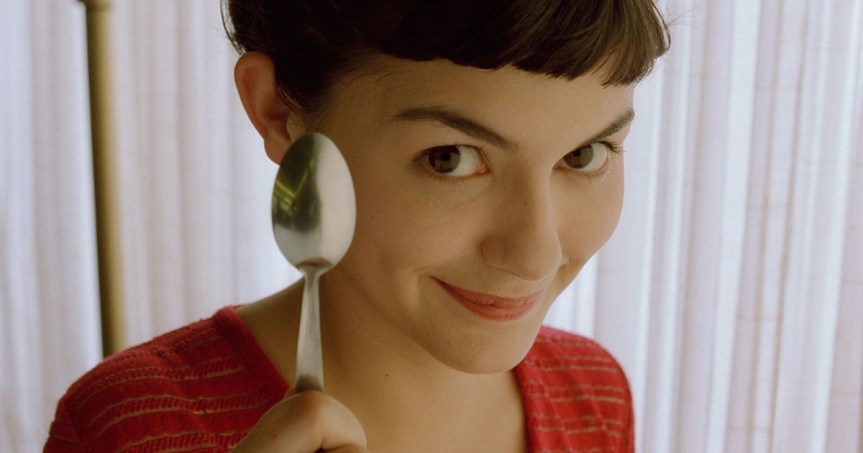 Audrey Tautou’s stardom is such that she easily crosses the barrier between the francophone and anglophone worlds. Her English-speaking roles – such as “The Da Vinci Code”, are as impactful an [ . . . ]
See full story at VOGUE: Audrey Tautou’s eight best films | Vogue Paris
Worst of heatwave yet to come as France braces for ‘terrible’ Tuesday
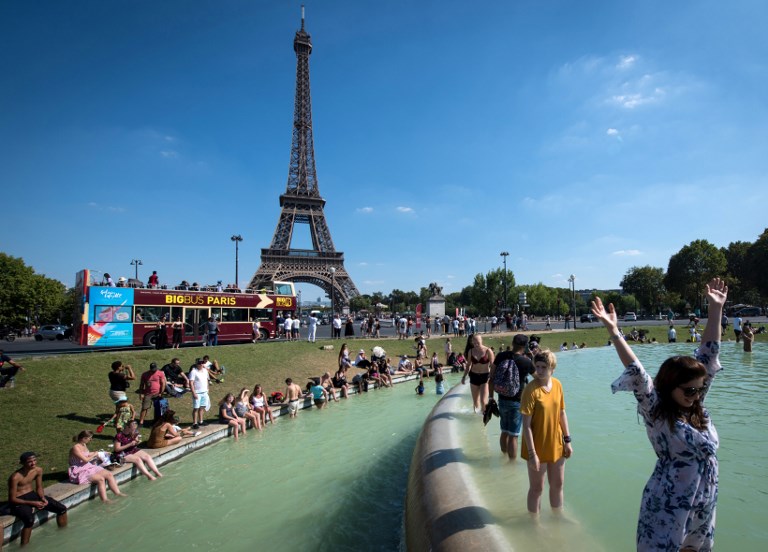
France’s heatwave is set to continue, with the hottest weather yet expected on Monday and Tuesday across the country.On Monday, temperatures could soar up to around 40C according to France’s national weather agency Météo France. France’s met office has issued heatwave weather warnings for 67 departments out of 101 in France – a record first reached in June last year – and has warned against storms in the country’s southeast in the afternoon, Le Parisien reported.
“The heatwave continues tomorrow Monday, with very high temperatures which will be difficult to bear. Be careful of storms on the southeast in the afternoon with a risk of hail,” the weather forecaster wrote on Twitter.
On Monday, the hottest parts of France will be in the southwestern regions, with temperatures in some cities reaching 36C in Toulouse and 37C in Bordeaux.
On Tuesday, Paris and the country’s northeast and centre will be the most affected by the heat, with Lyon and Paris sweltering under 36C.
Meteorologist Guillaume Séchet, creator of the site meteo-paris.com, is referring to Tuesday as a “terrible day with 38-39C in Ile-de-France and highs of 40C around Bourges and Auxerre”.
There will be a gradual decline in temperatures in the south-east of France on Tuesday but it will remain very hot.
Fortunately, the mercury is expected to drop considerably by Wednesday and Thursday.
“All of a sudden, we will lose 10C in 24 hours in the North and return to a more normal 23 to 24 C in the second half of the week,” Guillaume Séchet told Le Parisien.
France’s scorching weather is also causing air pollution levels to soar.
On Monday, traffic is being reduced in both Lyon and Paris to cut down on the smog with cars belonging to the most polluting category of vehicles being banned.
Similar measures were taken for three days in Paris in July.
Speed limits have also been lowered throughout the Ile de France region around Paris and in the east of the country.
Like much of Europe, France has been hit by a heatwave over the past week – which is already turning into the third hottest since temperatures have been recorded.
Last week, four nuclear reactors were forced to close in order to avoid raising the temperature of rivers whose water is used to cool reactors and then returned.
On Saturday, the southern town of Béziers in the Hérault department reached 41.3C. It was the hottest day in France since a deadly heatwave in 2003, that killed thousands of elderly people.
Source: Worst of heatwave yet to come as France braces for ‘terrible’ Tuesday – The Local
Behind Jean-Luc Godard’s Shades: Agnès Varda’s Ways Of Seeing
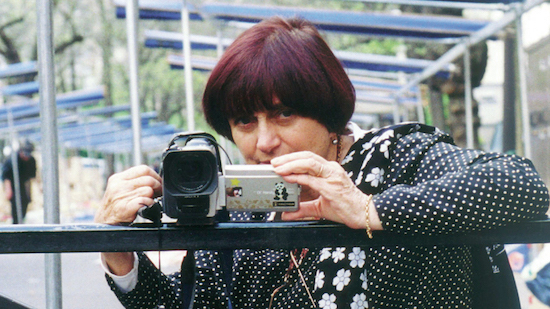
Elsa Court unpicks the cinematic relationship between Agnès Varda and Jean-Luc Godard. With her new film, Faces, Places, in UK cinemas soon, and a retrospective currently on screen at the BFI Southbank, a reassessment of the often marginalised Varda feels more vital than ever
”L’art du cinema consiste à faire faire de jolies choses à de jolies femmes” – the art of cinema consists in having pretty women do pretty things. This quote, from Francois Truffaut, was how I chose to open my lecture – the last of four taught on the directors of the French New Wave at the Department of Continuing Education at Oxford University last autumn – on Agnès Varda. I had decided to save Varda for last, and Truffaut’s quote, frequently remembered in the wealth of critical writing on the French New Wave, seemed to me a good entrée en matière to discussing the postfeminist narrative of Varda’s Cléo de 5 à 7 (1962).
So far into the course, I had approached the movement according to its standard historical – and therefore predominantly male – perspective, placing the films of Truffaut, Jean-Luc Godard, and Alain Resnais within their cultural context in postwar France, stressing the way in which the young, anti-orthodox filmmakers simultaneously called for a reassessment of cinema as art and for a relaxing of the rules of filmmaking. By the end of the day, I had yet to discuss the New Wave’s inclusion of women and its representations of gender relations, which jarred with the movement’s professed radical attitudes towards both film and the changing landscape of France’s society and culture. My lecture on Varda deliberately approached her work through the perspective of her uniquely playful, even generous redressing of the codes of female representation within the movement and in French cinema in the broader sense. Continue reading “Behind Jean-Luc Godard’s Shades: Agnès Varda’s Ways Of Seeing”
Heat brings relief for French vineyards
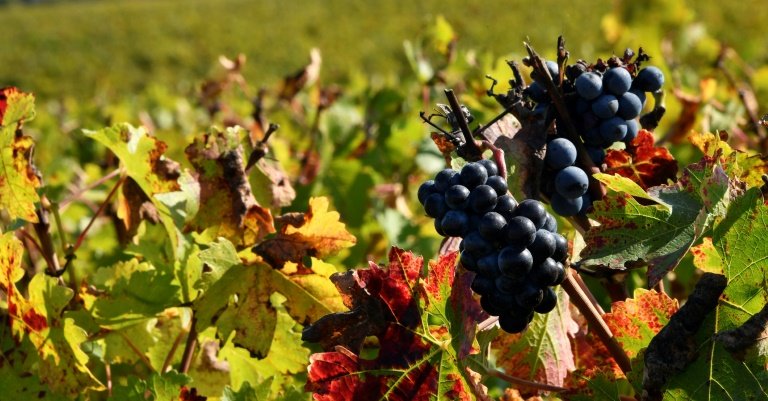
Torrid temperatures across much of France have made the past few weeks unbearable for many, but with grape harvests kicking off this week, the country’s winemakers say the heat could not have come at a better time.
“Grape vines like the sun,” said Bernard Farges, president of the wine grower’s association for the Bordeaux and Bordeaux Superieur appellations.
“It rained a lot last spring in nearly all winegrowing regions, especially in the south… so the vines aren’t suffering from the drought,” he said.
Agriculture Minister Stephane Travert told AFP on Monday that this year’s grape output was expected to be “higher than average” after production was hit by weather-related losses last year [ . . . ]
Continue at Source: Heat brings relief for French vineyards
Syrian anti-Assad May Skaf actress buried in Dourdan, suburbs of Paris
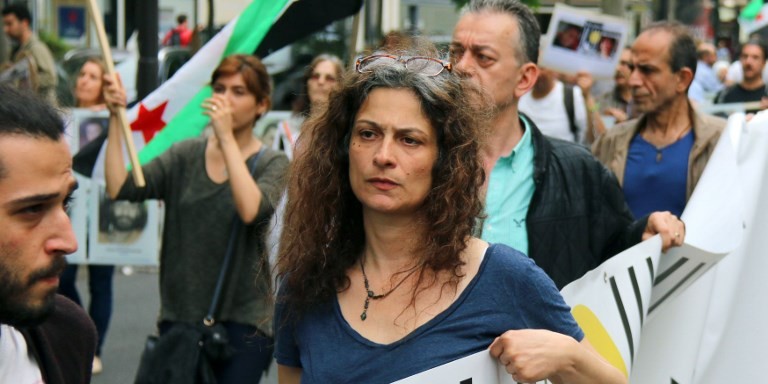
The actress May Skaf, one of the first Syrian artists to take a stand against the regime of Bashar al-Assad, who died at the age of 49 last weekend in the suburbs of Paris, was buried Friday in Dourdan (Essonne) to the south West of Paris.
Five to six hundred people, including Syrian figures from the world of cinema and culture, attended the funeral Friday afternoon at the cemetery of the commune of Dourdan, where many flags of the Syrian opposition floated. The coffin of this famous artist, who had left her country after a brief detention in 2013, in Jordan, then in France where she lived with her son Jude al-Zoabi, was covered with the green-white-black flag with red stars. “It will be a temporary resting place (…) until we all enter our Syria, democratic, fair and free,” said Jude al-Zoabi a few days ago on Facebook.
“I’m sure May never imagined where her path would take her, she believed in her ideas and took the path that respects her principles, I do not know if she knew she would have to give up her artistic career and to his interests in Jordan, “he said in his eulogy.A whole woman”May has become a star because she refused the glory, she refused to make money and to work with people who exploit her,” he added.
The actress was found dead in the night from Sunday to Monday at her home in Dourdan. His home was immediately sealed and an investigation opened, but the autopsy found a natural death, due to aneurysm, we learned from his relatives.
May Skaf had been living in Dourdan since 2015, living in the city with his son, like several other Syrian refugees, according to Mayor Maryvonne Boquet.
Syria has been ravaged by war since 2011. More than 350,000 people have been killed since 2011 in this conflict, which has become more complex with the involvement of foreign countries and jihadist groups in a fragmented territory.
Source: Syrian anti-Assad May Skaf actress buried in Dourdan, suburbs of Paris

