
Demonstrators sought to highlight similar cases in France.
Continue reading “In Paris, thousands defy police orders to protest death of George Floyd”
Demonstrators sought to highlight similar cases in France.
Continue reading “In Paris, thousands defy police orders to protest death of George Floyd”
LA VÉRIFICATION – Le professeur Philippe Parola, bras droit de Didier Raoult, l’a qualifiée de «farce». Au-delà, de nombreux scientifiques s’interrogent sur l’origine des données qui concluent à un excès de mortalité avec l’antipaludéen [. . .]
Continue at Source: Chloroquine: les critiques contre l’étude du «Lancet» sont-elles fondées?
McKay Coppins | The Atlantic
The president’s photo op outside St. John’s Church was emblematic of his appeal to the religious right.
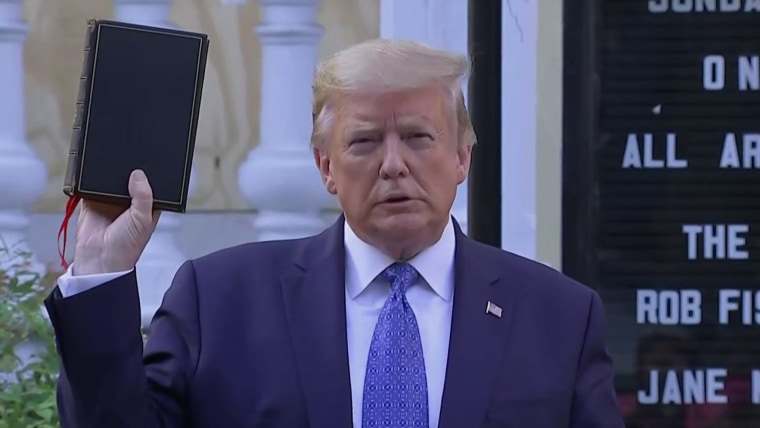
He wielded the Bible like a foreign object, awkwardly adjusting his grip as though trying to get comfortable. He examined its cover. He held it up over his right shoulder like a crossing guard presenting a stop sign. He did not open it.
“Is that your Bible?” a reporter asked.
“It’s a Bible,” the president replied.
Even by the standards of Donald Trump’s religious photo ops, the dissonance was striking. Moments earlier, he had stood in the Rose Garden and threatened to unleash the military on unruly protesters. He used words such as anarchy and domestic terror, and vowed to “dominate the streets.” To clear the way for his planned post-speech trip to St. John’s Church, police fired tear gas and rubber bullets into a crowd of peaceful demonstrators.
A few hours after the dystopian spectacle, I spoke on the phone with Robert Jeffress, a Dallas megachurch pastor and indefatigable Trump ally. He sounded almost gleeful.
“I thought it was completely appropriate for the president to stand in front of that church,” Jeffress told me. “And by holding up the Bible, he was showing us that it teaches that, yes, God hates racism, it’s despicable—but God also hates lawlessness.” Continue reading “Trump’s Biblical Spectacle Outside St. John’s Church”
US President Donald Trump suggested on Monday that he might use federal troops to end the protests that have erupted nationwide following the death of George Floyd, an unarmed black man who was killed in Minneapolis police custody. But to do so, Trump would need to formally invoke rarely used statutes known as the Insurrection Act.
“Mayors and governors must establish an overwhelming law enforcement presence until the violence has been quelled,” Trump said during brief remarks at the White House on Monday.
Continue reading “Can Trump ‘deploy the military’ to quell protests over George Floyd’s death?”Inaugurated in 1825, the Canal Saint-Martin stretches over five districts of eastern Paris. Once essential for transporting goods, it’s mainly used today by tour boats and pleasure cruises. Along its four kilometres, the canal with its nine locks lets both Parisians and tourists alike discover the French capital from a different perspective. FRANCE 24 went on board.
Source: Discovering Paris’s Canal Saint-Martin – You are here
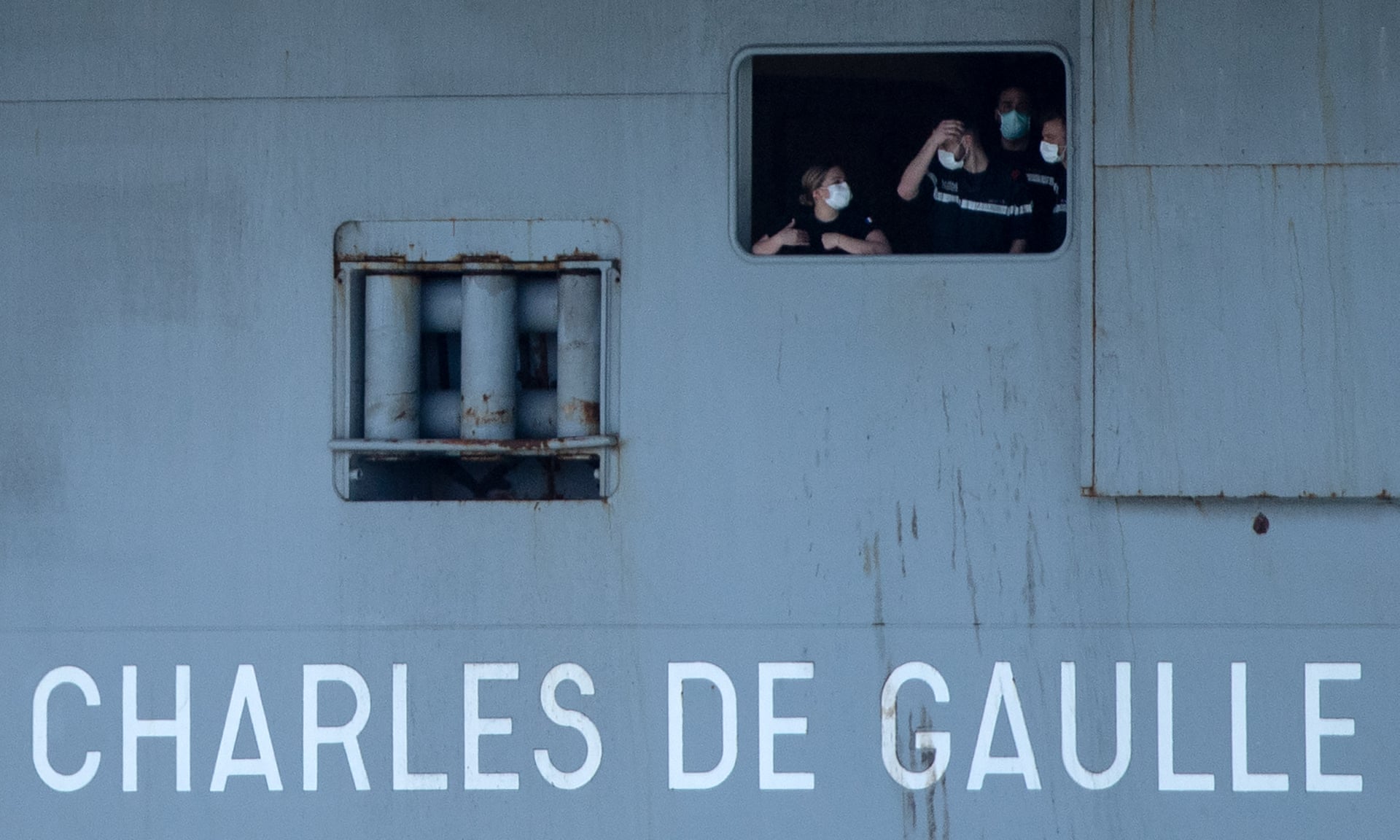
Two thirds of the nearly 2,000 sailors on this French aircraft carrier tested positive, but 48% of those were asymptomatic. | Read story at The Guardian

