Pope Leo signs first exhortation, ‘Dilexi te,’ focused on love for the poor

The document, which will be issued Oct. 9, can be seen as a companion document to “Dilexit nos,” the fourth and final encyclical issued by Pope Francis.

By Gerard ‘Connell

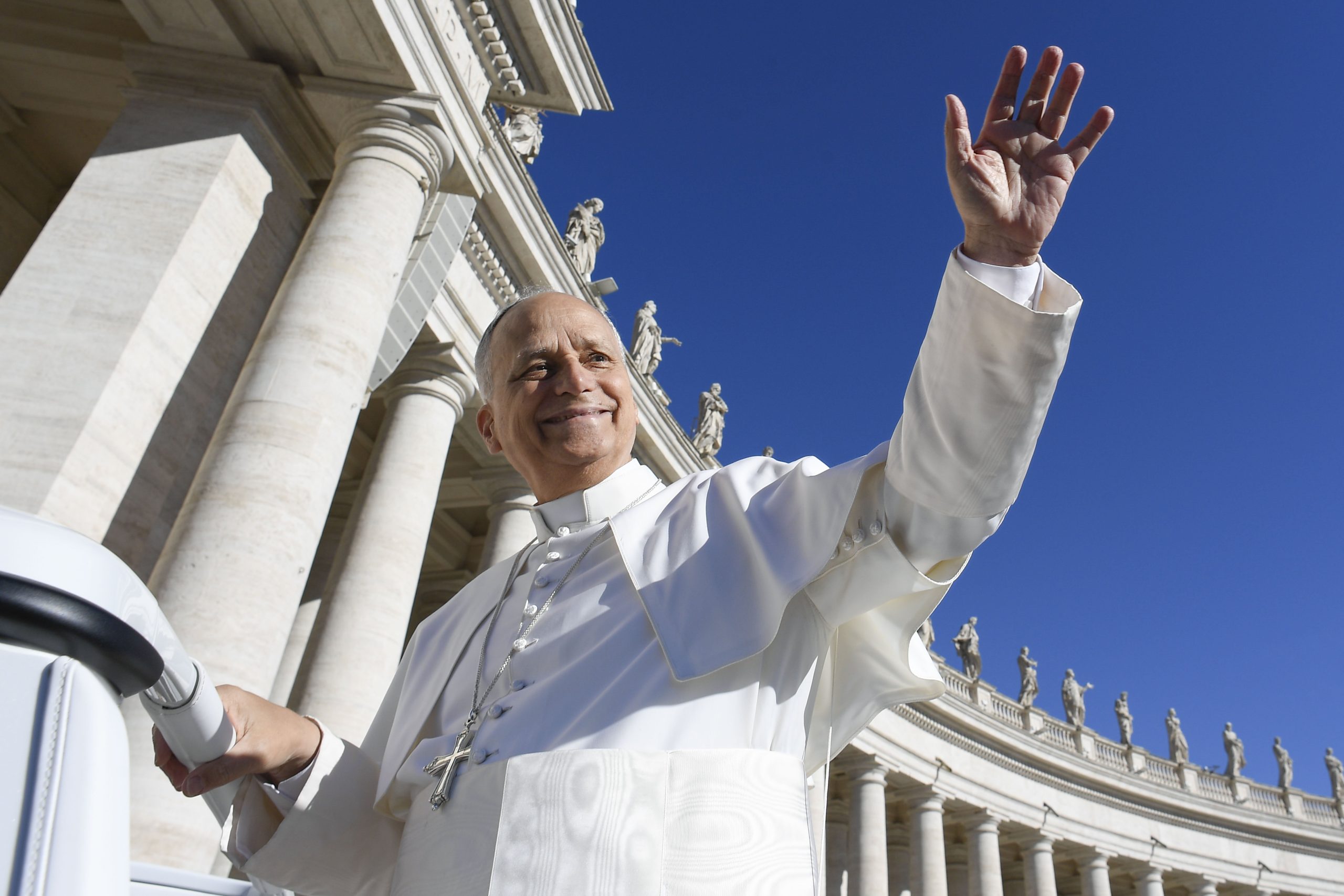
Pope Leo XIV this morning, Oct. 4, signed his first major document, an apostolic exhortation called “Dilexi te” (“I have loved you”), which will focus on love for the poor. The Vatican said it will be published next Thursday, Oct. 9, and emphasized that Leo signed it on the feast of St. Francis of Assisi, whose embrace of poverty is well known.

The title of the exhortation comes from Revelation 3:9, the last book of the bible. It can be seen as a companion document to “Dilexit nos” (“He loved us”), the fourth and final encyclical issued by Pope Francis on “the human and divine love of the heart of Jesus Christ,” published on Oct. 24, 2024. While that encyclical called believers to focus on the love of Jesus, this new document, begun under Francis and completed by Leo, emphasizes the call to believers to love the poor as Jesus did.

It is hardly surprising that Pope Leo should devote his first major document to the poor. Since his ordination in 1982 he has spent almost half of his priestly life, some 20 years, working as a missionary among the poor in Peru. Moreover, the fact that an early draft of the exhortation had been prepared during the last part of Francis’ pontificate, opened the path for Leo to complete it. Pope Francis also completed a document begun by his predecessor, Benedict XVI: “Lumen Fidei” was published on June 29, 2013.

Leo’s exhortation is expected to show his continuity with Francis in relation to the poor and the reality of poverty in today’s world. The first Jesuit pope had time and again emphasized that “the poor are at the heart of the Gospel,” and he showed not just in words but in multiple concrete ways his love for the poor, including ensuring that people in need were present at his funeral.

Leo, his Augustinian successor, has built on that original draft to produce his first apostolic exhortation. The document is about 40 pages (some 20,000 words) and is rooted in what scripture and church teaching say about the poor, and highlights the need for justice in today’s world.

Already, during his first five months as pope, Leo has spoken frequently about the poor, poverty in the world, and the impact of war and climate change in many countries across the globe. In his interview with Elise Ann Allen, senior correspondent for Crux, for her biography of him, for example, Leo significantly emphasized that “the continuously wider gap between the income levels of the working class and the money that the wealthiest receive” is contributing to the polarization in today’s world. He cited the fact that “C.E.O.s that 60 years ago might have been making four to six times more than what the workers are receiving, the last figure I saw, it’s 600 times more than what average workers are receiving. Yesterday the news [said] that Elon Musk is going to be the first trillionaire in the world. What does that mean and what’s that about? If that is the only thing that has value anymore, then we’re in big trouble.”

Pope Leo believes the church offers a different approach to inequality, as he explained in his homily to Caritas workers during Mass in Albano on Aug. 17, when he said: “I encourage you not to distinguish between those who assist and those who are assisted, between those who seem to give and those who seem to receive, between those who appear poor and those who feel they are offering their time, skills, and help. We are the church of the Lord, a church of the poor, all precious, all subjects, each bearer of a singular Word of God. Everyone is a gift to others.”

At the Jubilee audience this morning, Oct. 4, the American missionary pope again returned to the theme of poverty when he commented on the Gospel (Lk 16:13–14) that speaks about the challenge of serving God rather than wealth. He noted that some listeners mocked Jesus’ teaching on poverty because “his discourse on poverty seemed absurd to them. More precisely, they felt personally affected because of their attachment to money.”

He recalled how St. Francis of Assisi, a follower of Jesus, embraced evangelical poverty even at the cost of breaking with his family but, he said, St. Clare’s decision was “even more striking;  a young woman who wanted to be like Francis, who wanted to live, as a woman, free like those brothers.”

He described Clare as “a courageous and countercultural young woman,” who lived in a city that considered itself Christian but whose radical embrace of the Gospel appeared revolutionary. “Then, as today, one must choose! Clare chose, and this gives us great hope,” he said.

He concluded, “Let us pray to be a church that does not serve money or itself, but the Kingdom of God and his justice. A church that, like Saint Clare, has the courage to inhabit the city in a different way.” In this Jubilee Year, he said, “we must choose whom we will serve: justice or injustice, God or money.”

The Vatican said Pope Leo’s exhortation will be presented at a press conference on the morning of Oct. 9 by Cardinals Michael Czerny, prefect of the Dicastery for the Service of Integral Human Development, and Konrad Krajewski, the papal almoner. They will be assisted by Frédéric-Marie Le Méhauté, the provincial of the Friars Minor for France and Belgium, who will join the conversation by video call, and by Sr. Clémenceof the Little Sisters of Jesus, from the Tre Fontane community in Rome

Source: Pope Leo signs first exhortation, ‘Dilexi te,’ focused on love for the poor – America Magazine

New Pope Was Strong Supporter of Pope Francis, Say Friends

Pope Leo XIV
Pope Leo XIV

Rev. Mark Francis, a friend of Prevost since the 1970s, told Reuters the cardinal was a firm supporter of his predecessor’s papacy, and especially of the late pontiff’s commitment to social justice

By Joshua McElwee

VATICAN CITY (Reuters) — Robert Prevost, the choice of the world’s Catholic cardinals to serve as leader of the 1.4-billion-member Church, is the first pope from the United States and a relative unknown on the global stage.

Aged 69 and originally from Chicago, Prevost has spent most of his career as a missionary in Peru and became a cardinal only in 2023. He has given few media interviews.

He takes the papal name Leo XIV, and succeeds Pope Francis, who had led the Church since 2013.

Rev. Mark Francis, a friend of Prevost since the 1970s, told Reuters the cardinal was a firm supporter of his predecessor’s papacy, and especially of the late pontiff’s commitment to social justice issues.

“He was always friendly and warm and remained a voice of common sense and practical concerns for the Church’s outreach to the poor,” said Francis, who attended seminary with Prevost and later knew him when they both lived in Rome in the 2000s.

“He has a wry sense of humour, but was not someone who sought the limelight,” said Francis, who leads the U.S. province of the Viatorian religious order.

Prevost first served as a bishop in Chiclayo, in northwestern Peru, from 2015 to 2023, and became a Peruvian citizen in 2015, so he has dual nationalities.

Pope Francis brought him to Rome that year to head the Vatican office in charge of choosing which priests should serve as Catholic bishops across the globe, meaning he has had a hand in selecting many of the world’s bishops.

Jesus Leon Angeles, coordinator of a Catholic group in Chiclayo who has known Prevost since 2018, called him a “very simple” person who would go out of his way to help others.

Leon Angeles said Prevost had shown special concern for Venezuelan migrants in Peru, saying: “He is a person who likes to help.” More than 1.5 million Venezuelans have moved to Peru in recent years, partly to escape their country’s economic crisis.

In a 2023 interview with the Vatican’s news outlet, Prevost focused on the importance of evangelization to help the Church grow.

“We are often preoccupied with teaching doctrine … but we risk forgetting that our first task is to teach what it means to know Jesus Christ,” he said.

Prevost said during a 2023 Vatican press conference: “Our work is to enlarge the tent and to let everyone know they are welcome inside the Church.”

‘He knows how to listen’

Prevost was born in 1955 and is a member of the global Augustinian religious order, which includes about 2,500 priests and brothers, operates in 50 countries and has a special focus on a life of community and equality among its members.

He has a bachelor’s degree from Villanova University in Philadelphia, a master’s from the Catholic Theological Union in Chicago, and a doctorate in Church law from the Pontifical College of St. Thomas Aquinas in Rome.

Prevost first went to Peru as a missionary in 1985, returning to the United States in 1999 to take up a leadership role in his religious order.

He later moved to Rome to serve two six-year terms as head of the Augustinians, visiting many of the order’s communities across the world. He is known to speak English, Spanish, Italian, French and Portuguese.

Returning to Rome in 2023, Prevost generally did not take part in many of the social events that attract Vatican officials throughout the city.

Leon Angeles said he is a person with leadership skills, “but at the same time, he knows how to listen. He has that virtue.”

“The cardinal has the courtesy to ask for an opinion, even if it’s from the simplest or most humble person,” she said. “He knows how to listen to everyone.”

(Reporting by Joshua McElwee; Additional reporting by Marco Aquino in Lima; Editing by Keith Weir and Janet Lawrence)

Source: New Pope Was Strong Supporter of Pope Francis, Say Friends | Sojourners

Traditionalists who tried to overthrow Pope Francis wait for their moment at the conclave

For a long time, a sector of the Church directed and financed from the US attempted to depose the Vatican leader in order to impose its own identity-based ideology

By Daniel Verdu

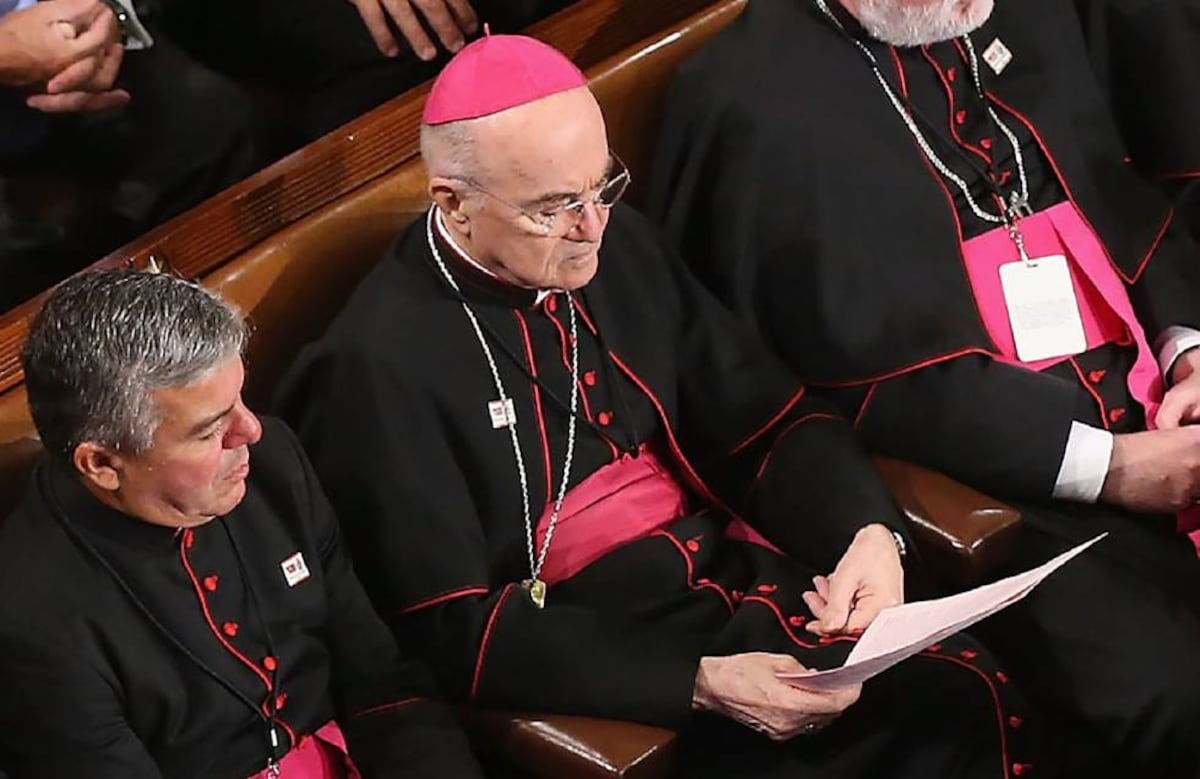
On the morning of August 26, 2018, while the Pope was visiting Ireland with the usual entourage of journalists and Vatican staff, the bomb dropped. Archbishop Carlo Maria Viganò, a former Vatican envoy in Washington between 2011 and 2016 and a heavyweight within the Curia, accused the Pontiff in an 11-page letter of having covered up the abuses of Cardinal Theodore McCarrick, and demanded his resignation. The violent tone of that letter and the accusations it contained were the culmination of a campaign that had begun a few years earlier within the Holy See to overthrow a Pope they considered too progressive, a heretic even. The attempted schism was directed and financed from the United States, where Donald Trump was spending his first term in the White House and in search of a cultural and ideological narrative capable of flourishing on the Judeo-Christian roots of the Western world. And the Vatican, from that perspective, could not be governed by a Pope who was an environmentalist, tolerant of homosexuality, an anti-capitalist, and, above all, extremely belligerent toward the anti-immigration policies that characterized Trump’s first presidency.

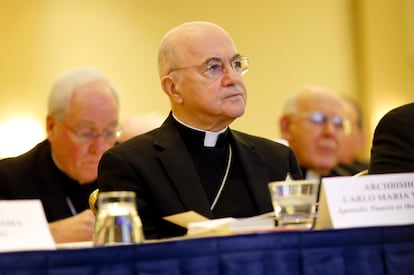
In this 2015 file photo, Archbishop Carlo Maria Viganó, Apostolic Nuncio to the U.S., listens to remarks at the U.S. Conference of Catholic Bishops' annual fall meeting in Baltimore.

There have always been tensions and internal struggles in the history of the Roman Catholic Church. Unity and avoiding schism were an obsession. But never in contemporary history had a Pope been so violently targeted. And, above all, it was completely unusual for the Pontiff’s enemies to come from the traditionalist sector, supposedly the keeper of the essence of Catholicism. Until then, such battles had been fought only by far-right groups like the Society of St. Pius X, founded by the rebel French archbishop Marcel Lefebvre, who was excommunicated in 1988 after ordaining four priests without Rome’s permission.

The symptoms had been clear for some time. Steve Bannon, Donald Trump’s chief advisor before his fall from grace, a sort of Elon Musk avant la lettre, settled into the penthouse of the Hotel De Russie on the luxurious Via del Babuino. From there, he began receiving Italian and European leaders who viewed the Pope unfavorably: from Matteo Salvini to Trump himself. Bannon attempted to open a sort of school of populism on the outskirts of Rome, increasing the pressure through sympathetic media. The American Cardinal Raymond Burke became the political arm of this new movement within the Vatican, and together with other cardinals such as the excellent theologian Gerhard Müller, they began to hatch a plan to expose Francis’s alleged lack of intellectual preparation.

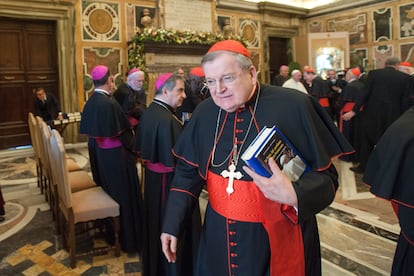
Former archbishop of St. Louis Cardinal Raymond Burke leaves the Clementina Hall during the Christmas greetings of the Roman Curia to Pope Francis on December 21, 2017 in the Vatican.

“It began early, in the summer of 2013, when it was already clear that many U.S. bishops didn’t recognize him as one of their own,” notes Massimo Faggioli, a professor in the department of theology and religious sciences at Villanova University in Philadelphia. “American conservatives thought that after John Paul II and Benedict XVI, their destiny was forever marked by neoconservatism. And the Pope didn’t allow it. That was his sin,” he adds.

In the United States, there are approximately 72.3 million baptized people, almost a quarter of the population. But the influence of Catholics has grown in recent years. A third of the members of Congress practice that faith, according to a study by the Pew Research Center. Vocations to one of the richest churches in the world have fallen more than anywhere else, and pedophilia scandals, with the now-famous Boston case, wreaked havoc. However, the obsession with the Vatican of the new White House occupants and neoconservative power circles has continued to grow.

One of the impressions that always haunted Bergoglio was that Benedict XVI’s resignation in 2013, despite having been a gesture of generosity and humility, had opened a rift in the Church that the conservative sector seized upon to wage its struggle. The fiction that was established was that if there were two men dressed in white strolling through the Vatican gardens, why not close ranks around the more conservative one? Ratzinger, an excellent theologian, though not skilled in personal relationships, never accepted that role. But some oversights and the influence of his personal secretary, Georg Gänswein, who was at odds with Francis, caused some slip-ups.

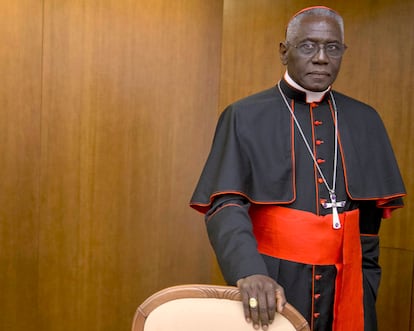
The height of tension came five years ago with the publication of a book that the Pope Emeritus was supposedly co-authoring with the ultra-conservative Cardinal Robert Sarah, in which he strongly opposed optional celibacy and, above all, the ordination of married men (From the Depths of Our Hearts). This was an issue on which Francis was due to address the synod on the Amazon, and which turned the publication into an act of interference.

Cardinal Robert Sarah in Rome on October 14, 2015.

Francis kept up the fight to the bitter end. On February 10, in fact, he sent a letter to the U.S. bishops (195 dioceses) denouncing the Trump administration’s program of mass deportations. The letter infuriated Tom Homan, known as the border czar. “He has a wall around the Vatican, does he not? I wish he’d stick to the Catholic Church and fix that and leave border enforcement to us,” he replied. “He never let himself be intimidated. He responded all those years with appointments, trips, documents. And the things he didn’t do, like the appointment of female priests, it was because he didn’t believe in it,” Faggioli argues.

The Joe Biden administration provided temporary relief, but the American Church itself was already deeply divided. “These are cultural and social universes that have grown in a different way. It’s a Catholicism that is more based on identity. That’s why we now find ourselves at a critical point with this conclave. There is a neoconservative movement that began in the 1980s. And the Vice President of the United States, J. D. Vance, is one of its exponents. They have a long-term strategy to return to a certain traditionalism that will not end with the conclave, no matter what.” In an ironic twist of fate, perhaps his way of dealing with this struggle, Francis dedicated part of his last day on this Earth to receiving Vance at the Vatican.

Source: Traditionalists who tried to overthrow Pope Francis wait for their moment at the conclave | International | EL PAÍS English

Interview: Pope Francis’ presence at COP28 climate conference in Dubai is ‘without precedence’ 

By Gerard O’Connell

“The pope’s presence at COP28 will be a historic event and without precedence in the history of COP,” Judge Mohamed Abdel Salam, a chief architect of the visit, said in this exclusive interview with Gerard O’Connell.

Pope Francis will travel to Dubai, the most populated city of the United Arab Emirates, from Dec. 1 to Dec. 3 to participate in COP28, the U.N. Climate Change Conference. He will address the summit on Dec. 2, as will the grand imam of Al-Azhar and chairman of the Muslim Council of Elders, Ahmed Al-Tayeb. On the following day, Dec. 3, the pope and the grand imam will take part in the inauguration of the Faith Pavilion, the first-ever hub for interfaith programming and engagement at COP.

“The pope’s presence at COP28 will be a historic event and without precedence in the history of COP,” Judge Mohamed Abdel Salam, the secretary-general of the Muslim Council of Elders, told me in an exclusive interview by Zoom from the U.A.E. on Nov. 4. The judge has played a key role along with the leaders of the COP28 presidency, the United Nations Environment Program and the Holy See in bringing faith leaders to COP28

“His Holiness is one of the pivotal players at the international level and one of the prominent faith leaders dedicated to this issue of climate change,” the judge said. He recalled how Pope Francis “issued the encyclical on the care of our common home [“Laudato Si’”] in 2015, on the eve of the Paris conference on climate change, and on Oct. 4, on the eve of COP28, he issued an important update document on this same topic, ‘Laudate Deum.’” For all these reasons, he said, the pope was invited to COP28, an invitation Francis willingly accepted.

COP28 stands for the 28th Conference of the Parties and brings together the countries that signed on to the U.N. framework convention on climate change launched at the Rio conference in 1992. Today, 198 Parties (197 countries plus the European Union) have signed on to the convention. They come together, usually every year, to determine responsibilities and assess measures taken in the fight against climate change. COP21, held in Paris in 2015, led to the Paris Agreement, which mobilized international action to limit the global temperature increase to 1.5 degrees Celsius above pre-industrial levels and to adapt to the existing effects of climate change.

Source: Interview: Pope Francis’ presence at COP28 climate conference in Dubai is ‘without precedence’ | America Magazine

Pope Benedict XVI’s secretary, advocate and confidant: What you need to know about Georg Gänswein

Archbishop Georg Gänswein is publishing a memoir of his years with Pope Benedict. But the archbishop is a compelling figure in and of himself.

By Jim McDermott

One of the central figures in the days surrounding Pope Benedict’s wake and funeral has been Archbishop Georg Gänswein, the pope’s longtime private secretary. It was Archbishop Gänswein who was at Benedict’s bedside when he died and reported that a nurse had heard Benedict say, “Jesus, I love you,” a few hours earlier; he also greeted mourners who came to visit Benedict’s body when it lay in state at St. Peter’s Basilica.

Later this week, he will be publishing a memoir of his years with Pope Benedict, Nothing But the Truth: My Life Beside Pope Benedict XVI. And while the book promises to tell the story of Benedict’s papacy from behind the scenes, Archbishop Gänswein is a compelling figure in and of himself. He has an amateur pilot’s license, loves the outdoors and plays tennis. As a young man he had long hair and listened to Cat Stevens and Pink Floyd. Working for Benedict, he aspired to be a “pane of glass,” allowing the “sunlight” of Benedict in without becoming visible himself. Yet his own good looks inspired fashion shows, magazine covers and stories around the world. After Benedict’s resignation, he worked simultaneously for both Benedict and Pope Francis in key positions, leading La Stampa to suggest he was “almost a ‘third pope.’” But in 2020, he was relieved of most of his Vatican duties after seeming to use Benedict to publicly undermine Francis.

Who is this paradoxical, controversial figure?

A childhood spent mining for meaning

Georg Gänswein was born in 1956 in a village in southwestern Germany. The oldest son of a blacksmith active in local politics, Gänswein saved for college by working as a mailman and dreamt of being a stockbroker. “My idea was that there was a lot of money being made and that you had to be bright and fast,” he told Süddeutsche Zeitung in 2007. But the more he considered that career, the more he wondered about what kind of meaning it would offer him. “I thought, O.K., if I can do all that and have money, what happens then?”

“Suddenly, existential questions took center stage,” he told the German magazine, leading him to the study of philosophy and theology. And the more he dug in, the more he came to believe that only as a priest could he fully enter into the deeper investigations of theology. “At some point I felt that I couldn’t drive at half speed, either I’d do it completely or I’d quit,” he said. “A little theology, that’s not possible. So, step by step, I approached the priesthood.” In 1976, he entered the seminary for the Archdiocese of Freiburg.

Gänswein: ‘The study of canon law felt to me as dry as working in a dusty quarry where there is no beer.’

After being ordained in 1984, Father Gänswein worked for a time as an associate pastor in his diocese before being assigned to get a doctorate in canon law at Ludwig Maximilian University of Munich. He initially hated it. “I had always studied gladly and easily,” he told Süddeutsche“but the study of canon law felt to me as dry as working in a dusty quarry where there is no beer. You die of thirst.” With the help of a good director, he produced a dissertation in 1993 on the ecclesiology of the Second Vatican Council.

Father Gänswein’s predecessor, then-Archbishop Stanislaus Dziwisz, had warned him that his most important job was as the pope’s gatekeeper, and in the early going, Father Gänswein admitted that navigating “the countless requests for private audiences and other encounters” was difficult. But a more unexpected and complex challenge for Father Gänswein was the massive media attention that he found himself receiving.

Almost from the start of Benedict’s papacy, commentators made a point of remarking on Father Gänswein’s good looks.

Almost from the start of Benedict’s papacy, commentators and others made a point of remarking on Father Gänswein’s good looks. The Italian press dubbed him “Gorgeous Georg”; in 2007, fashion icon Donatella Versace used him as an inspiration for her 2007 Clergyman Collection. And his handsome features frequently became a focus of stories during papal visits.

In describing a papal visit to the United Kingdom, John Hooper at The Guardian describes Father Gänswein as “A tall, athletically built man wearing a broad pink sash over his priestly black garb…the pope’s good-looking private secretary, who will no doubt become one of the stars of the four-day visit.” That same year, the Irish author Colm Tóibín called Father Gänswein “remarkably handsome, a cross between George Clooney and Hugh Grant, but, in a way, more beautiful than either.” When consecrated bishop early in 2013, the Italian edition of Vanity Fair put him on the cover of their January 2013 issue, with the headline “Father Georg—it’s not a sin to be beautiful.”

Benedict’s papacy suffered through a number of significant controversies—his citation in a speech at Regensberg of a 14th-century emperor who argued that the only thing that the prophet Muhammad “brought that was new…[were] things evil and inhuman”; clergy sexual abuse scandals; and the Vatileaks scandal, which would reveal that the pope’s own butler had for years been stealing correspondence between Benedict and Father Gänswein and then sold some of it to the press, out of a concern that Benedict himself was being kept in the dark about “evil and corruption” in the church. And Father Gänswein was always at his side.In 2007, he called the Regensberg speech “prophetic” and the protests that ensued around the world “crude reactions.” In recent days, he has said that Benedict was the “father of transparency” and “the decisive figure” in matters of sexual abuse.

And in his new book he describes Benedict’s papacy as frequently attacked by the devil. In an excerpt from La Reppublica about the Vatileaks scandal, he writes, “It’s obvious, as Pope Francis would say, that the bad guy, the evil one, the devil doesn’t sleep.”

Pope Francis: divided and dividing loyalties

In December 2012, Father Gänswein was appointed the head of the papal household and appointed to the rank of archbishop. This brought with it an even larger role in the Vatican—responsibility for every public papal audience in Rome, papal visits with heads of state and bishops, any papal travel within Italy and care for many of the Vatican’s buildings. It seemed to signal an ever deeper trust on the part of Benedict.

But behind the scenes Father Gänswein had been privy to a secret that no one else yet knew: Benedict was planning to resign. Over the last week, Archbishop Gänswein has begun to reveal details of Benedict’s last few months and how he pleaded with Benedict not to resign. “Holy Father, it’s impossible,” he recalls telling the pope. But Benedict would not be swayed. “This is a decision I’ve made…it’s not a thesis to be discussed,” the late pope said.

For some, that cast Archbishop Gänswein’s promotion into a different light. John Cornwell wrote in Vanity Fair that the appointment was a way for Benedict to be able to remain informed on what was going on in the Vatican. “Since this was one of Benedict’s last big appointments before his resignation,” Mr. Cornwell notes, “it would be difficult for the new Pope to countermand it without seeming disrespectful.”

In his early years working with Francis, his opinion of him seemed generally positive.

As it turns out, upon his election Pope Francis decided not to live in the papal apartments or to hold his normal meetings there, but instead took a room at the Casa Santa Maria guest house. And while Archbishop Gänswein remained the head of the papal household after Benedict’s resignation, he moved with the pope to the converted monastery in the Vatican Gardens that served as Benedict’s retirement home.

In his early years working with Francis, his opinion of him seemed generally positive. In 2015, while noting “a degree of unpredictability in [Francis’] action…the surprises at the last moment that are never lacking,” Archbishop Gänswein praised Francis’ work ethic, saying: “He is an extraordinary phenomenon. He works for two, and is 78 years old.” He also praised his spiritual life; “the coherence between his very active life and the time he dedicates to prayer is impressive; it is a contemplative life.”

A year later, Gänswein gave a talk at the Pontifical Gregorian University in which he argued that Francis and Benedict represented a new vision of the papal office, “a de facto extended Petrine ministry—with an active member and a contemplative member.” When questioned about this, Francis corrected the idea, telling reporters, “There is only one pope.”

That moment captured well the apparent conflict within Father Gänswein in his new position. As Pope Benedict’s private secretary, Father Gänswein made it his mission to “be transparent as glass so as not to conceal Benedict XVI in any way.” He came to identify with Benedict so intimately that when meeting a writer critical of Pope Benedict, he said, “Oh, you don’t like us.” Now he was being asked to serve a new pope with his own vision while also being the main caretaker of the well-being and legacy of his predecessor.

Archbishop Gänswein has spoken critically of the pope’s Synod on Synodality, saying he believes the texts generated “will not be fruitful.”

In 2017, he read a letter from Benedict at the funeral of Cardinal Joachim Meisner, who had criticized Francis’ apostolic exhortation “Amoris Laetitia,” praising Cardinal Meisner’s faith “even if the boat [of Peter] has taken on so much water as to be on the verge of capsizing.” It was widely interpreted as an attack on Francis. Some wondered whether it and other moves like it truly came from Benedict at all. Just a year earlier, Benedict had reaffirmed “my obedience to my successor” and said he felt “a sense of deep communion and friendship” with Francis.

Speaking to the puzzling contradiction of this, David Gibson recently noted in Slate that Benedict “continued to write, to send letters. But how much of that was Gänswein? Especially in the last couple years, it’s hard to tell how much of that was Gänswein pulling the strings.”

In 2020, Cardinal Robert Sarah and Pope Benedict together put out a book pushing for clerical celibacy at exactly the time Francis was publicly considering the possibility of married clergy in discussions at the Amazon synod. When the publication of this book made waves, Archbishop Gänswein insisted Benedict was not a co-author; he had simply contributed a chapter to the book. But in fact, other than a preface and conclusion, the book had only two chapters, the first of which was by Benedict.

Almost immediately, Archbishop Gänswein vanished from public functions of the papal household. This was explained at the time as “due to an ordinary redistribution of the various commitments and duties of the prefect of the Papal Household.” Later Archbishop Gänswein revealed that Francis had effectively removed him from the job, asking him to devote all his energy to caring for Benedict, which Archbishop Gänswein said “pained” him and felt like a “punishment.”

In February 2022, Archbishop Gänswein spoke critically of the pope’s Synod on Synodality, saying he believes the texts generated “will not be fruitful,” and implied that the concept behind the synod was not Catholic. “If I want a different Church that is no longer based on revelation, so to speak, if I want a different structure of the Church that is no longer sacramental but pseudo-democratic, then I must also see that this has nothing to do with Catholic understanding, with Catholic ecclesiology, with the Catholic understanding of the Church.”

In his new book—advance copies of which began to be sent out just hours after Benedict’s funeral—Archbishop Gänswein seems ready to issue more criticism of Francis alongside defending Benedict’s legacy. He told the German paper Die Tagepost that Francis’ restrictions on the Latin Mass hit Pope Benedict “very hard”: “I think it broke Pope Benedict’s heart to read that motu proprio.” He also writes that Benedict did not agree with the way that Francis answered questions on abortion and homosexuality in his 2013 interview with La Civiltà Cattolica editor in chief Antonio Spadaro, S.J., and said that he himself was never able to achieve “a climate of trust” with Francis.

The theologian Massimo Faggioli said of Archbishop Gänswein’s decision to do a tell-all book and publish it within days of Benedict’s death “[at] the very minimum, it’s very bad taste.” Mr. Gibson, who has written a book about Pope Benedict, agrees: “He’s being incredibly divisive. But Benedict took a lot of flak, and he’s going to defend his man.”

Source: Pope Benedict XVI’s secretary, advocate and confidant: What you need to know about Georg Gänswein | America Magazine

Pope Francis’ Covid message: We must let ourselves be touched by others’ pain.

Pope Francis is the head of the Catholic Church and the bishop of Rome

By Pope Francis

In this past year of change, my mind and heart have overflowed with people. People I think of and pray for, and sometimes cry with, people with names and faces, people who died without saying goodbye to those they loved, families in difficulty, even going hungry, because there’s no work.

Sometimes, when you think globally, you can be paralyzed: There are so many places of apparently ceaseless conflict; there’s so much suffering and need. I find it helps to focus on concrete situations: You see faces looking for life and love in the reality of each person, of each people. You see hope written in the story of every nation, glorious because it’s a story of daily struggle, of lives broken in self-sacrifice. So rather than overwhelm you, it invites you to ponder and to respond with hope.

These are moments in life that can be ripe for change and conversion. Each of us has had our own “stoppage,” or if we haven’t yet, we will someday: illness, the failure of a marriage or a business, some great disappointment or betrayal. As in the Covid-19 lockdown, those moments generate a tension, a crisis that reveals what is in our hearts.

Continue reading “Pope Francis’ Covid message: We must let ourselves be touched by others’ pain.”