Albert Camus and María Casares

In 1949, Albert Camus, one of the most influential philosophers and writers of the 20th century, penned a heartfelt letter to María Casares, a prominent actress and his muse during a pivotal period in his life. Camus, renowned for his contributions to existentialism and absurdism, was navigating both personal and intellectual transformations in the aftermath of World War II. The post-war years were marked by profound reflections on human existence, morality, and freedom, themes that permeated Camus’s works like The Stranger (1942) and The Plague (1947). His letter to Casares reveals the intimate emotional shifts that paralleled his philosophical journey, highlighting how personal relationships could inspire new perspectives and resilience.

María Casares, a Spanish-French actress, became an important figure in Camus’s life in the late 1940s. Their relationship, both passionate and intellectually stimulating, influenced Camus’s outlook during a time when he was grappling with the human condition in a world recovering from devastation. Casares herself was renowned for her theatrical talent and was a muse for many artists during the mid-20th century. The quote from Camus’s letter reflects a deeper humanistic side of the philosopher, showing how love and companionship could soften existential angst and ignite a renewed sense of admiration for life’s complexities.

The late 1940s also marked a vibrant period in the arts and philosophy, where figures like Camus were shaping cultural dialogues that continue to resonate today. His relationship with Casares was emblematic of a broader post-war search for meaning and authenticity in art and life. This era saw a flourishing of literary and artistic expression, as creators sought to make sense of the recent past and envision a hopeful future. Camus’s work and personal experiences during this time remain critical for understanding the intellectual currents of the 20th century, particularly in French literature and existential thought.
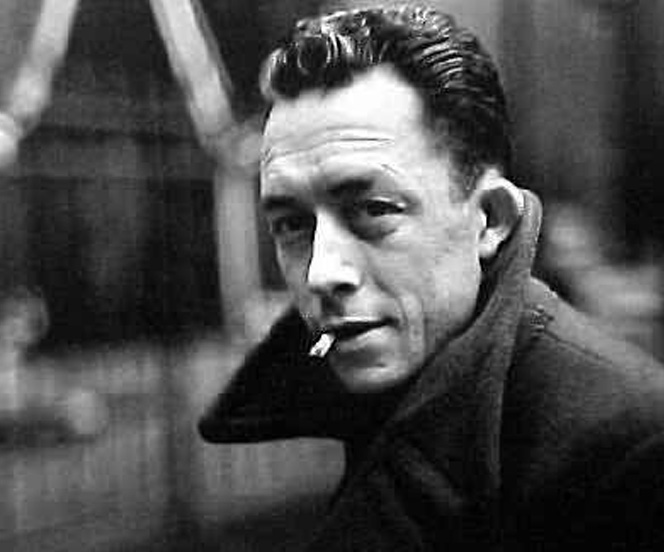
Man of our times: Why Albert Camus matters today – The Debate

He’s been gone six decades but after 2020, it feels like French literary great Albert Camus matters more than ever. The year began with tributes for the 60th anniversary of the French existentialist icon’s premature death in a car crash. Then came Covid-19. And readers locked down the world over dusted off that go-to guide, “The Plague”, to make sense of the randomly unexpected. We ask our panel about the re-reading of a novel set in Camus’s native Algeria in the wake of World War II. But it’s not just “The Plague” that is timeless.

In all of the Nobel literature laureate’s plays, essays and novels, protagonists struggle to understand where they belong in times of upheaval. Just look at today. We live in an age of alienation, identity politics, the loss of a sense of self. A bit like in “The Stranger” – also set in colonial Algeria.

What would Camus have made of 2020 and the age of digital discourse, where powered by tribal echo chambers, we judge and sometimes sentence our peers? When Covid-19 is long behind us, “The Fall” will still be worth re-reading. We tell you why.

Produced by Alessandro Xenos, Juliette Laurain and Imen Melllaz

Source FRANCE 24: Man of our times: Why Albert Camus matters today – The Debate

Hear Camus’ 1946 lecture: “The Human Crisis” – even more profound today

Albert Camus delivered this lecture on “La Crise de l’homme” in 1946 at Columbia University, on his only trip to the United States. The lecture is presented here in English translation.

Camus
““I think my life is of great importance, but I also think it is meaningless.” – Albert Camus

00:20 Introduction by Shanny Peer, Director of the Maison Française
05:35 Introduction by Alice Kaplan, Professor of Yale University
11:50 Reading of ‘The Human Crisis’ by Viggo Mortensen
56:50 Discussion with Viggo Mortensen, Alice Kaplan and Souleymane Bachir Diagne

On April 28, 2016 a reading by Viggo Mortensen of a speech by Albert Camus, and roundtable discussion with Viggo Mortensen, Alice Kaplan and Souleymane Bachir Diagne Albert Camus originally delivered this lecture on “La Crise de l’homme” on March 28, 1946, to a very full house at the McMillin Academic Theatre at Columbia University,

on his first and only trip to the United States. 70 years later, to celebrate Camus’s visit to New York and Columbia, his lecture will be delivered in a dramatic reading by the actor Viggo Mortensen, in a version newly translated into English by Alice Kaplan.

Continue reading “Hear Camus’ 1946 lecture: “The Human Crisis” – even more profound today”

The fascination with Fidel Castro of Saint-Germain-des-Prés 60s

In the 1960s, French intellectuals and artists, Gérard Philipe Jean-Paul Sartre, flocked to Havana, fascinated by the Cuban revolution. For them, Fidel Castro, died on the night of Friday to Saturday, will incarnate “hope”, at least for a time.Fidel Castro arrived when Stalinism was beginning to decline in ideals. He embodied hope, as something salutary, “said Jean Daniel, co-founder of L’Observateur, which then journalist with L’Express, met with Cuban in 1963. When on 1 January 1959, on the balcony of Santiago city Hall Cuba, Castro proclaimed the “beginning of the Revolution,” it is not yet a Marxist. But it is undeniably left and represents a great hope to some intellectuals after the Stalinist debacle.

https://www.youtube.com/watch?v=G1H_2G3UDY4

Read Full Story: The fascination with Fidel Castro of Saint-Germain-des-Prés 60s