Directed by Arnaud Desplechin, Tromperie (also known as Deception, 2021) is a deeply introspective and thought-provoking adaptation of Philip Roth’s novel. Featuring Denis Podalydès and Léa Seydoux in the lead roles, the film explores the complex, often ambiguous relationship between a writer and his mistress, seamlessly blurring the boundaries between fiction and reality. With its richly layered dialogue and philosophical tone, Tromperie invites viewers into an exploration of love, memory, and the blurred lines of storytelling.
Set in the 1980s in London, the film follows Philip (Denis Podalydès), a successful American novelist, and his unnamed lover (Léa Seydoux), a married woman who visits him frequently in his writing studio. Their interactions unfold as a series of emotionally charged dialogues—sometimes tender, sometimes confrontational—exploring themes of desire, fidelity, and the power dynamics at play in creative relationships.
As Philip’s bond with his mistress deepens, he also reflects on his past relationships, including those with his wife, former lovers, and even characters from his own literary works. Tromperie delicately weaves the line between reality and fiction, challenging the viewer to question where the truth ends and the imagination begins.
The Nature of Fiction and Reality – The film encourages the audience to grapple with the distinctions between what is real and what Philip conjures in his mind as a writer.
Desire and Betrayal – The emotional undercurrents of love, passion, and infidelity form the crux of the story, reflecting the complexities and contradictions inherent in human relationships.
Exile and Identity – Set against the backdrop of Philip’s life as an American writer living in Europe, the film examines themes of cultural alienation, belonging, and the internal conflicts that shape both his personal and creative identity.
Premiering at the Cannes Film Festival in 2021, Tromperie earned critical acclaim for its sophisticated storytelling and the exceptional performances of its leads. Léa Seydoux delivers a mesmerizing portrayal of emotional depth, while Denis Podalydès embodies the intellectual yet morally complex character of Philip with subtle brilliance.
Unlike conventional narratives driven by action, Tromperie thrives on the power of words, remaining true to Roth’s literary style. Its cerebral approach and philosophical layers make it a captivating watch for those who appreciate dialogue-heavy, thought-provoking cinema. With its blend of romance, intellectual exploration, and literary elegance, Tromperie stands as a remarkable adaptation of one of Roth’s most compelling works, inviting reflection on the nature of love, identity, and the boundaries of storytelling.
Latvian director Gints Zilbalodis’s enchanting eco-fable about a lone moggy in a flooded world is a triumph of imagination over budget
By Wendy Ide
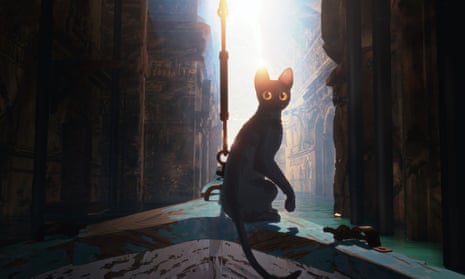
Animation as a medium and fairytales as a subject have always been natural bedfellows. You only need to look at Disney’s princess industrial complex to understand that sparkle-dusted happily-ever-after is big business; that the appetite for this particular breed of magical thinking (plus associated merchandising and sequined tat) is enduringly healthy. But the beguiling, Oscar-winning, dialogue-free Latvian animation Flow, which tells of a solitary cat who must learn to cooperate with a mismatched pack of other species to survive a catastrophic flood, is a little different.
The fairytale here is not the story the picture tells – it’s the story of the film itself. Created by a tiny team with a minuscule budget of about £3m, and rendered entirely on the free open-source 3D software Blender, Flow has been on a journey: its premiere in Cannes; the haul of prizes (54 to date), culminating in the Oscar for best animated feature – that is the stuff of film industry fantasy.
While the limited budget certainly shows on screen at times, it also gave director Gints Zilbalodis a considerable degree of creative freedom. With more money comes compromise and consensus film-making, plus a tendency to spoon-feed the audience rather than challenge them. Flow, however, embraces mystery: we see a disaster unfold in the same way the animals do – with no warning or context.
Zilbalodis has chosen not to explain the recent history of what seems to be a post-apocalyptic but stunningly verdant, geographically unspecified world. There are signs, in the lush forest, of human habitation and the remnants of civilisation. The cat lives in a house that appears to have once been home to a kitty-obsessed sculptor. Feline statues of varying sizes stand like sentinels in the grounds; a half-finished carving still rests on a workbench. But whether the former inhabitant has been relocated or is long since dead – perhaps along with the rest of humanity – is left open to the audience to interpret, and your reading of the background to the story very much depends on how bleakly apocalyptic your worldview is.
The cat’s happy solitude in the abandoned building is interrupted by a sudden environmental disaster: rapidly rising flood waters submerge the house and the forest surrounding it. A last-minute reprieve comes in the shape of a drifting sailboat, but the cat is outraged to discover that the vessel must be shared with another passenger – an unflappable and permanently chilled-out capybara. As the boat drifts, it takes on other creatures: an acquisitive ring-tailed lemur with a weakness for shiny trinkets; a wise but haughty secretarybird; and an excitable goofball of a dog.
One of the most distinctive elements of Zilbalodis’s vision is his decision to let his animals remain animals, instead of attempting to squeeze them into the mould of personhood. The character design and animation of the creatures are where the film’s meagre budget is most evident, and yet behavioural details are minutely observed. The cat – a neat, slinky, self-contained little black moggy – is pure feline, from the insouciantly twitching tip of its tail to its testy chirrup of annoyance (all the animal sounds are real, rather than voice actors cosplaying) at having to share a space with other critters. As an alternative to stamping human personalities on them, Zilbalodis instead encourages us to see elements of ourselves in the animals.
Being a self-taught animator accustomed to working on his own (his previous feature film, Away, was an entirely solo project created on his computer), the director has revealed in interviews that he identifies most with the self-sufficient cat, who must learn to cooperate with others. And anyone with a tendency to hoard accessories and to overpack when travelling will feel a kinship with the lemur.
An eco-parable, Flow is not exactly mining new thematic territory; from Wall-E to Cartoon Saloon’s My Father’s Dragon to The Wild Robot and numerous Studio Ghibli pictures, animated movies dealing with imminent climate collapse are relatively plentiful. However, the approach of Flow, with its animals’-eye, in-the-moment immediacy and its resistance to cutesiness and anthropomorphism, is bracingly fresh and unexpected. The animation, meanwhile, transcends its financial constraints to achieve moments of shimmering, heart-swelling loveliness.
Deliberately enigmatic in approach, with its focus on tiny, cat-level details and a provocative hint that the end of humanity may not be the end of the world, Flow doesn’t hammer home a single message. Other takeaways include the need to work together to survive, the value of adaptability – and that cats will always push stuff off tables given half the chance.
Björn Andrésen’s journey from ‘the most handsome boy in the world’ to a reflective artist reveals the deep and lasting impacts of early fame on his personal and professional life.
By Denise Massone
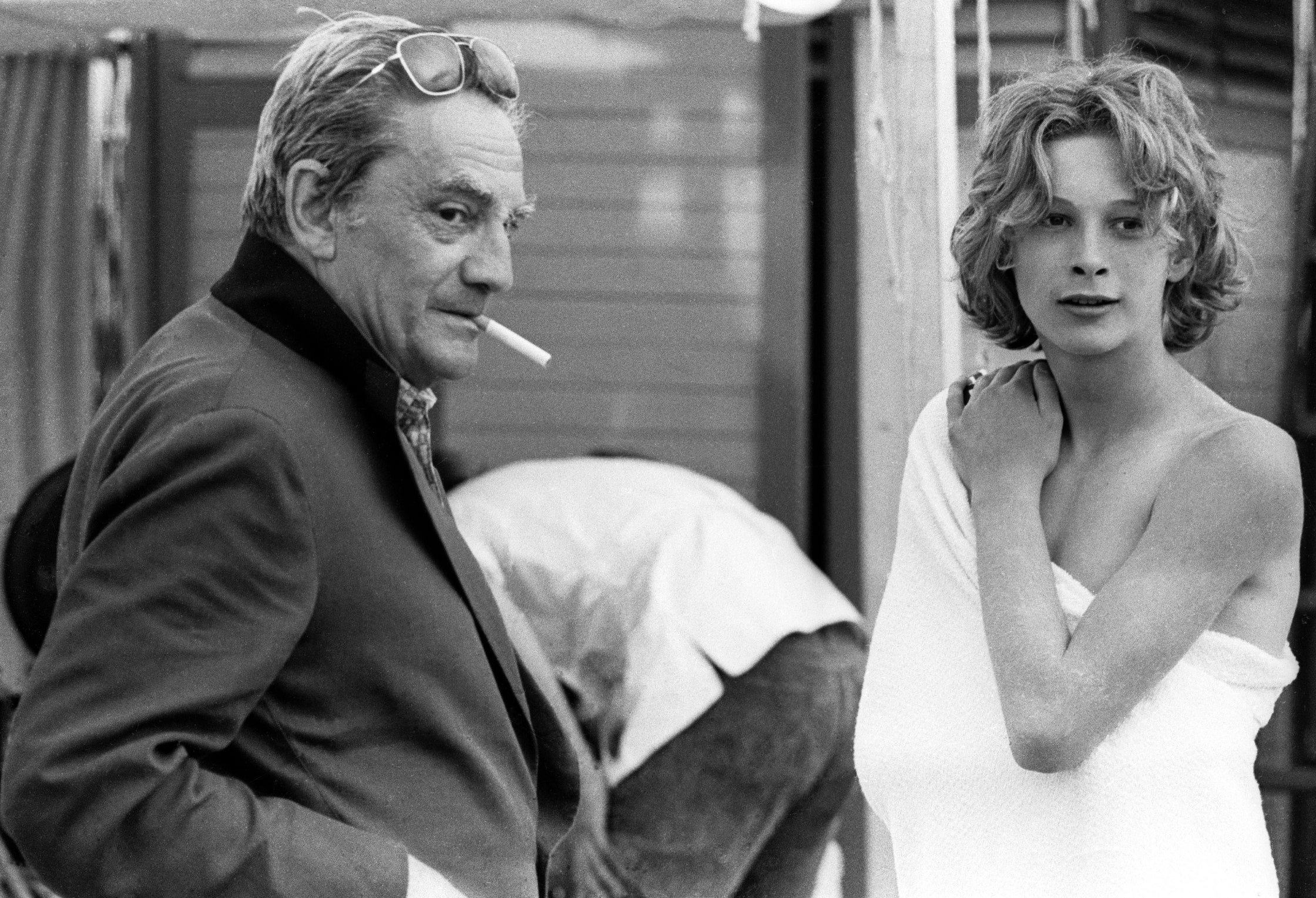
The label of “most beautiful boy in the world” was attributed to him by Visconti during the London premiere of the film. With the presentation of “Death in Venice” at the Cannes Film Festival, there was a global amplification of this vision. Andrésen’s beauty, defined by the director as “absolute beauty, like the angel of death,” with his delicate features and ethereal aura, captured the attention not only of Visconti but also of the entire crew from the start. For years, the production of the film had been looking for the right person for the role of Tadzio, who had to be played by a very young boy, with pure and androgynous beauty.
The choice of Björn Andrésen was the result of extensive research across Northern and Eastern Europe by Visconti, who viewed many young actors. When Andrésen entered the audition room, held in Stockholm, Visconti no longer needed to look any further: he had found his Tadzio. The photos and immediate filming that the crew took of the fifteen-year-old during the audition, including nude ones, became famous and immediately made the young man very embarrassed.
After the release of “Death in Venice,” Andrésen’s performance was acclaimed, and his physical appearance inspired audiences worldwide, not to mention a whole generation of manga artists in Japan. The most famous Japanese designer to take inspiration from him was Riyoko Ikeda, who took inspiration from Björn’s appearance for the renowned character of Lady Oscar in the manga “The Roses of Versailles”. From that moment, the young actor became a cultural icon and the first Western idol in the history of Japan.
The fame and morbid attention that followed the success of the film were the beginning of a nightmare for Björn, as he became a young teenager left alone, embodying for everyone only an object to be admired, such as a statue or a work of art. There was no slightest interest in who he really was and what he thought.
The 2021 documentary titled “The Most Beautiful Boy in the World,” made by Swedish independent filmmakers Kristina Lindström and Kristian Petri, explores the complexity of Björn’s life and the effects of early fame on his personal and professional life. This documentary film shows how the acclaimed beauty and celebrity influenced his already difficult childhood, marked by the lack of knowledge of his father and the loss of his mother in tragic circumstances, at just eleven years old. Björn lived for some time in boarding school and then went to live with his grandmother, a narrow-minded woman who immediately pushed him toward the world of entertainment to get rich. Björn himself says in the documentary, “My grandmother wanted a famous grandson,” and while the boy always looked for affection from his grandmother, she also pushed him to associate with important wealthy people to profit from her grandson’s beauty. These characters were interested in Björn’s presence as a trophy to display during their social gatherings. From that moment on, the young adolescent’s tendency towards depression and alcoholism was born.
Andrésen struggled for much of his life with the expectations and pressure resulting from his public image, which more often than not confliced with his reality as a boy who needed affection and his desires. After “Death in Venice” he faced periods of darkness and great pain, including family tragedies, a long period of alcoholism, and the incessant difficulty of managing a celebrity that arrived too soon, in solitude. That shade of sadness always present in his gaze became memorable, evident to others in every moment of public or private life, and an expression of his internal struggles.
The young actor, growing up, also explored other art forms such as music, but his identity remained inexorably linked to the iconic character of Tadzio. His life and career, after that role, have been a conflictual path, but also strong possibilities for personal growth and a profound understanding of pain. He had to fight against the public’s obsession with his beauty and against that morbid desire that made him stop being a person in the eyes of the world. Today, remembering what he had to go through in those moments, he refers to the people around him as “bats around him.”
After his short musical period, Andrésen continued to work in cinema and also on television, participating in a variety of projects. Andrèsen’s filmography includes his film debut in “En kärlekshistoria” (1970), followed by a series of Swedish films such as “Bluff Stop” (1977), “Den enfaldige mördaren” (1982), and “Lucifer sensorimmer-gult og sort ” (1990), demonstrating his ability to play different genres and roles. And on television, he participated in “Finding Tadzio” and “Maskrosbarn” (1989).
In recent times, Björn made an appearance in the horror film “Midsommar” (2019), directed by Ari Aster. He managed to bring an unforgettable performance to the screen, which rekindled the interest of filmmakers in his figure as an actor. Björn Andrésen’s career reflects his evolution as a person and as an artist. He has always sought roles that contrasted expectations and distanced him from the eternal image of a boy-object. Despite all his past suffering, the actor has left an indelible mark on the world of cinema and continues to be a major figure in popular culture. Today Björn Andrésen is a man who has found his own wisdom and inner peace. He has managed to acquire a way to live with the past and at the same time accept himself, despite the shadows that have long shrouded his figure. His story represents a powerful warning of how beauty, success, and fame can be both precious gifts and curses if not managed with empathy, the presence of true affection, and balance, and how the entertainment industry can profoundly influence the life of a human being.
A major contradiction of Jean-Luc Godard’s 60s films is that for all their difficulty, abrasiveness, unconventionality, and “distance,” they are largely pleasurable works. We routinely speak of Godard’s subversive tendency, but until he went full-on Maoist and created the militant cinematic Dziga Vertov group with Jean-Pierre Gorin, even his most out-there films—including Marxism media primer Le Gai savoir and One Plus One, a Rolling Stones studio session interrupted by revolutionary vignettes (both from 1968)—contain some kind of sexy fun by way of either radical chic or the near constant “playful” reinvention of cinema, even when in the form of a visual or narrative assault on the audience, and even when Anna Karina isn’t on screen. Just look at the commercial recuperation of anti-commercial Weekend (67), a film in which Godard went far out of his way to completely alienate his audience. Somehow rotten bourgeois protagonists, a reel-long single take traffic jam of blaring horns and mangled corpses, and a cannibalistic denouement weren’t enough, because if you hated it you were just as square as the film’s irredeemable anti-heroes. The film gained immediate supporters and is a “classic” to this day, an irony so ironic that I need go no further in explaining it.
Though it doesn’t mean his other films are compromises or failures (certainly not!), only two or three of Godard’s 60s films escape this trap; among them perhaps the most significant and ripe for reevaluation is Les Carabiniers (1963). Universally trashed by critics and audiences alike upon its release, Les Carabiniers still hasn’t been successfully rescued or rediscovered in recent years. What caused it to be so rejected then and forgotten now? For starters, the film is true to itself. Its subject is the ugly, violent, and wastefully stupid collective “mobilization” known as war, and the film enacts—relentlessly, absurdly, bitterly—that ugliness, that violence, that wasteful stupidity. Unlike virtually every other war movie, even every anti-war movie, Les Carabiniers refuses to pull punches by offering courageous heroism, thrilling action, or manipulative emotionality to offset war’s suffering and horror. This is not because the film is particularly violent or graphic, but because everything about it is off-putting, from its characters, two troglodytic dolts named Michel-Ange and Ulysse (Patrice Moullet and Marino Masé), forced to go to battle by order of the King, and their shallow, materialistic wives Venus and Cleopatre (Genevieve Galea and Catherine Ribeiro); to the unceasing parade of cowardly, graceless skirmishes that often end in systematic slaughter or disgusting, juvenile violation (nearly all the women in the film have their skirts lifted up by soldiers with their guns); to the film’s overall look, over-processed black and white that comes out as a drab, desolate palette of grays, grays, and grays, rendering the barren, wintry landscapes of ruined rural cottages and personality-less apartment complexes all the more drearily depressing.
Les Carabiniers is a satiric fable in the aggressive tradition of Alfred Jarry (Ubu Roi is its obvious point of reference)—following through on its opening Borges quotation, everything in the film has been simplified (but not abstracted) for maximum bluntness. The miserable characters shout at each other in monosyllabic grunts (a typical exchange: “Shit!” “Why?” “Because”), and it’s not a coincidence that the only one who speaks out against the mindlessness of war is also the only one who speaks in Godard’s patented language of complex allusion. Michel-Ange and Ulysse look forward to and then enjoy their military service because of the boundless plunder promised them (“Hawaiian guitars, elephants”), and their unfeeling brutality comes through not only in the atrocities they commit, but in their banal descriptions of the atrocities in their postcards home, which Godard took from actual war-time correspondences: “A lot of blood and corpses . . . We kiss you tenderly.” Godard in turn depicts Michel-Ange and Ulysse’s tragic misadventures as banally as possible. Long takes are employed for demoralizing, drudging marches through forests that end in mass execution—the climax of these marches are as dryly portrayed as the long walks to them. Actual documentary war footage counterpoints Godard’s documentary-style fictional events, and here’s where Les Carabiniers becomes an extremely important moment in the demystification of the war movie, and the movies themselves. Godard accomplishes this by calling attention to the unreality of representations of war, be they documentary or fictional. On the micro level he painstakingly and accurately matches sound effects with their specific sources (“we never had a Heinkel roar for a Spitfire,” he explained in his first and only retort to critics after the film’s disastrous reception), but then cuts these noises in and out of the mix so abruptly and artificially that they can’t help but be noticed as separate images and sounds. Brecht is, as usual, the presiding spirit of Godard’s strategies. The characters are cinematic constructs and not “real” people or soldiers—all unknown actors, Moullet and Masé possess the odd physical exaggerations of a silent era comedy duo (the former a bizarre, freakish bumpkin boy, the latter a cigar-smoking, unshaven lug), while Galea and Ribeiro’s pancaked makeup and overdone lipstick make them ghostly, childlike apparitions straight out of a Griffith two-reeler.
As such, Les Carabiniers’ fable-like characters are images of images. But more than that, their understanding of the world is a misunderstanding of images. Michel-Ange attends his first movie and tears down the screen pawing at the naked woman in a bathtub projected there. Later he and Venus place two-page magazine ads for bras and men’s underwear over their own anatomies. And in what is the film’s most notorious sequence, Michel-Ange and Ulysse unpack a briefcase containing their spoils of war, categorized postcards of monuments, natural wonders, animals, paintings, and women they take to be deeds for the real things. The scene goes on for more than ten minutes, an appropriately exhausting metaphor for the bottomless commodization of life by societies and individuals ready to abstract the world into a collection of conquerable objects. The last commodity, of course, is war itself, which is why Godard refuses to make his film just one more palatable illustration of war. If we think of the world as images, then people are merely images, and therefore disposable; if we think of images as images, and not reality, we set our priorities straight; and, with respect to the influence of images and the reality they pretend, if we make our images bullshit-free maybe we can begin to look at the world they represent without the corrosive illusions that keep us in their potentially infantilizing, desensitizing power.
A Perfectly Parisian Soundtrack Will Make You Want a Croissant
by Stacy Nguyen
As though Blake Lively and Anna Kendrick were not enough reason to get us to watch A Simple Favor, director Paul Feig’s mystery thriller also features an insatiable musical playlist lined with the best sounds of French pop. In a movie about lust, revenge, and betrayal, the music has to be good. Your obsession with the soundtrack may have already started with the trailers themselves, which use Saint Privat’s mischievous bossa nova-enhanced “Poisson Rouge” and Coeur de Pirate’s sultry “Crier Tout Bas.”
The film’s music selection encompasses emotionally charged new and old French sounds. Besides Saint Privat and Coeur de Pirate, it showcases a heated track by popular rapper Orelsan (“Changement”) and an impassioned ballad by jazzy singer-songwriter Zaz (“Les Passants”). In addition to newer musicians, A Simple Favor also draws on ’60s nostalgia, noticeably using romantic Brigitte Bardot songs, such as “Une Histoire de Plage” and “La Madrague.” The soulful songs are especially befitting given that the film is neo-noir, a genre that often uses moody, haunting music to tell stories.
Pour a glass of red wine and envision yourself listening to an old-timey record player at a French cafe — here is the entire soundtrack for A Simple Favor for your listening pleasure.




 Pas De Merde