

Reviewed by Roger Lewis | Saturday February 20 2016
One thing you can say about the British, we don’t have much patience with abstractions and causes. We are too practical. Virginia Woolf was a rarefied creature, God knows, but her last diary entry, before she walked into the River Ouse, was about what she and Leonard were going to have for tea — haddock and sausage meat.
Things are very different over on the Continent, where hard facts are shaken off for massive amounts of airy-fairyness — or what Sarah Bakewell, in her enjoyable and authoritative group biography of the existentialist movement — calls “a dangerous, irrationalist mysticism”. Eavesdrop on Simone de Beauvoir (1908-86) and Jean-Paul Sartre (1905-80), for example, in the cigarette smoke of a Montparnasse or Left Bank café, and should they have been talking about, say, coffee or cocktails, discussion might typically spiral away up into the clouds to be about the iniquities of international trade in beans or fruit, followed by a stream of elegant associations about colour and fragrance.
That’s to say, professional European philosophers like to go from the specific to the general, and then on to the arcane and the metaphysical. Sartre and de Beauvoir, for example, adored the student riots in Paris in 1968. The barricades “demanded nothing and everything”. What on earth is that supposed to mean? Another profound statement bandied about in this period was equally as vacuous, if such a thing is possible: “All consciousness is consciousness of something.” Perhaps you needed to be on drugs?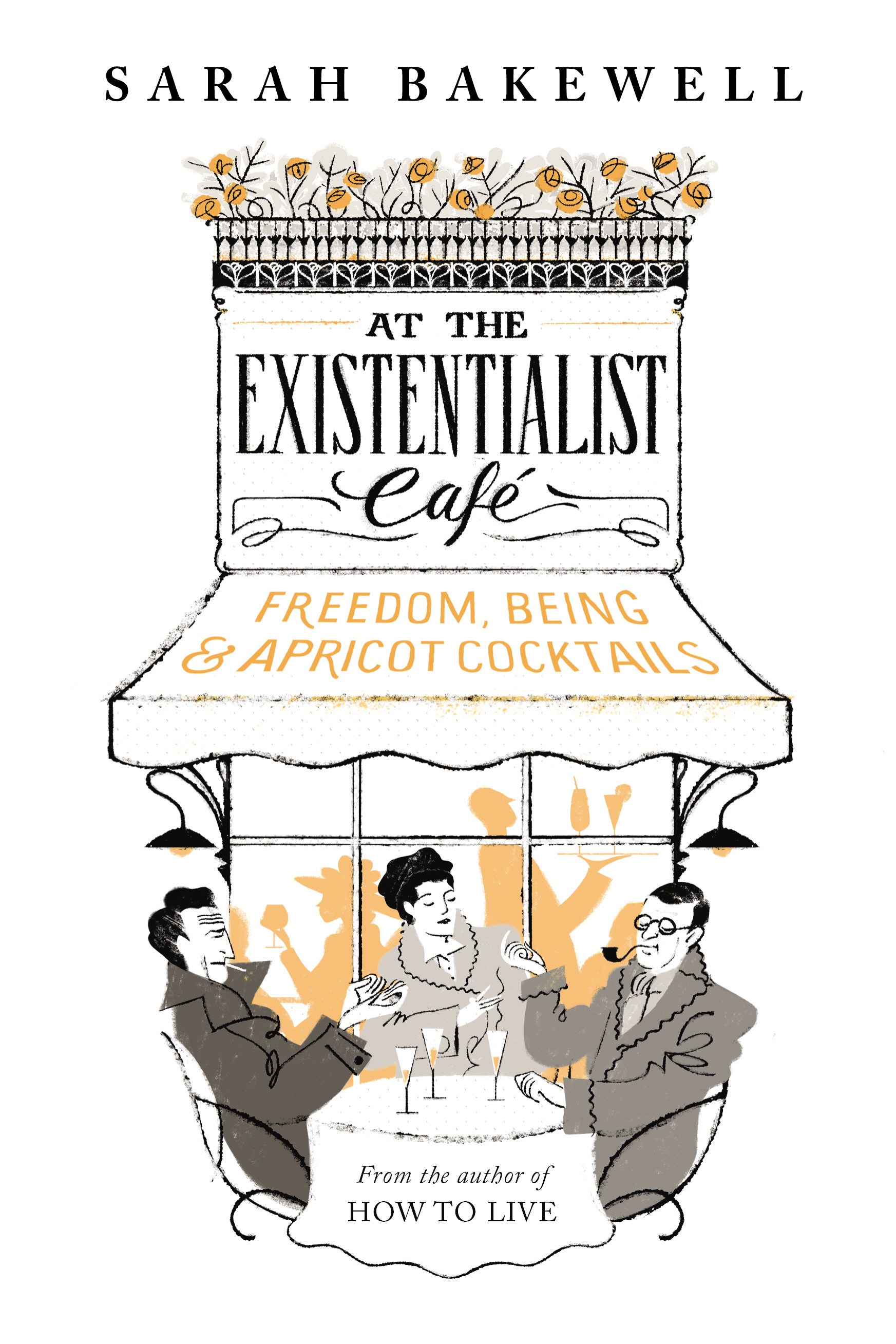
Bakewell came across these existentialists as a student in Essex. “They asked big questions about what it means to live an authentic, fully human life” — to which I would respond: what do you mean by big, what do you mean by a question, what do you mean by authentic, and what do you mean by full? Because to me, existentialism, “a philosophy of expectation, tiredness, apprehensiveness, excitement”, is incredibly adolescent and egotistical. In their Parisian cafés, Sartre and his colleagues thought it clever to pick quarrels, make difficulties, produce books that were “almost entirely unreadable”, and cleave to the notion that “for one who exists his existing is the supreme interest”.
Kierkegaard said that (does it lose something in translation? His name means “churchyard” by the way), and the existentialists also borrowed from “the anguished novelists of the 19th century” — by which I assume Bakewell specifically means the anguished, histrionic characters in 19th-century novels: Heathcliff, Raskolnikov, Alec D’Urberville.
Sounding off like mad, Sartre aped such figures and exuded an “air of intellectual energy and confidence”, says Bakewell, which made people overlook the fact he was a one-eyed midget who still lived with his doting mother. The “brilliance of his mind” got the girls into bed — and I do wonder if the point and purpose of being a French philosopher was a pretext for lots of sex. Bakewell almost implies as much: “Olga was married to Sartre’s former student Jacques-Laurent Bost, Sartre was sleeping with Bost’s sister Wanda, and de Beauvoir had retired to conduct a long, secret affair with Bost.” Bakewell describes Sartre as “a sex addict who didn’t even enjoy sex”.
“People overlooked the fact that Sartre was a one-eyed midget living with his mother
When she got wind of this, needless to say, Iris Murdoch, who in 1953 wrote the first full-length book on Sartre, was on the cross-Channel ferry at the double, keen to experience “free love with bisexual abandon” with which to pad out her novels. Despite all the sexual abandon they were not a harmonious band: “Sartre fell out with Albert Camus, Camus fell out with Merleau-Ponty, Merleau-Ponty fell out with Sartre, and the Hungarian intellectual Arthur Koestler fell out with everyone and punched Camus in the street.”
There was also a sinister and political dimension to existentialism. Issues of “what it meant to be free” struck a chord after the Nazi occupation, when, as Bakewell says, “many had good reason to forget the recent past and its moral compromises and horrors”.
If people had been cowards and collaborators — so what? “You choose who you will be,” said the existentialists. A man has every right to “constantly invent his own path”. It is interesting how antisocial this stance is, and as a fine upstanding example of such a citizen, Sartre fell head-over-heels for Jean Genet, a thief, vagrant and male prostitute. “Freedom alone can account for a person in his totality,” wrote Sartre in his 700-page encomium, Saint Genet, which attempted to justify and ennoble criminality.
Sartre also thought that “to see things fully . . . to gain freedom” his philosophy should encompass drugs, though when he took mescaline he had nightmare visions of snakes, fish, toads, vultures and beetles. For months he thought he was being followed down the street by a lobster. Maybe it was only Murdoch in an orange coat?
If existentialism appealed to the craven, the philosophy of “new beginnings” also made sense to Nazi sympathisers, when they were reinventing Germany after the First World War. Martin Heidegger, author of the influential Being and Time (1927), who in April 1933, as the rector of Freiburg University, sacked colleagues whom the regime identified as Jews, said that people must combat “the disappearing powers of authentic humanity” and rise above “a narrow-minded attachment to possessions and familiar scenes” by devoting themselves instead to the overpowering destiny of the Fatherland.
Violence was simply going to be a way of “being decisive and resolute, in carrying through the demands history was making upon Germany”. Heidegger lived until 1976, unapologetic and claiming to have been misunderstood. However, as Bakewell says, what his work boiled down to was “a call to Nazi obedience”. Serves him right if he is remembered today chiefly as a rhyme in a Monty Python song about “Heidegger, Heidegger, was a boozy beggar . . .”
Sartre, in his turn, fell for communism, believing that it was a creed for “the alienated, downtrodden, thwarted and excluded”. Anything that was against bourgeois privilege, he was for — though Sartre was pretty bourgeois himself, his late father being an officer in the navy. Indeed, you feel with these characters that, for all their pontificating, what they are fighting against are their personal middle-class backgrounds, the decorum and respectability. De Beauvoir, for instance, in The Second Sex (1949), was full of complaints about “the limits of her existence”. Neither she nor Sartre believed in marriage, “with its strict gender roles, its hushed-up infidelities and its dedication to the accumulation of property and children”. I myself have been married for 34 years and little of this has yet come my way.
Existentialism didn’t catch on in England, except briefly in 1956 with the publication of Colin Wilson’s The Outsider about the alienated strangers in literature. As Bakewell says: “It helped that Wilson himself was a publicist’s dream. Not yet twenty-five years old, he looked gorgeous, with abundant hair falling over one brow, a firm jaw, pouting lips and a chunky existentialist turtleneck.”
We have regarded it as an undergraduate fad that is to be swiftly grown out of. If we see life as futile, we’ll have a good laugh about it. If we are told we are held down by constraints — well, tradition, manners, taste, decorum, old habits may well be bourgeois niceties but they do count for something and they help hold back the chaos. The existentialist (actually surrealist) notion that “anxiety is the dizziness of freedom”: keep that for your Left Bank pretentiousness, where the golden rule, as I see it, was that no one knew quite what they were talking about.
Source: At the Existentialist Café: Freedom, Being and Apricot Cocktails by Sarah Bakewell

 Pas De Merde