Montmartre: Can Paris’s art and cabaret district survive Covid-19?

The Paris area of Montmartre is known for its artists and cabarets, dating back to the days when it was a haven for the likes of Van Gogh and Picasso. It’s normally packed with tourists but since Cov…

Source: Montmartre: Can Paris’s art and cabaret district survive Covid-19? – Encore!

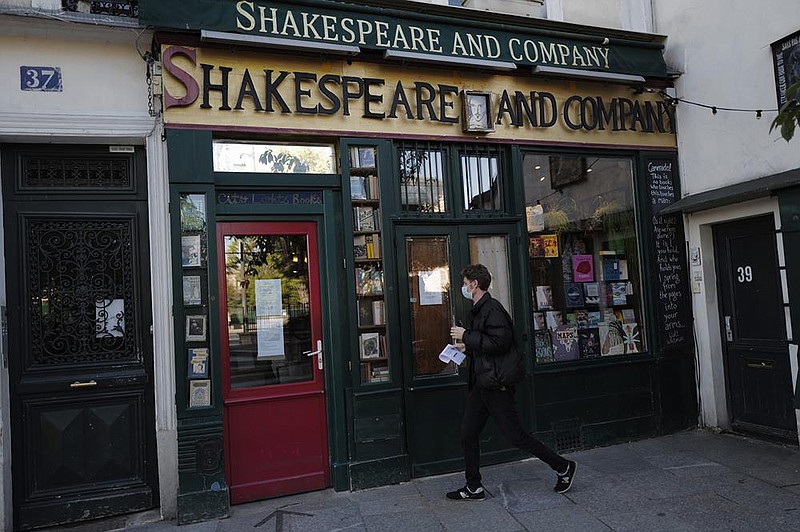
Iconic Paris bookshop asks for help amid virus losses

Shakespeare & Co., the iconic Paris bookstore that published James Joyce’s “Ulysses” in 1922, is appealing to readers for support after pandemic-linked losses and France’s spring coronavirus lockdown put the future of the Left Bank institution in doubt.

The English-language bookshop on the Seine River sent an email to customers last week to inform them that it was facing “hard times” and to encourage them to buy a book. Paris entered a fresh lockdown on Oct. 30 that saw all non-essential stores shuttered for the second time in seven months.

“We’ve been [down] 80% since the first confinement in March, so at this point we’ve used all our savings,” Sylvia Whitman, daughter of the late proprietor George Whitman, said.

Since sending the email appeal, Whitman says she has been “overwhelmed” by the offers of help Shakespeare & Co. has received. There have been a record 5,000 online orders in one week, compared with around 100 in a normal week — representing a 50-fold increase. Continue reading “Iconic Paris bookshop asks for help amid virus losses”

Paris to shut cafes and bars to curb Covid-19 spread as infections rise

Bars and cafes in Paris, placed on maximum coronavirus alert Monday, will be shuttered for two weeks under new measures to fight the rapid spread of the epidemic

With the rate of new infections, hospitalisations and deaths accelerating months after the lifting of a nationwide lockdown, new rules on social distancing will enter into force starting Tuesday.

“These are braking measures because the epidemic is moving too fast,” Paris police chief Didier Lallement told journalists. “From tomorrow, all bars will be closed.”

Bars and cafes have continued to draw large crowds often flouting physical distancing and mask-wearing guidelines.

Health Minister Olivier Véran announced last week that only improved Covid-19 infection rates could prevent closure of the capital city’s trademark bars and cafes [ . . . ]

Continue at FRANCE24: Paris to shut cafes and bars to curb Covid-19 spread as infections rise

ANALYSIS: Is France heading back into lockdown?

Health minister Olivier Véran says that tougher measures cannot be excluded. Photo: AFP

Until the last few days Emmanuel Macron, Jean Castex and members of their government insisted that a second nationwide “confinement” would be economically and socially and educationally catastrophic. It must be avoided at all costs.The government’s tone has changed somewhat, despite the tough, regionally-varied restrictions imposed last week. The Prime Minister, Jean Castex, said on France 2 TV on Thursday that the country could face the same kind of crisis which forced the first Covid-19 lockdown in March if people did not start to behave more responsibly.The health minister, Olivier Véran, said on Sunday that the government “does not want to close down the country” but tougher, nationwide restrictions for the late October school holidays or Christmas “could not be excluded”.


A group of seven senior doctors wrote in the Journal du Dimanche that harsh measures were needed immediately if France was to avoid a second wave of the virus which would be worse than the first. On present trends, they claimed, the number of Covid patients entering intensive care would match the late March-early April peak – about 650 a day – by the end of October and “could reach 1,200 a day by mid-November”. Continue reading “ANALYSIS: Is France heading back into lockdown?”

Paris Is About to Change

The city was hit hard by the pandemic, but French leaders know transformation is necessary.

The pandemic hit Paris hard. It hit poor Paris suburbs harder. Paris had already staked its future on merging with a wide ring of banlieue towns to form the new Metropolis of Grand Paris—an environmentally resilient 21st-century capital. But the coronavirus made clear how urgent that transformation really is.

Last year, more than 38 million people visited Paris. This summer, international travel bans sent hotel occupancy down 86 percent. The greater Paris metropolitan area has seen economic activity fall by more than 37 percent during the pandemic compared with the same period last year. In Île-de-France, the region that metropolitan Paris calls home, 100,000 jobs have been lost since mid-March.

The strict national lockdown from mid-March to mid-May did succeed in reducing infections, hospitalizations, and deaths. But after it was eased, the virus began to spread once more. Though current hospitalization rates remain manageable and death rates are relatively low, the number of new cases has risen alarmingly in recent weeks, with cases surging in the Paris metropolitan area. On August 27, Prime Minister Jean Castex declared 21 of France’s 101 administrative departments, including Paris and its neighboring departments, COVID-19 “red zones.”
Continue reading “Paris Is About to Change”