Worst of heatwave yet to come as France braces for ‘terrible’ Tuesday

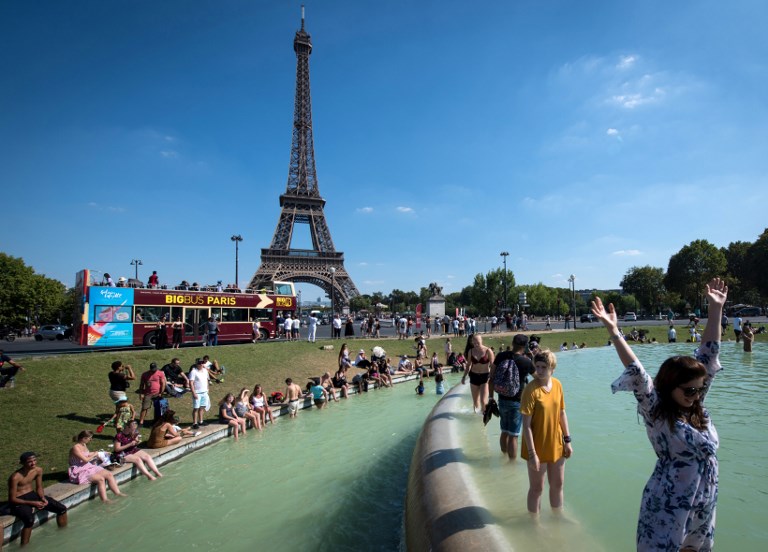
France’s heatwave is set to continue, with the hottest weather yet expected on Monday and Tuesday across the country.On Monday, temperatures could soar up to around 40C according to France’s national weather agency Météo France. France’s met office has issued heatwave weather warnings for 67 departments out of 101 in France – a record first reached in June last year – and has warned against storms in the country’s southeast in the afternoon, Le Parisien reported.

“The heatwave continues tomorrow Monday, with very high temperatures which will be difficult to bear. Be careful of storms on the southeast in the afternoon with a risk of hail,” the weather forecaster wrote on Twitter.

On Monday, the hottest parts of France will be in the southwestern regions, with temperatures in some cities reaching 36C in Toulouse and 37C in Bordeaux.

On Tuesday, Paris and the country’s northeast and centre will be the most affected by the heat, with Lyon and Paris sweltering under 36C.

Meteorologist Guillaume Séchet, creator of the site meteo-paris.com, is referring to Tuesday as a “terrible day with 38-39C in Ile-de-France and highs of 40C around Bourges and Auxerre”.

There will be a gradual decline in temperatures in the south-east of France on Tuesday but it will remain very hot.

Fortunately, the mercury is expected to drop considerably by Wednesday and Thursday.

“All of a sudden, we will lose 10C in 24 hours in the North and return to a more normal 23 to 24 C in the second half of the week,” Guillaume Séchet told Le Parisien.

France’s scorching weather is also causing air pollution levels to soar.

On Monday, traffic is being reduced in both Lyon and Paris to cut down on the smog with cars belonging to the most polluting category of vehicles being banned.

Similar measures were taken for three days in Paris in July.

Speed limits have also been lowered throughout the Ile de France region around Paris and in the east of the country.

Like much of Europe, France has been hit by a heatwave over the past week – which is already turning into the third hottest since temperatures have been recorded.

Last week, four nuclear reactors were forced to close in order to avoid raising the temperature of rivers whose water is used to cool reactors and then returned.

On Saturday, the southern town of Béziers in the Hérault department reached 41.3C. It was the hottest day in France since a deadly heatwave in 2003, that killed thousands of elderly people.

Source: Worst of heatwave yet to come as France braces for ‘terrible’ Tuesday – The Local
6 French Honeymoon Ideas You Should Consider Instead of Paris 

France has so much more to offer.

There are few things not to love about Paris. From the history, to the architecture, to the language and the food, it’s always at the top of honeymooners’ wish lists. But Paris is hardly the only honeymoon spot in France, and if you’re the kind of couple who like to do things a bit differently, we encourage you to set your sights beyond the City of Lights. Getting outside the big city will illuminate all sorts of charming aspects of French culture, from the joys of a cozy aprés-ski in the mountains, to eating fresh oysters in the seaside villages of Brittany. So when it comes to planning your honeymoon in France, there are plenty of places to love—and be in love.

French Alps

Dramatic landscapes, outdoor adventure, charming villages—if these sound appealing to you, perhaps you should consider a trip to the French Alps. Flying in and out of Geneva is probably the easiest way to get there from the States, and from there you are in prime position to explore Mont Blanc, Chamonix, Verbier, and Megève. The L’Hermitage Paccard is a decadent experience with unparalleled views of the Alps, and the W Verbier has a bit more of a scene going on in case you want to have more options by way of restaurants and nightlife. The Cheval Blanc in Courchevel is the region’s grande dame of hotels, and the fifty-five room Four Seasons Megève has all the walnut-paneled walls and fireplaces you’d expect from a luxury property in this neck of the woods. Obviously winter sports are the region’s main draw (“apré-ski” is a French term, after all), but these little towns also have a dedicated community of hikers and mountaineers in the warmer months. Wherever you end up staying, your concierge will be able to arrange all sorts of beautiful hikes and such so you can make the most of your stay [ . . . ]

Continue reading at BRIDES: 6 French Honeymoon Ideas You Should Consider Instead of Paris | Brides


 Listen to Pas De Merde’s Chanson du Jour | More stories on FRENCH MUSIC


An expat’s guide to Paris

Paris allows you to discover its secrets slowly. It kept my wife and me at bay in the 1990s when we lived and worked here. It ran down boulevards when we chased it. It hid behind copies of the newspaper Le Figaro and the magazine Paris Match. It vanished into clouds of café steam.

The city was everywhere, except where we happened to be. Until the day when, out for breakfast, we bit into tartines instead of croissants. And the day we put on shoes for a walk instead of sneakers. Paris was burning away its mist of strangeness, and we were starting — just beginning — to understand.

Kathy and I planned to revisit the city early last fall. It had been decades since we had learned what an expat learns about daily life and culture, about eating out and getting around. Would our memories and knowledge be useless — or at the very least, gnawed at, by years back in the States?

I started jotting things down. I scratched my head. I found that I was working, without realizing it, on a sort of guide.

It would have American-in-Paris tips for travelers in several categories. I would try to focus them as much as I could for short-term tourists. And when I was done, we would test all the advice during our week of revisiting. Here is what we found:

Daily life and culture

On our return trip here, Kathy and I were reminded how T-shirt-and-ballcap-casual our life in America had become.

Unless you're a jogger, leave the trainers at home.
Unless you’re a jogger, leave the trainers at home. (Arvind Garg / Getty Images)


We knew we had some relearning to do when it came to Paris’ rites and rituals. We remembered a simple rule of thumb: The city will open up to you in a thousand small ways if you can blend in and play by a few of its rules.

  • Paris protects its daily traditions, such as greeting store owners on entering and leaving, perhaps by saying “Bonjour, madame,” instead of just “Bonjour,” and by respecting at least some small-scale formalities between strangers while, at the same time, shaking hands or double-kissing just about everyone you know. Though we frequently failed, we tried to keep these formalities in mind.
  • Do your best to roll with the slower pace in ticket lines, restaurants and the like. When American friends visited us, some claimed that waiters in bistros and brasseries ignored them or were rude. Kathy and I would listen, then do what we could to explain. “The French don’t want fast service,” we would say. “They want leisure to enjoy.”
  • Try using a few words of French when you begin to speak, instead of launching into English right away. If you can, modulate your voice a little, no matter how enthusiastic or friendly you may feel. The more modestly you mumble, the better.
  • I’m embarrassed to admit that, when we lived here, I memorized the phrase for “Sorry, I don’t speak French well” and used it at the start of just about every sentence. (That’s ”désolé, je ne parle pas bien le français,” in case you’re wondering.) Even grouchy Parisians tended to back off on hearing this — falsely (though politely) assuring me that I was “doing fine.”
  • How you dress, as an expat or as a tourist, is a language of its own — and one that locals quickly understand. Parisians are good at guessing things about you based on your style of raincoat or how you angle your hat. For reasons I’ll never understand, the language of shoes seems to shout loudest when it comes to suggesting who you are. When we lived here, I realized that my American-style sneakers were doing the talking for me: They were saying things I didn’t want them to say in a city of leather shoes. Ironically, retro-chic canvas sneakers seem to be cool in Paris right now, but probably best not to pack your cross-trainers.
  • Consider leaving sports-style clothing at home — your Gore-Tex, your nylon, your trail-trekkers, your Thinsulate gear. Replace it with wool and cotton, with whatever take on the classics you can muster. Parisian street style isn’t fancy, as some seem to think. It’s simple, but with personal twists, my stylish wife said. Men add colorful pocket squares to Brooks Brothers standards; women like to add an interesting scarf or jacket to jazz up a pair of jeans. Continue reading “An expat’s guide to Paris”

Car share operators jump in as Paris Autolib scheme withers 

PARIS (Reuters) – A string of private car-share operators are revving up business in Paris as the pioneering city-run Autolib scheme comes to an end and city authorities promote car sharing over private ownership.

Last month, Paris ended the Bollore Group’s contract to operate its Autolib electric vehicles due to financial difficulties at the state-funded scheme. Its nearly 4,000 cars are set to disappear from Paris roads at the end of July.

“We will reestablish a car sharing offer from September and we will have more cars than we had before with Autolib. Paris will remain a pioneer in shared mobility,” Paris transport chief and deputy mayor Christophe Najdovski told reporters.

At a mobility event where car, scooter and bicycle share operators demonstrated their services in front of city hall, car sharing scheme operators said they planned to expand their operations, but that growth would largely depend on how many dedicated parking spaces the city makes available.

U.S. car-sharing group Zipcar, owned by car rental group Avis, has been active in Paris for five years and plans to grow its fleet from 100 cars today to 150 in September and about 200 by year-end [ . . . ]

Continue at REUTERS: Car share operators jump in as Paris Autolib scheme withers | Reuters

Tired of the Côte d’Azur? France has 35 other named coastlines 

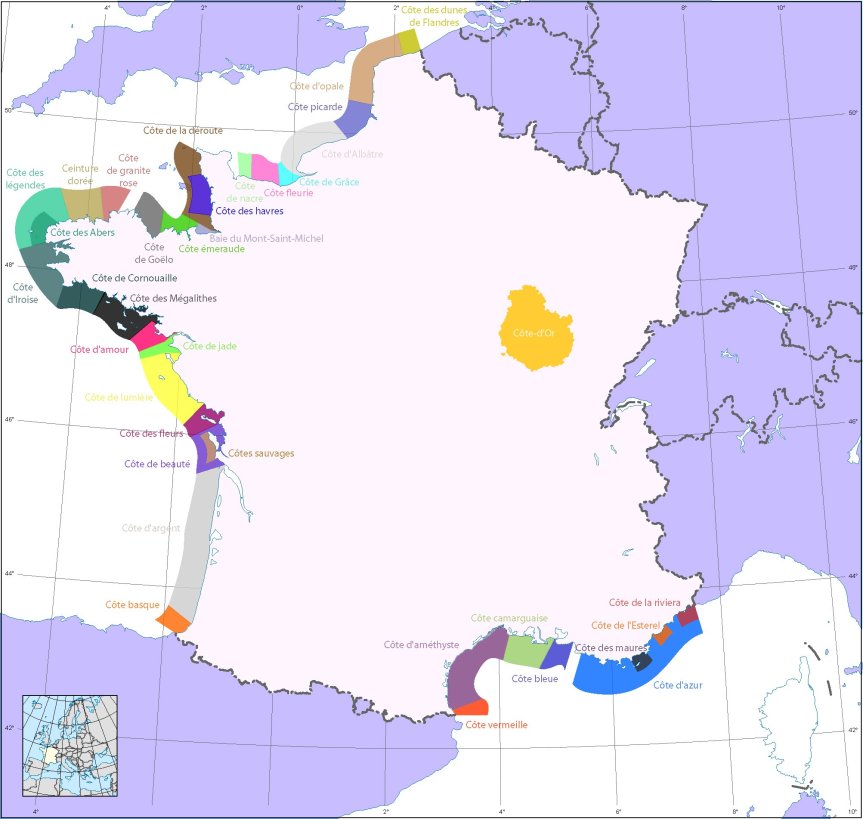
Name one French coastline. Great. Now name another. Can’t? Here are all 36.

Despite a number of recent high-profile terrorist attacks, France remains the world’s most visited country. The numbers are going up, in fact: last year, the French welcomed 89 million foreign tourists, 8% more than in 2016.

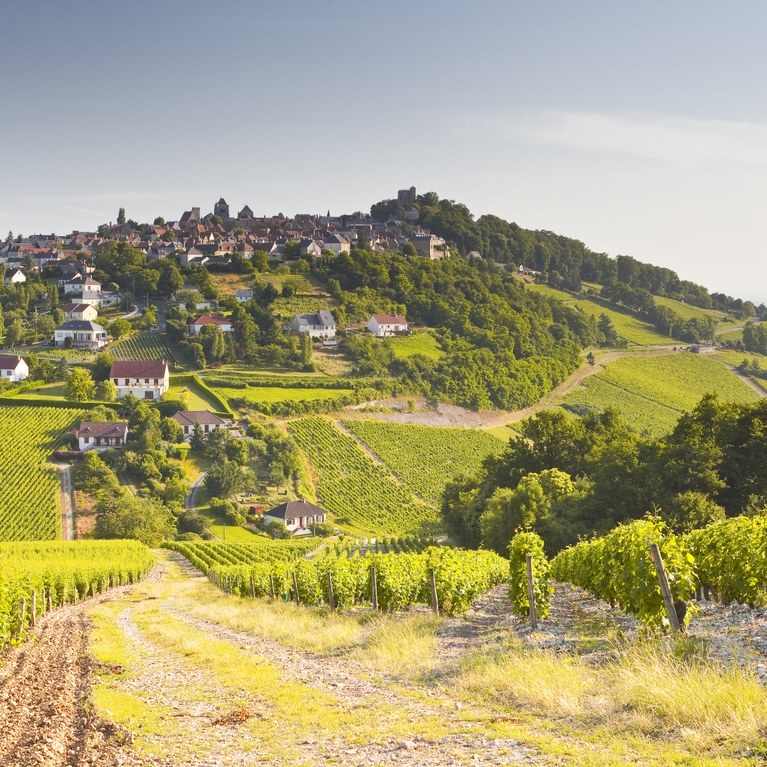
But how familiar are those visitors with the many splendors of France? Here’s a test: quickly, name your favorite French museum, city, wine region (1) and beach. Most likely answers: the Louvre, Paris, Bordeaux (or Burgundy) and the Côte d’Azur.

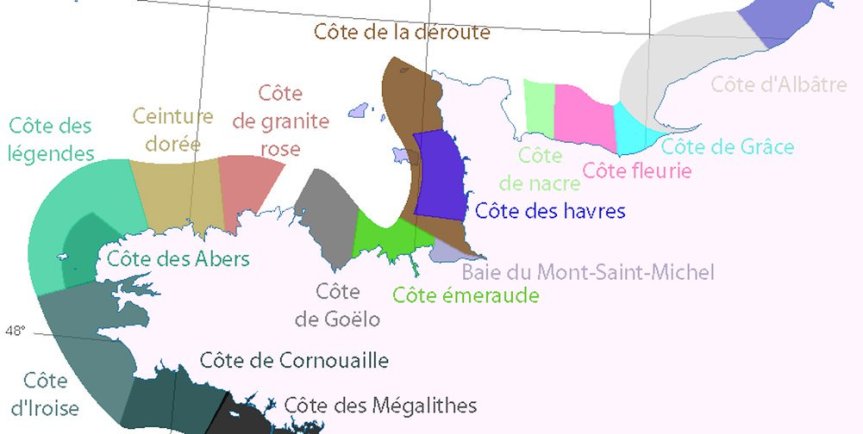
Hot and glamorous, the Côte d’Azur is the jewel in the crown of French seaside tourism. It’s also crowded and pricey. However, as this map shows, it’s just one of 36 named coastlines stretching along the country’s Atlantic and Mediterranean shores.

Commonly referred to in English as the French Riviera, the Côte d’Azur covers the eastern part of France’s Mediterranean coast. The term was coined by Stéphen Liégeard, who used it as the title for his 1887 book about his travels along the coast of the Provence in France and beyond, to Genoa in Italy. ‘Azure’ is the heraldic term for ‘blue’; he was perhaps inspired by his home département of Côte d’or (2). ‘Côte d’Azur’ quickly caught on, but only for the French part of the coast.

Hoping to emulate the success of their azure counterpart, many other French coasts were named soon thereafter, often after minerals, metals or colors (3). Each has its own particular history, climate, geography and charm. Below is a sample of some of the more remarkable stretches.

The Côte d’Opale (Opal Coast) was named in 1911 by local Édouard Lévêque, in homage to the region’s changeable light. Go here for two illustrious capes: Blanc-Nez (‘White Nose’) and Gris-Nez (‘Grey Nose’), the closest point between Europe and England, only 34 km (21 mi) from the white cliffs of Dover.

The Côte Fleurie (Flowered Coast) refers to the flowering apple trees in the interior. Dotting the coast are Deauville, Honfleur and other renowned seaside resorts – not forgetting Balbec, the fictional one from Proust’s A la recherche du temps perdu.

The beaches of the Cote de Nacre (Mother-of-pearl Coast) are better known by their D-Day code names: Gold, Juno and Sword.

The Baie du mont Saint-Michel (Bay of Mont Saint-Michel): A Unesco World Heritage site, this part of the Golf of Saint-Malo dividing Brittany from Normandy is dominated by the Mont Saint-Michel, a tidal island topped by a medieval abbey and pilgrimage site.[ . . . ]

Read full article at BIG THINK: Tired of the Côte d’Azur? France has 35 other named coastlines | Big Think