Review: Strong Performances Anchor ‘The Apparition’

“The Apparition” sounds like the title of a horror movie, and this is not a case where the United States distributors of this French film have goosed up the original language title, which was, yes, “L’apparition.” There are several points in the movie during which the viewer can see the story line veer into genre territory, as when some of the characters, a disparate group convened for an investigation, discuss the possibility of working with an exorcist.

But the movie, directed by Xavier Giannoli, in fact aims for tragedy (which it nearly achieves) and enigmatic spirituality (and here’s where there’s a problem). Vincent Lindon plays Jacques, a journalist whose best friend and colleague is killed, practically right next to him, in the Middle East. At home nursing a blown-out ear, and PTSD, he is summoned by a Vatican representative. A young woman in rural France, Anna (Galatéa Bellugi) has seen a vision of the Virgin Mary, and is being celebrated by locals — and now, tourists on pilgrimages — as a potential new Bernadette of Lourdes. The church wants an investigation, to which the local priest sheltering Anna has strident objections.

Mr. Lindon, who carries his powerful masculinity with canny reserve, is superb as a man inquiring into a faith he had previously thought had nothing to do with him. But Ms. Bellugi is a real find; she inhabits her character, who, even as she hides her secrets, is so genuinely beatific that you can hear it in her breathing. Which makes it even more of a shame that the movie, which for two hours is an absorbing, detailed procedural, becomes so willfully diffuse in its final 20 minutes.

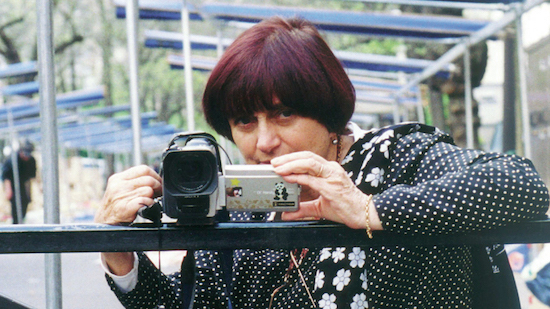
Agnès Varda, the queen of the meme

Cats, strange vegetables, street art, foraged food, feminism and playful ironic self-reflection: these things are at the heart of Instagram culture, but Agnès Varda, the veteran French-Belgian documentary-maker, was filming them years ago. Although the grande dame of the French New Wave, it’s now at the age of 90, and with the superb Faces Places, that her legacy is being fully rediscovered. A touring cinema programme and a Curzon Home release of some of her early work is bringing her to wider attention.

Varda’s later-life documentaries are personal and playful, an older woman looking back at a life of curiosity amid major social change. The Gleaners and I (2000), in which she riffs on the traditional French idea of those who scavenge after harvests, gets all the attention. For me, it’s The Beaches of Agnès (2008) that’s the magical one.

In it, Varda reflects on her love of seaside locations, and uses the beaches of her youth as a backdrop for restaging memories of love and loss while playing games and pondering creativity. Mixing archive clips, observational material, constructed fantastical sequences and to-camera reminiscences, she roams the country, musing on interesting random encounters.

One moment she’s sailing down the Seine; the next, she’s walking around dressed as a potato in her own art exhibition. It could be twee, this national treasure having fun with her memories. But Varda is sharp and no pushover. She has strong opinions on being an artist, on feminism, on the need for culture-makers to depict the working class with dignity, and on the importance of film-makers and artists being part of social change [ . . . ]

Jean Cocteau

Cocteau

Jean Maurice Eugène Clément Cocteau (5 July 1889 – 11 October 1963) was a French poet, writer, designer, playwright, artist and filmmaker. Cocteau is best known for his novel Les Enfants Terribles (1929), and the films The Blood of a Poet (1930), Les Parents Terribles (1948), Beauty and the Beast (1946) and Orpheus (1949).

His circle of associates, friends included Kenneth Anger, Pablo Picasso, Joan Miró, Salvador Dalí, Gertrude Stein, Jean Hugo, Jean Marais, Henri Bernstein, Yul Brynner, Marlene Dietrich, Coco Chanel, Erik Satie, Ernst Jünger, Albert Gleizes, Igor Stravinsky, Marie Laurencin, María Félix, Édith Piaf, Panama Al Brown, Colette, Jean Genet, and Raymond Radiguet. (Wikipedia)

Modigliani
Modigliani’s portrait of Cocteau 1916

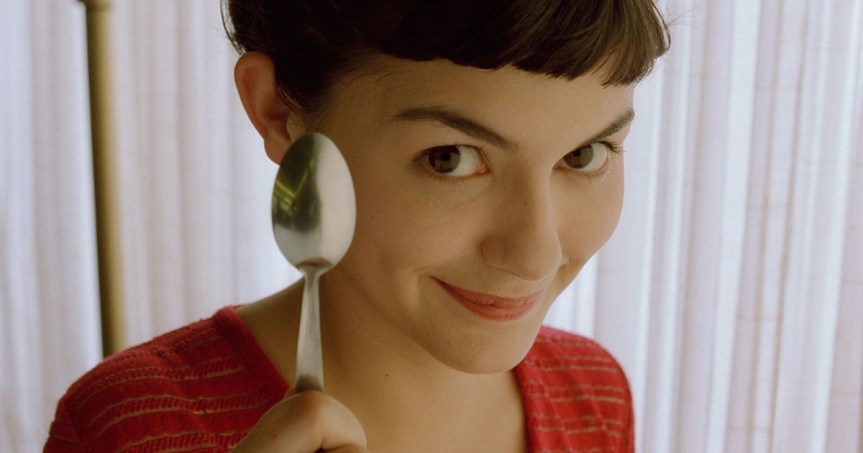
Audrey Tautou’s eight best films 

Pas de Merde loved Amelie of course, but The Da Vinci Code was horrible. What do you think of this list?


Audrey Tautou’s stardom is such that she easily crosses the barrier between the francophone and anglophone worlds. Her English-speaking roles – such as “The Da Vinci Code”, are as impactful an [ . . . ]

See full story at VOGUE: Audrey Tautou’s eight best films | Vogue Paris

Behind Jean-Luc Godard’s Shades: Agnès Varda’s Ways Of Seeing

Elsa Court unpicks the cinematic relationship between Agnès Varda and Jean-Luc Godard. With her new film, Faces, Places, in UK cinemas soon, and a retrospective currently on screen at the BFI Southbank, a reassessment of the often marginalised Varda feels more vital than ever

L’art du cinema consiste à faire faire de jolies choses à de jolies femmes” – the art of cinema consists in having pretty women do pretty things. This quote, from Francois Truffaut, was how I chose to open my lecture – the last of four taught on the directors of the French New Wave at the Department of Continuing Education at Oxford University last autumn – on Agnès Varda. I had decided to save Varda for last, and Truffaut’s quote, frequently remembered in the wealth of critical writing on the French New Wave, seemed to me a good entrée en matière to discussing the postfeminist narrative of Varda’s Cléo de 5 à 7 (1962).

So far into the course, I had approached the movement according to its standard historical – and therefore predominantly male – perspective, placing the films of Truffaut, Jean-Luc Godard, and Alain Resnais within their cultural context in postwar France, stressing the way in which the young, anti-orthodox filmmakers simultaneously called for a reassessment of cinema as art and for a relaxing of the rules of filmmaking. By the end of the day, I had yet to discuss the New Wave’s inclusion of women and its representations of gender relations, which jarred with the movement’s professed radical attitudes towards both film and the changing landscape of France’s society and culture. My lecture on Varda deliberately approached her work through the perspective of her uniquely playful, even generous redressing of the codes of female representation within the movement and in French cinema in the broader sense. Continue reading “Behind Jean-Luc Godard’s Shades: Agnès Varda’s Ways Of Seeing”