Cannes habitués Jean-Pierre Dardenne and Luc Dardenne debuted their latest film, Young Mothers, in Competition this afternoon, greeted by a 10.5-minute ovation.
The story follows five girls who are housed in a shelter for young mothers. The teenagers are hoping for a better life for themselves and their babies.
Marking their ninth time in Competition, the Dardenne brothers are two-time Palme d’Or winners, for 1999’s Rosetta (which also took a Best Actress prize for Emilie Dequenne who passed away earlier this year), and for 2005’s L’Enfant.
Other laurels the Belgian brothers have received on the Croisette include Best Screenplay for 2008’s Lorna’s Silence, a shared Grand Prize for 2011’s The Kid with a Bike, Best Director for Young Ahmed in 2019 and a special 75th Award for 2022’s Tori and Lokita.
Luc Dardenne told the Cannes Film Festival of Young Mothers, “We wanted to tell five stories about five young girls who, each in their own way, escape a destiny — a prison.” However, there’s slightly more lightness to the film than their previous collaborations. Luc Dardenne credited the music in the movie, “which wasn’t in the last two films.”
Added Jean-Pierre Dardenne speaking to Cannes, “A baby that’s crying, that you need to put down… these are things that we have incorporated… It adds tempo — a completely different rhythm.”
The cast includes Babette Verbeek, Janaina Halloy Fokan, Samia Hilmi, Elsa Houben and Lucie Laruelle.
Goodfellas has international sales on Young Mothers and Diaphana is distributing in France.
It was one of the key trends in recent years—and at the last Cannes Film Festival. And it’s likely to shape the next one, too. In 2024, many actresses debuted films as directors. Céline Sallette appeared on the Croisette with Niki, a biopic about artist Niki de Saint Phalle; Noémie Merlant unveiled Les Femmes au balcon (set in a heatwave-stricken Marseille); Laetitia Dosch presented Le Procès du chien; and Ariane Labed introduced September Says. Judith Godrèche premiered Moi aussi, a short film addressing sexual violence. Even the festival’s jury president, Greta Gerwig, is an actress-turned-director.
Noémie Merlant, Laetitia Dosch… a growing number of actresses head behind the camera
The growing number of women stepping behind the camera to express their own vision—beyond the male gaze—is no coincidence. This trend aligns closely with the momentum of the #MeToo movement. Women no longer want to be objects of male desire or perspective—they’re creating their own stories, populated with heroines often far more nuanced than those imagined by male directors.
As filmmaker Anissa Bonnefont recently put it: “There have been—and still are—men who tell women’s stories beautifully. But today, more and more female directors are beginning to make space for a different representation of women in cinema. It’s reassuring to witness this, even though we’re still very far from gender equality in our industry. Now we’re seeing films made by women where female characters are portrayed in all their complexity and strength—and that needs to stop being frightening.”
The end of the actress as an object in the hands of an all-powerful director?
The emergence of actresses-turned-directors signals the closing of an era—the actress as an object, a mere instrument wielded by a powerful auteur. As Juliette Binoche once said in Libération about her early career: “When a young actress, mutable and hesitant, gives herself through a role, she turns to her director for approval. She is wholly his, hers, the world’s. Doesn’t that yearning from the young actress give the director the illusion that everything belongs to him? Has he not sensed that this extreme longing hides another, not necessarily carnal, but invisible, unreachable—a yearning for the absolute that transcends them both?”
A movement spreading across the Atlantic
This shift is not entirely new. Asia Argento, Valeria Bruni-Tedeschi, Nicole Garcia, Hafsia Herzi, Monia Chokri, Mélanie Laurent, Emmanuelle Bercot, Zabou Breitman, Sophie Marceau, Agnès Jaoui, Julie Delpy, Valérie Donzelli, Sandrine Kiberlain, Valérie Lemercier, and Maïwenn have all leaped from acting to directing.
And the movement has long since taken root in the U.S. Angelina Jolie made her directorial debut as early as 2007 with the documentary A Place in Time. Last September, the Girl, Interrupted star showcased Without Blood, a drama she wrote and directed, starring Salma Hayek, at the Toronto International Film Festival.
After two years of media quiet, Zoë Kravitz returned to the spotlight—not as an actress, but as a director. Blink Twice marks her directorial debut, a project starring Channing Tatum and Naomi Ackie that’s been in development since 2017. Scarlett Johansson, Kate Winslet, and Kristen Stewart are also preparing to release their first features. Stewart’s debut, The Chronology of Water, stars Imogen Poots and has yet to receive a release date. Both this film and Scarlett Johansson’s Eleanor the Great could potentially be featured at the 2025 Cannes Film Festival.
It’s not just about directing—many actresses are also taking control as producers. Speaking to Numéro about the release of The Outrun, Saoirse Ronan shared: “I wanted to be more creatively involved and bring my own perspective to a project centered on me. After producing this film, I believe more actresses should step into action.”
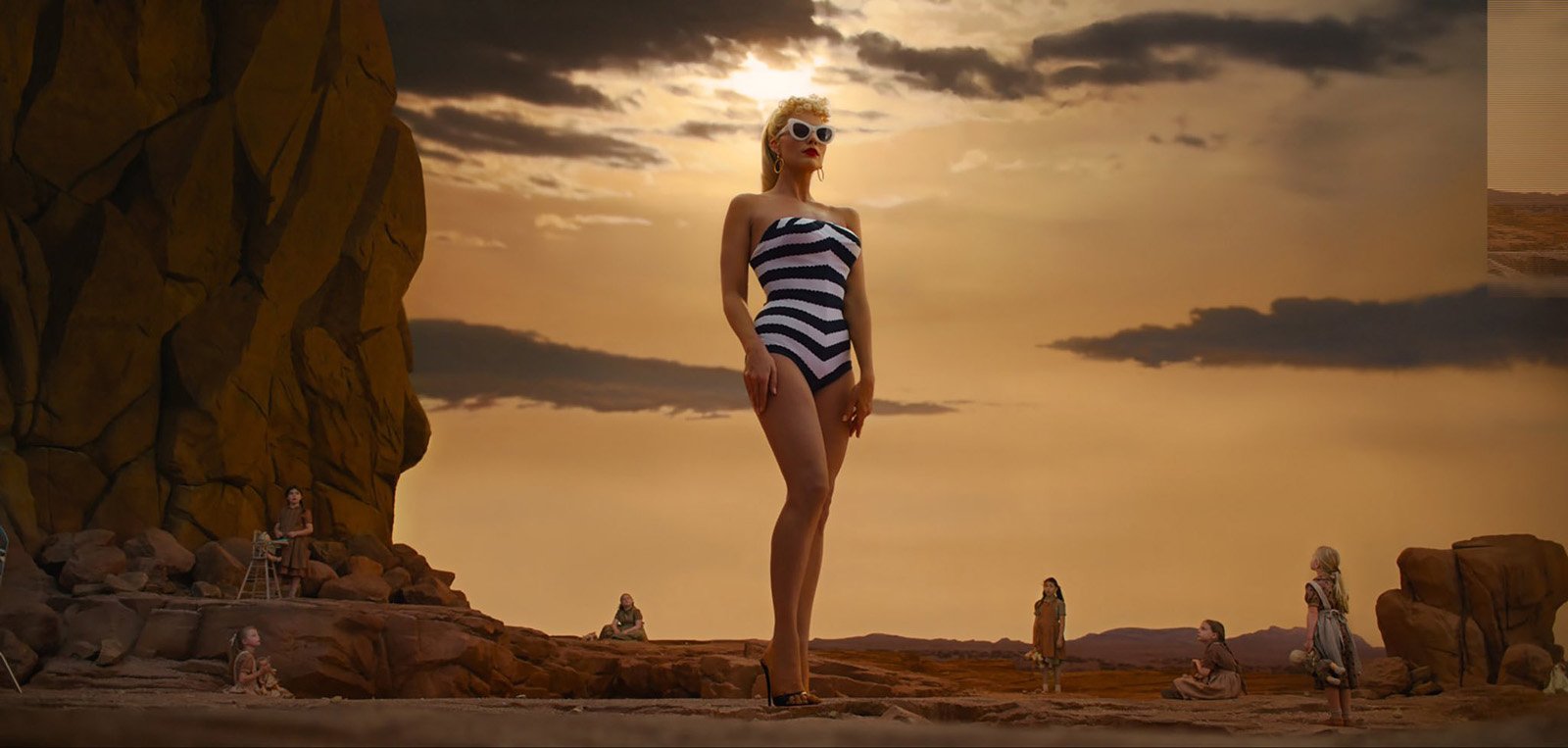
Actresses have increasingly made their mark as producers in Hollywood—think Reese Witherspoon or Viola Davis. In 2024, by taking up the camera and embracing production roles, actresses are clearly reclaiming power. Just as Margot Robbie declared in the metaphysical final scene of Barbie (2023): “I don’t want to be an idea anymore.”
A thought-provoking procedural about the nurse trying to keep a single mom from losing custody of her child, from the promising ‘Playground’ director.
By Peter Debruge
Who decides what’s best for a child? In “Adam’s Sake,” a scrawny 4-year-old boy is admitted to the pediatric ward with a broken arm, which the doctors attribute to malnutrition. A social worker is called, and Adam’s mother — who’s hardly more than a child herself — is forbidden access to her son while hospital staff try to nurse him back to health. But Adam refuses to eat unless his mother is present, fighting against the feeding tubes the doctors have ordered.
All that is backstory that we piece together on the trot during the opening minutes of Belgian director Laura Wandel’s emotionally wrenching whirlwind, which is bolstered by a pair of terrific performances from Léa Drucker as Lucy, the pediatric department’s head nurse, and “Happening” star Anamaria Vartolomei as Adam’s mom, Rebecca — to say nothing of soulful newcomer Jules Delsart, the remarkable young actor who plays Adam.
From the get-go, we see Lucy attempting to mediate between the impatient doctor (Laurent Capelluto), an inflexible social worker (Claire Bodson) and desperate Rebecca, who’s been granted a narrow window of visitation on a probationary basis. The boy in turn clings to his mom’s neck, plaintively asking any who will listen whether she might be permitted to stay the night.
The stakes are life and death, as the medical staff makes clear. Meanwhile, Rebecca works at cross-purposes, smuggling in plastic containers of a runny porridge-like goop she insists on feeding Adam instead of the hospital food. Without proper sustenance, the boy risks additional fractures, which makes it especially difficult to watch the scene in which Rebecca throws out the prescribed meal while Lucy’s back is turned.
Over the course of a tight, intense 70-odd minutes, Wandel plunges audiences into the frantic hustle of this overtaxed hospital, observing through fresh eyes a world we know from so many TV dramas — much as she did the daunting turf of an elementary schoolyard in her stunning 2021 debut, “Playground.” In that film, Wandel developed a formal approach perfectly suited to her milieu, adopting the perspective of her 7-year-old protagonist as the first grader tried to make sense of her intimidating new surroundings. Adults, when seen, were either cropped at the waist (à la the teacher in “Peanuts” cartoons) or obliged to bend down into frame, engaging with the girl at eye level.
Wandel could have repeated that same tactic in “Adam’s Sake,” but instead of portraying the action from the poor kid’s point of view, she aligns herself with Lucy, employing a similarly dynamic observational style to that of her producer-mentor Luc Dardenne. Nimbly covering the action via a small handheld camera, cinematographer Frédéric Noirhomme shadows Lucy and the other characters via long unbroken takes, occasionally staring at the back of her protagonist’s head (as Dardenne often did in “Rosetta”).
It’s an audacious strategy, not intended to impress so much as to immerse, which distinguishes “Adam’s Sake” from countless hospital-set procedurals. Wandel wants her audience to weigh the philosophical aspects of the situation, revealing the behind-the-scenes power struggles and split-second decisions that complicate Lucy and her superiors’ ability to spare Adam.
Audiences — especially those with children of their own — may have a tough time dealing with Rebecca’s self-defeating behavior, which springs from a place of panic. Abandoned by Adam’s father, she has raised the boy this far on her own, but her instincts are off. It’s not clear whether what’s she’s feeding him is vegan or some kind of religiously sanctioned alternative, although Wandel has explicitly said that’s beside the point. Her focus is on the various hierarchies at play in this hospital, where parents typically have authority — and which this mom has somehow lost to the legal system.
Rebecca has cultivated a codependent dynamic with Adam whereby neither can stand to be apart from the other; she goes so far as to lock herself in the hospital bathroom with her son one moment, then all but kidnaps him the next. No wonder practically everyone on staff seems determined to restrain Rebecca and limit access to her son. Only Lucy seems to recognize that they need the mother’s cooperation in order for Adam to pull through, heroically bending the rules for his benefit.
Lucy may have Adam’s best interests in mind, but she finds herself at the bottom of a chain of command, in which Adam’s doctor, the ward supervisor (Alex Descas) and eventually the law stand in her way. The movie can feel a bit melodramatic at times, especially when Adam finally speaks his truth — a chilling line it’s hard to believe any child actually saying, which no one who sees it will soon forget. In the end, “Adam’s Sake” is not quite as effective a film as “Playground,” but it most certainly confirms Wandel as a filmmaker to be reckoned with.
The majestic landscape of Provence takes center stage in Claude Berri’s two-film adaptation of an epic tale by Marcel Pagnol, a cinematic treasure that remains an abiding source of comfort for French viewers.
By Sue Harris
When Jean de Florette, the first part of Claude Berri’s magisterial two-film adaptation of Marcel Pagnol’s celebrated 1962 literary diptych, L’eau des collines, was released in theaters in August 1986—the second part, Manon of the Spring, would follow in November—it was the cinematic event of the year in France. The films ran during an exceptionally tough time for the French, who were on constant alert as they went about their daily lives because of a terrorist bombing campaign that had been targeting Paris and regional transportation networks since December 1985. One can only imagine what a relief it must have been to escape to a cinema for a few hours and be transported to 1920s rural France and a world imagined by one of the country’s most beloved and prolific chroniclers of Provençal life. Shot simultaneously on location in rural Provence over the last half of 1985, the two parts drew many millions of domestic spectators, capturing the top two box-office spots for 1986.
Jean de Florette and Manon of the Spring present Provence as a feast for the senses, a spectacular landscape of trees and mountains, dirt tracks and sun-bleached stone cottages. Our eyes, like those of Jean Cadoret, the first part’s protagonist, roam freely over the hills and valleys, soaring and sweeping, drinking in both the immensity of the land and its permanence. Tree branches intrude into our field of vision, framing the action and giving us a sense of being present with the characters in their secluded world, while natural sounds punctuate the tranquility of the countryside: cicadas and birds sing, bells peal from the village and from around the necks of grazing goats, water cascades from fountains, and mellifluous accents call out neighborly greetings. Both Jean and his daughter, Manon, play the harmonica—favoring a delicate leitmotif taken from Jean-Claude Petit’s Verdi-inspired orchestral score. The film music is alternately lyrical and soothing, plaintive and wistful, bestowing a sense of harmony with its simple orchestration, and Petit’s theme “La force du destin” (or “Jean de Florette”) gets at the heart of the pastoral sensibility of Berri’s films.
Jean is a city civil servant who inherits a remote bastide (farmhouse) from a relative. He moves his family to the countryside, full of optimism and plans for a modest life as a smallholder. Jean (Gérard Depardieu), whose head is full of science and statistics and modern farming methods, is indefatigable in his energy for his family’s adventure. His wife, Aimée (played by Élisabeth Depardieu, Gérard’s wife at the time), and their daughter, Manon (Ernestine Mazurowna), willingly assist in his endeavors no matter how arduous, plowing the land, tending the plants, fetching water in buckets from a distant well. Jean, who is hunchbacked, is watched constantly by Ugolin (Daniel Auteuil) and his uncle César “Le Papet” Soubeyran (Yves Montand), who covet the land for Ugolin’s flower business. César, the last of a long line of villagers, is a man obsessed with his family name and wealth, and he sees Jean as an interloper whose presence and projects thwart his own ambitions for his nephew. The two scheme, spying on Jean from behind trees and bushes; mocking him for his education, his attire, and his romantic ideals; and quickly turning the other villagers against the outsiders. By the time Jean and his family venture from their farm into the village itself, dressed in their best clothes and holding themselves with polite dignity, the hostility toward them is outright, and they are pelted with mud and chased out of town—the locals’ herd mentality and paranoid fear of strangers strike a very topical note for a twenty-first-century viewer.
Jean de Florette
The Soubeyrans’ appalling victory comes of their deep local knowledge and their authority within their community. Any agricultural concern needs a plentiful water supply; for one undertaken in the arid hinterlands of Provence, a spring is the most valuable of assets. Jean is sure there is a source on his land—and indeed there is, but the jealous Soubeyrans blocked it up before he arrived, dooming his enterprise to failure from the outset. Tormented beyond reason and desperate for rain, Jean rails at God: “I’m a hunchback! Have you forgotten that? Do you think that’s easy? Isn’t there anybody up there?” The story of Jean, then, is that of a good man, disabled from birth, who is deceived by neighbors who present themselves as friends and allies but have ruthless ambitions that will destroy him and his family. He is a man so overcome by the natural beauty of the land and his belief in the goodness of people that he doesn’t see the danger he faces. In contrast, the story of adult Manon in part two is one of revenge and destruction, as she in turn learns to control the secret springs that irrigate the local land and exacts a terrible price from those who tormented her father to death.
Pagnol, the author behind Berri’s films, was one of France’s most acclaimed artistic figures, with an incomparable career in theater, film, and literature. He first came to popular attention in France in the twenties as a playwright for the Paris stage. In the thirties, he relocated to Marseille, in his native Provence, where he set up his own film studio and production company and released a trilogy of locally set films (the first two adapted from his plays and directed by other filmmakers) that remain classics of French cinema: Marius (1931), Fanny (1932), and César (1936). After the war, Pagnol made the rural-Provence-set film Manon des sources (1952), written for his new wife, the actor Jacqueline Pagnol. While the film was not a commercial success, the dramatic potential of Manon, the shepherdess, and Ugolin, the local man whose love for her goes unrequited, stayed with him and resulted in the two novels of L’eau des collines, which flesh out the backstory of Manon’s father, Jean, and his destruction by the forces of envy and spite. Pagnol remains revered in France, not only for his many creative works but also for being the first filmmaker to be elected as an “immortal” to the prestigious Académie française. The election, in 1946, was a source of immense pride to him as well as to the French film world, and this recognition remains the mark of his prestige in twentieth-century French history.
Berri’s discovery of a paperback copy of Jean de Florette while on holiday in Morocco in the early eighties led him to seek the rights from Jacqueline Pagnol, by that point a widow, and to reformulate Jean as the central character of the narrative. His would be an epic production, mounted on a scale never before seen in France. Berri was already one of the country’s foremost film producers as well as an actor, screenwriter, and director. His first task was to assemble a cast that matched the grandeur of his ambitions while respecting the authentic flavor of Pagnol’s South. Yves Montand, a veteran singer and actor who had grown up in Marseille, agreed to play the part of César after some initial reluctance to appear as an elderly man on-screen (he was sixty-three). The role of his gullible nephew, Ugolin, went to Daniel Auteuil, a rising star of French cinema who was at the time mostly associated with comic parts. Like Montand, Auteuil hailed from the South of France, having grown up in Avignon, and both actors were quick to master the musical accents of their characters.
The anchor of the first film, Depardieu, was the premier male actor of the era and one of France’s most versatile and prolific screen stars. He was on a meteoric ascent, having begun the decade with the César Award for Best Actor for his role as Resistance operative Bernard Granger in François Truffaut’s The Last Metro (1980). His talent for incarnating historical figures was in evidence in recent box-office hits like The Return of Martin Guerre, Danton, and Fort Saganne, and he would soon be consecrated as the sculptor Rodin in Camille Claudel (the directorial debut of Bruno Nuytten, whose cinematography graces Jean and Manon) and the novelist and playwright Cyrano in Cyrano de Bergerac, for which he received a second Best Actor César. A performer at the top of his game, he was Berri’s obvious choice to play the idealistic out-of-towner who rhapsodizes about the beauty of the land that he has been fortunate enough to inherit.
The final lead role, of the adult Manon in the second part, went to a relative unknown, Emmanuelle Béart (who unbeknownst to Berri was already in a relationship with Auteuil). For Béart, this was the role that would launch her career, meriting her a César for Best Supporting Actress and bringing her to the attention of the French auteur directors Claude Sautet and Jacques Rivette. One of the films’ most affecting elements is the striking resemblance between Béart and Mazurowna, and their shared capacity for intense and silent scrutiny of others. Their watchful gazes structure both films, and it is through those gazes that Manon comes to understand the devastating truth about Jean’s fate and the complicity of the other villagers in the Soubeyrans’ staggering acts of cruelty. In the first film, Manon is an almost wordless part, as the camera focuses on her intense stare or quiet observation of the animals she plays with. In the second, her dialogue is also limited, with the story told through her surveillance of the villagers who consigned her father to an early death. When Manon does speak, it is to accuse, to expose, to condemn.
Manon of the Spring
The real star of the films, however, is Provence itself—powerfully captured by Nuytten’s cinematography—and the region’s majestic landscape, redolent of summer holidays and lazy days in the sunshine. The land is ever-present in the lives of the characters: Ugolin dreams of tending a farm of red carnations; Jean plans to breed rabbits and feed them on squash plants grown nearby. Shots of the two men working the land are interspersed throughout, their tiny figures almost lost from view as the camera sweeps birdlike over the terrain. These moments are contemplative, inviting us to pause and reflect on the fleetingness of the characters’ lives and the inexorability of nature’s power; reminding us that as dark and tangled as this story is, and for all its characters’ complex efforts to impose human authority on the terrain and the elements, the land will endure and outlast them all. It is that permanence that puts the Soubeyrans’ obsession with property, inheritance, and the family fortune into sharp perspective, as Le Papet’s dream of bestowing wealth and status on the family line comes to nothing and he dies broken and alone, devastated by the revelation of a decades-old secret.
The films were released at a time when tourism in Provence was taking off in a major way, a trend that would be accelerated by British author Peter Mayle’s international best seller A Year in Provence (1989). The region’s appeal was further boosted after Yves Robert’s My Father’s Glory and My Mother’s Castle (both 1990), adapted from Pagnol’s novel cycle Souvenirs d’enfance (published beginning in 1957), became huge hits in France and abroad. Of course, it is Pagnol’s own Marius, Fanny, and César, more than any other films, that have fixed an idea of the South’s quirky characters and customs in the French collective memory. The Marseille Trilogy endures as the template for the musicality, warmth, and wit of the area the French call le Midi. Pagnol’s cinematic world, which Berri recreates in a spirit of absolute respect, is one of expansive gestures and animated conversation, of idiosyncratic personalities and lyrical phrasing, and of decisions and actions carelessly taken whose consequences resonate across generations. The characters in Berri’s films have the same quick repartee, the same disheveled look, the same grounding in community as the ones in Pagnol’s work.
With shoots as lengthy and complex as those of Jean de Florette and Manon of the Spring, logistics were a constant issue. The site for the Cadoret family farm (Les Romarins) was found in remote Riboux, one of France’s least populated villages (there were only six inhabitants at the time). The village of Mirabeau (population at the time 480) was transformed into an open-air film studio for six weeks, and locals were hired to take part in the religious procession around the fountain toward the end of Manon of the Spring. The films’ principals lodged in the village of Gémenos, while other members of the cast and crew were billeted across the region and around the town of Cuges-les-Pins. Aside from the difficulty of communication among such a dispersed team were the issues of filming in the searing heat; accessing the various sites (a road had to be built so the film equipment could reach Riboux); the Grand Prix trials taking place in the nearby town of Le Castellet; the sacrosanct French hunting season; and the vapor trails left across the sky by planes from Marseille’s airport.
Manon of the Spring
In an echo of the hardships experienced by Jean and his family, one of the production’s major concerns was sourcing sufficient water to keep the cast and crew hydrated, and to feature in the film where required. Meanwhile, the risk of forest fires meant the Cuges-les-Pins fire service remained on constant standby for the duration of filming. Béart spent many weeks of Jean de Florette’s production learning the art of tending goats from local shepherd André Brunat. Montand learned of the death of his wife, Simone Signoret, in late September 1985. He took only one day off to attend her funeral.
Berri’s films are enduring exemplars of what has become known as French heritage cinema, a type of filmmaking that blossomed in France in the eighties. These movies are characterized by lavish sets and costumes, big budgets and high production values, soaring scores and stunning locations, and the presence of star actors. Many are derived from literary works or based on historical figures or events. Their classical style harks back to the highly crafted French studio productions of the forties and fifties, a type of cinema named the “tradition of quality” and condemned as staid and formulaic by the critic-filmmakers of the French New Wave. But this new kind of prestige cinema was greatly admired by contemporary audiences and fared well in international markets. Its nostalgia for bygone eras, and its affirmation of the glories of French culture and history, resonated with audiences far beyond France, and heritage cinema was promoted and celebrated by France’s Ministry of Culture for much of the eighties. Berri’s films, along with Pagnol’s books, continue to be staples of the curriculum in French schools, and they feature among the highest-grossing French movies of all time.
The image of France and French culture that these films presented to the world found favor with critics as well as audiences. Between them, the films were nominated for ten Césars—earning awards for Auteuil and Béart—and eleven BAFTAs, winning Best Film, Best Screenplay, Best Cinematography, and Best Supporting Actor (Auteuil). Jean de Florette and Manon of the Spring were jointly deemed Best Foreign-Language Film by the U.S. National Board of Film Review in 1987.
More recently, as France went into COVID-19 lockdown in March 2020, the Centre national du cinéma et de l’image animée announced that scheduled television programming on France 2 would be suspended at two o’clock every afternoon for the screening of a film of “national importance.” The third and fourth films shown as part of this initiative were Jean de Florette and Manon of the Spring. It seems that, once again, the escape and solace they offer French viewers in times of darkness and uncertainty was undeniable.
‘Souleymane’s Story,’ Boris Lojkine’s timely drama which won two prizes at Cannes and four Cesar Awards, has been acquired by Kino Lorber for the U.S.
“Souleymane’s Story,” Boris Lojkine’s timely drama which took two prizes at Cannes’ Un Certain Regard and four Cesar Awards earlier this year, has been acquired by Kino Lorber for U.S. and English-speaking Canada distribution rights.
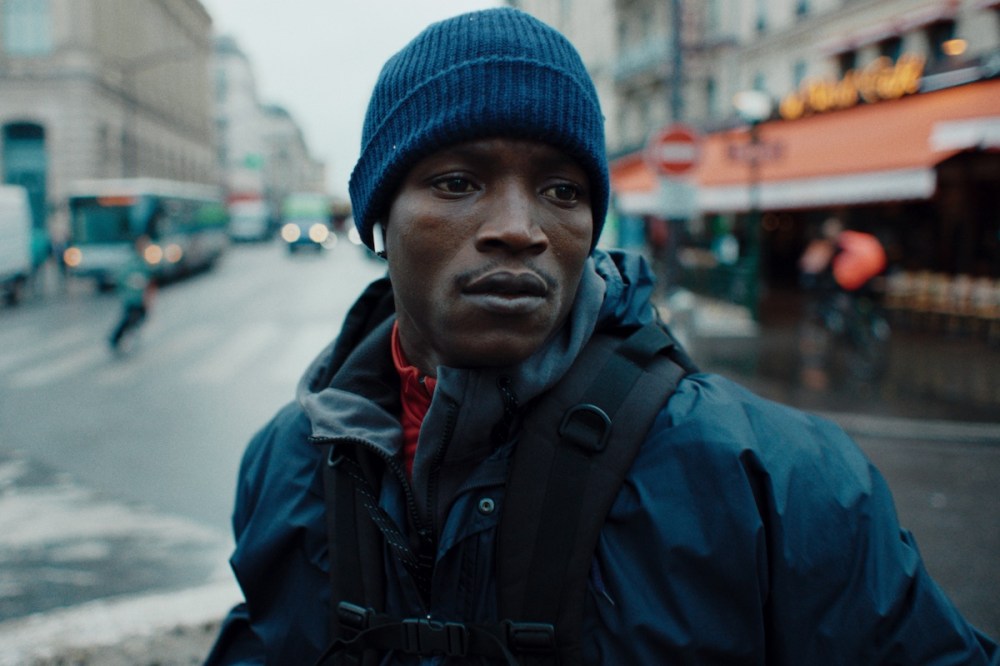
Bolstered by the debut performance of first-time actor Abou Sangare, “Souleymane’s Story” is a ticking-clock drama charting the journey of a Guinean immigrant working as a bicycle deliveryman in Paris in the days leading up to his asylum interview. Kino Lorber pointed the film draws inspiration from Cristian Mungiu’s “4 Months, 3 Weeks and 2 Days” and socially minded films by the Dardenne brothers.
Since world premiering at Cannes where it won the Jury Prize at Un Certain Regard and best actor for Abou Sangare, “Souleymane’s Story” became a major arthouse hit in France, selling approximately 500,000 admissions in French cinemas. The film also turned out to be one of the highlights of France’s awards season. On top of the four Cesar Awards, the film also won a Lumiere Award (France’s equivalent to the Golden Globes), as well as two European Film Awards.




 Pas De Merde